Hollywood is currently in love with legacy sequels that come decades after the original. What’s up with that? We already knew Hollywood loved its sequels. Just look at how many Iron Mans, Nightmare On Elms Streets and Godzillas there are. We’re spoilt for choice when it comes to our favourite characters. Especially now. Hollywood has ... Legacy sequels – cheap nostalgia bait or welcome return to our favourite films?
Hollywood is currently in love with legacy sequels that come decades after the original. What’s up with that?
We already knew Hollywood loved its sequels. Just look at how many Iron Mans, Nightmare On Elms Streets and Godzillas there are. We’re spoilt for choice when it comes to our favourite characters.
Especially now. Hollywood has fallen in love with a different kind of sequel; the legacy sequel or the – ready for this? – legasequel. These sequels come sometimes 20 or 30 years after their predecessor and try to recreate the magic all over again. Some succeed better than others. They’re designed to reboot a franchise as much as continue it, bringing it to the promised land of a new audience.
It’s hard to say which film specifically started the trend, but it’s certainly not a new phenomenon. Psycho got its sequel in the 80s, over 20 years after Alfred Hitchcock’s groundbreaking horror scared the socks off people. Martin Scorsese’s 1986 The Color Of Money was the sequel to 1961’s The Hustler, so that definitely counts. Belated sequels are not new.
Undeniably one of the most successful of these has been Top Gun: Maverick. Joseph Kosinski’s sequel to the original Top Gun came 36 years later and audiences couldn’t have been more excited. The film went on to gross well over $1bn worldwide and was met with raving reviews, including ours. It remains, to date, the biggest hit of Tom Cruise’s career.

It’s an example of a sequel that somehow made sense after all these years. It made use of the long gap between films to its favour, making it possible to introduce Goose’s son Rooster (Miles Teller), now a Top Gun himself.
Before Joseph Kosinski brought Tom Cruise back as Maverick, he brought back another classic 80s film in TRON: Legacy. That film was a bit more mixed, received with middling reviews, praise going towards the visual effects, but the characters being criticised for being flat and one-dimensional. TRON is getting another sequel later this year, TRON: Ares, from director Joachim Rønning (whose last film was the hugely underappreciated The Young Woman & The Sea.) The new TRON film hopes to cash in on the franchise’s fans nostalgia by bringing back Jeff Bridges as Kevin Flynn, cinema’s most famous arcade owner and ENCOM CEO.
Perhaps taking a page out of the TRON: Legacy’s book – and arguably the north star to aim for – 2017’s Blade Runner 2049 also brought back Harrison Ford as Rick Deckard. While the film might go down as one of the best sci-fi sequels of all time, audiences didn’t exactly warm up to Denis Villeneuve’s low and slow approach and the film ended up losing money. Yet, in terms of artistry, Blade Runner 2049 is a treat and filled with genuine affection towards the original.
Then there are franchises that feel seemingly endless. Star Wars, Star Trek and Jurassic Park/World have all had multiple sequels in different decades across film and TV, but only a few have managed to contribute something new and exciting to their respective franchises. None have been shy about mining their own legacies when putting fresh sequels and retreads together.
The whole idea of the legacy sequel though can be tricky. 2022’s Scream managed to bring back a horror franchise long thought to be dead and has since had another sequel, with another one in the works. Even that franchise now has six released movies. It’s successful, maybe in part because of the fact that most of the more recent films repeat themselves shamelessly when it comes to the plot.

There’s a guaranteed audience for these films though, of course, and as films continue to get more expensive to make, so risk aversion grows exponentially too. Star Wars is still one of the biggest franchises in cinema and Scream is hugely popular, thanks to Wes Craven’s groundbreaking original.
These legacy sequels tend to be relatively sure bets for film studios; inject a little fresh blood into an existing mould and you’ve got a good chance of making a decent amount of money, especially if the film’s budget is modest. It’s useful if the resultant film is good, but it’s hardly proven itself to be a dealbreaker. And when it works – Beetlejuice Beetlejuice being another recent example – you bring old fans back, make new ones, and gleefully rub hands while looking at numbers pouring onto an Excel spreadsheet.
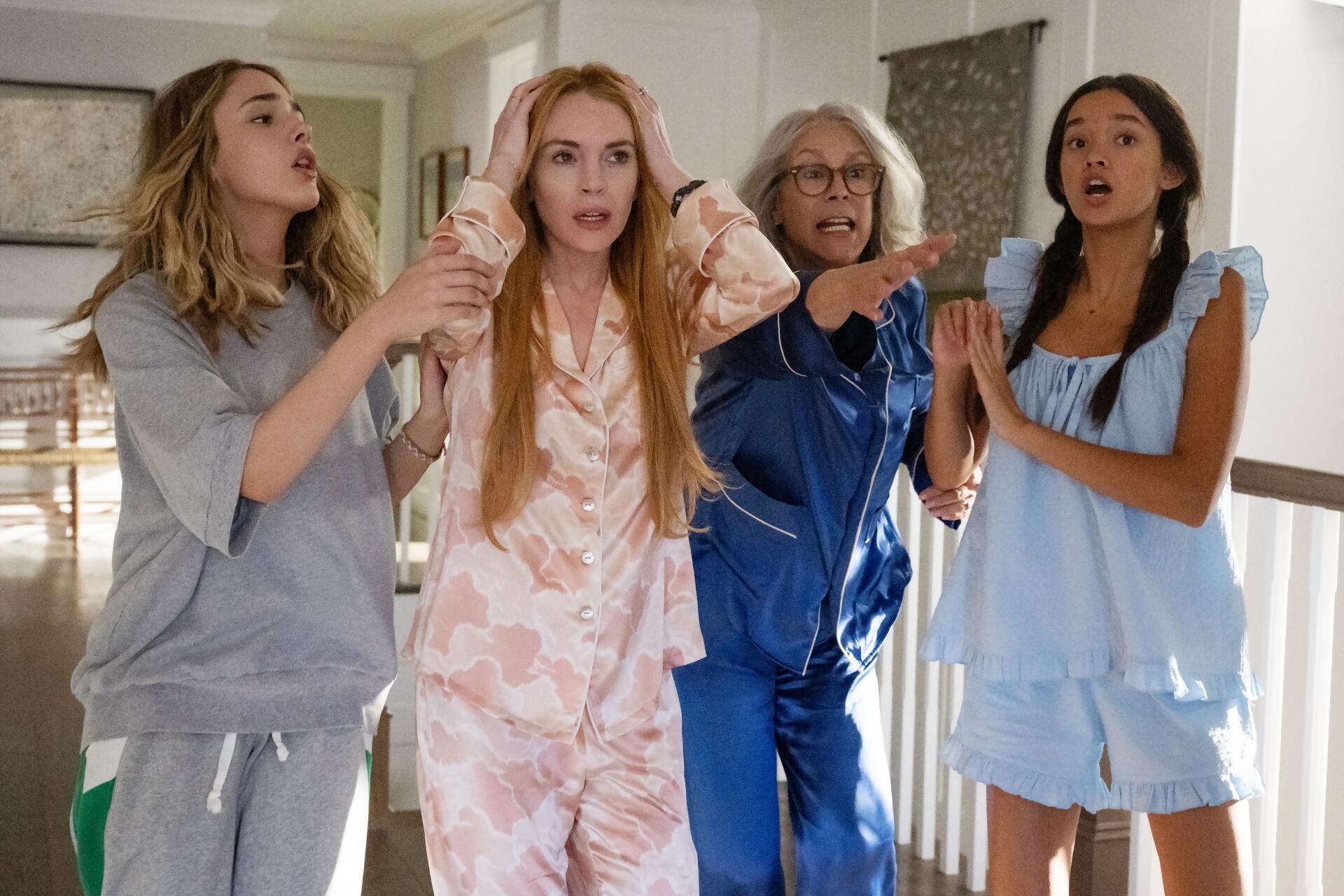
The latest legacy sequel up to the oche, then? Freakier Friday, the sequel to a 2003 remake and novel adaptation. It’s surprising that a follow-up hasn’t surfaced until now, considering how regarded the first film is, but at least we got one now. While a perfectly passable sequel, Freakier Friday tends to mostly repeat what the 2003 one managed, with aplomb.
Same goes for Netflix’s Happy Gilmore 2. While fans of the 1996 original might be excited to spend some more time with Adam Sandler’s hapless golfer, Happy Gilmore 2 settles for repetitive jokes and relying on the charm that made the first one so popular. But Happy Gilmore 2 has been very popular with Netflix users, becoming the biggest US opening on the streaming service ever. Photocopiers are more powerful than movie critics.
In the case of Freakier Friday and Happy Gilmore 2, it’s hard not to feel cynical about the motivations to revisit these characters. These legasequels often try to play on our sense of nostalgia, but are they just cheap cash grab? The jury is still out on that, but we’re hoping we get more Top Gun: Mavericks and fewer Happy Gilmore 2s. Coming up the near future though? Gremlins 3. If they mess that up, expect ‘feedback’…