From director Jonathan Mostow came the war drama, U-571. As we re-evaluate the cinema of 2000, does it stand the test of time? This is the latest in AJ Black’s series of features on films released in the year 2000. He previously looked back at William Friedkin drama, Rules Of Engagement. Potential spoilers lie ahead… U-571 ... U-571 | a troubling example of American historical revisionism
From director Jonathan Mostow came the war drama, U-571. As we re-evaluate the cinema of 2000, does it stand the test of time?
This is the latest in AJ Black’s series of features on films released in the year 2000. He previously looked back at William Friedkin drama, Rules Of Engagement. Potential spoilers lie ahead…
U-571 is a film perhaps better remembered for the dangers of playing too fast and loose with established history, particularly wartime history, than for the quality of director Jonathan Mostow’s movie itself.
It sees Matthew McConaughey’s untested American lieutenant forced to seize command of the titular German u-boat during a daring mission to capture the Enigma code breaking machine. That machine allowed Alan Turing and his Bletchley Park boffins in the United Kingdom to turn the tide of World War Two. The film’s departure from historical events stoked enough ire to reach even the House of Commons. Labour MP Brian Jenkins called it an “affront” to the British sailors who actually retrieved the Enigma machine in such dangerous conditions, and Prime Minister Tony Blair agreed at the time. “We hope that people realise these are people that, in many cases sacrificed their lives in order that this country remained free,” he said.
It’s rare that a Hollywood film designed as popcorn entertainment gets onto Prime Minister’s Questions, such was the frustration by government officials when U-571 arrived in the UK in June 2000. The true story behind the events of Mostow’s film – in which the British vessel HMS Bulldog (as British a naval command could ever be called) disabled and seized German submarine U-110 to retrieve the device, risking their lives in the process – is paid lip service at the end of U-571’s credits, which admit that it was ‘inspired’ by true events. But the damage had been done: for millions of Americans, history was rewritten by Mostow’s film.
By no means one of the year’s heavy box office hitters, U-571 still doubled its budget, and stood as one of the more successful entries of the year at that point. People turned out to see it. People would have heard what it had to say. If we previously saw Rules Of Engagement as a liberal-minded, if ultimately toothless, attempt to confront America’s demons in terms of war and foreign policy at the turn of a new century, U-571 is more of a conservative effort to do the opposite.
Just a few years before Michael Bay’s painfully jingoistic depiction of Pearl Harbor, the seismic attack by the Japanese on the Hawaiian naval base that brought America into WWII, U-571 works hard to revise history and establish America’s naval superiority. The British may have cracked the Enigma code in the real world, but you try finding a Brit anywhere in this film. It’s like America’s closest wartime allies have been entirely, and weirdly, airbrushed from the past. Co-writer David Ayer even admitted, some years later, admitted the whole thing was mistaken in attempting to pass off British successes as American wartime glories:
“It was a distortion… a mercenary decision to create this parallel history in order to drive the movie for an American audience. Both my grandparents were officers in World War Two, and I would be personally offended if somebody distorted their achievements.”
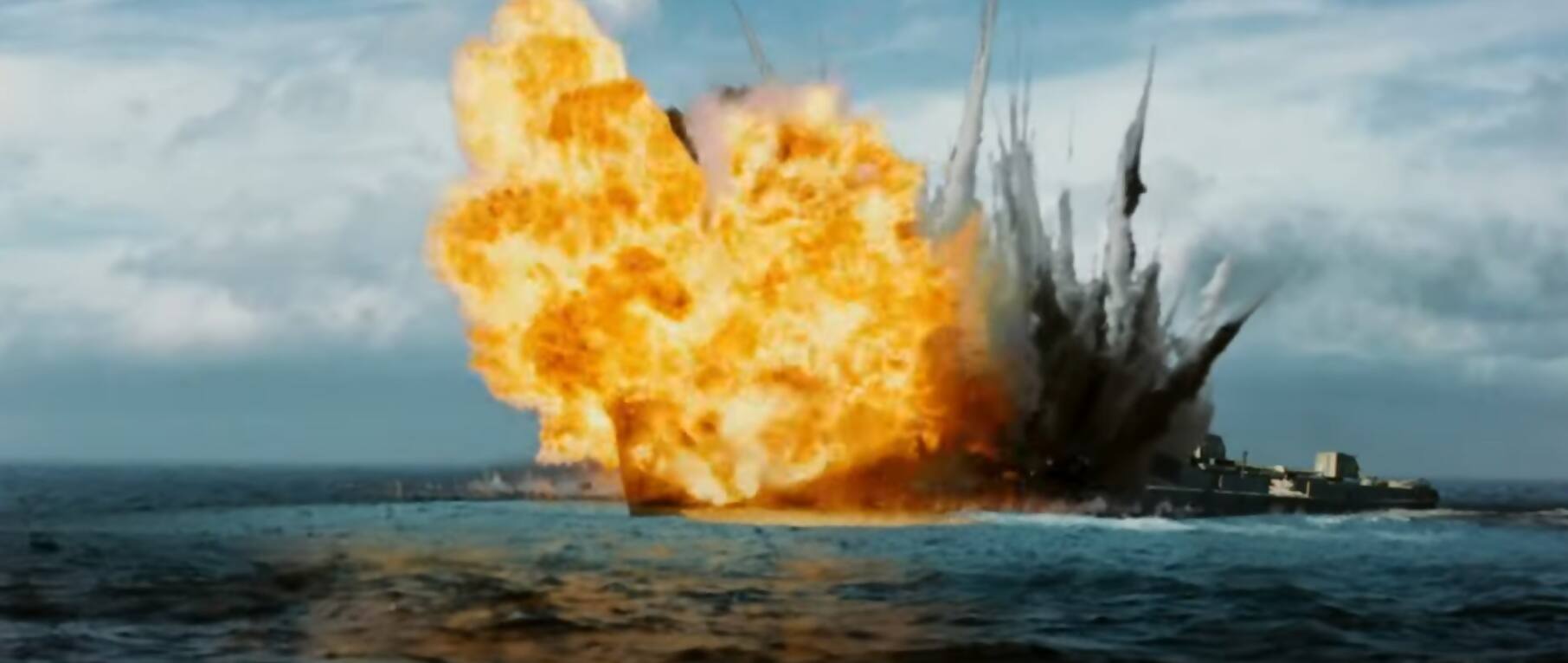
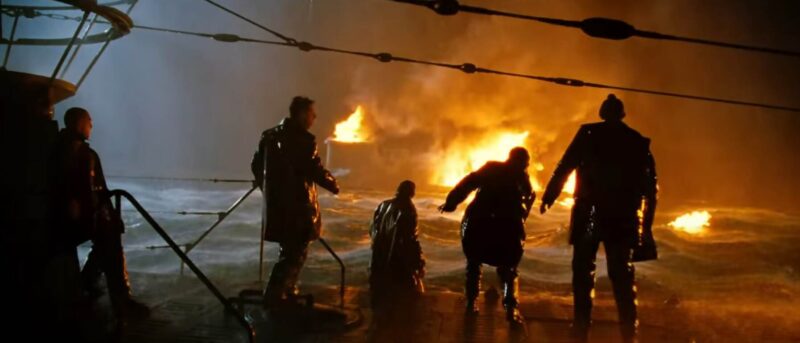
Ayer is likely onto something in his description of U-571 being ‘mercenary’, because everything about the film is designed to appeal to a brawny, action-oriented sense of American superiority. There is little nuance and just as little substance, with Mostow’s lens focused more directly and heavily on the set-pieces of naval missions, sneak attacks on German forces, sinking u-boats and, toward the end, the deliberate tension of pinging sonar and the wait for exploding depth charges. It isn’t quite The Enemy Below, but it sees itself in a similar wheelhouse, updated for a post-90s blockbuster crowd who expect suspense and spectacle rolled into one.
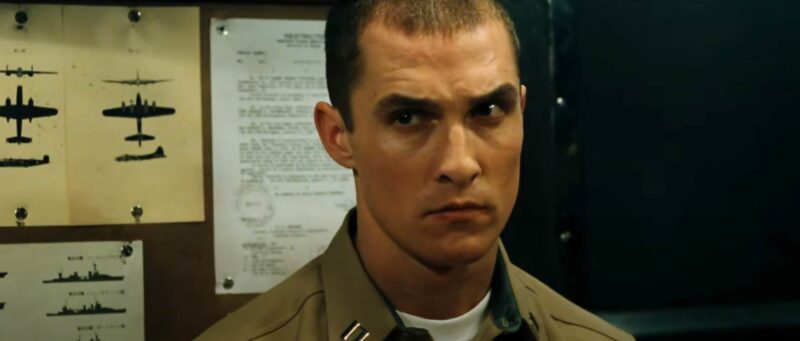
Had U-571 delivered both, it might well have gotten away with how it tramples over historical fact, but it ends up being a remarkably average film given the remarkable subject matter and real-life peril the story depicts. McConaughey plays the central role of Lt Tyler entirely straight, exuding less a sense of charisma than he does dull intensity. The screenplay has at its core Tyler’s story of proving his worth as a commanding officer, after Bill Paxton’s Captain Dahlgren refuses him a command at the beginning, leaving Tyler to his fill his absent role once they seize control of the titular German boat. You can see his arc coming a mile away, and the necessary beats to follow it, but it does ground the film in a recognisable character through-line.
Tyler’s story works as a simplistic parallel for U-571 as a whole. It feels like a film attempting to prove its veracity, and its legitimacy, as much as Tyler does in terms of becoming a naval commander. The 90s questioned the hagiographic historical role the Americans played in World War Two in various ways. Films such as Saving Private Ryan, which brutally displayed the personal cost of the conflict. Star Trek: Deep Space Nine andThe X-Files overtly suggested that America’s post-war misdeeds clouded its established role as ‘saviour’ of Western civilisation from Nazism and Communism. Rules Of Engagement questioned whether morality in war still exists, or has ever existed. U-571, on the other hand, wants its audience to believe “we have always been the good guys and we always will be.”
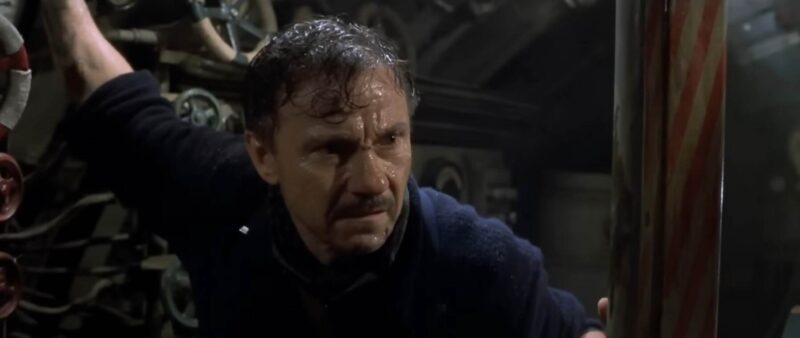
It’s a simplistic approach, but then U-571 is a simplistic film – albeit one not without merit. Mostow is a solid pair of directorial hands, having previously helmed the tense late-90s thriller Breakdown, and he later made the sci-fi action behemoth that is the underrated Terminator 3: Rise of the Machines. He knows how to execute a set-piece, and U-571 employs good production design and practical effects, for the most part, to give the film a sense of sturdiness and place. There’s little wrong with the film on an aesthetic level – the problems are ground up, with a script that ebbs and flows, allows for little solid characterisation of a decent supporting cast (including Harvey Keitel and, no I’m not making this up, Jon Bon Jovi) and weaves a predictable yarn.
In the end, your enjoyment of U-571 depends on whether you can compensate for the wild historical inaccuracy of the whole thing. A quarter of a century on, in a world rapidly losing touch with fact and truth, it’s not something I can easily make peace with.
You can find A J. on social media, including links to his podcasts and books, via Linktr.ee here.