With Weapons in cinemas, 2025 is shaping up to be a banner year for horror. Here’s a possible reason why the genre resonates with audiences: We’re halfway through 2025, and it’s already been a huge year for horror. We’ve had Sinners, Heart Eyes, 28 Years Later and Final Destination Bloodlines, while the past weekend has ... Weapons, and why 2025 is the year horror dominates the box office
With Weapons in cinemas, 2025 is shaping up to be a banner year for horror. Here’s a possible reason why the genre resonates with audiences:
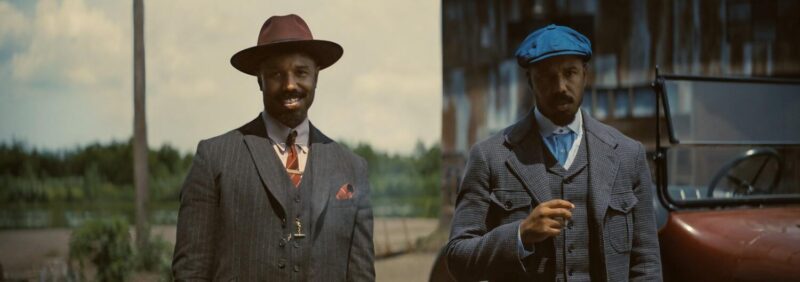
We’re halfway through 2025, and it’s already been a huge year for horror. We’ve had Sinners, Heart Eyes, 28 Years Later and Final Destination Bloodlines, while the past weekend has seen the arrival of director Zach Cregger’s eagerly-awaited Weapons. Meanwhile, Osgood Perkins’ Keeper is still on the way. In fact, if we were to list all the horror movies either out or on the way in 2025, we’d be here for hours.
And, as Sinister and The Black Phone screenwriter C. Robert Cargill pointed out in a June Bluesky post, horror movies have consistently appeared in the top five weekend box office in 2025.
At the time of writing, Sinners is the 12th highest-grossing movie of the year. Final Destination Bloodlines is at number 13; the $70m box office numbers for Weapons suggest it too will be a hit of a similar size.
So in an otherwise uncertain landscape for cinema, why is horror still consistently selling tickets?
The obvious answer is escapism: we all go to the cinema to feel an emotion of some sort. A superhero movie can exhilarate; a comedy should hopefully make us laugh. But sat in the darkness, confronted with a massive screen, cinema’s ideally suited to the fight-or-flight rush of a horror film.
The concept of cinema is quite spooky in itself if you think about it: we’re watching the movements of people months, even years after the fact. When we watch a movie from decades ago, we’re often peering into the faces of the dead. (This last bit was pointed out in a terrific documentary called American Nightmare, released in 2000. If you haven’t seen it, you should watch it. You’ll find it on YouTube.)
Beyond that, though, there’s another reason why horror cinema is so pertinent for us today. It’s a genre that prods at our innermost fears. It takes our nightmares and gives them shape. And what’s more, horror itself has constantly evolved to reflect our present-day anxieties.
In many ways, horror, in more than one sense of the word, is how we react to seismic events. In 1915, months after the outbreak of the First World War, an entire art movement rose up in response to the bloodshed and trauma. Dadaism, a weird collision of performance art, nonsense poetry and automatic writing, was the result. In the face of a world that seemed to be losing its mind, artists decided that irrationality was the only response.
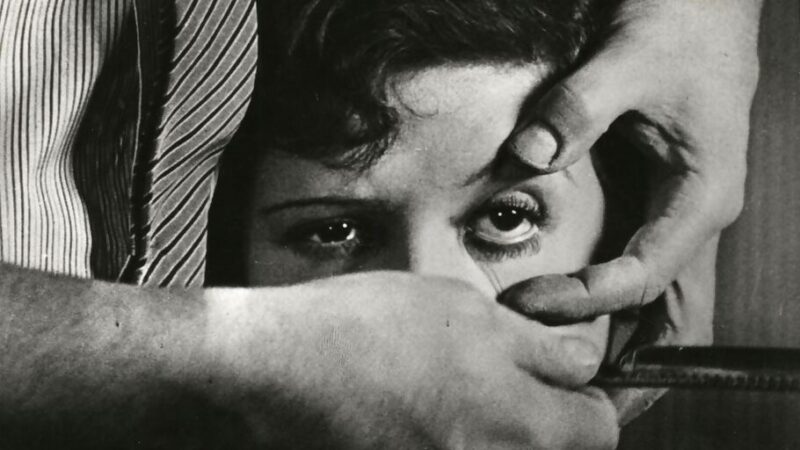
From Dadaism came Surrealism – an art movement that itself had a massive impact on horror. You only have to look at the infamous sliced eye in Luis Bunuel’s Un Chien Andalou for evidence of that.
In the late 1960s, cinema began to respond to an era of the Vietnam War, political assassinations and social upheaval. The genre moved out of the cobwebs and castles of Hammer and Roger Corman’s Poe cycle and into modern tenement buildings and cities. This gave us Rosemary’s Baby. The Exorcist. Night Of The Living Dead. David Cronenberg. John Carpenter. The vast output of Stephen King, including Carrie, The Shining, It, and more besides.
Horror has risen and fallen in popularity over the decades. But even in its 1990s doldrums, it’s always been there, like a background static.
In the 2000s and 2010s, it was the superhero genre that was on the ascendency, providing a sunlit fantasy of how great power could be used for good. Superhero films offered a refuge from the uncertainty of the post-financial crisis and fears of global terrorism. Even now, that’s still true: Superman and The Fantastic Four are bright, colourful and endearing in their positivity. But even here, shadows are creeping in: this year’s Thunderbolts* rested on an undercurrent of horror, its antagonist a traumatised superbeing tormented by his own past.
Today, horror again provides an outlet for our fears in an uncertain world. A world where politicians have no answers, and seemingly no roadmap towards a brighter future. Turn on the news, look at social media, and it’s easy to feel overwhelmed by the churn of events: war, the climate crisis, genocide, rising costs in housing and food, an uncertain job market in the grip of AI fever.

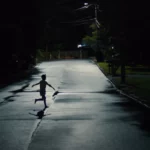
In Weapons (without spoiling things) we see a close-knit suburban community succumb to suspicion and paranoia following an inexplicable nocturnal event. The entire film is riddled with an uncanny sense of fear and uncertainty – as though the safety net of humdrum reality has been ripped away, revealing something awful lying beneath. Whether Cregger intended it to or not, Weapons feels right for 2025, and a planet still processing the pandemic a few short years ago – our own fear and paranoia-inducing event that dropped seemingly out of nowhere.
Ironically, there’s a comfort in turning away from all that and finding solace in a good horror movie. Time and again, we watch characters caught in terrifying situations: cursed by a demonic toy; trapped in a building and surrounded by vampires; pursued by a masked killer.
Often, the protagonists in these films seem powerless, until they find some inner resolve or a cunning means of escape. Or maybe they don’t get out at all; maybe they’ll always be cursed by the haunted toy. Maybe they can’t get away from the killer. In which case, at least we can reassure ourselves that we’re having a better day than they are.
Maybe one day we’ll see a new vision of the future emerge: a collective sense that there’s a positive path forward that includes all of us, not just a handful of the world’s richest people.
Until then, it’s just us, sitting in the dark, alone with our horror.