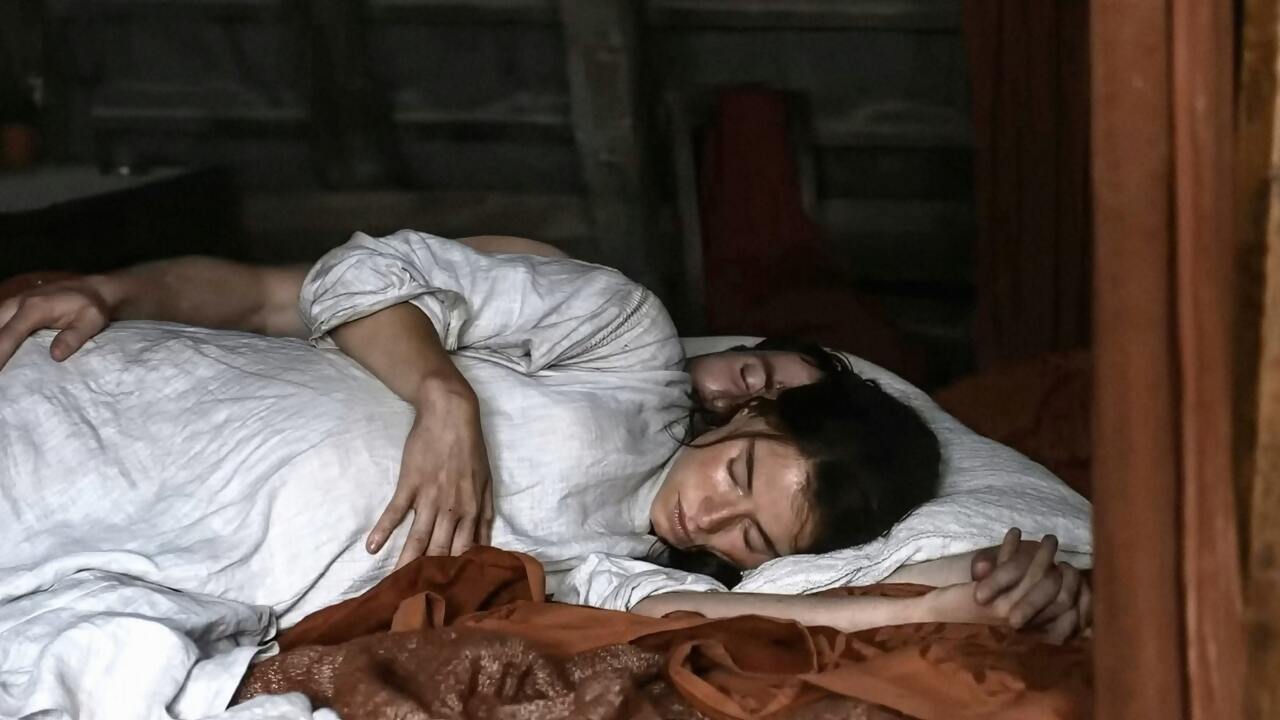
Chloé Zhao’s Hamnet is either emotional, or emotionally manipulative. As it arrives in UK cinemas, we ask if there’s a difference? You’ve stumbled across the Film Stories Newsletter! To get this sort of thing in your inbox every Friday, subscribe here. Hello! And a happy new year to all and sundry. The air bites shrewdly; ... Hamnet will make you cry, so it must be cheating
Chloé Zhao’s Hamnet is either emotional, or emotionally manipulative. As it arrives in UK cinemas, we ask if there’s a difference?
You’ve stumbled across the Film Stories Newsletter! To get this sort of thing in your inbox every Friday, subscribe here.
<div class="klaviyo-form-Vsf8Ad"></div>Hello!
And a happy new year to all and sundry. The air bites shrewdly; it is very cold, and Hamnet (not to be confused with Hamlet, or, indeed, Robert Eggers’ The Northman) arrives in cinemas with a cry. Several cries, in fact. But how do we draw the line between “emotional manipulation” and, er, a good film? We’ve stopped blubbing just long enough to find out.
PLUS: Why not make it your New Year’s resolution to support indie print mags? Get the latest issue of Film Stories magazine, featuring Rowan Athale’s Giant on the cover – also in cinemas today. 168 pages can’t all be wrong.
TELL ME THE NEWS IN FIVE(ISH) LINES
Hamnet enters, stage left, into UK cinemas. Read our review.
Warner Bros. rejects Skydance’s latest acquisition offer. Face it, Paramount, she’s just not that into you…
JJ Abrams’ next film re-titled The Great Beyond. Still space-y, presumably.
The James Bond rumour mill continues to Turner. Callum Turner.
Join us in Birmingham for a Q&A screening of Ben Wheatley’s new film! It’ll be dead dead good, we promise.
Based on a true story
It started out with a sniffle. Then a sob. The splash of a tear in a large Diet Coke.
Soon, the entire screening was at it. Damp carpets would need cleaning with one of those fancy vacuums for slurping up water. Seat mechanisms would need inspecting for rust. Soggy floorboards would need to be replaced. And the worst was yet to come.
Ushers begged for calm as tears swirled around their ankles. A man clambered to sit on his headrest, saving his suede shoes even as tears poured from his eyes like leaks in a Yorkshire Water pipe.
As the water level rose, the venue staff gave in to the inevitable. The doors opened, and a wave of salty tears gushed, The Impossible-like, into the foyer of the Royal Festival Hall. A woman, swept along by the current, appeared not to notice as she blew her nose into a Jessie Buckley t-shirt.
Punters clamoured at the pay phones, switchboards overwhelmed with calls to estranged relatives. Mothers called sons; cousins called aunts; cats called dogs. All were near-unintelligible, so choked up they were by the story they’d seen over the last two hours. Others, dehydrated and shrivelled like so many walking sultanas, simply collapsed on the pavement outside as kind strangers doused them with Lucozade Sport.
Chloé Zhao’s Hamnet, if the reception to its UK premiere last year was anything to go by, was a hit. Obviously, with three months to go before its arrival in cinemas proper, it couldn’t stay that way for long.

Cry me a river
If all the folks who’ve seen it can agree on one thing, it’s that Hamnet will make you cry. Based on Maggie O’Farrell’s 2020 bestseller (she co-wrote the screenplay alongside Zhao), the film gives a semi-fictionalised account of the events leading up to the creation of William Shakespeare’s similarly named masterpiece. Will (Paul Mescal) falls in love, star-crossed style, with the woodsy, hawk-summoning Agnes (Jessie Buckley). She gives birth to twins, Judith and Hamnet. Hamnet, it’s no spoiler to say, dies. Attempting to come to terms with his grief, Will starts to work on a new play…
See, everyone told you it was sad.
What people might also have been telling you is that this is a bad thing. Or, not bad, per se, but that Hamnet doesn’t make you cry fairly; that it’s, to borrow a phrase I hate with a passion when applied to any kind of entertainment, “emotionally manipulative”. Less It’s A Wonderful Life (which makes you cry properly) and more Marley & Me (which, apparently, is cheating. I blame the dog). Whichever side of the line you fall on will depend, as far as I can see, on whether you think Hamnet is good or not.
Because almost as long as we’ve been sobbing at screens, we’ve been worried about why. The history of the “weepie” has been tied up with the rather dated idea of the “women’s picture” or, in more recent times, “the chick flick”. Post-WWII, the melodrama (Brief Encounter (1945), How Green Was My Valley (1941)) fell out of fashion with critics, if not always with audiences. Cue Love Story (1970), the birth of the modern rom-com, and 21st century offerings like The Fault In Our Stars (2014) and We Live In Time (2024).
Historically dismissed as “chick flicks” (targeting women with silly things like love and death, instead of serious topics like spandex and exploding helicopters), critical dismissal hasn’t done much to dent the genre’s popularity at the box office. It’s even, in the case of more securely commercial offerings, achieved something of a critical hall pass; it’s why a film like the latest Pixar offering is generally judged using tear-inducing as an entirely positive metric. Few would call Bridget Jones: Mad About The Boy (2025) “emotionally manipulative” because, just as The Naked Gun (2025) is designed to make you laugh or F1 (2025) is supposed to thrill you, that’s obviously the point.

Read more: Hot Pursuit | Revisiting a half-forgotten teen comedy from the director of Tron
The science bit
But while blockbusters are now more able to wear their emotional intentions on their sleeves, Hamnet has the unfortunate problem of falling between two stalls. As awards bodies have increasingly moved away from big box office (or, probably more accurately, the box office has moved away from the awards bodies) each year’s Oscar hopefuls inevitably have a more “arthouse” sensibility than they used to. For whatever reason, that means they’re usually judged by different standards. Big emotions and bold intention are (to massively overgeneralise) judged more harshly than subtlety and nuance.
It’s the difference, maybe, between a filmmaker telling you how to feel, and one telling you how they feel. It’s a problem Zhao, who has brought her unflinchingly indie aesthetic now to two more mass-market films (Eternals being the first), seems to be more vulnerable to than most. Hamnet looks like a MUBI movie, but plays with emotions like Shakespeare In Love. It’s exactly the sort of film an increasingly binary blockbusters vs good movies discourse is ill-equipped to discuss.
Especially when, scientifically, exactly the same thing is going on in your brain whether you’re watching Aftersun (2022) or Titanic (1997). The production of oxytocin (“the love hormone”), designed to produce empathy and social cohesion, has the funky side-effect of supercharging our own emotional state – hence why watching someone else go through the emotional wringer does the same thing to us, whether we know the person is real or not.
“For a lot of people, our emotional brains struggle telling reality from fantasy,” psychologist Dr Audrey Tang told The Independent in 2022. “So even though we know logically we’re in front of a [screen], we are connecting with the emotions of the characters.”
In other words, if we’re crying at a film, it’s because we’re empathising with the characters. If there’s a line to be drawn here between manipulation and a film doing its job, science hasn’t found it – and neither, to a much less impressive extent, have I.