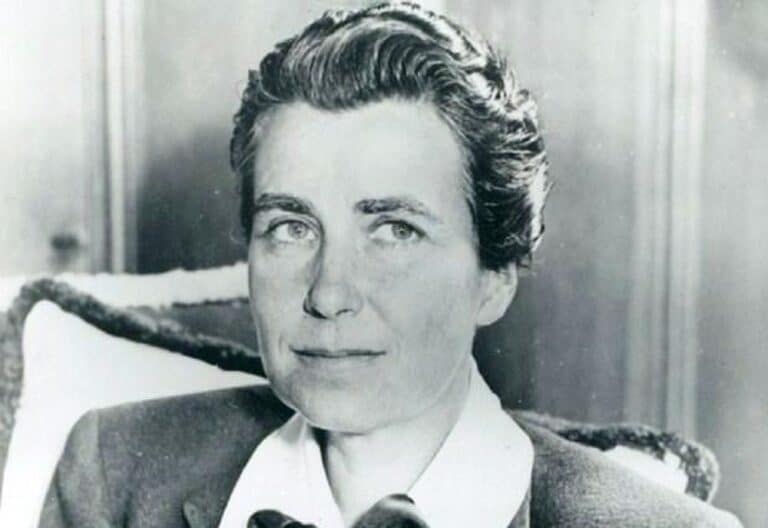
In our regular look at old cinema a salute to the groundbreaking work of female film director Dorothy Arzner, whose first film debuted in the 1920s. Welcome back to the column where we chat about really old films. Personally, I often think that my voyage into ‘pre-code’ movies started with Dr Jekyll And Mr Hyde last ... Old movies: a salute to cinematic pioneer Dorothy Arzner
In our regular look at old cinema a salute to the groundbreaking work of female film director Dorothy Arzner, whose first film debuted in the 1920s.
Welcome back to the column where we chat about really old films. Personally, I often think that my voyage into ‘pre-code’ movies started with Dr Jekyll And Mr Hyde last year, sending me into the rabbit hole that helped me through lockdown.
That isn’t quite true, however. Nearly a year earlier, during a film nerd pilgrimage to Los Angeles, I visited the acclaimed New Beverly Cinema for a double bill. Having randomly picked the night, wishing to visit the cinema at any cost, I settled in to watch Clara Bow flirt with teacher Fredric March in The Wild Party (1929) whilst Judith Wood and Dorothy Hall tried to get jobs in Working Girls (1931)
 Over the course of her filmmaking career, spanning 1927 to 1934, Dorothy Arzner would only direct twenty films. Her films are fantastic studies of the female experience, from jilted wives to women who refuse to play in the games of men.
Arzner would be celebrated for producing films where it was seen from the female perspective, criticising the sexism of the era and the female need for performance in society. She would criticise heterosexual marriage whilst also offer a new fluid outlook on love and life, subverting the depictions of women and their friendship.
These themes are best shown in three major Arzner films; Merrily We Go to Hell (1932,) Christopher Strong (1933,) and Dance, Girl, Dance (1943).
A marriage is tested in Merrily We Go to Hell, a film with a title apparently so racy that newspapers refused to publish it.
Based on a play by Cleo Lucas (titled I Joan, Take Thee Jerry,) Merrily We Go to Hell, sees the charming heiress Joan meet writer Jerry at a party. They fall in love and get married quickly but soon Joan discovers that Jerry is not easy work. After all, he is a known alcoholic and adulterer.
When Joan finds out about Jerry’s betrayal, she doesn’t whimper or cry. Instead, she decides to play him at his own game – announcing that she is going to have an affair also.
Merrily We Go to Hell showcases the strength of female characters within the pre-code era. Joan could have easily been just the betrayed spouse, yet she absolutely doesn’t.
On an unrelated note: the guy she has an affair with is the brilliant Cary Grant in one of his first film roles. Luckily, this May, Merrily We Go to Hell is getting a Criterion Collection disc release in the US.
Katherine Hepburn and Colin Clive are centre stage for Arzner’s 1933 romantic drama Christopher Strong. The film sees the titular character (Clive) fall in love with Lady Cynthia Darrington (Hepburn,) a pilot who has never had a love affair. Despite being married, Strong falls in love with Darrington and she falls desperately in love with him. The film boasts an incredible and memorable moth costume by Walter Plunkett and a dramatic score by Max Seiner. However, it’s more notable for the way Strong’s wife Elaine forgives Cynthia for the affair towards the end of the film. The moment could’ve easily been portrayed as bitter rivals, sparring over one man. Yet it is a tender moment that, despite the tragic end of the film, resonates long after watching.
Over the course of her filmmaking career, spanning 1927 to 1934, Dorothy Arzner would only direct twenty films. Her films are fantastic studies of the female experience, from jilted wives to women who refuse to play in the games of men.
Arzner would be celebrated for producing films where it was seen from the female perspective, criticising the sexism of the era and the female need for performance in society. She would criticise heterosexual marriage whilst also offer a new fluid outlook on love and life, subverting the depictions of women and their friendship.
These themes are best shown in three major Arzner films; Merrily We Go to Hell (1932,) Christopher Strong (1933,) and Dance, Girl, Dance (1943).
A marriage is tested in Merrily We Go to Hell, a film with a title apparently so racy that newspapers refused to publish it.
Based on a play by Cleo Lucas (titled I Joan, Take Thee Jerry,) Merrily We Go to Hell, sees the charming heiress Joan meet writer Jerry at a party. They fall in love and get married quickly but soon Joan discovers that Jerry is not easy work. After all, he is a known alcoholic and adulterer.
When Joan finds out about Jerry’s betrayal, she doesn’t whimper or cry. Instead, she decides to play him at his own game – announcing that she is going to have an affair also.
Merrily We Go to Hell showcases the strength of female characters within the pre-code era. Joan could have easily been just the betrayed spouse, yet she absolutely doesn’t.
On an unrelated note: the guy she has an affair with is the brilliant Cary Grant in one of his first film roles. Luckily, this May, Merrily We Go to Hell is getting a Criterion Collection disc release in the US.
Katherine Hepburn and Colin Clive are centre stage for Arzner’s 1933 romantic drama Christopher Strong. The film sees the titular character (Clive) fall in love with Lady Cynthia Darrington (Hepburn,) a pilot who has never had a love affair. Despite being married, Strong falls in love with Darrington and she falls desperately in love with him. The film boasts an incredible and memorable moth costume by Walter Plunkett and a dramatic score by Max Seiner. However, it’s more notable for the way Strong’s wife Elaine forgives Cynthia for the affair towards the end of the film. The moment could’ve easily been portrayed as bitter rivals, sparring over one man. Yet it is a tender moment that, despite the tragic end of the film, resonates long after watching.

 In 1943, Arzner would direct her most famed work, Dance, Girl, Dance (pictured) featuring Maureen O’Hara and Lucille Ball as two spatting dancers and friends.
At the heart of it is the complicated and intricate relationship between women who try desperately to not let men come between them. Especially when they are under the eye of objectification which Dance, Girl, Dance reprimands.
Towards the end of the movie, O’Hara’s character Judy berates the leering men of the audience who the women have had to endure for the majority of the film. The pair wish to dance but their careers are subject to their sexuality and when Judy denies their degradation, it is a powerful, poignant moment within the film.
The sense of female community can be found in most of Arzner’s work such as Craig’s Wife (1936) and Anybody’s Woman (1930)
Her last film was American war film First Comes Courage in (1932,) which saw Merle Oberon as a Norwegian resistance rebel who falls in love with a Nazi commandant.
It’s often speculated that Arzner retired due to a lack in success in her later films. Others would argue that the implementation of the “moralistic” Hays Code and rampant homophobia of the era would cause Arzner to leave the industry. Whilst it’s never really known why she stopped directing, instead creating films for the Women’s Army Corp, it is said she lived happily with her life-partner Marion Morgan until her death in 1979.
To this day Arzner still feels like a renegade and has been celebrated through the industry as a pioneer of women in film Arzner’s work is groundbreaking but also fun, sexy, deep, profound, and always brilliantly shot. Arzner was the only women working in the industry and an open lesbian (who is rumoured to have had an affair with both Joan Crawford and Katherine Hepburn.)
Arzner produced some of the most successful pre-code films of all time (and the sexiest eleven seconds in cinematic history.) Her fantastically feminist films must be seen by all because they established themes and outlooks that feel new even today. Plus her filmography is a great place to start with pre-code films!
You can read more about Arzner and the women of Hollywood in O’Hara’s new book, which is out in hardback now.
—
Thank you for visiting! If you’d like to support our attempts to make a non-clickbaity movie website:
Follow Film Stories on Twitter here, and on Facebook here.
Buy our Film Stories and Film Stories Junior print magazines here.
Become a Patron here.
/**/
In 1943, Arzner would direct her most famed work, Dance, Girl, Dance (pictured) featuring Maureen O’Hara and Lucille Ball as two spatting dancers and friends.
At the heart of it is the complicated and intricate relationship between women who try desperately to not let men come between them. Especially when they are under the eye of objectification which Dance, Girl, Dance reprimands.
Towards the end of the movie, O’Hara’s character Judy berates the leering men of the audience who the women have had to endure for the majority of the film. The pair wish to dance but their careers are subject to their sexuality and when Judy denies their degradation, it is a powerful, poignant moment within the film.
The sense of female community can be found in most of Arzner’s work such as Craig’s Wife (1936) and Anybody’s Woman (1930)
Her last film was American war film First Comes Courage in (1932,) which saw Merle Oberon as a Norwegian resistance rebel who falls in love with a Nazi commandant.
It’s often speculated that Arzner retired due to a lack in success in her later films. Others would argue that the implementation of the “moralistic” Hays Code and rampant homophobia of the era would cause Arzner to leave the industry. Whilst it’s never really known why she stopped directing, instead creating films for the Women’s Army Corp, it is said she lived happily with her life-partner Marion Morgan until her death in 1979.
To this day Arzner still feels like a renegade and has been celebrated through the industry as a pioneer of women in film Arzner’s work is groundbreaking but also fun, sexy, deep, profound, and always brilliantly shot. Arzner was the only women working in the industry and an open lesbian (who is rumoured to have had an affair with both Joan Crawford and Katherine Hepburn.)
Arzner produced some of the most successful pre-code films of all time (and the sexiest eleven seconds in cinematic history.) Her fantastically feminist films must be seen by all because they established themes and outlooks that feel new even today. Plus her filmography is a great place to start with pre-code films!
You can read more about Arzner and the women of Hollywood in O’Hara’s new book, which is out in hardback now.
—
Thank you for visiting! If you’d like to support our attempts to make a non-clickbaity movie website:
Follow Film Stories on Twitter here, and on Facebook here.
Buy our Film Stories and Film Stories Junior print magazines here.
Become a Patron here.
/**/
OUR BEST EVER SUBSCRIPTION OFFER!
Try three issues of Film Stories magazine – for just £4.99: right here!

This is where I discovered cinematic pioneer Dorothy Arzner, who is now my idol. To celebrate the release of Helen O’Hara’s book Women vs Hollywood, I thought I’d do a small ode to my favourite filmmaker. However much I write, though, it would never be enough to convey how incredible and pivotal Arzner was in cinema.
Though born in San Francisco in 1897, Arzner was raised in Los Angeles where she would grow up surrounded by the Hollywood elite at her parent’s restaurant. It seems that Arzner was born with cinema in her blood and whilst she wanted initially to be a surgeon, she moved into the film industry during World War I.
Arzner would become prominent in silent movies, writing and editing them. However, it was really The Wild Party (1929) that launched Arzner into the mainstream. The film follows a young college student who starts an illicit affair with her hot teacher. The Wild Party was a groundbreaking movie for many reasons; Arzner’s debut sound film was also silent sweetheart Clara Bow’s first talkie. As Bow struggled with the bulky sound equipment, Arzner would, instead, strap a microphone to a pole to follow Bow around, thus inventing the boom mic.
It was also Fredric March’s first leading role, playing the teacher to Bow’s amorous student. Arzner would direct March again in Sarah And Her Son (1930, with Ruth Chatterton,) Honor Among Lovers (1931 with Claudette Colbert, which I spoke heavily about last week) and Merrily We Go to Hell (1932 with Sylvia Sidney).
Over the course of her filmmaking career, spanning 1927 to 1934, Dorothy Arzner would only direct twenty films. Her films are fantastic studies of the female experience, from jilted wives to women who refuse to play in the games of men.
Arzner would be celebrated for producing films where it was seen from the female perspective, criticising the sexism of the era and the female need for performance in society. She would criticise heterosexual marriage whilst also offer a new fluid outlook on love and life, subverting the depictions of women and their friendship.
These themes are best shown in three major Arzner films; Merrily We Go to Hell (1932,) Christopher Strong (1933,) and Dance, Girl, Dance (1943).
A marriage is tested in Merrily We Go to Hell, a film with a title apparently so racy that newspapers refused to publish it.
Based on a play by Cleo Lucas (titled I Joan, Take Thee Jerry,) Merrily We Go to Hell, sees the charming heiress Joan meet writer Jerry at a party. They fall in love and get married quickly but soon Joan discovers that Jerry is not easy work. After all, he is a known alcoholic and adulterer.
When Joan finds out about Jerry’s betrayal, she doesn’t whimper or cry. Instead, she decides to play him at his own game – announcing that she is going to have an affair also.
Merrily We Go to Hell showcases the strength of female characters within the pre-code era. Joan could have easily been just the betrayed spouse, yet she absolutely doesn’t.
On an unrelated note: the guy she has an affair with is the brilliant Cary Grant in one of his first film roles. Luckily, this May, Merrily We Go to Hell is getting a Criterion Collection disc release in the US.
Katherine Hepburn and Colin Clive are centre stage for Arzner’s 1933 romantic drama Christopher Strong. The film sees the titular character (Clive) fall in love with Lady Cynthia Darrington (Hepburn,) a pilot who has never had a love affair. Despite being married, Strong falls in love with Darrington and she falls desperately in love with him. The film boasts an incredible and memorable moth costume by Walter Plunkett and a dramatic score by Max Seiner. However, it’s more notable for the way Strong’s wife Elaine forgives Cynthia for the affair towards the end of the film. The moment could’ve easily been portrayed as bitter rivals, sparring over one man. Yet it is a tender moment that, despite the tragic end of the film, resonates long after watching.
In 1943, Arzner would direct her most famed work, Dance, Girl, Dance (pictured) featuring Maureen O’Hara and Lucille Ball as two spatting dancers and friends.
At the heart of it is the complicated and intricate relationship between women who try desperately to not let men come between them. Especially when they are under the eye of objectification which Dance, Girl, Dance reprimands.
Towards the end of the movie, O’Hara’s character Judy berates the leering men of the audience who the women have had to endure for the majority of the film. The pair wish to dance but their careers are subject to their sexuality and when Judy denies their degradation, it is a powerful, poignant moment within the film.
The sense of female community can be found in most of Arzner’s work such as Craig’s Wife (1936) and Anybody’s Woman (1930)
Her last film was American war film First Comes Courage in (1932,) which saw Merle Oberon as a Norwegian resistance rebel who falls in love with a Nazi commandant.
It’s often speculated that Arzner retired due to a lack in success in her later films. Others would argue that the implementation of the “moralistic” Hays Code and rampant homophobia of the era would cause Arzner to leave the industry. Whilst it’s never really known why she stopped directing, instead creating films for the Women’s Army Corp, it is said she lived happily with her life-partner Marion Morgan until her death in 1979.
To this day Arzner still feels like a renegade and has been celebrated through the industry as a pioneer of women in film Arzner’s work is groundbreaking but also fun, sexy, deep, profound, and always brilliantly shot. Arzner was the only women working in the industry and an open lesbian (who is rumoured to have had an affair with both Joan Crawford and Katherine Hepburn.)
Arzner produced some of the most successful pre-code films of all time (and the sexiest eleven seconds in cinematic history.) Her fantastically feminist films must be seen by all because they established themes and outlooks that feel new even today. Plus her filmography is a great place to start with pre-code films!
You can read more about Arzner and the women of Hollywood in O’Hara’s new book, which is out in hardback now.
—
Thank you for visiting! If you’d like to support our attempts to make a non-clickbaity movie website:
Follow Film Stories on Twitter here, and on Facebook here.
Buy our Film Stories and Film Stories Junior print magazines here.
Become a Patron here.
/**/