It took a long time for Sean Connery to agree to make Highlander II: The Quickening – and even then, his appearance came with a few challenges. In the book that lists all of the great movie sequels, you’d need a good pair of glasses to find a reference to Highlander II: The Quickening. It ... Highlander II: The Quickening, and Sean Connery’s contract restrictions
It took a long time for Sean Connery to agree to make Highlander II: The Quickening – and even then, his appearance came with a few challenges.
In the book that lists all of the great movie sequels, you’d need a good pair of glasses to find a reference to Highlander II: The Quickening. It was a film so messed around by financiers that its director, Russell Mulcahy, walked out of its premiere. Its reviews were hostile to the point of declaring it one of the worst ever made. Even its fans admit that it’s, well, ‘troubled’.
One or two alternate cuts have since tried to repair some of the damage made to the 1991 sequel, but it remains a tough film to love.
It was also a brutally difficult film to make. Among all its difficulties, it’s worth zeroing in on the challenges both of luring Sean Connery – arguably the original film’s highest-profile star – back for the sequel, and then the further pressures when he arrived on set.
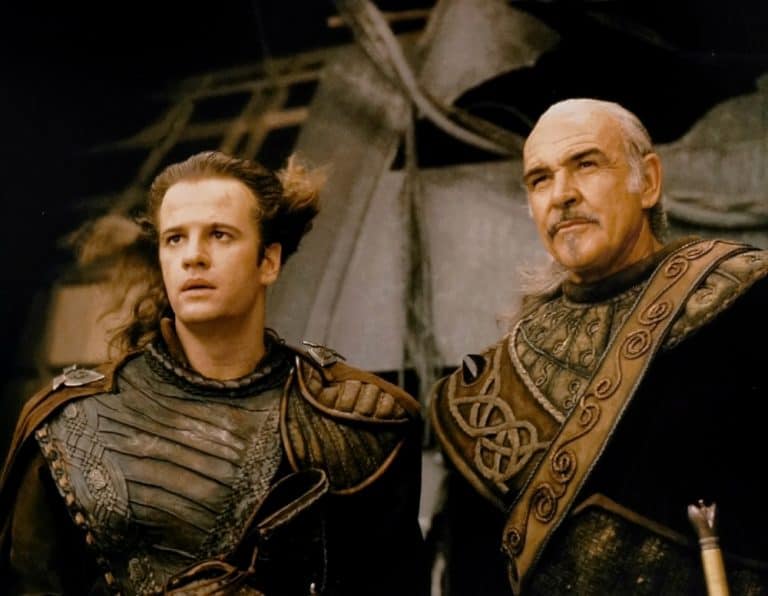
The original, 1986 film featured 18 minutes of Connery in the role of the immortal Ramirez, and it was something of a coup to get him involved (appreciating his latest career revival at that stage was still a couple of years off). Christopher Lambert took the lead, though on its release, Mulcahy’s film wasn’t a big hit. A $19m production budget returned $12.9m at the box office. There was little appetite for a sequel.
But then word of mouth spread, and the movie became a sizeable video success. To the point where a sequel not only was coming together, but a handsome budget of over $30m was to be spent on it (although the original plan was around $22m).
Christopher Lambert and Russell Mulcahy both agreed to return as star and director, but to raise the money and to keep the film’s global appeal, the backers knew that Sean Connery was needed, too. An offer went out to him, but he hardly bit their hand off.

After a year of script revision work, and a lot of toing and froing over the screenplay, Connery would – as Film Review magazine reported back in October 1990 – sign his contract after 30 weeks of will he/won’t he. He’d been unhappy for some time about the lack of humour in early drafts, and it took a lot of work to get him to a point where he would commit. But commit he eventually did.
Some of the crew were a bit nervous too. Connery by reputation was never one to suffer fools gladly, and the fact that the movie was having to shoot far away in Argentina wasn’t going to help. It wasn’t Mulcahy’s first choice of location, and it caused the production no end of problems when the exchange rate of local currencies fluctuated wildly against the American dollar during production.
“It got to the point where banks closed for five days, and no retailer would sell us vital raw materials because the price could double tomorrow,” production designer Roger Hall said at the time.
Connery eventually signed a contract worth $3m in exchange for just two weeks of filming time. That was their lot. Mulcahy assembled a core crew of British and American technicians for the shoot (who would have an idea what to expect from the star), but also knew that Connery would only work 12 hours a day under the regulations imposed by local filmmaking authorities.


To maximise his time, a helicopter was therefore hire at extra expense to cut out the two hour drive he’d otherwise have to do every day to get to the location. All concerned knew that they needed to get at least 20 minutes of Connery into the final cut of the film for that $3m price tag. Some feat that was going to be, with just two weeks of filming time on a complex sci-fi action film.
But it was a target that absolutely had to be hit, for this was a condition when Highlander II was pre-sold to overseas distributors. Connery’s name had, in short, been used to get a chunk of the sequel’s production budget. That said, the production team hedged their bets by employing the services of Rocky Taylor, Connery’s regular stunt double. The plan being to get a further ten minutes of footage that way.
It was difficult, but work got underway. Yet something of a disaster meant that extra expenditure was suddenly required. A crane shot involving Connery – a complex setup – was filmed and processed, only to come back damaged: a scratch on the negative rendered it completely unusable. That whole shot thus had to be set up and done again, with the already tired crew’s day off cancelled one Sunday. Fortunately, in the end, an insurance company agreed to cough up the funds for the reshoot.
Connery also agreed to work for free one day to get a particular speech in the can. In fact, Mulcahy would go on, in the aforementioned Film Review piece, to say that Connery was a lot more fun to work with on the second film than he was on the first (having won his Oscar for The Untouchables between the two movies). Some crew members had still been nervous about working with Connery, and on his first day, there was reportedly a lot of tiptoeing about. One crew member was apparently so keen to make a good impression with the actor that she ended up calling him “his Sean-ness”.
Connery for his part would insist that “anybody who’s professional has no problems with me,” and that was soon borne out. He and Lambert in particular were said to have got on very well.
But in spite of jumping through the assorted hoops to get Connery involved – and to get the movie itself completed in testing circumstances – the film itself stumbled. The box office returns, following the bloating of the budget and the critical evisceration of the movie, were below expectations. It’d cover its costs over time, but only just.
This time, though, there was an olive branch for Highlander, in the shape of a television show that earned far more acclaim and a lot more audience success, which debuted in 1992. It also re-ignited the franchise, and to this day, chatter continues of even more films to go with the six made to date (a reboot has been in development hell for years, and is now finally getting going under the eye of John Wick filmmaker Chad Stahelski).
As for Connery, his time in Argentina marked the end of his involvement in the Highlander franchise. A final fun fact: Ramirez would remain the only character – outside of James Bond – that he played more than once on the big screen.
A version of this article originally appeared on Film Stories in 2020.
—
Thank you for visiting! If you’d like to support our attempts to make a non-clickbaity movie website:
Follow Film Stories on Twitter here, and on Facebook here.
Buy our Film Stories and Film Stories Junior print magazines here.
Become a Patron here.
See one of our live shows, details here.
/**/