There’s no crossover between David Cronenberg’s 1996 Crash and the 2004 Crash – except the latter adopted the same title, and there was little Cronenberg could do about it. While David Cronenberg’s 1996 movie Crash became known in the UK in part for the huge Daily Mail campaign against it, the psychological thriller always had ... When David Cronenberg found out there was another movie called Crash coming out
There’s no crossover between David Cronenberg’s 1996 Crash and the 2004 Crash – except the latter adopted the same title, and there was little Cronenberg could do about it.
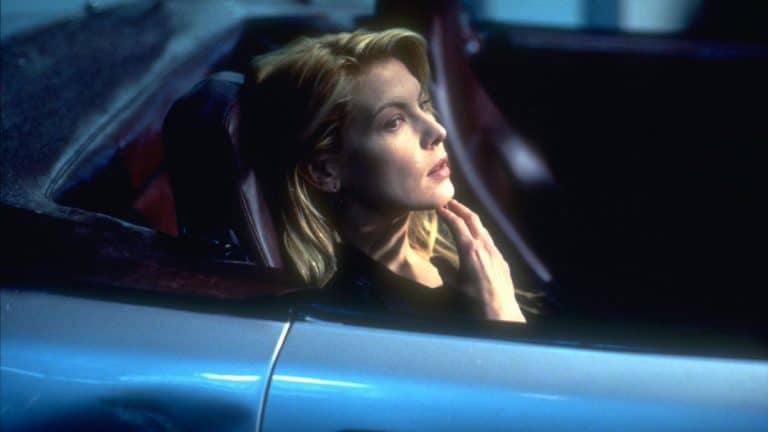
While David Cronenberg’s 1996 movie Crash became known in the UK in part for the huge Daily Mail campaign against it, the psychological thriller always had a lot more to it than tabloid attacks. It didn’t stop both newspapers such as the Mail and the Evening Standard campaigning to have the movie banned in the UK, yet their joint efforts were ultimately unsuccessful. If anything, they raised the movie’s profile, not to mention the JG Ballard book on which it was based.
My colleague Ryan Lambie has long been a huge fan of Cronenberg’s work, and when I alerted him to the Arrow Blu-ray release a few years ago, he in turn alerted me to a war of words that emerged over the film’s title.
Unsurprisingly, it bubbled up over another high-profile film, also called Crash.
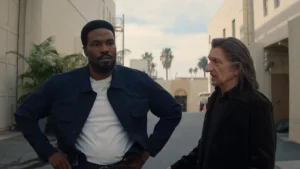
Writer-director Paul Haggis, in 2004, released his ensemble drama Crash, completely unrelated to Cronenberg’s movie and Ballard’s text. There was nothing to stop him using the title, with there being nothing in US copyright law to prevent such a situation.
(The Motion Picture Association does, however, have its own rules in place, where a film that shares the same name as another piece of filmed entertainment could be denied an age rating or a screening in US cinemas. Hence the existence of such things as Lee Daniels’ The Butler or Lee Cronin’s The Mummy.)

Similar laws and conventions are in place around the planet. As such, were I to come up with a new movie script and entitled the film Once Upon A Time In Hollywood here in the UK, I could just about get away with it
What I couldn’t do was mirror Tarantino’s film of the same name, or in any way use its identity or similarity to its promotional materials to sell my masterpiece. And the biggest risk in using a film title that’s already known to audiences is it rarely tends to help your own project. Instead, it’s likely to confuse audiences if anything.
There’s often cited a glorious case of Warner Bros getting antsy in the 1940s when the Marx Brothers put together A Night In Casablanca, and when pushed by the studio Groucho Marx questioned the studio’s right to use ‘Warner Bros’, pointing out “professionally we were brothers long before you were”. Legend has changed the story over the years, and it’s worth reading the Snopes fact check article on it here.
But back to the story in hand. Haggis was, ultimately, able to press ahead with calling his own movie Crash, and there was precious little anyone could do to stop him doing so. His was going to be an entirely different film, with no crossover – outside of the title – with the earlier movie. There are many other examples, of course. The Keanu Reeves-headlined bomb on a bus action thriller Speed from 1994 has little to do with the 1936 film of the same name, which stars James Stewart as a mechanic trying to develop a new carburettor.
That said, David Cronenberg was mightily pissed off when he heard about it (the name of Paul Haggis’ film, not Speed or Stewart’s car). And there was none of that having a quiet word behind the scenes about his response, either. He called it out, and he called it out publicly. I’m grateful to the website Ballardian for pulling together the quotes.

Suggested product
Issue #61 (Horror Special): Magazine + Signed Ben Wheatley F&TT&N: Issue #4 (Reprint)
£14.99

“I thought it was very disrespectful”, he was quoted as saying in the New York Post. “Not just to me, but to J G Ballard who wrote the book Crash in 1973, which is very famous.”
He went on to point out that in France, the name of Haggis’ film had to change (to Collision), due to the “reverence for that book and for my movie”.
Cronenberg added in the same article, “I don’t know how I would react if I met Paul Haggis. He’s also Canadian. You know, we’re basically peaceful people, but there was the fur trade, and it got nasty”.
Crikey.

It’s unknown whether Cronenberg and Haggis ever met up to have talk about the title, but it would have been fascinating to be the proverbial (Brundle) fly on the wall if such a conversation did take place.
Cronenberg, meanwhile, did consider legal action against Haggis’ decision – the story being that Haggis couldn’t come up with another name for his film – but he seemed to accept in an interview with Slate that it was all a bit moot.
“The last thing a creative person wants is litigation, which is anti-creative,” he argued. But he was still sore about the matter, not incorrectly arguing that two films called Crash side by side when they got to the DVD shelves was going to cause a confusion.
Crash, of course, would go on to – surprisingly – win the Best Picture Oscar in 2005. While it’s a film that has its fans, that it prevailed over films such as Brokeback Mountain, Munich, Good Night And Good Luck and Capote remains something of an upset. If you’re interested in Haggis’ film, it’s worth reading Thandiwe Newton’s superb Vulture interview, where she reflects less than favourably on her experience making the movie.
As for Cronenberg’s film? It may have failed to trouble the Academy Awards, but it escaped censorship in the UK, and in 2020, it got the kind of deluxe catalogue disc treatment that the other Crash – to date – still hasn’t. You can buy it on regular Blu-ray, but all these years later, there’s no sign of a 4K release. A little victory, there, for Cronenberg perhaps.
/**/