Jared Leto was pivotal in getting Tron: Ares made, but it seems he also had the script changed to turn his minor villain role into its new hero… NB: The following contains one or two spoilers for Tron: Legacy and Tron: Ares. Actor Evan Peters summed up Tron’s on-again, off-again franchise status in an off-the-cuff ... Tron: Ascension | The shelved Legacy sequel and the Quorra story we never got
Jared Leto was pivotal in getting Tron: Ares made, but it seems he also had the script changed to turn his minor villain role into its new hero…
NB: The following contains one or two spoilers for Tron: Legacy and Tron: Ares.
Actor Evan Peters summed up Tron’s on-again, off-again franchise status in an off-the-cuff remark earlier in October. When asked whether he was likely to appear in a sequel to this autumn’s Tron: Ares – reprising his role as the villainous Julian Dillinger – Peters simply said, “We’ll see in 20 years if that pans out.”
He’s referring, of course, to the vast 28 year gap between the original Tron, released in 1982, and its first sequel Tron: Legacy, which came out in 2010. But then this year’s second sequel, director Joachim Ronning’s Tron: Ares, has taken a full 15 years to get to the large screen – a gulf of time which has seen the rise and fall of five British Prime Ministers.
The moribund box office for Tron: Ares suggests that Peters may well be right: it’s likely to be some time before Disney revisits the digital realm of the Grid again, at least on this scale. But as the dust settles on this latest Tron outing, it’s worth remembering that Tron: Legacy almost got a sequel almost a decade ago – and that, over time, it was actor Jared Leto himself who transformed the project into one that gave him a starring role.
Directed with an architect’s eye for clean lines by Joseph Kosinski, 2010’s Tron: Legacy was a sympathetic updating of the first film. The original Tron, written and directed by Steven Lisberger, was a sci-fi fantasy about a counter-culture programmer, Kevin Flynn (Jeff Bridges) turning the tables on his corporate masters and transforming the dystopian virtual world of the Grid into a utopia.
The 2010 sequel explored how the Boomer generation’s idealistic vision for an interconnected future – as represented by a now older Flynn – had run out of control. Flynn’s obsession with creating a perfect digital frontier resulted in the creation of CLU – a digital being (or Program) who takes over the Grid, commits genocide against a new race of artificial lifeforms (the isomorphic algorithms, or ISOs) and rules the place like a despotic emperor.
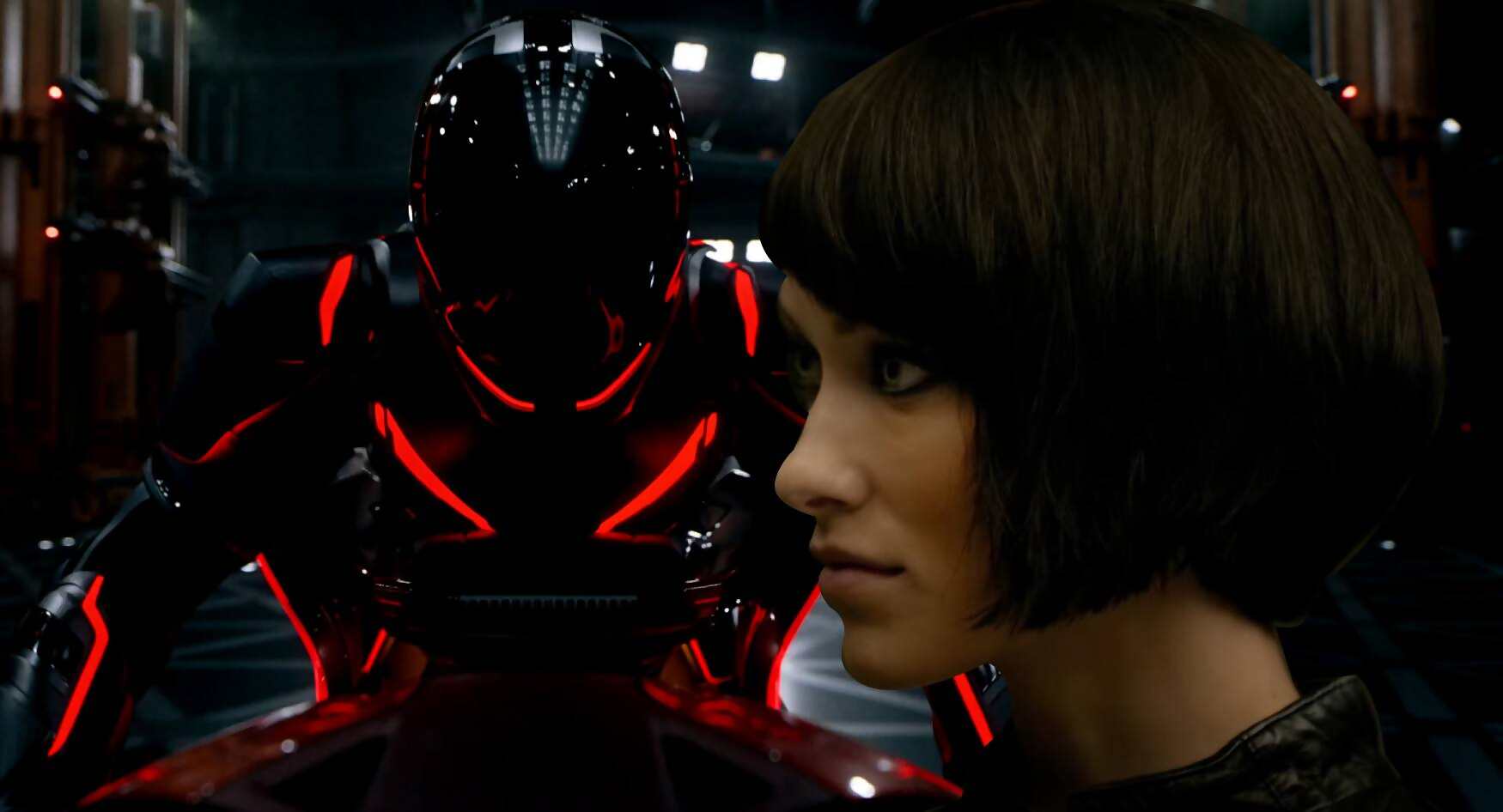
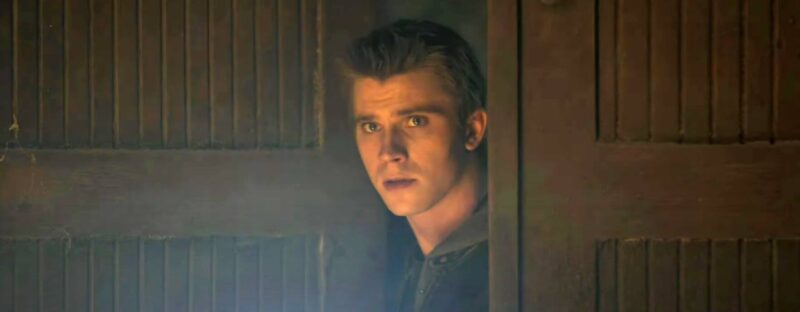
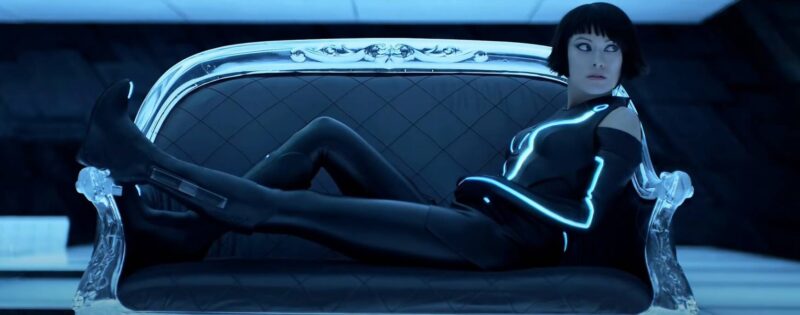
Leading the rebellion against CLU (played in part by a de-aged Bridges) were Flynn’s wayward son, Sam (Garrett Hedlund), zapped into the Grid much like his father was decades earlier, and the last survivor of the ISOs, the childlike Quorra (Olivia Wilde). Following a final conflict in the Grid in which Flynn confronted the demonic version of himself, Tron: Legacy ended with Sam guiding Quorra through a portal and into the real world.
Tron: Legacy wasn’t quite the box office behemoth that Disney expected, but it still more than made money – roughly $410m on a budget of about $170m. Its merchandise and other branding exploits – videogames, toys, an animated spin-off, plus disc sales of the first Tron – no doubt added to its profitability. There was also its infectious score by Daft Punk; while critics were mixed in their opinions on the film itself, most agreed that the soundtrack was an all-timer.
All of which coaxed Disney into giving a sequel the go-ahead, with Steven Lisberger, one of the producers on the second movie, talking about it in late 2010. Joseph Kosinski had moved onto the post-apocalyptic sci-fi thriller Oblivion, starring Tom Cruise, after he’d finished work on Tron: Legacy; the hope was that he’d be available to shoot the sequel a couple of years later.
Work on Tron 3 was begun by screenwriter Dave DiGilio, taking over from Legacy’s screenwriters Edward Kitsis and Adam Horowitz. Although a succession of screenwriters would turn in their own drafts, looking back at interviews with various actors connected to the sequel suggested that it would pick up Sam and Quorra’s story in the real world, immediately after the second film’s events.
Read more: Why Tron didn’t geta VFX Oscar nomination in 1982
“I’m really excited to see what happens to [Quorra] when she’s put into the real world,” Olivia Wilde said in a 2015 Collider interview. “I think it’s an interesting concept. I’m fascinated by all discussions of AI, and especially now with virtual reality becoming something that’s like a personal device, I think it is the time to tell this story.”
It was also suggested that Cillian Murphy, who had an uncredited cameo in Legacy, could return in Tron 3, reprising his role as Encom boss Edward Dillinger Jr, son of David Warner’s villain in the original Tron.
By December 2012, screenwriter Jeff Wigutow had taken over from DiGilio, but that outgoing writer had left behind an idea that would become pivotal years down the line: a villain named Ares.
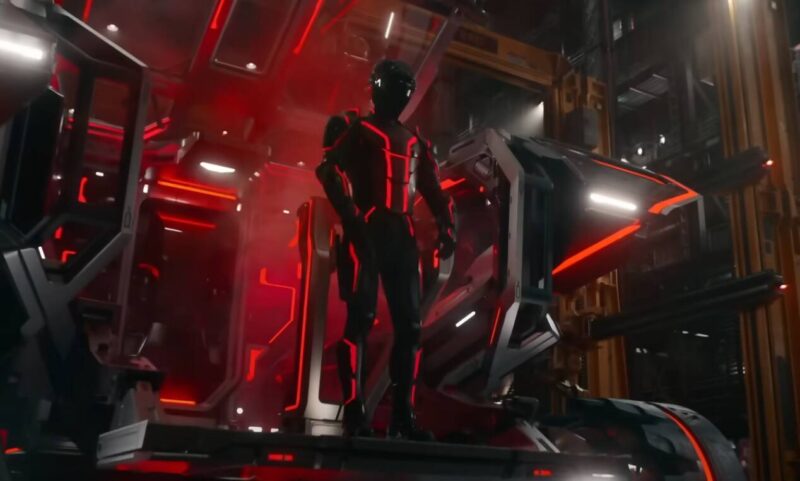
“There was a very different movie,” Wigutow recently told CBR about that earlier script. “That film was a real sequel, a real continuation of Legacy, and it introduced a character named Ares who was a much smaller role but a real villain.”
By 2015, it seemed as though the production had settled on a script, and Tron: Ascension, as it was titled, was well into pre-production by the middle of that year. Filming was set to begin in Vancouver, and there were reports that Jared Leto was in talks to play its antagonist, Ares.
Events occurring elsewhere at Disney, however, soon stopped Ascension in its tracks. The studio had suffered a string of expensive flops, including John Carter in 2012 and, more crucially, Brad Bird’s Tomorrowland, released in May 2015 – right around the time Ascension was being prepped. The latter film, a $180m sci-fi adventure about a futuristic hidden city, barely scraped its budget back in cinemas, and Disney executives began to have second thoughts about spending similar amounts of money on another expensive genre film.
By this point, Disney now had ownership of Marvel and Lucafilm, and so superhero movies and Star Wars sequels seemed like safer investments than a second Tron sequel.
“We were actually this close to filming,” DiGilio recently told The Hollywood Reporter. “We were in heavy prep at the time, and the guys were scouting over in Shanghai when Disney purchased Lucasfilm. So that just sucked the air out of the room, because the biggest franchise in Hollywood was going to take their attention. It was a tough blow for us. [Screenwriter] Jesse Wigutow, who I’ve gotten to know through the process, came in and did a great pass after me. So things were rocking and rolling, but it got shut down.”
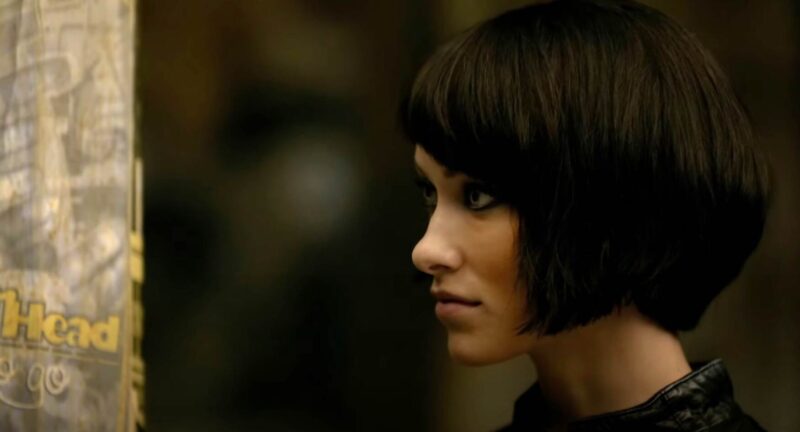
Kosinski later said that Tron: Ascension wasn’t cancelled, but rather put in stasis; all the same, Disney clearly wasn’t in a rush to make the sequel, and Garrett Hedlund and Olivia Wilde were eventually released from their contracts.
One person who never forgot about Tron: Ascension, though, was Jared Leto. A self-described Tron superfan, he personally contacted Wigutow and began talking to him about amending the script to place more emphasis on the Ares character. Thus what was a villain became the hero, and Ares was given top billing in the film’s title.
“The first iteration of [Tron: Ares] was a different movie, but it had a character named Ares that [Leto] was cast as while we were in pre-production,” Wigutow told Polygon. “He really got his teeth into this character and really wanted to hold onto it, and ultimately came to me and said, ‘Let’s just build a movie around this character. I want to understand this character, his origins, and I want to take him to a very different place.’ So that’s really the provenance and the origin of this specific film is Jared’s dogged persistence on getting it done, but also telling the story of this character specifically.”
Read more: Spaceblasters | The mystery of the 1982 sci-fi adventure that never was
According to Tron: Ares’ production notes, Jared Leto officially signed on as the film’s producer in 2016, and in the years that followed, he and fellow producer Justin Springer continued to push the project forward through the pandemic and then the 2013 Hollywood strikes. Directors came and went, and Disney regular Joachim Ronning was the filmmaker who finally called ‘action’ on Tron: Ares in January 2024.
By this point, the script had long since written out Quorra and Sam – though they do get a nod towards the end of the story. Interestingly, DiGilo told The Hollywood Reporter that, despite the expansion of Ares’ role, the “overarching story remained the same.”

It’s likely, then, that Tron: Ascension would have seen Cillian Murphy occupy the place in the story taken over by Evan Peters in the finished film. Now CEO of his own self-titled company, Dillinger oversees a new laser technology that enables Programs and weapons created in the Grid to be manifested in the real world. But the tech has a flaw: spawned Programs or objects can only exist for 29 minutes.
The story’s MacGuffin is therefore a piece of ‘permanence code’ written by Kevin Flynn decades before his disappearance. In Tron: Ares, it’s Leto’s character, spawned from the Grid as a high-tech soldier by Dillinger, who goes off-program and tries to hunt down the code so he can become a real human.
Although we don’t have access to any early drafts of the script, it seems likely that Quorra would have had the Pinocchio-like character arc taken over by Leto, with Ares being the Terminator-like villain dispatched to stop her from getting the permanence code.
Olivia Wilde’s wide-eyed performance was one of Tron: Legacy’s highlights, and it’s easy to imagine a story in which Quorra learns to adapt to the real world and her new physical body. But according to Wigutow, Leto told him that, “I want to do a Tron film that basically leaves all of the mythology on the side. It’s entirely focused on this character, and it builds this character up from the ground.”
Read more: Tron: Ares review | Keep your pets indoors for the loudest film of 2025
(A late scene involving a 1980s-style Grid and a cameo from Jeff Bridges was said to have been a late addition, following suggestions that Tron: Ares’ connection to its predecessors was too tenuous.)
In recent years, Leto’s career has been marred on both professional and personal fronts. Sony’s comic book spin-off Morbius created memes but little money for the studio. More seriously, Leto was accused of sexual misconduct by nine women in June this year; Leto’s representatives have denied the allegations, and the actor remained front and centre in Tron: Ares’ marketing.
In retrospect, Tron: Ares – about a villainous character rehabilitated into a hero capable of warmth and empathy – appears to have been an expensive vanity project for Leto. From the writers who worked on it, Leto was certainly pivotal in getting the movie made after it faltered in 2015. Regrettably, it also appears that the story of Tron: Legacy’s most likeable characters was also written into oblivion.
Tron: Ares features a late film tease of now fully-human Ares tracking down Sam and Quorra in a future film. Given that Ares’ box office sits at just $64m worldwide against a budget of $180m, it’s unlikely that story will ever be told, either.