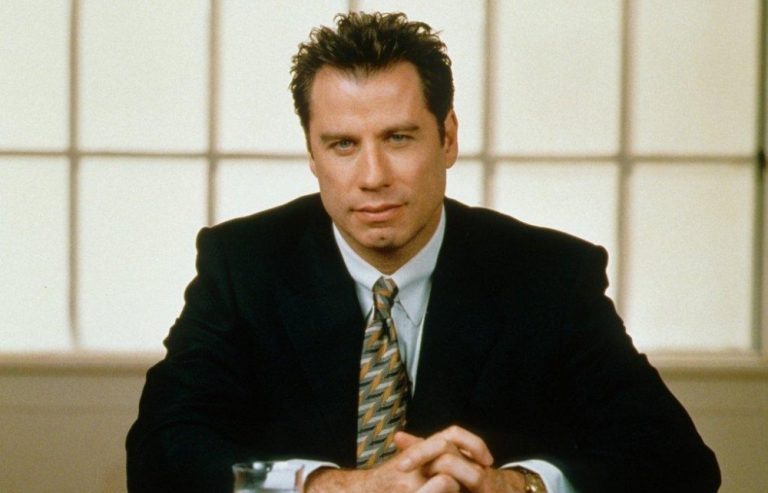
Roman Polanski was set to make The Double with John Travolta in 1996 – but the film soon collapsed in high profile fashion. Following his second career resurrection with 1994’s Pulp Fiction, John Travolta was one of the most in-demand movie stars of the 1990s. A string of hits – Get Shorty, Face/Off, Phenomenon and ... The Double | When John Travolta quit a $17m payday, days before filming
Roman Polanski was set to make The Double with John Travolta in 1996 – but the film soon collapsed in high profile fashion.
Following his second career resurrection with 1994’s Pulp Fiction, John Travolta was one of the most in-demand movie stars of the 1990s. A string of hits – Get Shorty, Face/Off, Phenomenon and Michael following soon after, and the actor’s salary infamously shot through the roof.
His box office returns justified the outlay, however, and so Hollywood kept writing the cheques. And when Roman Polanski planned to make a film called The Double in 1996, Travolta’s agent was able to negotiate a $17m payday. It was to be an adaptation of the book by Dostoyevsky, and Isabelle Adjani had signed up as Travolta’s co-star. John Goodman took on a supporting tole.
Mandalay Entertainment was set to produce on behalf of Sony Pictures, and the project was given the greenlight. Filming was readied for the summer of 1996, with an eye to release in 1997. It seemed like it was full steam ahead.
There were logistics to consider, though. Because Polanski was directing, that instantly meant it couldn’t be made in America, even if all involved wanted to shoot it there. Polanski is a convicted rapist, and fled America in the late 1970s to avoid jail. Should he ever step foot back in America, he would be liable to arrest on the spot.
Obviously, this didn’t stop Hollywood offering him work.
The shoot was thus set for France, and Travolta flew out for filming at the end of May 1996. Rehearsals soon began ahead of a start date in early June.
But this one didn’t last long.
After alleged rewrites of his character, Travolta left the set a few days before shooting began, never to return. The Irish Times report suggested there have been a “row” between Travolta and Polanski. Details were few, but it didn’t take long for people to start digging.
E! Online, in a tabloid-y report, suggested that Polanski’s alleged addition of a nude scene to the script was a major point of contention, and there was an apparent breakdown of relations between star and Polanski. It also wrote in its report that Polanski wasn’t a fan of Travolta’s acting style.
Polanski apparently still tried to keep the film moving, and Steve Martin was quickly mooted as a possible replacement for Travolta. But then, appreciating exact details are sketchy, Adjani left the project after the sizeable changes in what she thought she was signing up for.
The game was up. On the 1st July, a month after Travolta left, Polanski opted to pull the plug. The film was dead. And then the legal ramifications began in earnest.
Each side blamed each other. Travolta wasn’t happy, and the three companies involved – Sony, Mandalay Entertainment and Liteoffer – all started legalities against him. It took some time for the proceedings to get going.
A year later, the case was due to come to court. It had already been delayed by six months after its first hearing date at this stage, but with the complaint said to be heard on Monday the 14th July 1997, all sides were given extra time to reach an out of court settlement.
At the time, Travolta was shooting A Civil Action for Disney (that’s the title image above), but one option would have been to take on a picture for Sony (Bruce Willis, when a film of his fell apart in the 1990s, agreed to make three films with Disney, as we covered here). An assortment of possible projects were identified (Variety reported that a sci-fi movie called After The Visitation was one option, a movie ultimately never made). Sony, though, also wanted financial compensation for its loss.

The first signs of the mist clearing came the following week, when Sony and Travolta settled their side of the case. The pair agreed to ‘find a project suitable for both parties’, and the Variety report on the deal is here (although the contents of said deal were under legal lock and key). In 2003, Travolta starred opposite Connie Nielsen and Samuel L Jackson in Basic for the studio (directed by Die Hard’s John McTiernan). It was never made public whether that was the movie Travolta made as part of that deal, but it was the next Sony picture that he took on.
But there was still some way to go.
In the end, the case wasn’t fully settled until 2001. As the BBC reported, Travolta then reached a deal with production companies Mandalay Entertainment and Liteoffer – half a decade after the movie fell apart.
The report threw a new detail into the story too, as it told how Travolta had counter-sued Mandalay as it filed suit against him, arguing it had gone back on an agreement that he should star in another of its productions, Donnie Brasco. That film ultimately starred Al Pacino and Johnny Depp, to sizeable acclaim.
The settlement was thus reached, but no details were disclosed, as you’d expect. The case was said to have been settled “to everyone’s satisfaction”, said a representative for Travolta.
The film – at least in its original guise – was never resurrected in the aftermath of the legalities surrounding it. But given that the court cases rumbled on for half a decade, that likely did significant damage to any chance of it coming back to life. Going back to the project would have likely meant more trouble than it was realistically worth.
The book, though, was still game for adaptation, and it finally came to the screen in 2013 – but far away from Hollywood. Richard Ayoade opted to make it his second directorial outing after the wonderful Submarine.
He recruited a cast that included Jesse Eisenberg and Mia Wasikowska, and the movie was a sizeable critical success, and a modest one at the box office. Notably, though, the entire film was made for just $2.3m – considerably less than Travolta’s proposed salary some 17 years earlier.
—
Thank you for visiting! If you’d like to support our attempts to make a non-clickbaity movie website:
Follow Film Stories on Twitter here, and on Facebook here.
Buy our Film Stories and Film Stories Junior print magazines here.
Become a Patron here.
See one of our live shows, details here.
/**/