Glasgow Film Festival Head of Programme Paul Gallagher popped round for a chat about one of the UK’s biggest film festivals… In the summer of 2025, with Tom Holland’s Spider-Man swinging overhead, a secret cabal met in the depths of the Glasgow Film Theatre to talk movies. More specifically, to talk the Glasgow Film Festival; ... Glasgow Film Festival | New programme head talks honouring audiences – and Robert Redford
Glasgow Film Festival Head of Programme Paul Gallagher popped round for a chat about one of the UK’s biggest film festivals…
In the summer of 2025, with Tom Holland’s Spider-Man swinging overhead, a secret cabal met in the depths of the Glasgow Film Theatre to talk movies. More specifically, to talk the Glasgow Film Festival; somewhere on the agenda (we didn’t ask where) was the small topic of choosing a new Head of Programme, Festival Director Allison Gardner having just stepped down after 30 years at Glasgow Film.
Paul Gallagher, already nearby as the programme manager of the city’s foremost independent arts cinema, seems like an obvious choice to lead what’s become one of the UK’s biggest film festivals. First flickering onto the screen in 2005, the programme for the 2026 edition sees the festival embracing the two sides of its scrappy personality. Opening with the story of a sit-in protest against Home Office detentions and ending with James McAvoy’s crowd-pleasing directorial debut, there’s something here, Gallagher says, for everyone.
We sat down with Paul in late January to spill the beans on what’s about to hit the screens of Glasgow. And Tom Holland, obviously – with the scale of GFF’s ambitions, we’re sure he’ll turn up there eventually…
This is your first Glasgow as programme head – how’s it going?
I’m loving it! I mean, it’s a lot to take on. And so what I found is this is the 22nd edition of [GFF], and my main priority coming in was to respect the incredible audience that has built up over the past 21 editions, what they’ve come to know and love about GFF, and to ensure that’s what we continue to deliver. The programme that we’ve got together this year is very recognisable, I would say, as a Glasgow Film Festival programme: very audience centred, bringing new Scottish cinema to the screen, bringing a lot of the great films that you’ve heard about from festival circuit over the year to Glasgow.
And so in terms of how I’m feeling, I’m feeling good. And I would also say that I stepped up to this role in September, which is a point when it’s all happening already. And so it was really essential that I could just step into the team that was already there and trust them to guide me on all the decisions I was needing to make. It’s a really strong team that GFF has in place, and while there’s members of the team who come and go, as is the case with all film festivals, we have quite a lot of returning team members, and that’s been an incredible asset and an incredible confidence boost to me.
Even more so than previous years, this programme seems to really celebrate Scotland and Scottish filmmakers – both the opening and closing galas are Scottish stories. Was that a priority for you coming in?
I think the answer is a mix of things. That was definitely a key priority for me in terms of what is Glasgow Film Festival here for: being a cheerleader for Scottish cinema, and a platform for really good new films from Scotland. That’s what the audience knows we’re going to get there.
But there’s also, I guess, the ongoing life and growth of the festival. For a long time, Glasgow in particular has been a favourite location for films from all over the world, but often not playing itself. But I think increasingly the industry here is stepping up, where we’re now making not just one film a year, but three, four, five, six films a year that are worthy to stand on that national and international stage. And that’s naturally led to the festival being seen as a place where those conversations about film production can begin, but also as the natural end point, or a later stop on the life of a film.
And so [it’s about] bringing these things together and thinking, Okay, what’s the natural sort of place for GFF to really stick its unique claim?
You touched on Glasgow being used as a location – Spider-Man, you had recently, and Batman before that. Are you aware of any impact these big productions are having on the local industry? Is it a net positive or, er, the opposite?
I would be lying if I said I had that kind of intimate knowledge, so my answer is really just anecdotal. But from my understanding, they’re not really that connected in Glasgow. The big studio pictures come to Glasgow, I think that’s good for the general popular narrative about Glasgow as a place where the film industry is. Certainly no one that I know in filmmaking… It’s not at the top of anyone’s bug bear list. Like: ‘Oh man, I wish we could make more films in Glasgow, but all these Hollywood studios are using all the talent.’ I don’t think that’s what’s happening. There are probably different factors that are affecting that outcome.
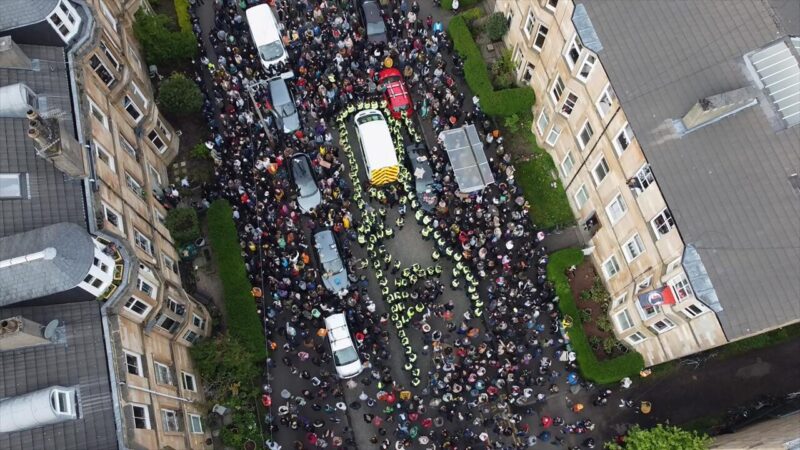
The programme’s showing off plenty of interesting documentaries – not least your opening gala, Everybody To Kenmure Street. What led to that decision?
It is, I suppose, unusual to open with a documentary. I don’t know if we’ve done that in the past. I was very aware that the film was being made because the director, Felipe Bustos Sierra, his previous film, Nae Pasaran, closed GFF in 2018 and was a hugely significant moment for documentary-making in Scotland and for the festival as well. And I was very aware of the event that actually happened in 2021 – it was across all the news here in Scotland, and, I think, across the UK and even out to the world.
Then when I saw the first rough cut of the film, what surprised me was that there was actually a whole lot more to it – about what it was saying about Glasgow – and I found that incredibly moving. These things just made me think this would be perfect as an opening film; how often does something come along that is so rooted in the place we’re showing the film, that’s so relevant to our immediate community in Glasgow, but then also has something to show to a much wider audience?
In terms of documentary through the programme, you’re right, there’s a lot of really good stuff. There’re quite a few documentaries across very different subjects, but also even styles of documentary. Molly vs THE MACHINES, like Kenmure Street, it’s one that tackles a current issue: young people in social media and the, arguably, intentional ways in which social media algorithms feed inappropriate content to young people. That’s definitely one that people will have different opinions on.
And then at sort of a different end of the documentary [scale], we’ve got a really big sports documentary, Lomu, on the rugby player Jonah Lomu. It’s really great to have those kinds of films that appeal to an audience that wouldn’t usually come to Glasgow Film Theatre. And then we’ve got Megadoc, which is the behind-the-scenes documentary about the making of Francis Ford Coppola’s Megalopolis. The hope is you end up with a programme that’s full of variety and full of breadth, across budgets, across nationalities, and across different of subjects. And I think that’s what we’ve got.
I gather you were the driving force behind this year’s (free!) retrospective strand, Truth To Power…
That’s right, yeah. I love retrospective programming, and I’m also very aware, from my programming at GFT, that there’s been an increasing younger audience for [repertory] cinema, post Covid. It seems that a lot of young film fans have just discovered afresh that there’s a world of cinema from the past out there. And so I wanted to make sure that we were doing a retrospective of classics, you know, genuine classics, but also something that could be easily seen as connecting with the world right now – so that it works for people who just love to come and see classic films, but it also works for people who want to think about something that I consider to be real, not just escapism.
And so it was the latter part of last year that I was thinking about this, and around this time was when Robert Redford passed away. He’s been one of my film heroes, and the film, for me, that really crystallises everything he was brilliant at is All The President’s Men, because it married real Hollywood entertainment and star power with an artistic integrity and social conscience that’s not in any way diminished by the fact it’s also delivering a great piece of entertainment.
It made me think about that theme of, truth to power, and the fact that cinema, over the years, has been great at being a light in the darkness. Literally, that’s what cinema is, but in metaphorical terms as well, cinema can let us feel something is still possible in a moment when it can seem that things are very tough in the world. And, you know, I don’t want to be too high minded about it, because it’s just movies, but movies can really move us and inspire us, and so I wanted to do something that could capture some of that, I guess.
Let’s touch on the films competing for the Audience Award… I’m not going to ask you to pick favourites, but I was wondering if there’s anything you could tell us about the selection films that you’ve got there?
So for the Audience Award at GFF, we look through the programme and identify 10 films from either first- or second-time filmmakers that we want to say, yeah, these are filmmakers who are who are worth watching, who are worth investing in, who are ones to look out for, basically, and then it’s down to the audience to vote on them, so that’s the thinking.
Like we talked about with documentary, the thing that I’m really pleased about with these audience award films is they do offer quite a wide range of tones and genres. So there’s a very funny New York comedy, On A String, from this young director and star Isabel Hagen. She’s very much got something of Greta Gerwig about her in terms of her sense of humour and her multi-hyphenate abilities. And then there’s this contemplative Filipino drama called First Light, which is much more an immersive, character-driven experience about this nun in the Philippines and whether the things she believes really line up with her community. There’s all kinds. But I think, if you’re looking for a place to start in the programme, picking any one of those 10 audience award films is a good starting point.
We should probably end by talking about the closing film. California Schemin’ is a Scottish story, it’s a directorial debut from Glasgow native James McAvoy, it must have been a clear contender from the start…
I did have my sights on this one from very early on. James McAvoy was our Cinema City awardee at the festival last year, and we knew at that point that he was making this film. Then I got the chance to see it as a world premiere in Toronto and again, similar to the opening gala, you couldn’t find a much more fitting film for Glasgow Film Festival. I think California Schemin’ is perfect to close with, because it really is a moment of celebration that the festival is building to for the whole 12 days, and I know that it’s going to be the perfect launch point for the film in the UK.
It’s a real crowd-pleaser with really excellent performances; James McAvoy clearly has taken a lot of what he’s learned on film sets as an actor and let that inform the way he directs other actors. It’s super funny, and it is kind of silly, but all the time you are kind of with the emotions of it. I think audience is going to leave that film on an absolute high.
The Glasgow Film Festival runs from the Glasgow Film Theatre and at venues across Glasgow from 25th February to 8th March 2026. Get your tickets here.
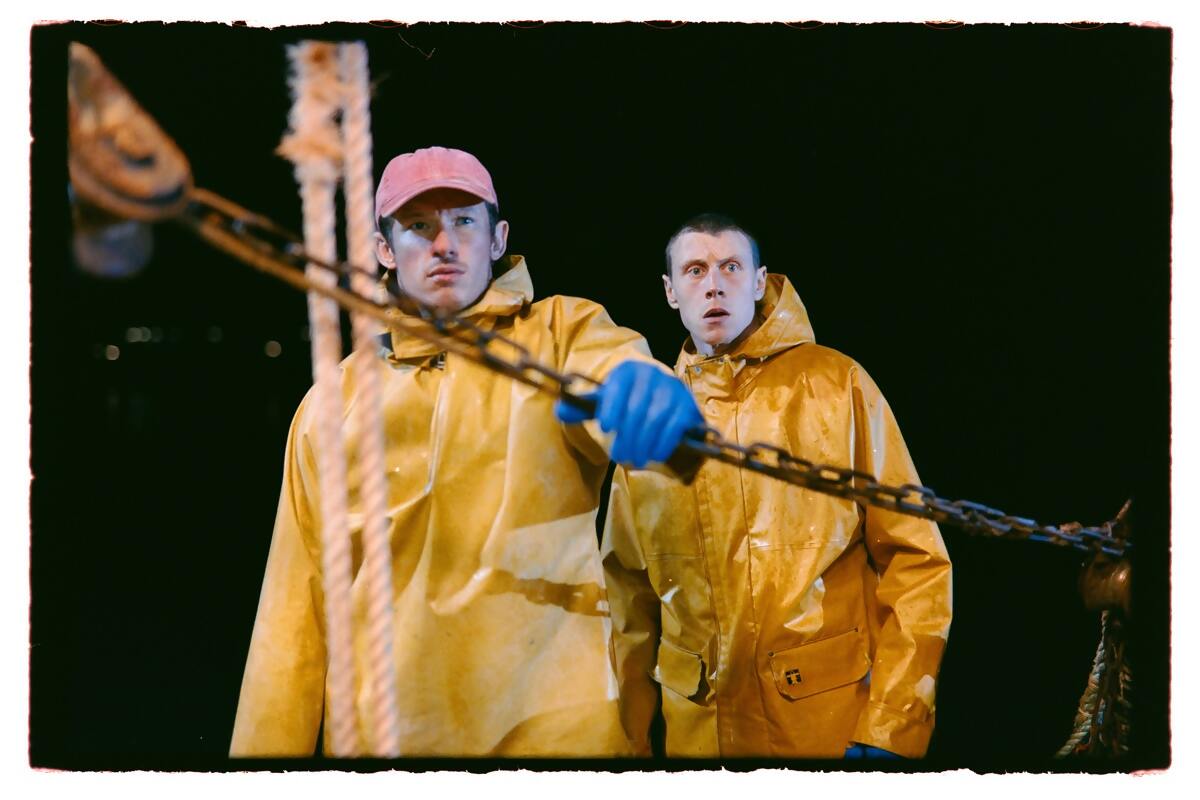
Cover image from Rose of Nevada, credit: Steve Tanner