The Amblin Hearth Archive of Spielberg film props and art hasn’t been seen on camera before now. The director himself gave one YouTuber a tour. Most movie-goers will have heard of Amblin, the company co-founded by Steven Spielberg in 1980. Fewer people will have heard of the Amblin Heath Archive – a sprawling collection of ... Steven Spielberg opens up the Amblin archives – and offers his thoughts on AI
The Amblin Hearth Archive of Spielberg film props and art hasn’t been seen on camera before now. The director himself gave one YouTuber a tour.
Most movie-goers will have heard of Amblin, the company co-founded by Steven Spielberg in 1980. Fewer people will have heard of the Amblin Heath Archive – a sprawling collection of props, production art and materials from Spielberg’s long filmmaking career.
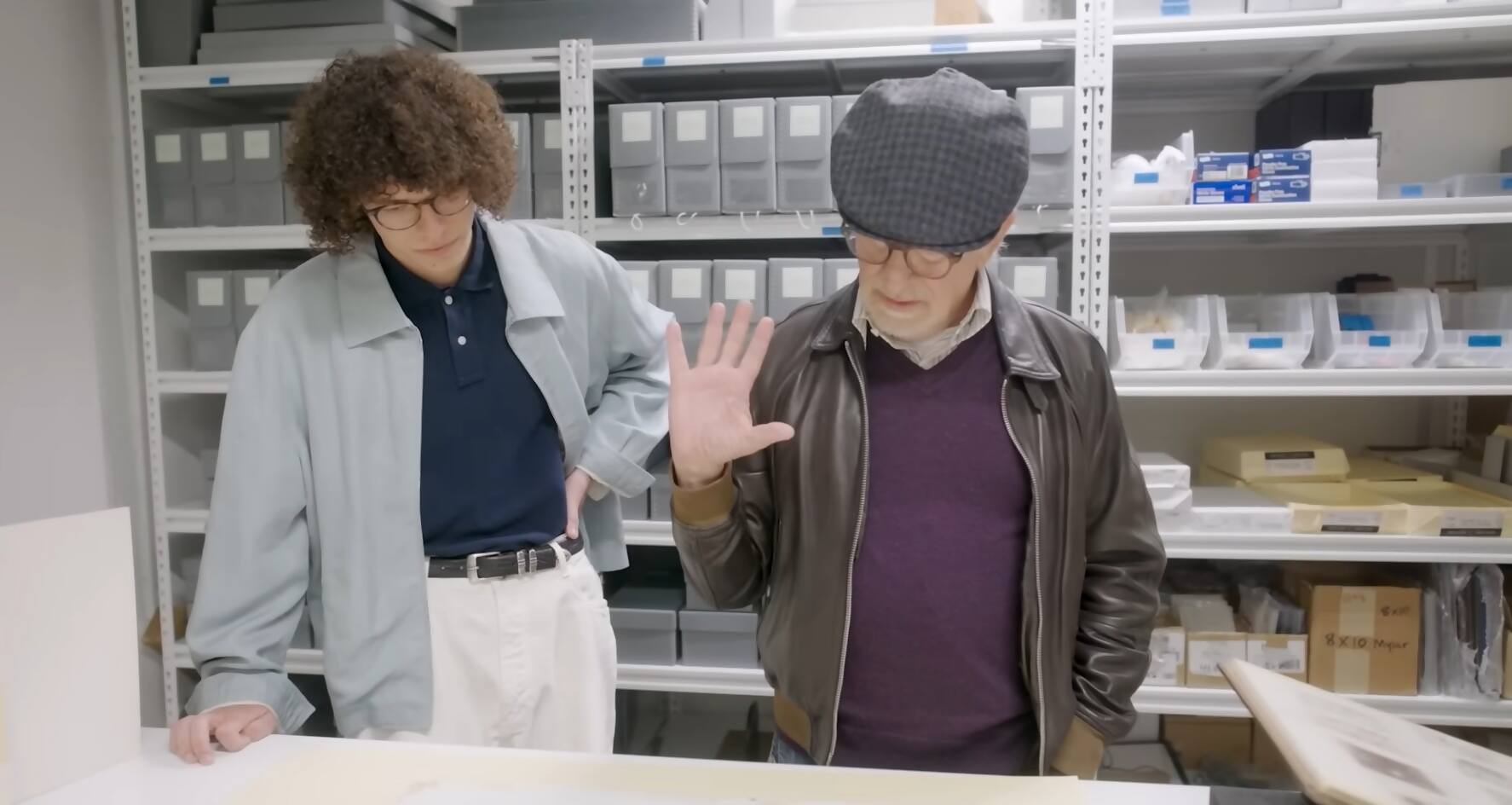
Although not open to the public, YouTuber Reece Feldman got a rare look around the archive a few days ago – and was given a guided tour by Spielberg himself. We get glimpses of the original bike ridden by Henry Thomas (and a certain alien) in E.T. The Extra-Terrestrial, some Ralph McQuarrie production art from Close Encounters Of The The Third Kind, and a few more bits and pieces besides.
Wearing a leather jacket and flat cap, Spielberg talks Feldman through the archive’s 200 or so props and nuggets of film history, all stored on pristine white shelves or boxes. There’s a charming anecdote about the origins of the tooth-shaped clapperboard from Jaws, while Feldman gets to try out Indiana Jones’ iconic bullwhip.
Bringing us up to date, there are props and outfits from Disclosure Day, Spielberg’s latest flying saucer opus. Note how magenta Emily Blunt’s weather presenter dress looks; in the movie it looks bright red to our eye. The magic of colour grading, we guess.
In the middle of all this, Spielberg takes a moment to offer his thoughts on the current flap surrounding generative AI. We’ll quote the maestro in full here, if it’s okay with everyone:
“You have to keep remembering: all of these were done by artists,” he says, looking down at one of McQuarrie’s exquisite paintings. “All of these were done by people with creative vision and not AI. What is being created by AI, based on whatever input you’re telling it, is also coming from every other possible clue in the archive. That was created by people who breathe and have souls.
“I’m not opposed to a certain use of AI, but when it comes to replacing artists, I’m completely opposed to AI taking place of someone’s own way of seeing.”
This isn’t the first time the filmmaker has spoken out against the use of AI in filmmaking, but it’s still reassuring to hear the words come out of his mouth. Although this was almost certainly recorded weeks ago, Spielberg’s comments offer a counterpoint to Martin Scorsese’s recent endorsement of Black Forest Labs and its Flux image-making software.
A growing number of actors and filmmakers are beginning to talk positively about using AI in art, including Peter Jackson, George Miller and Gareth Edwards. Spielberg joins Guillermo del Toro as one of the technology’s high-profile critics. Thank goodness.
Elsewhere, there’s a quite poignant moment where we see some archivists work to preserve some of Spielberg’s 8mm movies from his youth. Looking at the screen where (presumably) a piece of film is being digitised, Spielberg expresses his surprise – it’s the first time he’d seen the footage since he shot it decades earlier.
“I gotta get a copy of this! This is amazing,” Spielberg says.
It’s all thoroughly lovely, and our only criticism is that the film’s only 22 minutes long. More please, Mr Spielberg.