How a battle over Francis Ford Coppola’s unmade Pinocchio led to the biggest ever civil financial verdict against a Hollywood studio. Multi-Oscar-winning filmmaker Francis Ford Coppola had huge success with his films in the 1970s, although in the aftermath of the troubled production of Apocalypse Now, his movies of the 1980s struggled to break through ... When Francis Ford Coppola was awarded $80m for not making Pinocchio
How a battle over Francis Ford Coppola’s unmade Pinocchio led to the biggest ever civil financial verdict against a Hollywood studio.
Multi-Oscar-winning filmmaker Francis Ford Coppola had huge success with his films in the 1970s, although in the aftermath of the troubled production of Apocalypse Now, his movies of the 1980s struggled to break through (and studios were less keen to write him sizeable cheques). But off the back of 1990’s The Godfather Part III and particularly 1991’s Bram Stoker’s Dracula, in the eyes of the movie studios he was back as a commercial force.
A project he’d long struggled to bring to the screen was suddenly viable again. He’d long dreamed of making his own take on the classic story Pinocchio, and by 1994, things looked like they were finally moving ahead.
A report in the Los Angeles Times published that July described the project as Coppola’s “lifelong dream”, and a story meeting had taken place in London in January 1994. Coppola was in the midst of producing Mary Shelley’s Frankenstein for Columbia Pictures, who he’d made his Dracula film with. And Columbia seemed like the final home for the Pinocchio movie.
But then Warner Bros stepped in.
As the same Los Angeles Time piece noted, a source at Columbia said “the studio was a bit concerned that Coppola’s plans might be swallowed up in a dispute with Warner Bros, which several years ago had expressed interest in doing its own live-action Pinocchio”. Coppola had apparently had talks with Warner about the story, but Columbia now was the studio set to back it.
Fred Fuchs, who was heading up Coppola’s American Zoetrope studio, declared that “it really didn’t go anywhere. . . . There was no deal with Warner Bros regarding Francis’ script or this project”.
What he couldn’t know was that one of the biggest court cases of its type was about to erupt over the project.

The problems began earlier in the 90s.
In 1992, when Warner Bros and Coppola had their conversations over his Pinocchio, the latter signed a certificate of employment with the former. He was set to produce The Secret Garden and a J Edgar Hoover biopic for Warner (the latter only happened when Clint Eastwood separately pursued the story nearly 20 years later), with Pinocchio also believed to be part of the deal. It seemed that after the success of Bram Stoker’s Dracula, Warner had been keen to lure Coppola to the studio, yet ultimately a deal for that film couldn’t be agreed. Coppola, according to this Variety report, wanted the same deal he’d just got for Dracula ($5m to direct, 15 percent of the gross), but Warner Bros didn’t want to pay that much.
Development work had been done, though. A script was put together during the time the project was set up at the studio and around $350,000 spent, but in 1993, Coppola felt that the project wasn’t moving forward. He was lured to other projects, including The Rainmaker, an adaptation of John Grisham’s novel for Paramount, and Warner Bros was informed that Coppola was out.


Still, it had all got as far as a producing agreement between the two parties being drawn up, although neither ultimately signed it. As Premiere magazine noted in its November 1998 issue, this was a far more common Hollywood business practice that might be assumed. “Lengthy contracts are often not completed until after the production”, the magazine reported. In Coppola and Warner Bros’ case, the pair had an annotated long-form contract drawn up, but that was it.
Problems arose when Warner Bros became aware that Columbia Pictures was now set to make a live action Pinocchio movie with Coppola. It was a project that a fresh screenplay was being developed for from scratch, but Warner Bros still wasn’t happy, and a letter was sent to Columbia outlining its protest. The letter declared that Warner Bros already had a deal in place with Coppola to bring the story to the screen. Columbia had no urge to get into a legal wrangle over the project and the Warner Bros missive worked: Columbia backed out.
Coppola, though, was livid. A dream project lay in tatters, and he wasn’t going to take it lying down.
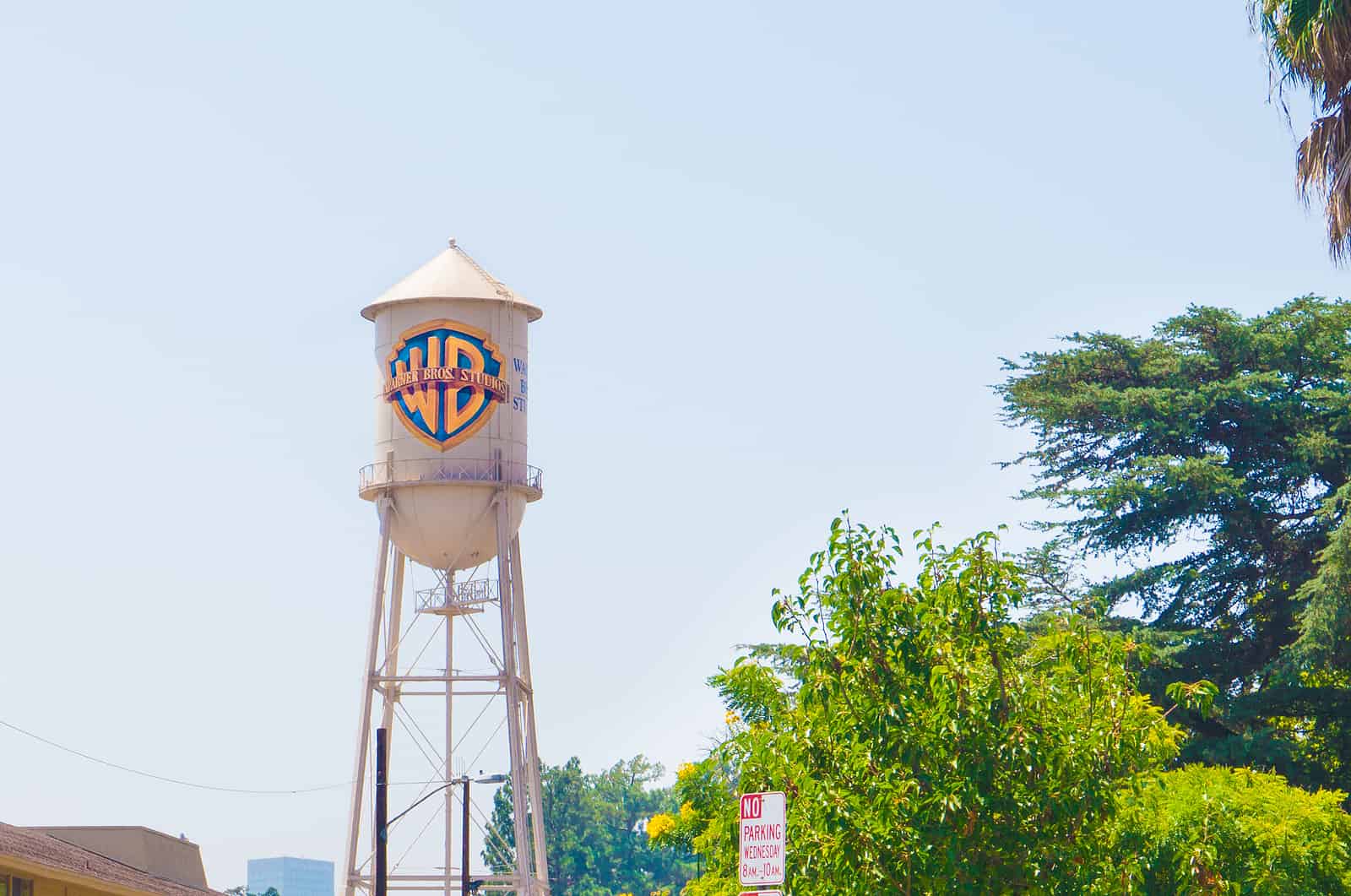
In 1995, he thus sued Warner Bros for “tortious interference”. Coppola argued that there was never a signed deal in place to make the film with Warner Bros, and the case become something of an audit of just what constitutes a deal in Hollywood. A judge, even before the case made it to court, ruled that an unsigned producing deal was “unenforceable”. Nonetheless, the case pressed ahead.
It took some time to reach a courtroom though, and the civil case that Coppola brought was finally heard in June 1998. By this time, Coppola had helmed the Robin Williams-headlined Jack, a film where he was very much a director for hire. Legal thriller The Rainmaker made it to screens in 1997, too, but it would be the last film he directed for a decade.
Instead, he was about to be embroiled in the Pinocchio case. When it finally made it to court, he was asking for $22m in damages for the lost movie. The eventual ruling sent shockwaves through the Hollywood community.
It wouldn’t be the first time that a legal case had wrongfooted Hollywood. At the start of the 1990s, Kim Basinger has infamously sued by the producer of Boxing Helena when she (wisely) pulled out of making it. A jury initially ruled against her, judging that she had to pay $8.1m in damages: a sum that left her on the verge of bankruptcy and immediately put the $1.8m film into profit. The ruling was overturned on appeal, but it made Hollywood stars a lot more cautious about committing to, then pulling out of project.
With the Pinocchio case, Coppola was able to call as witnesses ex-Columbia Pictures executives, who testified that the project hadn’t stalled there because of budget or creative problems, as Warner Bros had argued in court. Rather, it was Warner Bros’ claim to the project that led to Columbia walking away. Coppola testified himself too, breaking down in tears as he described his long attempts to make a Pinocchio movie.
It all worked. The jury in the civil case ruled in Coppola’s favour. It concluded that Warner Bros had overplayed its hand and didn’t have a deal to make the film with Coppola, and that its actions had stopped the film happening elsewhere. It further ruled that Warner Bros should pay $20m in compensation to Coppola, and a staggering $60m in punitive damages.
It was the largest civil financial verdict against a Hollywood studio, and remains so to this day.
Afterwards, it was revealed that a pretrial settlement hearing had recommended Warner Bros pay Coppola $15m. It refused, and now it was facing a bill more than five times that amount.

In this case though, Coppola’s victory – while stunning – was relatively short-lived. Given the size of the award, it was a given that Warner Bros would appeal it. A judge soon dismissed the $60m in punitive damages part of the ruling on appeal, but that still left Warner Bros indebted to the tune of $20m.
Coppola appealed the overturning of the $60m, and Warner Bros continued to appeal the $20m part of the award too. Three judges of the California court of appeals handed down an 18-page judgement in 2001, and this time, Coppola lost the lot. The judgement said that “we conclude that a reasonable attorney, considering the facts before the court, would believe that Warner had a legally tenable claim in any Coppola Pinocchio project and that such claim was not totally and completely without merit”.
Coppola’s award had been taken away. He was left with no money and no film. Warner Bros, meanwhile, could breathe out while the rest of Hollywood set about sorting out its leaky contracts. It was a story without any winners.
There have been many adaptations of Pinocchio since, including duelling 2022 films by Robert Zemeckis and Guillermo del Toro.
For Coppola, one of his dream projects had to remain just that. In its place, the remaining rubble left behind is the story of one of the most infamous Hollywood court cases of the 1990s. Afterwards, Coppola produced another long-held passion: the independently-made, hugely expensive fantasy drama, Megalopolis. That, of course, is a whole bizarre story by itself.
A version of this feature previously appeared on the site in 2021.
Images: BigStock
/**/