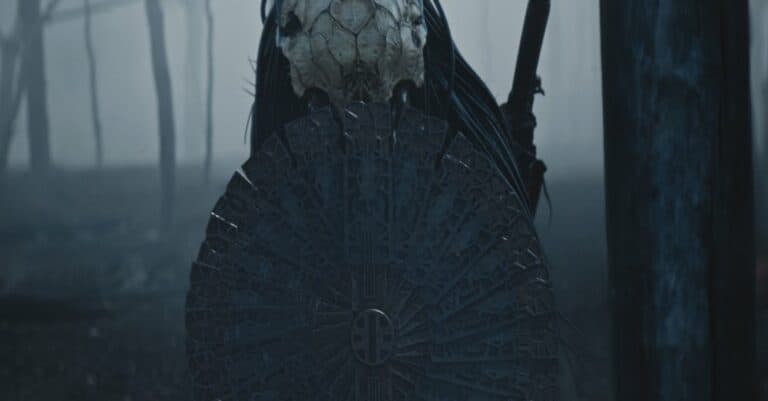
The quiet reboot of the Predator saga, Prey, has much to teach a Hollywood still looking to the 1980s and 90s for movies. The 1980s continues to recede into history, but its movie franchises are still in the here-and-now. The past three years alone have seen sequels to (and reboots of) Ghostbusters, Top Gun, The ... Prey: a few thoughts on a legacy sequel done right
The quiet reboot of the Predator saga, Prey, has much to teach a Hollywood still looking to the 1980s and 90s for movies.
The 1980s continues to recede into history, but its movie franchises are still in the here-and-now. The past three years alone have seen sequels to (and reboots of) Ghostbusters, Top Gun, The Terminator, and more besides. The 70s is hardly different: Rocky, Star Wars, Mad Max, Halloween, and even The Texas Chainsaw Massacre may be decades old, but those properties are still going in one form or another.
As we’ve seen, though, making modern entries in ageing franchises is fraught with pitfalls. For every unabashed bit of brilliance like Mad Max: Fury Road or Top Gun: Maverick, we’ve had to sit through at least one half-baked atrocity like Terminator: Genisys.
Which brings us to Prey, the latest film in a series that hasn’t exactly had the best track record since the first one landed in 1987. Certainly, the sequel (or was it a soft reboot?) that came along before Prey, 2018’s The Predator, felt like a compendium of everything that could go wrong with a movie like this. Its plot, about a bunch of soldiers fighting an alien big-game hunter, was both over-familiar and muddled. Its mix of gore and crass humour was distracting and ill-judged. With a reported budget of $88m, The Predator felt like a flailing attempt at pleasing everybody – both older movie fans and younger cinema-goers to young to even remember Arnold Schwarzenegger’s heyday – and satisfying neither.
See also: what went wrong with The Predator?
Prey, on the other hand, boldly sets off on the opposite course. Its cast isn’t over-stuffed with Hollywood actors of varying stature. Its setting actively precludes it from leaning heavily on pop cultural references or nods to previous films. There’s no cameo from Arnold Schwarzenegger (something planned for The Predator but soon cancelled) and only one or two passing attempts to revive old catchphrases (“Get to the chopper” could have been shoehorned in, with the camera whip-panning to an axe sticking out of a tree, but let’s gloss over that idea).
Even Prey’s title takes a softly-softly approach. Where so many modern movie titles sound SEO-ready (hence ungainly constructions like Batman V Superman: Dawn Of Justice), Prey does little to court lapsed Predator fans – the only telltale sign is some familiar-looking typography.

These are all quite bold moves, and ones that perhaps could only be taken once a franchise has reached a financial dead end. If the Predator franchise no longer works as an overblown summer tentpole, why not go back to basics? Why not have its plot be about a young Comanche warrior, Naru (Amber Midthunder) rather than bulked-up mercs (Predator) or sweaty cops and gangsters (Predator 2)?
Besides, our cultural reference points have shifted vastly since 1987, haven’t they? A group of mercenaries blundering into the jungle and finding themselves hopelessly outgunned by an unseen enemy with a superior understanding of the terrain suited an America still dealing with the aftershocks of the Vietnam war. The films that came afterwards, including Robert Rodriguez’s okay-we-guess 2010 reboot/sequel Predators, aped the formula but failed to put it in such a magnetically charged new context.
Prey, on the other hand, is told from the perspective of a woman trying to assert herself in a society intent on keeping her in her place. It’s also about a race of people who – though they don’t know it yet – are facing environmental catastrophe. Naru’s discovery of a vast herd of bison, slaughtered and shorn of their skins by French trappers, is a grim foreshadowing of much worse to come in the near future. (There’s a quite poignant subtext sitting here, really: the invisible Predator that stalks the plains and woodlands might be vicious, but at least it’s not about to decimate an entire race of indigenous people.)
Prey is therefore a Predator movie for a post #MeToo, pre-climate collapse 21st century. But it’s also a gratifying Predator movie where its alien hunter dispatches humans with an exotic arsenal of weapons, lurks menacingly in trees, and engages in an epic punch-up with a bear. Director Dan Trachtenberg is careful to give the character moments and themes time to breathe, but also recognises the series’ lineage: ultimately, we want to see just how the heroes are going to defeat a faster, stronger, better-equipped opponent, and that’s precisely what we get.


Suggested product
Issue #60 Magazine Bundle (3x Covers: A Scanner Darkly Magazine + 1991 + Roger Deakins)
£14.99
‘Back to basics’ might sound like an obvious approach for a long-running movie franchise, but it’s one surprisingly few studios actually take. Terminator: Dark Fate (2019) initially sounded like it was returning to the straight chase-thriller format after the lumpen, time-hopping Terminator Genisys, which it sort of did, but then it got bogged down with a string of overblown, largely tension-free action scenes and callbacks to the glory days of Terminator 2. The Matrix Resurrections started strongly, thumbing its nose, Gremlins 2-like, at the Hollywood sequel machine, only to devolve into a string of curiously flat set-pieces that paled in comparison to the technical wizardry of the first movie. Ghostbusters: Afterlife was a wholesome family sequel told with a surprising veneer of American Gothic, but then its nostalgia for the 1980s threatened to tip over into grave-robbing bad taste.
Refreshingly, Prey doesn’t lean that heavily on past movies to get by. One easily-missed connection to Predator 2 aside, it largely stands alone: even the alien itself differs from those seen in earlier films. Instead, the film concentrates on telling a simple story, telling it briskly, and telling it well. Prey doesn’t have time to bleed – or wallow in nostalgia.
—
Thank you for visiting! If you’d like to support our attempts to make a non-clickbaity movie website:
Follow Film Stories on Twitter here, and on Facebook here.
Buy our Film Stories and Film Stories Junior print magazines here.
Become a Patron here.
/**/