Weapons director Zach Cregger strips survival horror down to its raw essentials with Resident Evil. Our review of a hectic 90 minutes: How to adapt a videogame franchise with 30 years of backstory, dozens of characters, multiple entries and even previous movie incarnations? Weapons and Barbarian director Zach Cregger’s answer, with Resident Evil, is to ... Resident Evil review | Relentless survival horror without a pause button
Weapons director Zach Cregger strips survival horror down to its raw essentials with Resident Evil. Our review of a hectic 90 minutes:
How to adapt a videogame franchise with 30 years of backstory, dozens of characters, multiple entries and even previous movie incarnations? Weapons and Barbarian director Zach Cregger’s answer, with Resident Evil, is to carve out a niche far away from the zombie-filled mansions, S.T.A.R.S, Leon Kennedy, Claire Redfield and all the other series staples.
Cregger’s underlying concept, it seems, is to create the panicked emotion of playing a survival horror game – the sweaty palms, the swinging of the virtual camera in search of possible threats, the jolts of terror and the din of firearms. There are nods to Raccoon City and the shadowy Umbrella Corporation, among others, but this Resident Evil is otherwise its own detached property.
There’s another twist in here, though: what if, unlike so many of the games’ heroes – or Milla Jovovich’s Alice from the earlier film incarnations – the protagonist was essentially a bit rubbish? What if they behaved like a player who isn’t entirely adept at pressing all the buttons, who wasn’t a weapons expert? And what if the world they inhabited didn’t always obey the conventions of action games and movies?
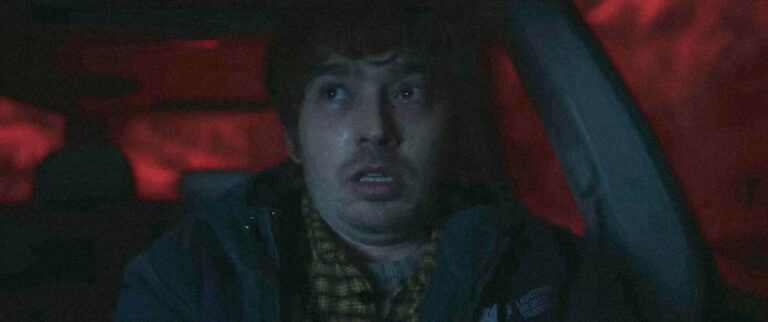
Which brings us to Bryan, the jittery everyman played by Austin Abrams, who previously worked with Cregger on last year’s Weapons. He’s a scruffy, young-ish guy who drives a Subaru Outback and has a pretty thankless gig economy job: he’s a medical courier, and as he trudges into a busy hospital one wintry night, he’s running late.
Green cooler bag slung over his shoulder, he’s meant to be delivering some urgently-needed internal organ or other, but can’t find the person who’s meant to sign for it. Meanwhile, he’s on the phone to his partner, Michelle, who’s just found out that she’s pregnant. Bryan’s non-committal response strongly indicates his fear of responsibility, which his girlfriend – understandably – isn’t too pleased about.
When Bryan finally tracks down the surgeon waiting for the body part he’s been carrying, another medical-type offers him a further mission: get the unspecified contents of another cold storage bag over to Raccoon City within the hour. The job pays double.
Bryan, either desperate for the cash or perhaps reluctant to go home and face the conversation with Michelle he’d rather avoid, agrees to deliver the goods. Thus begins the night from hell: a hazard-filled journey from point A to point B, as Bryan drives, runs and generally battles his way through everything Cregger and co-writer Shay Hatten can throw at him.
In terms of plot and premise, this is it: just Bryan, mostly on his own, doing his best to survive with the skills at his disposal – which, again, are meagre. Unless you’ve never so much as heard of the Resident Evil games, then it’s probably no spoiler to say that there’s been an outbreak of some sort. Much of the film’s value comes from watching Bryan react to the unfolding nightmare, and it’s to Abrams’ credit that, with the camera fixed on him for much of the lean 90-minute duration, his haplessness comes across as appealing rather than annoying.
Abrams makes it feel natural that this ordinary civilian, whose experience of guns begins and ends with videogames, would struggle to figure out where the safety catch is located. (One random, adorable character detail: Bryan wears a woolly hat with pictures of sheep knitted into it.)

Suggested product
Issue #60 Magazine Bundle (3x Covers: A Scanner Darkly Magazine + 1991 + Roger Deakins)
£14.99

What may surprise audiences is how deliberately funny Cregger’s film is; Bryan’s good-naturedness, eagerness to help, and the mayhem that results, have a Sam Raimi-esque feel – far more so than the increasingly glum Evil Dead films we’ve recently seen from younger directors.
When events really take a turn for the nasty, Cregger evokes other genre maestros: George A Romero, logically enough, but also John Carpenter’s The Thing and maybe a dash of Bryan Yuzna’s Society (that Christopher Nolan’s The Odyssey also recalls the latter film suggests that its influence may be far greater than this writer previously appreciated).
Cinematographer Darius Khondji makes the most of Cregger’s horror scenarios – particularly in the early going, where Bryan’s stuck in the snowy wastes of god-knows-where with only his mobile phone to light up the darkness. Here, at last, are some modern nocturnal scenes that actually look cinematic, and where it’s possible to see what’s going on.
Khondji and Cregger’s repeated use of POV shots, like the iron sights perspective of first-person shooter games, are also used in such a way that they add to the suspense rather than recall footage from a Twitch stream. Perhaps it’s because the camerawork in general is so fluent, moving naturally from low angles on tiptoeing feet to over-the-shoulder glimpses of what Bryan’s seeing.
Coming right on the heels of Cregger’s Weapons, Resident Evil also feels like a structural about-face in terms of complexity. Where that film (and its predecessor, Barbarian) was told from multiple perspectives, this latest opus is lean almost to a fault. We see only what Bryan sees, and only know what he knows. For the first hour, the momentum, Cregger’s technical skill and Abrams’ appealing performance are enough to keep everything driving along, like a miniature Mad Max: Fury Road, or The Lord Of The Rings with only one central character at the core (thinking about it, Bryan’s haircut is distinctly Frodo-esque).
At around the time of the third act, however, the sense that we’re simply seeing one damn thing happening after another begins to tell. It’s here that, as the CGI gore and threats pummel the screen, the earlier tension begins to ebb.
Co-writer Shay Hatten previously penned Ballerina, whose original spec script had an on-screen counter that tallied the bodycount (which ran into the thousands). It also contained an action sequence in which the protagonist massacred a retirement home filled with dozens of superannuated assassins – an idea that didn’t make the finished film. Resident Evil has some similarly button-pushing ideas, and Hatten’s type of action is clearly as indebted to videogames as it is to cinema. But there are times, at least for this writer, when that taste for the outrageous can threaten to break our suspension of disbelief.
Your mileage may vary when it comes to the gaudy final stretch, then. But there’s a sense that Cregger’s aim all along was to deliver a simple, entertaining popcorn movie that makes audiences laugh as well as gasp, and doesn’t allow itself to become too bogged down in slavishly respecting franchise lore (often a fools’ errand) or obsessing over metaphors and big themes about trauma or grief. In this regard, it’s mission accomplished.
This isn’t to say that Resident Evil is completely empty-headed, either. There’s a sentiment in here about the fear of change, and how pointless that fear is when the world, time and external events will alter us whether we like it or not. And beneath the over-the-top splatter, Bryan’s puppyish anxiety and eagerness to please, there also sits a glint of icy harshness.
A horror classic? Not quite. One of the best videogame adaptations ever? Easily.
Resident Evil is in UK cinemas from the 18th September.