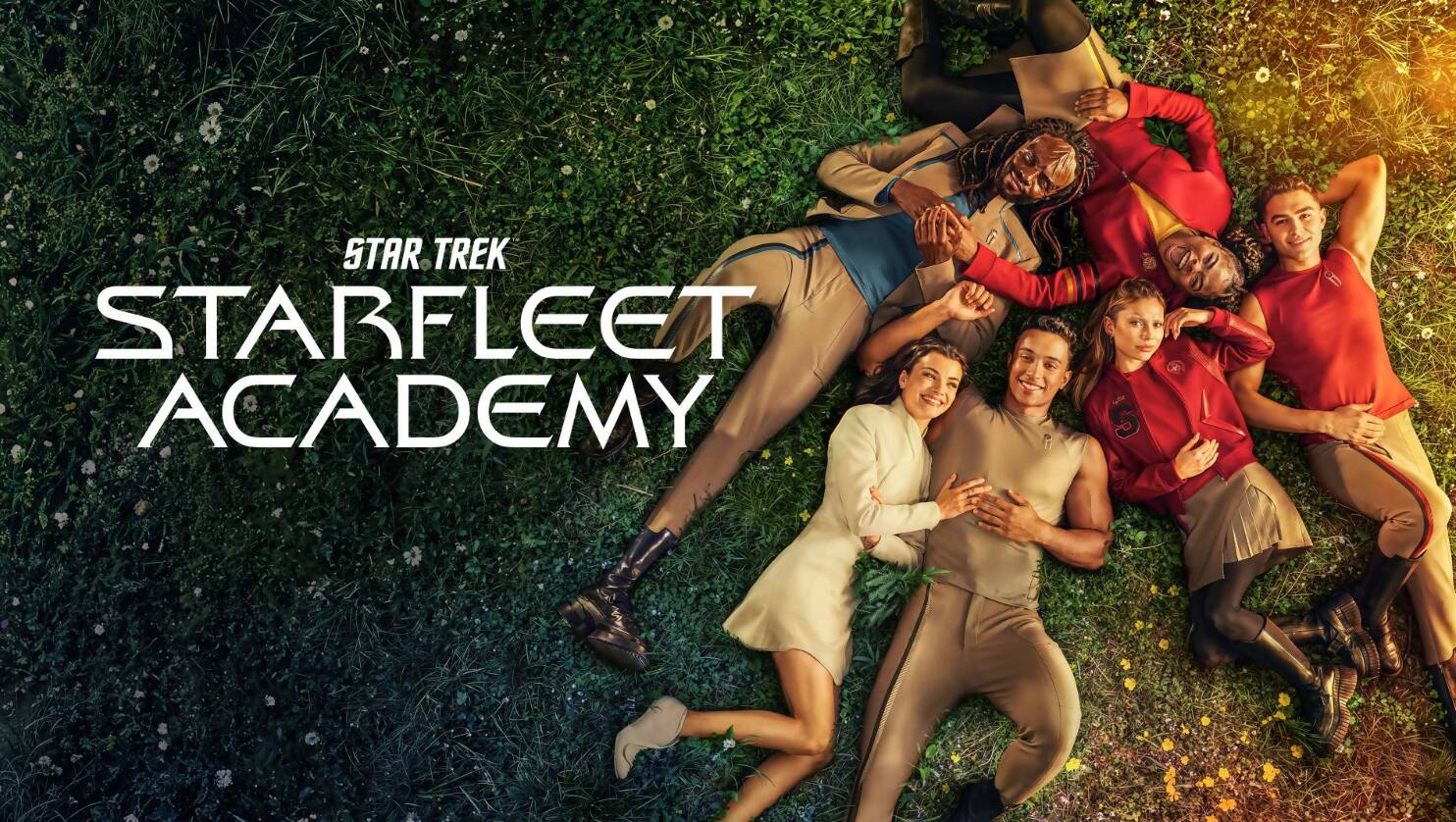
The future of Star Trek again hangs in the balance. But what does the cancellation of Starfleet Academy really mean? We unpack the details… The second and final season of Starfleet Academy will drop in 2027, precisely ten years after the arrival of Star Trek Discovery and the rebirth of the Star Trek franchise on ... Starfleet Academy was supposed to be Star Trek’s next big thing – so why is it ending so soon?
The future of Star Trek again hangs in the balance. But what does the cancellation of Starfleet Academy really mean? We unpack the details…
The second and final season of Starfleet Academy will drop in 2027, precisely ten years after the arrival of Star Trek Discovery and the rebirth of the Star Trek franchise on television. Gene Roddenberry’s iconic creation had spent over a decade in the wilderness following the cancellation of Enterprise in 2005. It was the first Star Trek show to be axed since The Original Series in 1969, before the adventures of Kirk, Spock et al had truly embedded into popular culture.
Enterprise ending after just four seasons rather than the planned seven felt quite telling at the time, suggesting a lack of confidence about the future of the franchise.
The last cinematic Star Trek adventure, Nemesis, withered creatively and commercially, putting paid to more big budget tales for the ageing Next Generation crew. Enterprise – designed as a stripped-down prequel with human characters much closer to our world today – eventually fell back into a tried and tested formula, boldly going into serialised and finally fan fiction arenas to stave off an early bedtime.
None of it worked.
The announcement of Starfleet Academy ending after just two seasons this week has a ring of the Enterprise about it.
Where the three series of the Rick Berman-led era of Star Trek from 1987 to 2005, lasting seven seasons, the Scott Bakula-led Enterprise failed to last as long. Nor did it garner the required 100 episodes for syndication.
Despite the narrative building blocks that would have showed the formation of the United Federation of Planets in the ashes of a devastating war very much being placed by steward Manny Coto, faith in the series had ran out.
Has the same happened not specifically with Starfleet Academy but the wider Alex Kurtzman-era of Star Trek? Parent studio Paramount may well have ran out of faith after a divisive ten years across six shows that have very much creatively ebbed and flowed, perhaps even to a greater degree than any of the series that preceded them.
There is definitely something fishy about Starfleet Academy ending this soon, though.
This was the great new hope. Based on an idea that has been lurking around since the 1960s, which very nearly became a reality in the late 1980s (we ended up with Star Trek V: The Final Frontier instead), Starfleet Academy is theoretically a slam dunk of a Star Trek series idea.
Almost every series for 40 years has skirted the edges of it in episodes such as The Next Generation's ‘The First Duty’ or Deep Space Nine's ‘Valiant’; Lower Decks is an entire show based around fledgling young officers finding their feet; and much like Discovery laid track for Original Series prequel Strange New Worlds, it spent the last two seasons of its life prepping audiences for this payoff.
Heck, the entire idea behind this take on Starfleet Academy is based around using it as a means of further restoring the idea of the Federation in the distant 32nd century future, following cataclysmic events that led to its near obliteration.
As a broader thesis, Starfleet Academy represents a restoration of the Star Trek concept after years of reflecting back the cultural and international decay of American politics and society. This saw the writers lean into dismantling the progressive institution Roddenberry first established during the post-war decades. Kurtzman’s rationale for later Discovery seasons and Starfleet Academy seemed to be a deliberately progressive rebuke to the regressive, reductive degeneration of American democracy in the 2020s.
So why is it ending? Kurtzman’s contract as producer is being re-negotiated. He’s openly discussed this process and how early talks are underway around new Star Trek shows as a result. But once Strange New Worlds airs its fifth and final (already filmed) season also in 2027, that’s it. Ten years on, Star Trek will again hit a period on TV with nothing in production and nothing planned, as things stand.

That could change. Fans still cling to the fantasy of a ‘Star Trek: Legacy’ series following the end of Star Trek: Picard or even a ‘Star Trek: Year One’ following the end of Strange New Worlds, telling the beginning of Captain Kirk’s voyage on the Enterprise and leading right into the 1966 era.
Maybe these shows could happen, but it feels unlikely. Some fans believe and even hope that Kurtzman will walk away, taking his creative entourage with him. This too strikes me as wishful thinking. Even if he moves on, almost certainly one of his lieutenants who have developed these series alongside him will take his place. Presuming there is anything to develop.
Other fans are suggesting sinister motives from right-wing billionaire David Ellison, who now owns Paramount, believing that he considers modern Star Trek too 'woke’ in its zeal to depict diversity in the future, from trans Trills to – more recently – gay Klingons. Again, this feels too simplistic an explanation, given Star Trek's value as a global brand.
What has been clear is Starfleet Academy’s ‘review bombing’ on sites such as Rotten Tomatoes, which serves as common practice for bots and trolls who seek to stamp on diverse, progressive depictions on screen.
Critical notices have been mixed for the first season and fan responses can’t be truly adequately judged, as Star Trek especially is a fandom where people who want to defend it will do so at the absolute expense of critical faculty. They will espouse loving something just because others are setting out to hate on it.
This was the case with Discovery, though to my mind it rather demonstrated the uneven quality of that series in the polarised opinions it generated. The same was not true of either Lower Decks, Prodigy or Picard, and to a lesser extent Strange New Worlds.

One more likely reason Star Trek could be winding down is the cost of production, tied broadly into the wider issue around streaming service costs.
Discovery was designed for what was then CBS All Access as a major pull for subscribers during the ‘Gold Rush’ years of streaming, where companies fire hosed money at IP to pull in viewers.
Those days are over.
Fewer shows are being made, profits are down, companies have pivoted heavily back to ad models or ad-free subscription packages, and streamers are ever more opaque about their streaming viewing numbers. Rumours circulate that Star Trek shows might not draw in the viewership Paramount is looking for, compared perhaps to the ever expanding Yellowstone franchise. Maybe Star Trek's return simply doesn’t warrant the cost of top tier visual effects and state of the art Toronto sound stages.
The movie situation could also be a problem.
It’s now a decade since the release of the last cinematic film in the franchise, Star Trek: Beyond (the disappointing Section 31 went straight-to-streaming). Numerous projects and writers/directors have come and gone in that time.
People working on a movie, but we Trek fans have learned not to hold our breath. There hasn’t been synchronicity between the cinematic and TV worlds of Star Trek since 2002. and this doesn’t look to be changing any time soon.
Perhaps, however, Paramount wants to invest resources into a Star Trek movie rather than maintaining the churn of expensive television. After all, JJ Abrams’ two Star Trek reboots made more money than any Star Trek film before them. Maybe the studio wants a piece of that pie again.

The only certain factor is that, much like in 2016 celebrating half a century of the franchise, Star Trek's 60 year celebrations are hardly flying at warp speed.
It is not as parlous as 20 years ago, when Star Trek was effectively dead at 40. But we are a far cry from the 30 year celebration of Deep Space Nine's glorious ‘Trials and Tribble-ations’ and the joy later on of Star Trek: First Contact in cinemas.
What we get three decades later is one of the 20th century’s great sci-fi franchises again struggling to truly establish itself in the 21st.
While Starfleet Academy isn’t not entirely for me, there is no pleasure in seeing such a historically championed Star Trek concept end before it has truly begun.
A world without Star Trek on television, where it has always found its true home, is a lesser one.
Perhaps a new slew of shows are on the horizon, similar to those we have seen over the previous ten years. Perhaps Star Trek goes away again for a while. Perhaps even the growing fan campaigns to save Starfleet Academy, including encouraging Netflix to pick it up, will work (fan campaigns have seen results in the past). One thing remains certain. There will always be an appetite for this universe, whatever the quality it delivers.
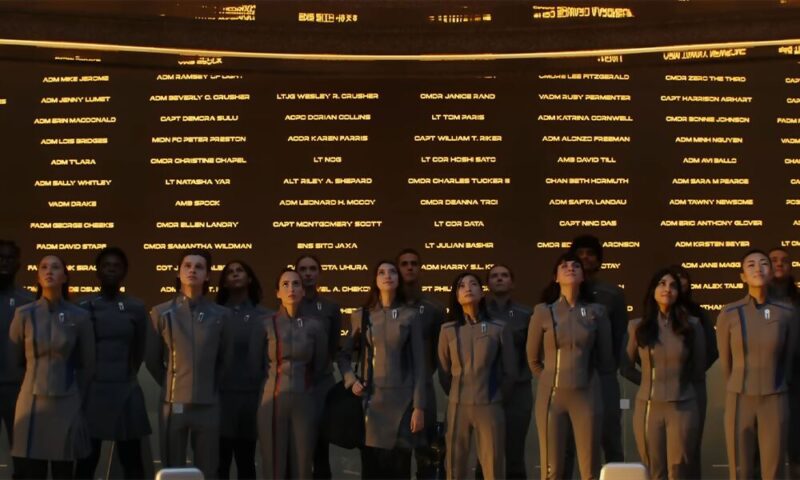
One aspect of Starfleet Academy is quite telling. In the main arena of the USS Athena, a starship which doubles as a mobile campus, a huge honour board exists containing the names of practically every famous Starfleet character who appeared on every Star Trek series past. It is the ultimate tribute to everyone who came before and it often overlooks the cadets on this latest show. A nice touch but now, should Starfleet Academy be less a beginning than the beginning of the end, there is a poignancy about it.
Will more legendary names end up on such a list? Time will tell whether Star Trek truly continues to live long and prosper.
—
You can find A J. on social media, including links to his podcasts and books, via Linktr.ee here. Don’t miss him on the Film Stories Podcast Network too.