The ZX Spectrum classic Manic Miner is back and “better than ever” according to its makers, but the trailer has worrying AI hallmarks. Reader, I’m hypnotised. I’ve watched the trailer for something that calls itself ‘Manic Miner’ several times now and noticed something new and horrifying each time. On the first watch, it was the ... Truly, the Manic Miner ‘reboot’ is the stuff of gen-AI nightmares
The ZX Spectrum classic Manic Miner is back and “better than ever” according to its makers, but the trailer has worrying AI hallmarks.
Reader, I’m hypnotised. I’ve watched the trailer for something that calls itself ‘Manic Miner’ several times now and noticed something new and horrifying each time.
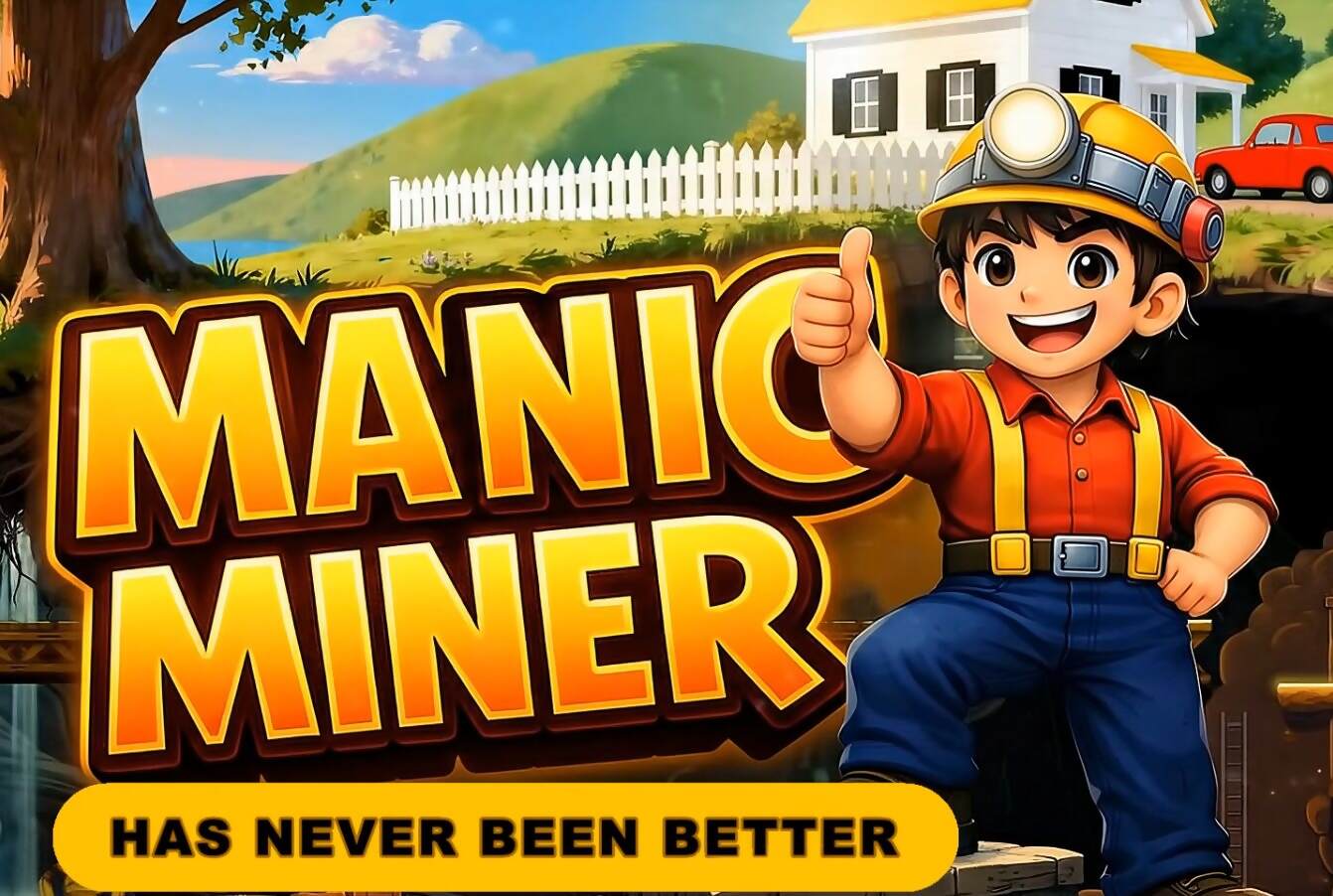
On the first watch, it was the weirdly out-of-place graphic style. This is, the promo informs us, the ‘official’ reboot of the 1983 ZX Spectrum platformer – personally authorised by its own creator, Matthew Smith, who was just 17 when he programmed it all those years ago.
Except the visual presentation doesn’t look so much like a computer game from the era that brought us quintessentially British titles like Hover Bovver and Terrormolinos as a generic mobile title from the 2010s. Worse, just about every element in the trailer has that queasy, garish look of generative AI – the sort of aesthetic that is now all over posters for your local church fete or pub open mic night.
On the second watch, the voiceover, which was merely grating at first, suddenly began to make me feel strangely ill. Again, it’s clearly AI-generated, with all the inhuman syntax you’d expect. No normal person would utter the words, “Rearranged soundtrack!! Featuring STRAUSS. And. GRIEG!” quite like that.
Or, “GLOW-BALL LEADERBOARDZZZZ.”
The third time, I began squinting at the gameplay ‘footage’ itself. The trailer calls the reboot a ‘pixel perfect’ re-creation of the original, with the option to switch between (horrible) modern graphics and the original 8-bit sprites. It’s the kind of thing R-Type Dimensions and the like have been doing since at least the 2000s.
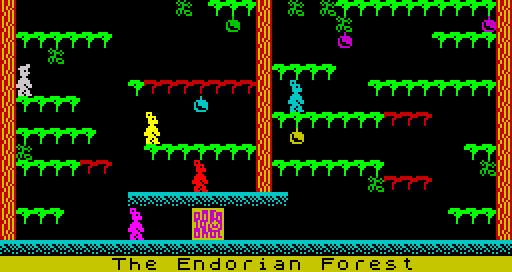
A closer look reveals that it’s anything but pixel perfect, however: the sprites themselves aren’t upscaled properly, so there are weird shading and shape artefacts all over the place. A clip of Manic Miner’s The Endorian Forest level (the game’s cheeky nod to Return Of The Jedi) reveals a frankly hideous issue with the font at the foot of each screen.
Read more: RoboCop | The ultimate 1980s videogame tie-in
This is a game, it should be pointed out, that fits into less than 48kB of memory. That can be emulated quite reasonably in your browser via a Javascript plugin. Manic Miner shouldn’t be a difficult piece of software to reproduce even with a small amount of time and effort.
Instead, eagle-eyed social media users have noticed such slapdash design elements as CRT televisions that aren’t the correct aspect ratio, a typo in an earlier incarnation of the trailer, and glaring signs of AI-upscaled images.
There are also some suggestions that the game itself may have been vibe-coded with AI, though of course we can’t confirm that at this early stage. We’ve contacted the maker of the game, BBG Entertainment, to ask whether AI has been used in the development of Manic Miner itself; we’ll update this piece if we get a reply.
UPDATE: Since this piece was written, we’ve received a response from BBG Entertainment. The company says that AI was used in the trailer to “speed things up”, but adds that “we understand the concerns the community has about AI and we will keep this in mind moving forward.”
You can read the studio’s full response in this separate news piece.

All this talk of synth voices and dodgy graphics is so much griping, though, when compared to what’s really chilling about the Manic Miner reboot: packed into just 50 seconds, it amounts to a glimpse of what our AI-enabled future is going to look like. It’s a relic from the past, dredged out of pop cultural history and repurposed with minimal effort. It looks like Manic Miner, but only if you’re not really paying attention, in much the same way that a pod-person replica of an uncle looks and sounds the same if you ignore the deadness behind the eyes.
It’s the latest fulfilment of what the filmmaker Adam Curtis talked about roughly a year ago: that AI is haunting us, in a sense, with regurgitated sounds and images from our past.
“It’s going back to our own images, our own language,” Curtis said. “The words we wrote, our own emotions. Because out there in the server farms are our feelings in fragmentary forms – little images, little moments. Intense moments of fear and love. And [AI] is scraping it all, putting it all together in some strange, cubist form, and playing it back to us.”

It’s nostalgia in weaponised form: technology acting like whatever force powers the world between worlds in Kane Parsons’ Backrooms. There, half-remembered faces, objects and spaces become physical reality – but in a distorted, incomplete way, as though whatever entity that created them couldn’t fully understand what it was copying.
The promise of generative AI is to turn our own world into the Backrooms. We are becoming surrounded by images and slabs of text and, seemingly, even videogames that sort of resemble the things they’re meant to represent, but not quite. They’re all products of an entity – Claude, ChatGPT, whatever – that has sucked up all this stuff from our collective past, but can’t understand what any of it represents.
As I type this, I’ve gone to a Fandom page to fact-check the precise name of R-Type Dimensions because I’m getting old and have a head like a sieve. Each side of the page I’m currently on is festooned with adverts about sciatica pain and enlarged prostate glands. All are AI-generated; you can always tell because there’s always something off about the people depicted in them.

Barring some miraculous intervention, AI slop will continue to seep into every space it can find – not because anybody likes it, but because it’s cheap and fills gaps. As Cory Doctorow put it, AI is “the asbestos we are shoveling into the walls of our society.”
For this writer, the AI-ness of this Manic Miner reboot hits particularly close to home. Matthew Smith’s original is one of the first computer games I ever remember playing. I can still remember the specific places you had to jump and the titles of certain levels. I can remember the little cheat code you could type in at the start that enabled you to skip levels. Seeing Manic Miner like this is like witnessing a much-loved family pet returning as a shambling zombie.

As I watched the trailer for the ninth or perhaps tenth time, still trying to pin down what disturbed me about it, the penny finally dropped. It feels uncannily like something Charlie Brooker would have made up for one of his Black Mirror episodes. He was an avid ZX Spectrum player, for one thing (the interactive episode Bandersnatch even contains an homage to the era that gave us Matthew Smith).
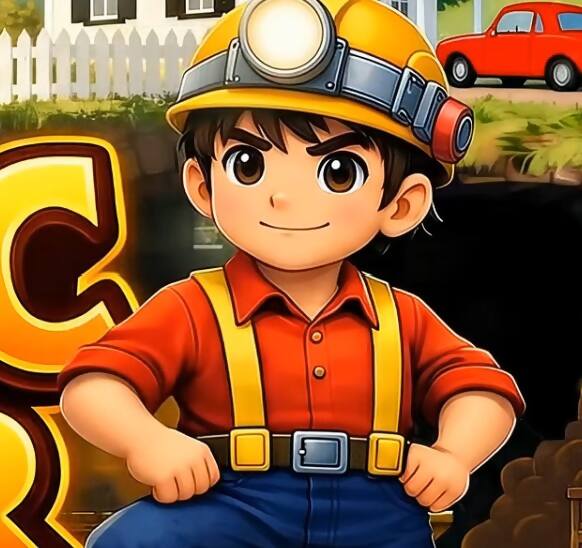
But the trailer also has an underlying sinister quality that feels distinctly Brooker-esque: beneath the jaunty music and promise of cosy nostalgia, there’s the haunting quality of a piano playing by itself in an abandoned warehouse. Look again at the final shot and its AI-anime miner character.
A synth voice ensures us that “Manic Miner has never been better!”. The miner grins and offers a thumbs-up. But then the smile drops, and all we’re left with is those cold, doll-like eyes fixed directly on us. It’s like staring into an abyss.
Generative AI is coming for our entertainment, for our literature, for our advertising, and now, by the looks of things, our retro videogame remakes. Is there anything that can be done to stop it? Will society reject this stuff so aggressively that its usage dies back down again, or will we simply shrug and adapt to it? For my own sanity, I hope we choose the first option.
To paraphrase The Manic Street Preachers, if you tolerate this, then your Jet Set Willy will be next.
Read more: The ZX Spectrum | Celebrating Clive Sinclair’s greatest hit