It couldn’t hope to capture the biting satire of Paul Verhoeven classic, but Ocean Software’s RoboCop was perhaps the ultimate 1980s videogame tie-in. If you were a youngster in the ZX Spectrum era, there were all sorts of ways you could live out the fast-moving fantasies seen in Hollywood movies. Did you love the speeder ... RoboCop | The ultimate 1980s videogame tie-in
It couldn’t hope to capture the biting satire of Paul Verhoeven classic, but Ocean Software’s RoboCop was perhaps the ultimate 1980s videogame tie-in.
If you were a youngster in the ZX Spectrum era, there were all sorts of ways you could live out the fast-moving fantasies seen in Hollywood movies. Did you love the speeder bike sequence from Return Of The Jedi? Then you could always hurtle through pseudo-3D forests in Deathchase. Did you want to pretend you were an athletic, 007-esque spy? Rolling Thunder had you covered. Top Gun pilot? Try Afterburner (okay, it wasn’t perfect, but it was still better than the actual Top Gun tie-in game).
As quintessentially 1980s wish-fulfilment fantasies went, though, Ocean Software’s RoboCop took some beating. It let players step into the implacable metal boots of the titular Detroit law enforcer as he stomped through city streets and warehouses gunning down bad guys.
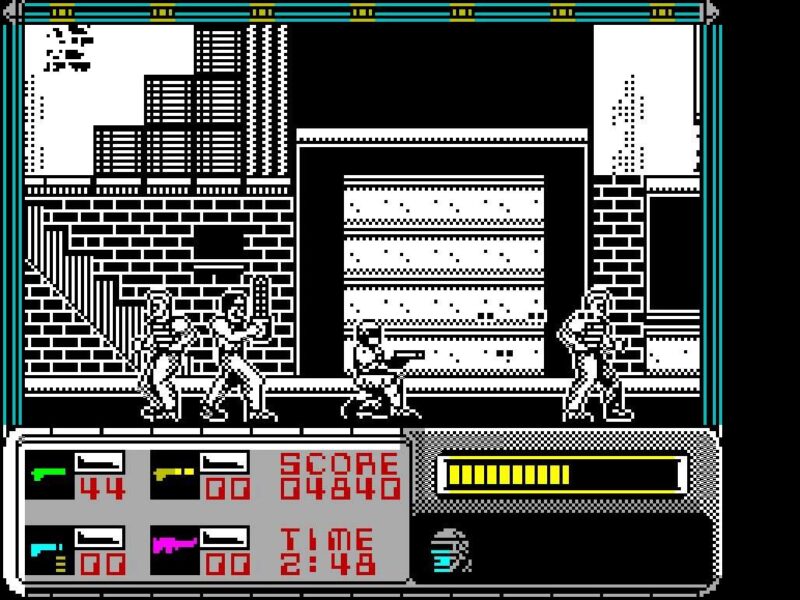
A side-scrolling shooter-platformer with the odd mini-game thrown in, it offered a means of pretending you were the revived remains of idealistic cop Alex Murphy without having to experience, say, the horrible death at the hands of a gang of hoodlums and the loss of everything you held dear.
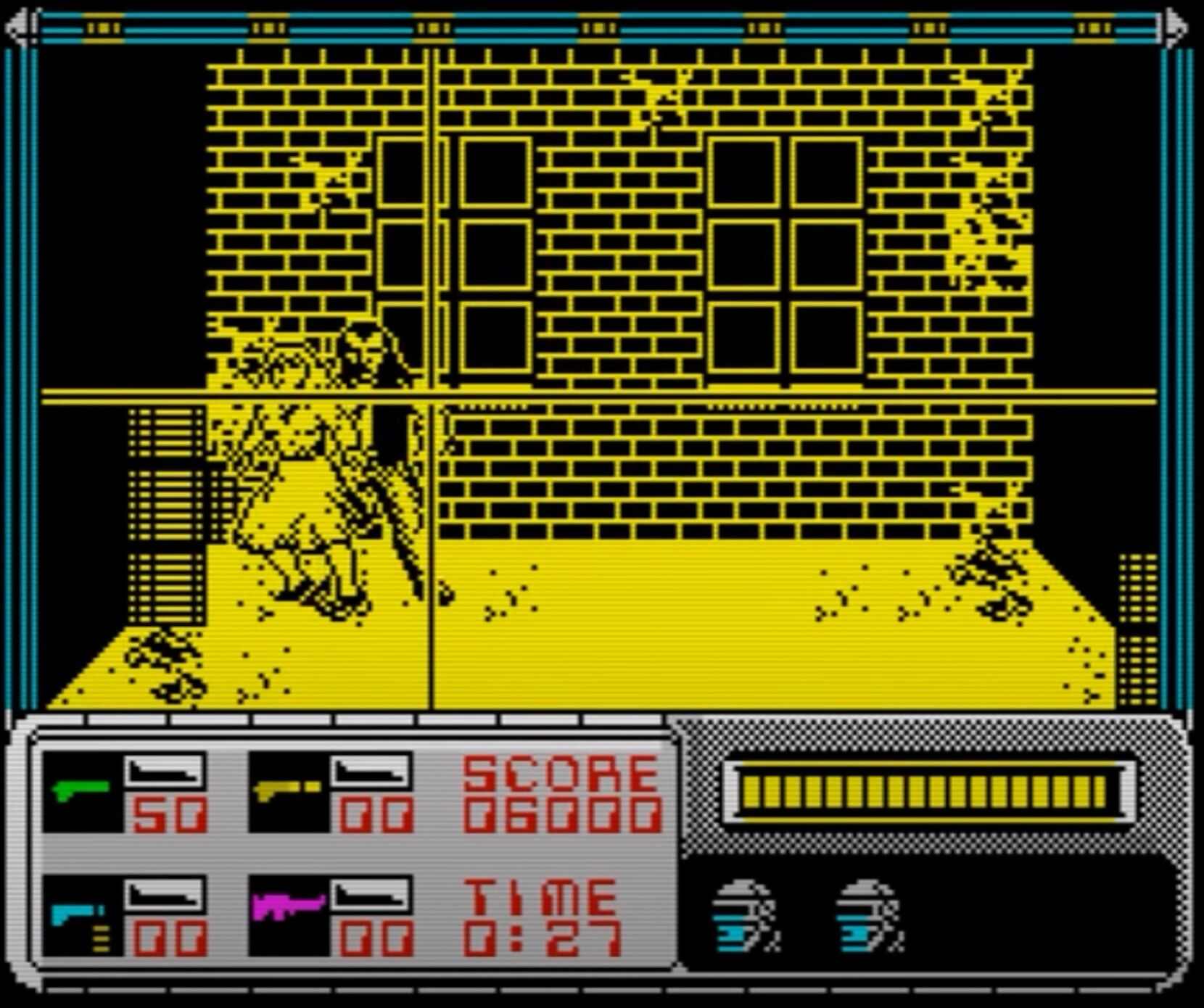
Released in 1988, roughly a year after Paul Verhoeven’s source film emerged, the RoboCop game arrived just in time to accompany the hushed chatter from kids too young to see the 18-rated film itself. Unless you knew someone who happened to be able to get hold of RoboCop on VHS, the game was about as close as you were going to get to enjoying its sights and sounds – the shoot-outs, the tank-like power of rampaging ED-209, the scene with a knife-wielding attacker and a female bystander in a grimy alleyway.
Read more: The 1980s age of videogames based on 18-rated films
Solidly programmed by Mike Lamb, and available on a variety of computers and consoles of the period besides the ZX Spectrum, RoboCop was a huge hit for Ocean Software. It was bolstered both by the aura of forbidden excitement around the film, and also the genuine value of the game itself: the constant march from left to right, blasting villains who emerged from all angles – leaning out of windows and charging at you with motorbikes, kung-fu kicks and chainsaws.
Certainly, the quality of RoboCop’s programming wasn’t necessarily a given at the time. Tie-ins were frequently a mixed bag before and after – there were interesting ones (Ghostbusters) and technically remarkable ones (The Great Escape) but also some startlingly bad ones. Back To The Future was enormously disappointing, for example, and Highlander turned the swashbuckling brio of the original film into one of the most staggeringly dull fighting games ever conceived.
One of the factors that may have contributed to RoboCop’s level of polish was its unusual development story. As explored in a 2014 piece over at Eurogamer, Ocean boss Gary Bracey had purchased the rights to the film from Orion Pictures for $20,000, then sub-licensed those rights to Data East, a Japanese development company then known for such titles as Kung-Fu Master and Karnov.
Data East then began developing the game, hooking in several of the pixel artists and programmers who worked on Bad Dudes Vs DragonNinja, another side-scrolling hit released that same year. Ocean used Data East’s arcade game as a reference for its home computer versions, removing elements where necessary (in the arcade, Robo can jump) and adding new ones.
The mini-games were Ocean’s own devising, with an identify-Emil-Antonowsky puzzle challenge and the above-mentioned alleyway attacker scene – where the action switches to a first-person view – breaking up the foot-based sections. The one common gripe here was that, try as you might, you couldn’t shoot the knife-wielding bad guy in the groin, as RoboCop did in the film. (I shudder to think how many kids tried and failed to do this. There was a rumour going around my school that you could do the trick shot, but you had to hit the exact right pixel on the hostage’s skirt. This was, of course, nonsense.)


As well as being a popular game in its own right – the most successful ZX Spectrum game ever released, legend has it – RoboCop arguably raised the bar for other licenced tie-ins that came afterwards. Batman: The Movie and The Untouchables were both terrific (the latter being mildly controversial for the splats of gore in its own first-person shooter scenes).
I also don’t think it’s too much of a stretch to say that, going into the 1990s, the high bar set by RoboCop prompted some other British software houses to push themselves when they developed the next generation of tie-ins. RoboCop 3 was a hugely ambitious attempt at a first-person shooter, and probably more technically accomplished than the film itself. GoldenEye 007, although arriving somewhat late, was a similarly pioneering FPS for the Nintendo 64 in 1997.
If there was a downside to RoboCop, it’s that it also ushered in a new orthodoxy. For a while, it became the established template that all tie-in games, whether they were based on films, animated TV or comic books, would take the form of a side-scrolling action platformer with the occasional minigame thrown in. And while the quality of tie-ins improved in general, there were some genuinely bad ones from time to time. Ocean’s Total Recall, outsourced to external developers, was another side-scrolling action-platformer. It was put together in a matter of days, and it showed.
As Ocean’s Gary Bracey once put it, RoboCop was a ‘perfect storm’ in 1980s gaming. Cobra, programmed by Joffa Smith and released in 1986, was a quite brilliant action game for the ZX Spectrum, but based on a Sly Stallone film that didn’t exactly set the box office on fire, it didn’t have the same cut-through with players.
RoboCop, on the other hand, marked a moment where the computing limitations of the era fit perfectly with the premise. It didn’t matter that the game’s action moved at something of a plod, because it matched the robotic movements of its title character. The quality of the programming and graphics captured at least a hint of the film’s grisly violence (though not the gore).
Then there was Jonathan Dunn’s unforgettable soundtrack, which went in a completely different direction from Basil Polidouris’s triumphant march. The title theme, in particular, is a beautiful piece of 8-bit melancholy: an inadvertent reflection, perhaps, of the theme of loss present in the film but otherwise difficult to replicate in a blocky 80s action game. Dunn’s music was so catchy, in fact, that it famously ended up in a TV advert for white goods. Praise indeed.
For a generation of gamers, RoboCop offered just about everything they could need. Other games may have offered more exhilaration and depth, but Ocean’s adaptation captured what excited kids about Verhoeven’s film. It couldn’t hope to match its mayhem or the vicious intelligence of its satire, but the game managed to impart the thrill of playing the future of law enforcement. The after-image of its visuals and sounds are, surely, still seared into the minds of those who played it all those years ago.