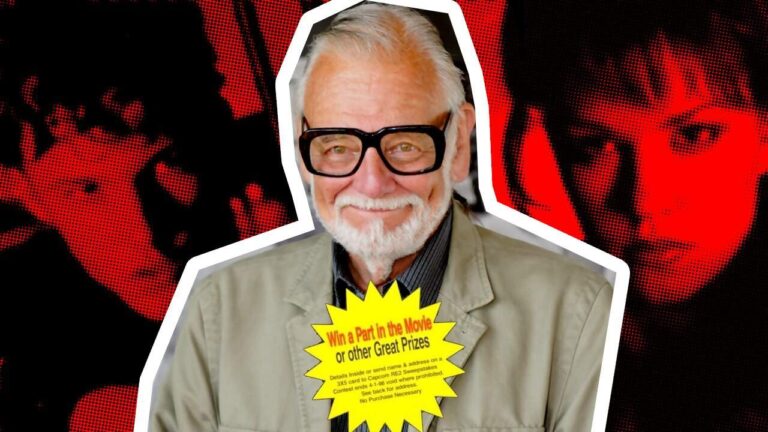
In 1998, Resident Evil fans were offered a chance to appear in the first movie adaption, then headed up by George A Romero. Here’s what happened. Certain covers for the horror videogame Resident Evil 2 advertised an eye-catching prize in 1998. “Win a part in the movie,” the blurb read, housed in a gaudy yellow ... Resident Evil | The film cameo competition – and the George Romero adaptation that never was
In 1998, Resident Evil fans were offered a chance to appear in the first movie adaption, then headed up by George A Romero. Here’s what happened.
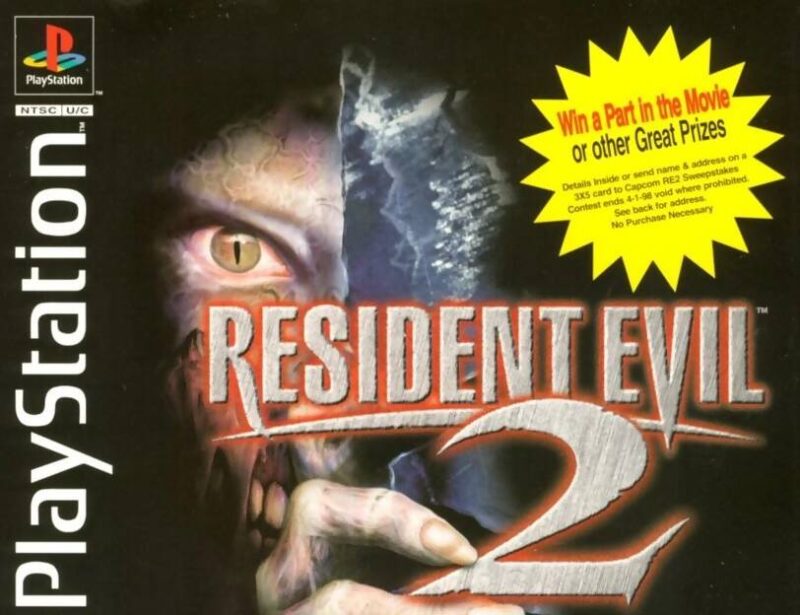
Certain covers for the horror videogame Resident Evil 2 advertised an eye-catching prize in 1998. “Win a part in the movie,” the blurb read, housed in a gaudy yellow flash.
The competition was a sign of how bullish its studio, Capcom, was about its then-new survival horror videogame franchise, known as Biohazard in Japan. Released in 1996, the original was a multi-million-selling hit, with the game’s use of 3D graphics and atmospheric sound creating the feel of an interactive zombie horror movie.
Enthusiasm surrounding the game was such that not only did Capcom begin work on a sequel almost right away, but plans were soon made to broaden the franchise into other media.
A Marvel comic emerged in 1996. An assortment of books and novelisations began to appear from 1997 onwards. And Resident Evil 2 was developed surprisingly quickly, particularly given that an initial build of the game was scrapped after approximately one year (Resident Evil 2 was originally set for release in 1997 before Capcom pushed it back to January 1998).
By early 1997, Munich-based production company Constantin Film had bought up the Resident Evil movie rights, and in 1998, it scored what sounded like quite a coup: George A Romero, the grandfather of the modern zombie horror film, had been hired to write and direct.
Romero had already produced some work for Capcom the previous year, having shot a 30-second commercial for Resident Evil 2. That commercial’s production values were a sign of just how committed Capcom was to giving its games an air of the cinematic. The ad’s budget was $1m, with a sizable portion of that sum going to effects legend Screaming Mad George’s zombie makeup. Evil Dead II cinematographer Peter Deming was also on hand to provide the smoky lighting and extreme camera angles.
Behind the scenes footage of shoot sees Romero talking jovially about the scale of the production; given that he shot his seminal Night Of The Living Dead on a shoestring, it must have seemed surreal to be given a fleet of trucks, directors’ chairs and a proper cast and crew to make a tiny commercial.
The result spoke for itself: featuring Brad Renfro and Adrienne Frantz as heroes Leon Kennedy and Claire Redfield, it gave audiences a brief glimpse of a zombie horde invading an abandoned police precinct.
Constantin was so impressed by the Resident Evil 2 ad, in fact, that Romero was hired to make the feature film off the back of it. And again, the plan appeared to be that the film would be completed quite quickly; in an interview with Official PlayStation Magazine in November 1998, it was reported that “Capcom is hoping to have the movie ready in time for the release of the third game.”
By then, work on what would become Resident Evil 3: Nemesis had already begun; it was launched in September 1999. Capcom, presumably, expected the film to come out that same autumn; the fact that Resident Evil 2’s cover offered the chance for competition winners to have a cameo in the film adaptation also suggested that Capcom thought the production would progress quite quickly.


Suggested product
Issue #61 (Horror Special): Magazine + Signed Ben Wheatley F&TT&N: Issue #4 (Reprint)
£14.99
Instead, there was creative tension behind the scenes. Speaking of his ideas for the film to Official PlayStation Magazine, Romero said that he wanted to make a bloody horror movie with an adult rating.
“I’m hoping that it can just be dark and chilling like the game – good zombies, good makeup, good effects… I think for the US release it’s going to have to fall within an ‘R’ because it’s going to be an expensive film, and nobody’s going to take the chance of letting it go unrated.”

Herein lay the rub. Romero had written multiple drafts of the screenplay with co-writer Alan B McElroy, which adapted the first game’s mansion setting and retained many of its characters. Producer Robert Kulzer, however, was nervous about making the film too violent for a broad movie-going public.
“With George, we could have done a great zombie movie for a very, very limited audience,” Kulzer told Fangoria magazine in 2002. “We could not have shown it to a regular theater, we could not have shown it on television and the video would have been sold in the X-rated section. Then you can make a $2-million movie, but not a big event movie.”
The specifics of what happened to George A Romero’s version of Resident Evil are laid out in detail in director Brandon Salisbury’s 2025 documentart, logically titled George A Romero’s Resident Evil.
In brief: there were fundamental differences over the script, and so Romero’s Resident Evil never happened. Instead, along came British director Paul WS Anderson, who was such a fan of Resident Evil that, after playing the first game, he wrote a spec script, Undead, that was essentially an unauthorised adaptation.
Constantin Films read that script and – again, long story short – it was repurposed as the first Resident Evil movie, which was finally released in 2002. With that, a divisive yet long-lasting and profitable film series was born; Milla Jovovich starred in a total of six Resident Evil entries, all overseen by Anderson in some form.
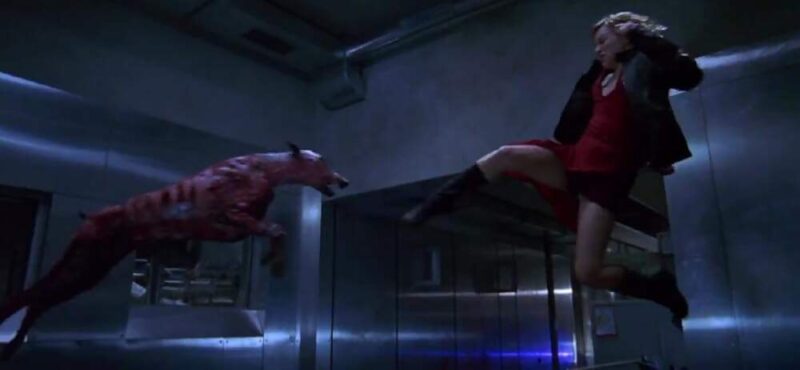
The unexpectedly lengthy development process of that first Resident Evil film had a knock-on effect that few noticed, however: the competition winner, if there was one, never got to make a cameo in the movie.
In 2002, a chap named Rob McGregor wrote to Capcom asking about what happened to the competition. Was a winner ever chosen?
McGregor later posted Capcom’s response on a Resident Evil fan group.
“Thank you for contacting Capcom,” the reply from customer service read. “In regards to your inquiry, the winner of the Resident Evil 2 contest did not appear in the movie because it was filmed in Germany. Therefore, the winner was awarded a prize of equivalent value.”
A list of prizes could be found inside Resident Evil 2’s booklet; these included a bag, a director’s chair, a T-shirt and a bunch of games from Capcom’s back catalogue. But what was the ‘prize of equivalent value’ that Capcom indicated in that response above?
YouTube channel That Old Panda looked into the booklet’s small print, and it appears to hold the answer: Capcom valued being part of the movie at $2,000. That’s the equivalent of roughly $4110 adjusted for inflation, or £3,000 in old money.
To date, the identity of that lucky winner hasn’t been published anywhere, so we don’t know whether they were disappointed that they missed out on being immortalised in a movie, or if they were happier with the cash prize.
What we do have, though, is a small footnote from a more innocent time in the games industry. In the 1990s, videogame adaptations were a comparatively new concept; Super Mario Bros came first in 1993, while Paul WS Anderson directed an early one – Mortal Kombat – in 1995.
Capcom, new to the vagaries of film production, didn’t appear to realise that it’s not uncommon for movies to take years to develop. Whether it would have been a classic or a disappointment, Romero’s Resident Evil never happened. All that publicly remains of it is a likeably kitsch trailer and an overly optimistic competition splashed on the cover of a videogame.
The Resident Evil film franchise’s future appears to be on solid ground, following the glowing critical notices for Zach Cregger’s new outing. All the same, the Romero Resi will always remain one of cinema’s fascinating near misses. Nor will we ever know where he would have placed that cameoing competition winner.
Resident Evil is in cinemas now.