The latest of Pixar’s films the power of play, Toy Story 5 confronts an existential threat to childhood. With spoilers, we explore how its messaging doesn’t paint technology as a purely modern evil… Of all the Toy Story films in the last three decades, the core messaging of Andrew Stanton’s fifth outing could be the ... Toy Story 5 understands that tech needs to serve childhood
The latest of Pixar’s films the power of play, Toy Story 5 confronts an existential threat to childhood. With spoilers, we explore how its messaging doesn’t paint technology as a purely modern evil…
Of all the Toy Story films in the last three decades, the core messaging of Andrew Stanton’s fifth outing could be the most pointed.
The series has always been reflective of lost childhood, fuelled by the melancholy of time pressing on, innocence fading, and the purity of childhood ebbing away. Nowhere more apparent was this than in the conclusion of Toy Story 3, with its one-two punch of the toys’ seeming apocalyptic escape from a literal fiery abyss before Andy, their kid, grew up and left Woody, Buzz and the others behind.
Toy Story 5 is the first of the series to move from lost childhood to one that is being actively stolen from children worldwide. Stanton’s film pointedly takes aim at the creeping normalisation of technology in the lives of families, of devices which parents more and more are relying on to fill a void for their children in a fast-moving, pressurised world of economic stresses, fractured mental health and a sense of missing communal cohesion.
The release of the film is well timed alongside the publishing of a worldwide study, the first of its kind, examining the impact of technology and devices on children aged two and under. The results are predictable while also stark. Long-term negative life effects are predicted with, according to one researcher, parents “inadvertently teaching children and babies to develop unhealthy habits and relationships with screen devices.” The knock-on effects can damage play with other children, create a physical reliance on devices, and see children turn to machines for comfort rather than parents or carers.
Bonnie in Toy Story 5 might now be eight years old, but we see all of these effects depicted in Stanton’s film once she’s bought a ‘Lilypad’ device. Her educated, middle-class parents are wary of plugging Bonnie into the online grid at such an age, but equally conscious that her focus on playing with physical toys is leaving her somewhat ostracised from her pre-teen peer group. They get her the device for all the right reasons, but immediately see the effects discussed in the study – withdrawal, reliance on the device, a change in mood toward her parents and an increased difficulty to integrate with her peers.
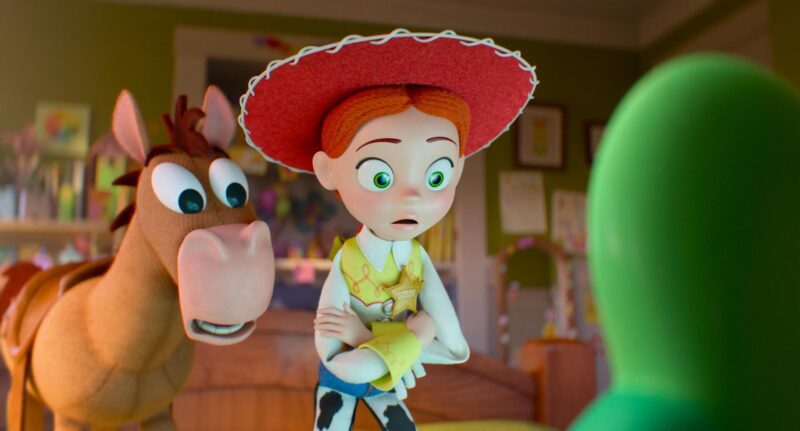
Where the toys in previous films have worked to try and ensure their own relevance in the lives of their kids, whether it’s Woody’s anxiety about Buzz in the 1995 original, or the dark fate of Lotso the bear and his charges in Toy Story 3, in Toy Story 5 both Jessie and Bullseye (promoted to lead players here) lead the squad in working to protect Bonnie from the malicious intent of technology. Granted, they fear for their own survival, as they always have, but there is an existential threat to Stanton’s film that we haven’t seen in previous films.
Much mirth is gained from the apocalyptic description of ‘devices’ from older toys, left to rot in garden pits or unused playhouses, but the comedy comes from the kind of anxiety being reflected in the adult world around technology such as AI. There is a great deal of fear about what these innovations will do to society, to the climate, to the way we interact with each other – some of it justified, some of it absurd panic that only heightens anxiety. Toy Story 5’s fear is, at least, grounded in a measured, clear net effect on childhood both young and teenage. Technology and devices are changing our children. It’s a fact.
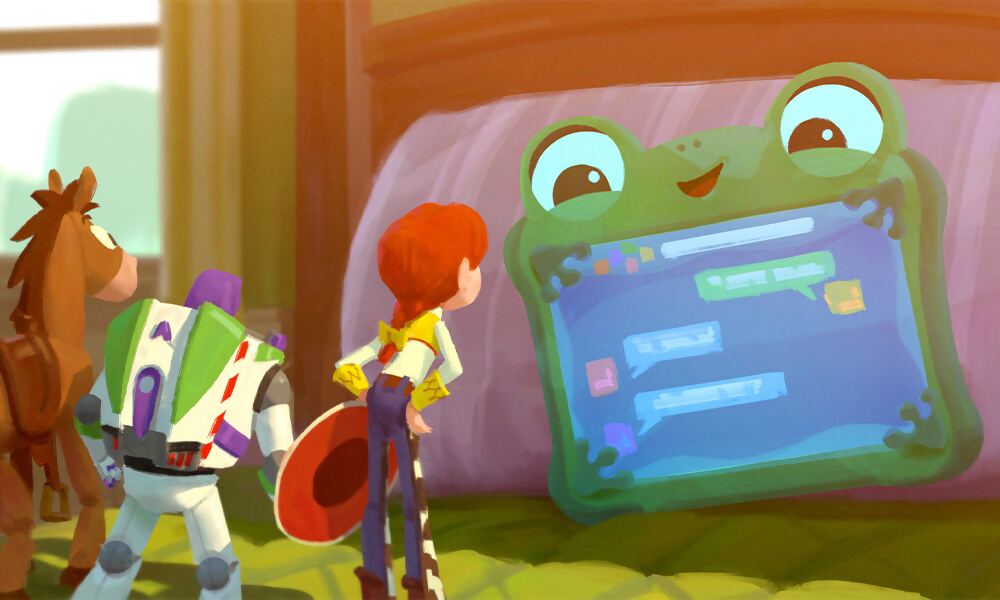
Where Stanton’s film is to be applauded, however, is that it refuses to buy completely into the idea that technology is some kind of evil force to forever be banished from society or childhood. Lily, the pad Bonnie is given, is initially presented as somewhat malevolent, helping to pull Bonnie into the online space of device games and chat threads at the expense of the toys and any kind of make believe play they provide. However, as the film progresses, and Bonnie’s peers cause her genuine emotional distress in mocking her attachment to physical toys, Lily begins to see and feel the damage she is doing to her kid.
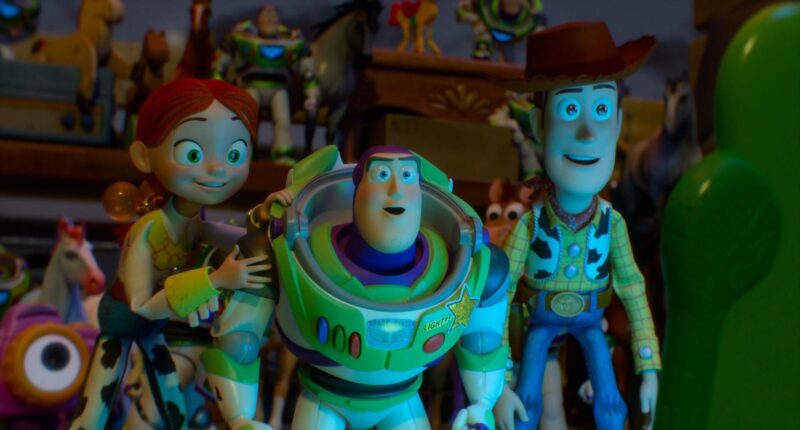
We also see how technology and devices can themselves be ephemeral parts of childhood, with the breakout character of Toy Story 5 being Smartypants, an electronic potty trainer who alongside several other key devices (such as a crocodile GPS and camera) have spent years switched off in drawers as the technology becomes irrelevant. They are no different from the physical toys at this point – dismayed at their banishment and keen to find some relevance again. Smarty and Jessie bring their analogue and digital skills together to ultimately find Bonnie a friend in Blaze, a similarly innocent pre-teen who isn’t reliant on the technological world.
It would have been easy to depict Lily, as the current epitome of online tech that draws children away from play and imagination, as a purely malevolent depiction of a world parents and society at large are fearful of. Lily’s ultimate realisation that she’s exposing Bonnie to trauma, and how she tries to remove herself to safeguard her kid, is perhaps wish-fulfilment. The algorithm nor the tech companies behind it are going to have anything like this social conscience. Nonetheless, it speaks to what the film hopes for – a balance between an older and newer kind of childhood.


At the end, Bonnie and Blaze are enjoying imaginative play together, but they’re augmented by what Lily can add as a device, rather than being dictated by it. Lily ends up allowing them to communicate and come together, playing in the real physical world. Toy Story 5 wants us to believe in a childhood where physical play, with all of its developmental benefits, remains key in helping to build social and emotional interactions between children and to help provide them the tools they need to navigate adulthood.
Technology isn’t going anywhere. How we integrate it into our lives remains a key question that underpins a great deal in our global society right now, linking to everything from politics and economics to culture and cinema. Toy Story 5 isn’t going to solely move that needle, but it might add to the voices among parents and politicians who understand safeguarding childhood innocence is key – while at the same time ensuring they aren’t disadvantaged by a lack of the tech that will form so much of the future.
You can find A J. on social media, including links to his podcasts and books, via Linktr.ee here. Don’t miss him on the Film Stories Podcast Network too.