Studio execs were nervous about blowing up the White House in the Independence Day trailer. Here’s the story behind an iconic shot. The helicopter sells it. Flying in front of the White House just as it explodes, silhouetted against a great ball of frame, the Sikorsky Sea King creates the illusion of scale. It makes ... Independence Day | The story behind its exploding White House shot
Studio execs were nervous about blowing up the White House in the Independence Day trailer. Here’s the story behind an iconic shot.
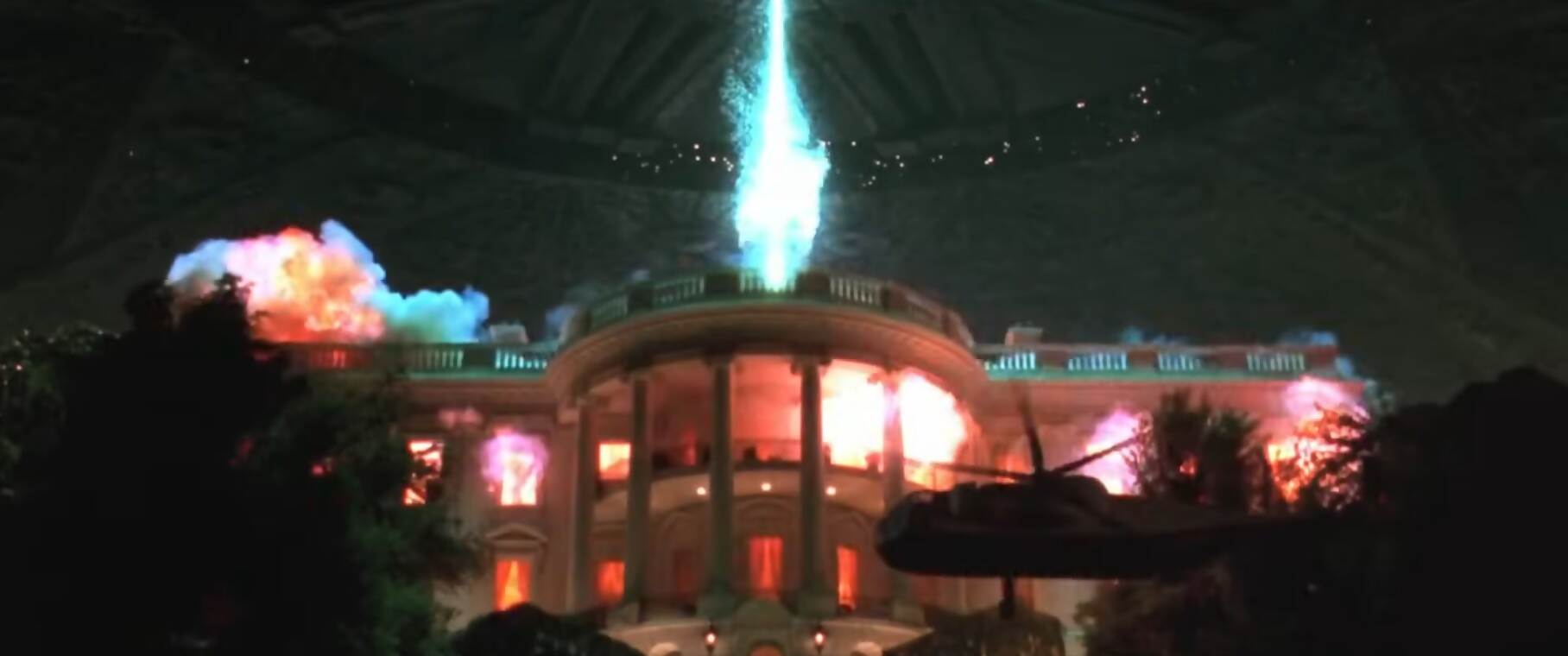
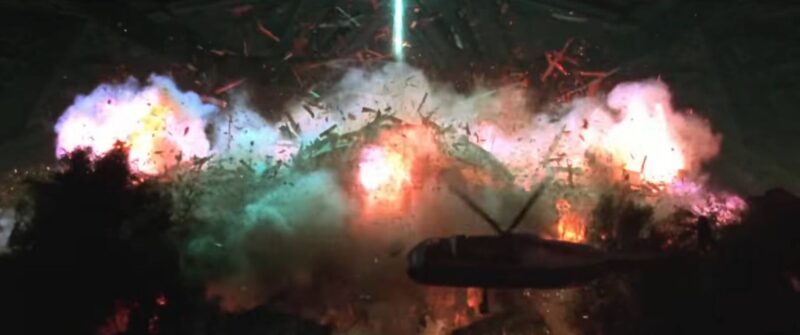
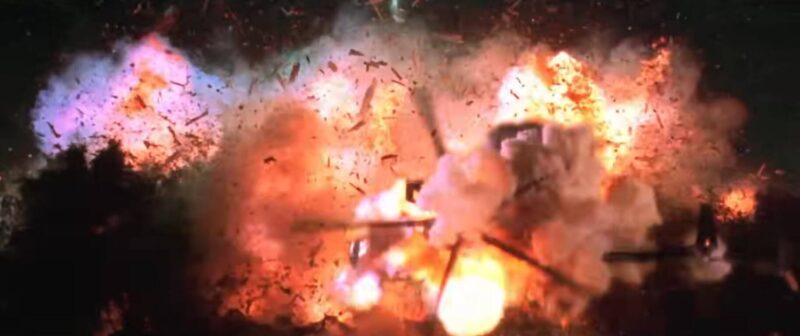
The helicopter sells it. Flying in front of the White House just as it explodes, silhouetted against a great ball of frame, the Sikorsky Sea King creates the illusion of scale. It makes what is in reality a scale model look huge, the explosion behind it gargantuan.
This was easily Independence Day’s most famous shot: an image that summed up its amped-up colour and larger-than-life bombast. It formed the centrepiece of the invasion thriller’s marketing campaign (albeit without the helicopter mentioned above), and helped turn director Roland Emmerich’s summer flick into one of the biggest films of the 1990s.
Emmerich wasn’t the first filmmaker to show extra-terrestrials blowing up famous US landmarks (Earth Vs The Flying Saucers got there decades earlier), but Independence Day had a markedly different tone from previous invasion movies. First, his 1996 film fused a genre that had been around since H.G. Wells’ The War Of The Worlds with the ensemble cast and tone of an Irwin Allen 1970s disaster movie.
Second, it portrayed the United States as a peace-loving democracy pluckily holding its own against an imperialist force – a conscious echo of the American Revolutionary War, which Emmerich explored more directly in 2000’s The Patriot. Having the aliens strike at a symbol of American freedom and righteousness was an image designed to leave audiences riveted to their seats, rooting for the heroes to fight back and repel the aggressors.
Emmerich immediately recognised the power of the White House destruction scene, which he wrote into the script with his producer-writer partner Dean Devlin. As he told me in 2016, coinciding with the release of his sequel Independence Day Resurgence, “I pulled the whole explosion of the White House forward very early in the schedule.”
The reason being that Emmerich wanted that sequence to feature in Independence Day’s promotional campaign. But when executives at 20th Century Fox got wind of Emmerich’s plans to put the shot in the trailer, they began to grow nervous.
Recalled Emmerich, “They said, ‘Okay. What’s going to be the first teaser?’ I’d pitched [the White House sequence] as the part of the teaser. They said, ‘It’s all great, but you can NOT blow up the White House in the teaser.’
“I said, ‘Well, it’s in the movie.’ They said, ‘Yeah Roland, but you’re not American. You have to understand it’s a very touchy issue!’”
Emmerich therefore reached a compromise: he and his team would cut together two teasers – one including the exploding White House, one without. The two trailers were then shown to test audiences to gauge their reaction. Needless to say, the response to the President’s Pennsylvania Avenue residence blasted with a colossal laser got the bigger response.
“People said that they cheered when the White House exploded,” Emmerich said. “They cheered the trailer because it felt so unique at the time.”
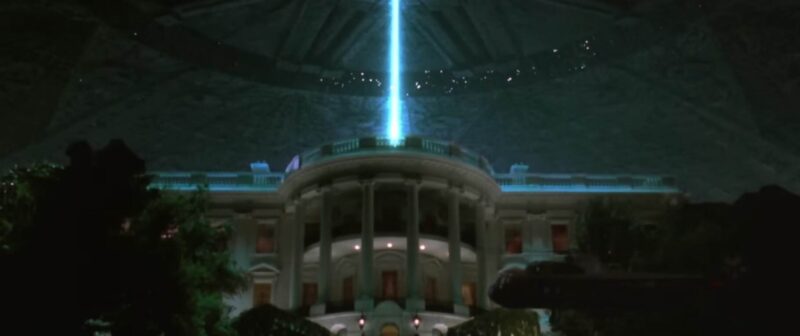
Emmerich pointed something else about Independence Day’s promo: lasting just over a minute long, it was composed almost entirely of effects shots and crowd scenes. The shadows of vast ships eclipsing American cities; citizens looking agog at something hovering above them. Then the pay-off: a curtain of fire ripping through buildings and flipping up cars. The final money shot of the doomed White House.
“It was a movie trailer where there was not one lead character in it,” Emmerich said. “Not one!”
In Independence Day, the visual effects were the stars, not the actors. Along with Jurassic Park, Emmerich’s film ushered in a new era that favoured high concepts and visuals over traditional Hollywood stars.
Read more: Independence Day | In praise of its easily-overlooked creature design
From the moment that teaser appeared in front of the Super Bowl in 1996, Independence Day’s success hinged on the quality of those visual effects. And it’s a testament to the skill of VFX supervisor Volker Engel that the film looked as impressive as it did. The movie had a decent budget of $75m, but the script required the creation of a then-huge 450 effects shots.
Emmerich had gone around such respected effects companies as ILM and Digital Domain to get some quotes, and estimates came back that each shot would cost some $150,000. That’s $67.5m, leaving almost nothing for location shooting, actors’ salaries, craft services and so forth.
Rather than hack the script down to fit the budget, Emmerich and his team instead came up with an alternate plan: get the per-shot cost down. The filmmaker turned to Engel, a film school colleague of his from Germany.
“Volker was a teacher at Ludwigsburg Film Academy, which has a really strong visual effects component,” Emmerich recalled. “I wanted to have him as my visual effects supervisor, and he said, ‘Yes, I can do it, but I have to bring some of my students, so they at least get the chance to work on a big film. It would be good for them.’”
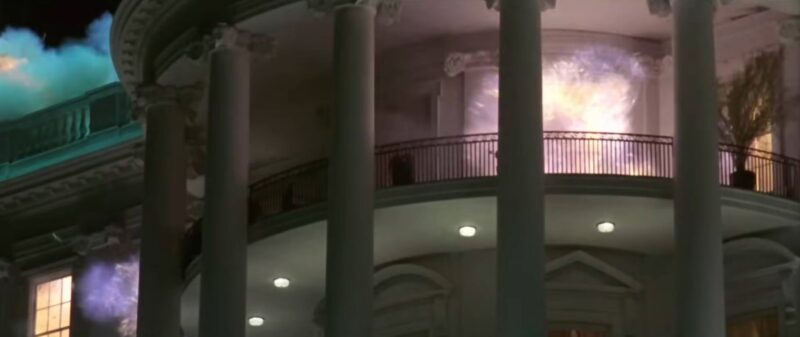
Engel and a group of around 10 German film students were therefore set to work at the former headquarters of Hughes Aircraft Company – a vast hangar that had the space to accommodate the huge numbers of miniatures the film would require. Among all those miniatures was, of course, the White House, which measured roughly 10 feet wide by five feet high.
The use of practical miniature effects proved to be a masterstroke. Not only did the results look impressively physical, but they also cost less than the digital equivalent; it was later estimated that each shot cost a relatively small $40,000. To this day, Independence Day holds the record for the most miniature effects shot in a single film.
The following year, Independence Day won an Oscar for Best Visual Effects; as Emmerich later recalled, the 10 or so students who moved to the US to make the film ended up staying behind. “They were sucked up by ILM and all kinds of companies,” he said, “because they were really good.”
Independence Day emerged in US cinemas in July 1996, just in time for its titular celebration. By then, the White House shot looked slightly different: the helicopter mentioned above was composited in front of the building, making the shot look even more impressive than it did in the teaser.
Critics thoroughly disliked the film (“The Day The Script Stood Still” was one famous headline), but the film hit a nerve with audiences. It made $817m by the time it left cinemas – a sum that still sounds huge in 2026. It’s certainly rare for a 21st century Hollywood blockbuster to make back its investment more than 10 times over.
The clamour surrounding Independence Day was such that President Bill Clinton called Emmerich’s office one day and asked for a private screening. So it was that the director, producer and co-writing partner Dean Devlin, and actor Bill Pullman – who played the film’s idealistic President Whitmore – ended up at a screening room in the real White House.
Emmerich later recalled standing at the back of the theatre in the East Wing with Devlin and Pullman, watching Clinton as he sat down with a huge bucket of popcorn. They observed the surreal sight of the President watching the White House blow up – while sitting inside the real White House.
Then Clinton got up and abruptly left.
“Who runs out?” the director told The Hollywood Reporter. “Bill Clinton!”
The President fled the room, Emmerich clarified, because he needed the loo, not due to shock or horror. It was common for audience members to sit glued to their seats for the film’s first act, Emmerich added: by his reckoning, they were so engrossed in the movie, it was only after the dramatic release of the White House that they realised how badly they needed the loo.
Minutes later, Clinton rushed back into the screening room, “shaking his hands dry.”
“Dean and I looked at each other and nearly started laughing.”
The East Wing, together with the small movie theatre mentioned here, was demolished by President Donald Trump in October 2025. The former reality TV star, who deferred five military drafts during the Vietnam War thanks to a doctor’s diagnosis of bone spurs in his heels, is currently spending up to $500m on a new ballroom.
After Independence Day, Emmerich went on to make a string of other disaster movies, including The Day After Tomorrow and 2012. He wreaked havoc on Washington DC again in the thriller White House Down, before returning to the alien invasion well with the lesser sequel, Independence Day Resurgence.
None captured the world’s imagination in quite the same way as the original Independence Day did – partly thanks to the strength of its imagery, and partly due to the perfection of its timing. As Independence Day went from the most hyped film of 1996 to one of the biggest of all time, one psychologist tried to explain exactly what it was that audiences were responding to.
“This movie delves into some very archetypal needs and myths,” a professor told the LA Times that July. “There is an idea that we, as people, have been fragmented since a primordial time. Anything that can provide us with the illusion of oneness and unity will have an appeal.”
Thirty years on, and both in the US and elsewhere, the illusion of oneness and unity has been replaced by growing enmity and fragmentation. In retrospect, Independence Day was probably such a hit because it emerged in what was a time of relative prosperity and optimism; before the successive waves of crises, political spasms and technological changes that have left society reeling in the 21st century.
Had Emmerich made Independence Day in 2026, his portrayal of the US President as a brave war veteran, ace pilot and all-round youthful idealist would probably seem even more fanciful than it did all those years ago. Modern audiences might still cheer the moment when the White House blows up – albeit for a very different reason.