It’s had a sequel, a remake, and even a homage in Scream. But the opening to 1979’s When A Stranger Calls remains unmatched in its tension. “Have you checked the children?” It’s a chilling refrain in director Fred Walton’s 1979 chiller, When A Stranger Calls – or at least, its first 20 minute reel, which ... When A Stranger Calls | Over 40 years on, its opening is still one of the scariest 20 minutes in cinema
It’s had a sequel, a remake, and even a homage in Scream. But the opening to 1979’s When A Stranger Calls remains unmatched in its tension.
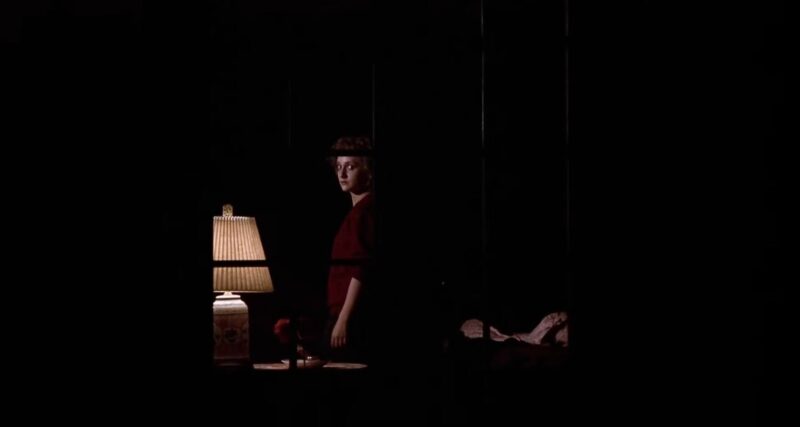
“Have you checked the children?” It’s a chilling refrain in director Fred Walton’s 1979 chiller, When A Stranger Calls – or at least, its first 20 minute reel, which remains one of the most terrifying openings in cinema.
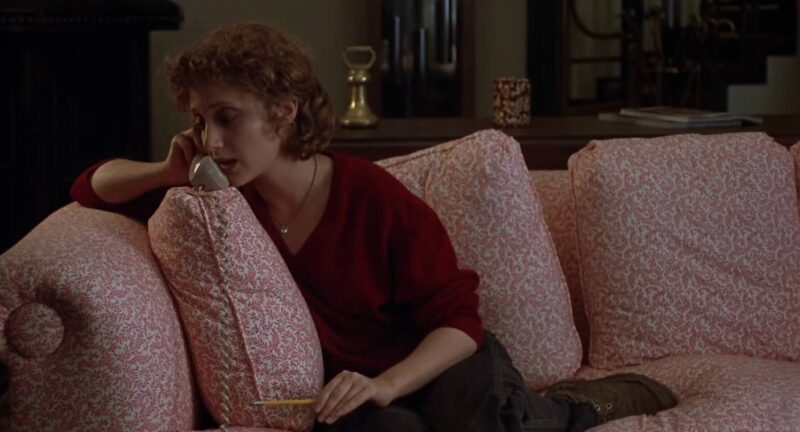
Walton, who co-wrote the script with Steve Feke, keeps things elegantly simple. Babysitter Jill (Carol Kane) shows up at the house of a well-to-do doctor and his wife, who are heading out for a meal and maybe a visit to the cinema. Their two kids are already tucked up in bed and fast asleep, so all Jill has to do is keep an ear out for any signs of them awaking – or perhaps a sneeze, since they both have rotten colds.
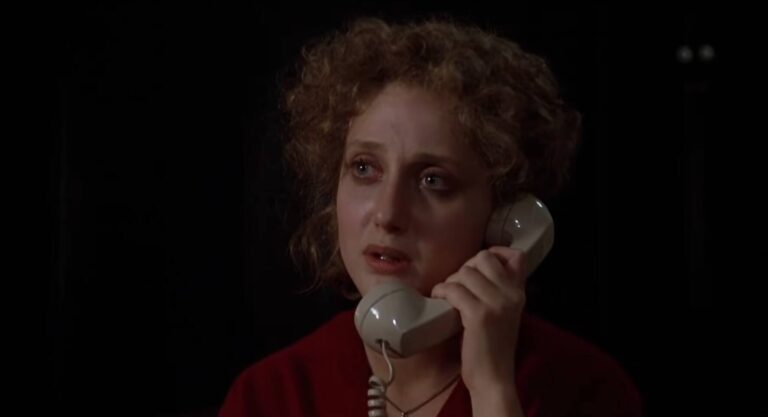
The couple then depart, leaving Jill alone in the big, fancily-appointed house – the rooms are voluminous, the soft furnishings plush, and the fridge even has an ice dispenser. Clearly a studious sort, Jill sits down and gets on with her maths homework. But then the phone keeps ringing. Jill answers it; at first, there’s nothing but silence. On the second or third call, a soft, sinister voice asks that ominous question: “Have you checked the children…?”
We then watch as Jill’s mood changes from mild annoyance to paranoia to outright fear. With each subsequent call, Jill begins to realise that the person on the other end of the line can see her. She tries to alert the police, who are, predictably, unmoved by her story.
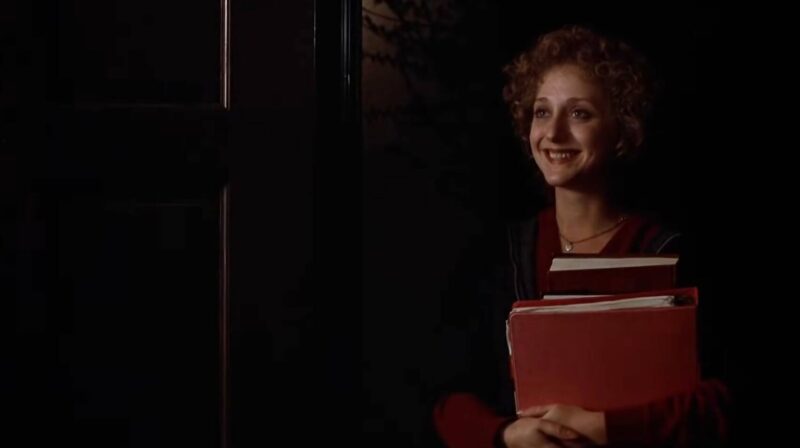
Cinematographer Donald Peterman, who later shot Flashdance for Adrian Lyne and Point Break for Kathryn Bigelow, underlines the growing sense of unease with tracking shots that follow Jill from room to room, or keep her low in the frame to emphasise her vulnerability. Dana Kaproff’s string-laden score simmers beneath the images, hinting at something awful just around the corner.
Above all, When A Stranger Calls is a showcase for Carol Kane’s strength as an actor. She spends the opening act almost entirely on her own, and has little dialogue to play with; Kane turns all this to her advantage, crafting a performance so convincing in its white-knuckle anxiety that her character’s plight becomes instantly believable.
Walton keeps the suspsense rising right up until the final pay-off which – no spoilers – is still quite shocking today. If there’s a criticism to be made, it’s that the resolution is delivered so quickly that we’re given little time to process what’s happened.
The bigger problem with When A Stranger Calls’ opening act is that, once it’s over, there’s still an hour left. The opening is so effective, and so frightening, that the rest of the movie simply can’t match it – though there are times when Walton comes at least close.
Briefly, the story switches to the guy who menaced Jill in the opening act; he’s played with sleazy precision by British actor Tony Beckley, who sadly died not long after filming completed. He’s being pursued by middle-aged detective John Clifford (Charles Durning), who’s been on the guy’s trail ever since that fateful night described above. Later, we catch up with Jill again, now ten years older and married with two kids of her own. It all builds to a climax that is… perfectly fine, though also disappointingly similar to other thrillers of its type.
If When A Stranger Calls’ structure sounds somewhat disjointed, there’s a good reason for that – which you may have already guessed by now. It began life as a short film – 1977’s The Sitter, also directed by Fred Walton and co-wrtten with Steve Feke. Made for just $12,000, it runs for 21 minutes – in other words, almost exactly the same duration as the later feature’s opening act.
The plot is also identical, right down to the names of the characters and the harsh denouement. Walton and Feke were inspired by an urban legend that is largely the same as their film. They may also have been drawing – consciously or not – on earlier thrillers like Fright (1971) and Black Christmas (1974) which deal, respectively, with a menaced babysitter and young women terrorised by anonymous voices on telephones.
At any rate, The Sitter was so well received that it was put in cinemas. A pair of movie producers – Barry Krost and Douglas Chapin – bought the rights and gave Walton and Feke the task of extending it to feature length.
Again, the resulting When A Stranger Calls is well acted, with Durning and Beckley taking over from Carol Kane for the middle stretch, yet the scuzzy atmosphere makes it feel like a separate movie. It could also surprise modern viewers, who might assume that they’re in for a more conventional slasher movie. Instead, we get something far more strange and twisted. It doesn’t all work, but Beckley makes for an unsettlingly convincing villain – in a shabby, mundane sort of way.
Critics were lukewarm about the film in 1979, but it was still a decent-sized hit. Its profile also grew over time, leading Fred Walton, Carol Kane and Charles Durning to return in 1993 for a made-for-TV sequel, When A Stranger Calls Back. In the interim, Walton also directed I Saw What You Did, a TV remake of the 1968 film of the same name, which also uses telephone calls as the pivot point for its thriller plot.
In 2006, Con-Air director Simon West headed up a When A Strange Calls remake, which stretched out the original’s opening act to the entire movie. The result, this time starring Camilla Belle as Jill, is disappointingly suspense free.

When A Stranger Calls’ biggest legacy, perhaps, is the one we haven’t brought up yet: the opening to Wes Craven’s Scream. Here, it’s Drew Barrymore who’s terrorised by an unexpected caller who turns out to be uncomfortably close to the house. One of many homages to other horror movies, Scream’s 12-minute opener was clearly modelled on When A Stranger Calls – something screenwriter Kevin Williamson has been open about in interviews.
Barrymore was also a fan of the 1979 movie, and later told Carol Kane that she cited it when pitching herself for the role of Casey Becker (she was originally supposed to play the lead, Sidney Prescott).
As iconic as Scream’s first scene is among a generation of horror fans, though, it’s arguable that When A Stranger Calls’ opening is by far the more frightening of the two. Lacking Scream’s meta commentary on horror cliches, the 1979 movie leaves us with nothing of comfort to cling onto. It’s proof that, in the hands of the right actors and filmmakers, the sound of a ringing phone is enough to freeze the blood in our veins.