Relay and Hell Or High Water director David Mackenzie tells us about his new thriller, Fuze, starring Aaron-Taylor Johnson and Theo James. “Could it blow at any minute?” a construction worker nervously asks Aaron Taylor-Johnson’s Major Will Tranter. “Theoretically, yes,” Tranter casually replies, gazing through his binoculars at the topic of conversation: a gigantic, unexploded ... Fuze | Director David Mackenzie on directing this spring’s twistiest thriller
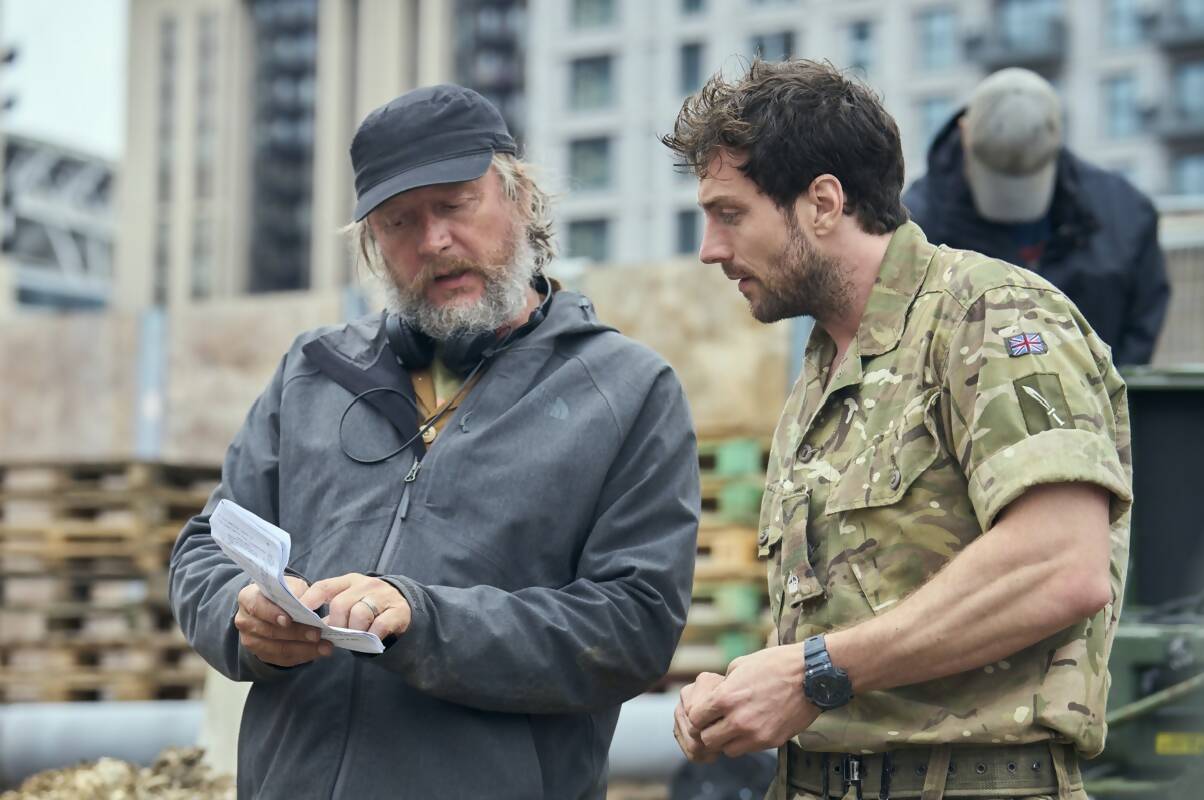
Relay and Hell Or High Water director David Mackenzie tells us about his new thriller, Fuze, starring Aaron-Taylor Johnson and Theo James.
“Could it blow at any minute?” a construction worker nervously asks Aaron Taylor-Johnson’s Major Will Tranter.
“Theoretically, yes,” Tranter casually replies, gazing through his binoculars at the topic of conversation: a gigantic, unexploded bomb.
Having been dropped on London during a raid in World War II, the bomb laid in the mud for over 70 years – only to be uncovered in the middle of a building site one sunny day.
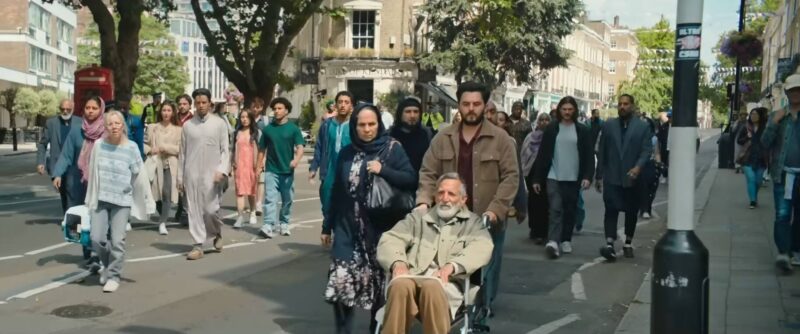
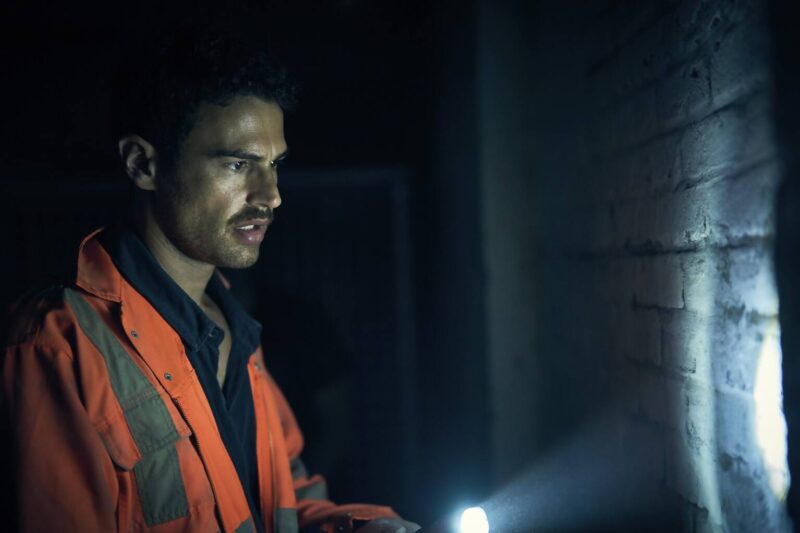
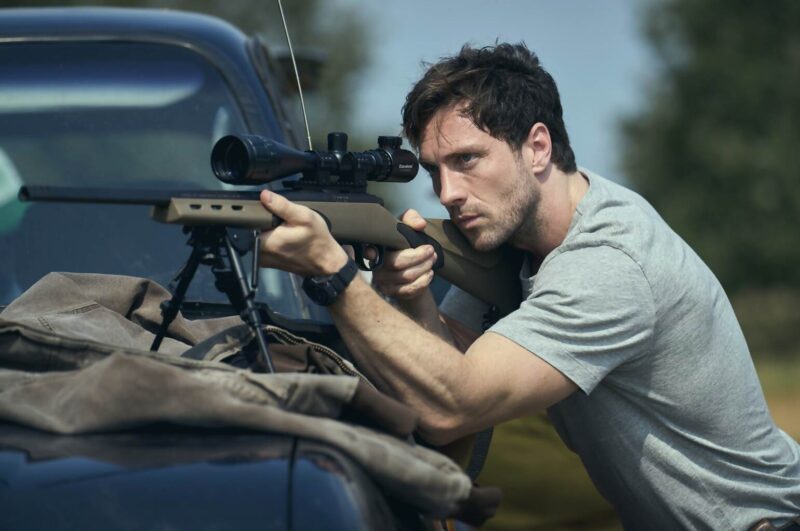
So begins Fuze – director David Mackenzie’s tense thriller out in cinemas this week. That unexploded bomb provides the focal point for a knotty plot that is constantly on the move; we follow Taylor-Johnson’s explosive expert as he and his team attempt to defuse it. Meanwhile, Gugu Mbatha-Raw’s police chief, Zuzana, oversees the nightmarishly complex attempt to evacuate the area. Then there’s Theo James’s Karalis, whose team of thieves take advantage of the bomb threat to stage a daring heist.
To relate much more would spoil Fuze’s manifold turns, but as Mackenzie tells us, understatedly, “it’s a bit of a ride.”
“It’s designed to be kinetic, quite fast,” the filmmaker told us earlier this month. “It’s basically a 90 minute film if you take the credits off… really, from the get go, the idea is that it’s a high-intensity experience.”
Fuze emerges as a punky counterpoint to Mackenzie’s previous thriller, Relay, which came out last year. Where that film was all 1970s paranoia and slow-burn intensity, Fuze hurtles along like a pure pulp page-turner.
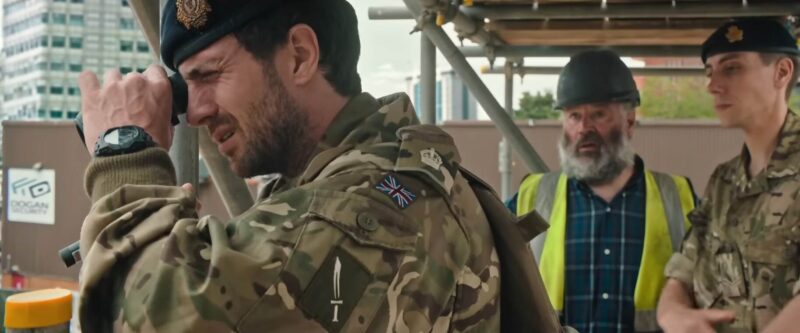
What unites the two films is Mackenzie’s attention to detail as a filmmaker; although Fuze is a heightened thriller, it’s filled with tiny details that make it feel convincing in the moment. We’re shown the specifics of how an evacuation effort in a densely populated area might take place; we get glimpses of the tools bomb disposal efforts use in their line of work and the specific language they use.
“We leant heavily on the advisor, Nick Orr, who’s an amazing bomb disposal guy,” Mackenzie says. “He travels the world, defusing war zone munitions and all those kinds of things. He’s an extremely interesting and impressive man. And we leaned a lot on his understanding of the protocols and how you do it. And some of the language, the particular jargon [used by] unexploded bomb teams…
“So there’s a lot of details in the research that find their way into the story. I think it’s a really nice way of working…. [Screenwriter Ben Hopkins] and I worked on that script for a long time, and then it meets the reality of what things are really like. And things have to adjust in order to compensate for that reality.”


Suggested product
Issue #61 (Horror Special): Magazine + Signed Ben Wheatley F&TT&N: Issue #4 (Reprint)
£14.99
Part of that reality involved shooting on real locations in and around London – a process that required an enormous amount of planning for Mackenzie and his first assistant director, Danny McGrath.
“That was tough – complicated,” Mackenzie says. “We did have to try and lock the streets down. The rule for us was we shot early on Sunday mornings, and we were allowed road closure on Edgeware Road for three minutes every 15 minutes. And then people lose their patience, and you’ve got to clear the traffic and all that, and then you keep going again.
“And so we had to be very organised. We had this great floor plan of Edgeware Road, and little toy cars, and a schedule of which camera was there and which camera was here. It had to be a kind of mechanistic process and highly organised. But interestingly, the police who helped us thought it was really well organised. Danny McGrath, who’s my first AD, who I’ve worked with on a few films… it was all down to him, really.”
In a career stretching back to the early 2000s with his debut The Last Great Wilderness and his acclaimed 2003 second feature, Young Adam, Mackenzie’s work has straddled genres. He’s dabbled in comedy drama (Hallam Foe), downbeat sci-fi (Perfect Sense) and period epic (Outlaw King).
But while the Scottish filmmaker shifts between genres and tones, from the claustrophobia of his prison drama Starred Up to the wide open spaces of the Oscar-nominated Hell Or High Water, one constant has been his free approach to directing; where some movie-makers stick rigidly to the script or plan everything down to the last detail, Mackenzie is more comfortable in discovering moments on set, and sometimes diverging from the script to suit.
It’s a style, he says, that emerged during his earliest work in the 1990s, when he made the short film Dirty Diamonds in 1994. What was envisaged as a pure noir homage morphed during filming. “I started making it, and the actor, Martin Black, who I cast in it, was unwittingly funny,” Mackenzie says. “So in the course of it I learned as a director, very early on, to take advantage of the opportunities as they present themselves.”
Mackenzie’s above-mentioned debut, 2002 dark comedy The Last Great Wilderness, was also a trial by fire: an outbreak of foot-and-mouth disease saw the locations that had been scouted and chosen suddenly thrown out. “We had to think on our feet,” Mackenzie realls. “I had to turn up and try to shoot a scripted movie in places I’dliterally never seen before. So it suddenly made me have to think on my feet in a really interesting way.”
Although that semi-improvisational approach was “initially terrifying,” Mackenzie says he’s since learned to embrace uncertainty in his movie-making.
“Over the course of 12 films, I’ve learned to find ways through, to flow with it. It feels like that’s my method. I mean, maybe I should change it. Maybe I should just try and do something really precise… but I did one short film where I storyboarded every shot, and I got bored of it. I mean, the film’s fine, but I got bored of the process, because it was like, ‘Oh shit. All I’m doing is just serving the preconception.’”
That ‘flow with it’ approach explains why Mackenzie and his team kicked off the production of Relay by shooting an eight-minute scene – a pivotal moment in the movie – in the middle of New York’s Times Square. Although they’d gotten permission to film, and secured a spot in which to shoot, the area they had cordoned off was little bigger than a newsstand.
So there they were, on day one of filming, with stars Riz Ahmed, Lily James and Sam Worthington, trying to capture a key sequence in one of the busiest spots in Amerca. In theory, anyone could have leapt into the camera’s view and ruined the take.
“It’s a live environment… people coming, buskers making loads of noise and crazies… nothing we could control. But it was great. It was an exciting thing, and it threw us all into the deep end.”
Mackenzie’s approach may also be informed by the types of films that have influenced him since he was a youth. He compares that New York shoot with the French New Wave approach to filmmaking, including Agnes Varda’s Cleo From 5 To 7 – a 1962 drama that, like so many other films from that school, rejected structure and gloss in favour of handheld cameras, improvisational dialogue and jagged editing.
When asked what film he’d recommend as a complementary watch with Fuze, as a kind of suspense thriller double bill, Mackenzie’s eyes again turn to France. Jules Dassin’s 1955 crime thriller Rififi is one title he brings up; as is the work of another New Wave filmmaker, Jacques Becker.
“Those French high-tension movies were an influence, so try a bit of hard boiled French cinema, you know? [Try] Touchez Pas au Grisbi [1954], where they’re criminals, but you can feel that they were probably members of the French resistance as well. You know, they’ve been toughened by not just criminal experience, but by occupation. And on the tension front, [director Jean-Pierre] Melville’s pretty good as well.”
Fuze, then, is as contemporary a British thriller as they come. But peel back the layers, and its roots in the classic thrillers of the mid-20th century can be found, lying there like an unexploded bomb. And if Mackenzie, in all his wide-ranging work, keeps coming back to the thriller genre, then that’s because he regards it as cinema in its purest form.
“A tension-based movie is, I think, very pure cinema,” he says. “In a way, you’re taking sounds and images and all of those abstract things you do in filmmaking and turning them into something which is tangible… the whole thing is about trying to lean into that cinematic intensity.”
Fuze is out in UK cinemas on the 3rd April. We’ll bring you our full podcast interview with David Mackenzie on the same day.