On the surface it may just be a teen musical, but High School Musical 2 is a surprisingly intelligent film worth considering as one of the best sequels ever made. When we talk about the “best sequels” in cinema history, there are some titles that immediately come to mind: The Godfather Part II, The Dark Knight, and ... High School Musical 2: why it’s one of the finest sequels ever made
On the surface it may just be a teen musical, but High School Musical 2 is a surprisingly intelligent film worth considering as one of the best sequels ever made.
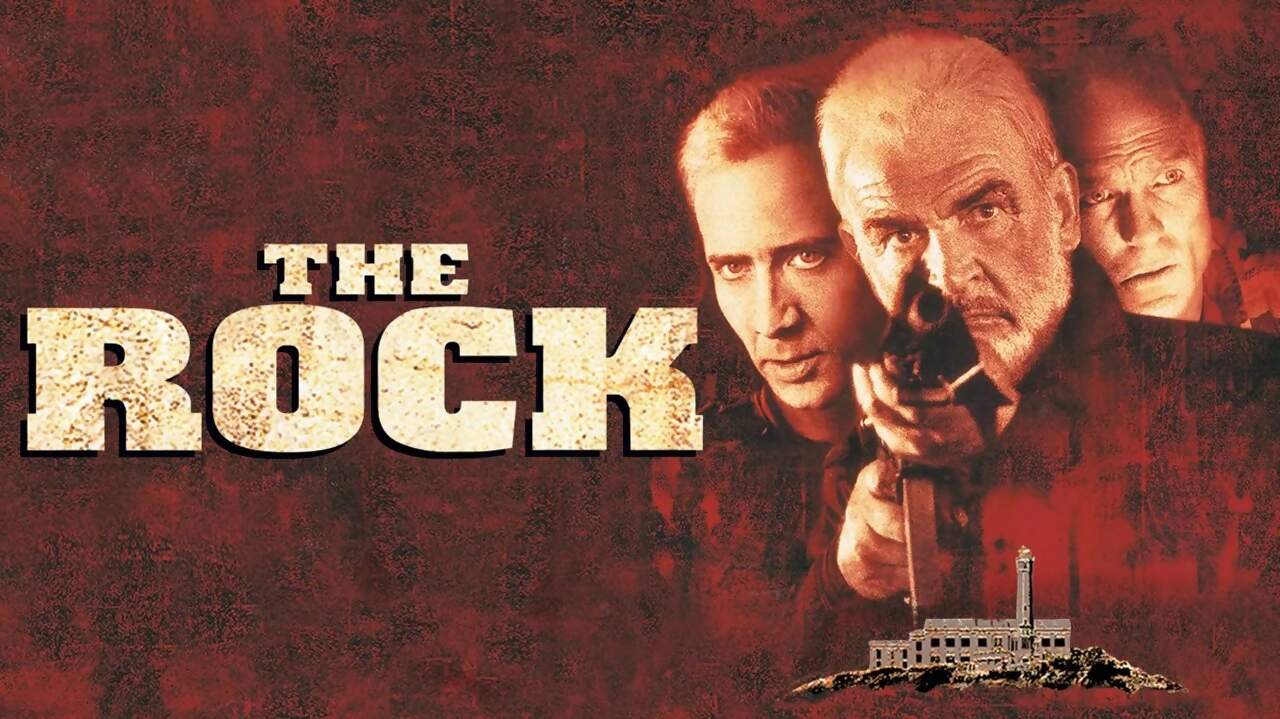
When we talk about the “best sequels” in cinema history, there are some titles that immediately come to mind: The Godfather Part II, The Dark Knight, and The Empire Strikes Back are likely the most common. But here I’d like to argue that among those titles, we need to consider High School Musical 2, too. Not only does it surpass its predecessor in every way, but it’s also a standalone teen movie musical that dares to boldly take on social and class issues by setting the action at a country club.
Aside from the opportunity to engage with issues of class, the country club setting for the second movie also simply offers a more visually interesting backdrop for when compared with the almost entirely indoor sets of the first film. The film’s “Lava Springs” country club, ostensibly located outside Albuquerque, New Mexico, is actually Entrada at Snow Canyon Country Club in St. George, Utah, which sits near the bases of a number of beautifully red desert mountains. The movie makes the most of these mountains with a number of scenes, including the iconic “Bet On It” number – taking place on the club’s golf course to allow the mountains to serve as a gorgeous backdrop.
But it’s not only the mountains that are picturesque. The club also has an outdoor pool that’s used to lend the night scenes an almost fairytale visual quality, particularly during the “Gotta Go My Own Way” performance, where the light sparkles off of the water as Vanessa Hudgens and Zac Efron sing.
While the backgrounds certainly make those sequences more cinematic, the songs stand on their own as some of the most emotional songs in all three High School Musical films; they push the performer’s abilities as real musical theater actors, asking them to deliver on acting and singing at the same time.
The songs I’ve already mentioned are just two of many in the film that go beyond the songs in the first. Ashley Tisdale’s “Fabulous” is a joyous “what I’m about” song, that’s once again supported by fun visuals as director Kenny Ortega makes everything in the number as pink as possible. “I Don’t Dance” is similarly significant in that it may have single-handedly led to the creation of a ship because of the palpable tension between Corbin Bleu’s Chad and Lucas Grabeel’s Ryan (and the fact that they’re wearing each other’s clothes after the number).
To be fair, there are still good songs in the first film, and not every number in High School Musical 2 is a certified banger, but the fact that the sequel offers more (both in quantity and quality) memorable songs and visually distinctive performances than the first counts for a lot – these movies are musicals, after all.
But what makes High School Musical 2 one of the greatest sequels of all time is its surprising, and surprisingly overt, engagement with issues of class and race. It wastes no time getting to its economic themes either. After a brief scene that leads into the first song and dance sequence in the movie, the first line of meaningful dialogue comes from Troy to his basketball teammates: “But seriously guys, this summer I gotta make bank. My parents keep talking about how much college is gonna cost.” Zeke (Chris Warren) and Chad reveal that their goals for the summer are the same.
 Similarly, Taylor (Monique Coleman) and Martha (Kaycee Stroh) discuss the difficulty they’ve had applying for jobs that keep going to college students. Even Troy’s attempt to be cute with his girlfriend by approaching her with a sly “your summer activities consultant has arrived” is undercut by the economic reality of their need for work and cash when Gabriella responds “hopefully some of those activities will include a job.”
These early scenes at the high school also establish that Sharpay plans to do her best to break up Troy and Gabriella so that she and Troy can be together. This drive of hers, combined with the economic needs of the rest of the cast, is the driving force for the rest of the plot. After talking with his dad and friends about how hard it is to find a job, Troy is offered a job at Lava Springs (a place he didn’t even apply to), and has to enquire how the club even got his number. We soon learn that Sharpay told the club’s manager Fulton (Mark L. Taylor) to hire Troy at any cost. He requests jobs for all of his friends, which unsurprisingly displeases Sharpay.
The fact that the starting point of the film is a good-looking white boy getting offered a job he didn’t apply to is extremely on the nose. While Troy’s new job is motivated by a rich girl’s crush on him, it still immediately highlights the economic opportunity gap that exists between white men and other Americans. Over the course of the movie, Troy is hired without applying, promoted to a position as a golf instructor (“I don’t think I’m qualified,” he says), and is regularly told that the rules that apply to the other staff don’t apply to him.
On top of the exceptional way he’s treated in his job, Sharpay also makes sure to introduce him to her father, Vance (Robert Curtis Brown). Vance in turn invites Troy to dinner when he should be working and informs him that given his significant “pull” at his alma mater (the fictional University of Albuquerque), he could likely land Troy a scholarship. It’s an opportunity Troy can’t ignore, but at the same time he doesn’t feel as though he’s earned it. He speaks with his father about feeling weird that his friends served him during the dinner with Sharpay’s family. His father tells him “never be ashamed of attention, especially if you’ve earned it,” when that’s precisely the discomfort Troy is struggling with.
This alone is already enough to see the film is making comments about the problems with economic opportunity in the United States, both in terms of race and gender, and the principle of “it’s who you know” rather than any merit. But it goes even further. On two separate occasions Troy convinces Gabriella, his Latina girlfriend, to break the rules of the club so that they can do something fun, first having a picnic on the golf course and later swimming in the pool after hours.
Both times they’re caught by Fulton, who reprimands Gabriella and cuts off Troy in his attempts to say that the rule violations were his idea. In fact, in the scene where Troy is promoted to golf instructor, he’s in the middle of telling Fulton that he, not Gabriella, should be blamed for swimming when Fulton interrupts him mid sentence to inform him of the promotion.
Beyond Gabriella’s role as a Latina who bears the entirety of the disciplinary attention for Troy’s decisions, the other students that Troy got jobs for are almost entirely students of color and/or girls. The only other white boy who works at the club and is a Wildcat is Jason (Ryne Sanborn). It’s made clear through a number of jokes that he isn’t the brightest, and also simply isn’t as good looking as Zac Efron (no shade to Sanborn, but most of us aren’t).
The only characters that challenge Troy when he’s becoming swept up in the opportunities being afforded him are Gabriella and Chad, a black man and Troy’s best friend. There’s even a scene late in the film where Troy tells a frustrated and disappointed Chad that he didn’t ask for any of these opportunities and that they simply came to him, without any reflection about why that may be, even if in this case it’s because Sharpay is pulling strings. In one of the most jarring scenes in any movie that’s accessible to children, Sharpay comments at one point that she and Troy are “majorly skin-tone compatible.” The line follows from her stating that a coral blue tie works with his skin-tone, but it’s still shockingly on the nose from a rich white girl who likes the poor (by Disney Channel original movie standards) white boy who has a Latina girlfriend.
Similarly, Taylor (Monique Coleman) and Martha (Kaycee Stroh) discuss the difficulty they’ve had applying for jobs that keep going to college students. Even Troy’s attempt to be cute with his girlfriend by approaching her with a sly “your summer activities consultant has arrived” is undercut by the economic reality of their need for work and cash when Gabriella responds “hopefully some of those activities will include a job.”
These early scenes at the high school also establish that Sharpay plans to do her best to break up Troy and Gabriella so that she and Troy can be together. This drive of hers, combined with the economic needs of the rest of the cast, is the driving force for the rest of the plot. After talking with his dad and friends about how hard it is to find a job, Troy is offered a job at Lava Springs (a place he didn’t even apply to), and has to enquire how the club even got his number. We soon learn that Sharpay told the club’s manager Fulton (Mark L. Taylor) to hire Troy at any cost. He requests jobs for all of his friends, which unsurprisingly displeases Sharpay.
The fact that the starting point of the film is a good-looking white boy getting offered a job he didn’t apply to is extremely on the nose. While Troy’s new job is motivated by a rich girl’s crush on him, it still immediately highlights the economic opportunity gap that exists between white men and other Americans. Over the course of the movie, Troy is hired without applying, promoted to a position as a golf instructor (“I don’t think I’m qualified,” he says), and is regularly told that the rules that apply to the other staff don’t apply to him.
On top of the exceptional way he’s treated in his job, Sharpay also makes sure to introduce him to her father, Vance (Robert Curtis Brown). Vance in turn invites Troy to dinner when he should be working and informs him that given his significant “pull” at his alma mater (the fictional University of Albuquerque), he could likely land Troy a scholarship. It’s an opportunity Troy can’t ignore, but at the same time he doesn’t feel as though he’s earned it. He speaks with his father about feeling weird that his friends served him during the dinner with Sharpay’s family. His father tells him “never be ashamed of attention, especially if you’ve earned it,” when that’s precisely the discomfort Troy is struggling with.
This alone is already enough to see the film is making comments about the problems with economic opportunity in the United States, both in terms of race and gender, and the principle of “it’s who you know” rather than any merit. But it goes even further. On two separate occasions Troy convinces Gabriella, his Latina girlfriend, to break the rules of the club so that they can do something fun, first having a picnic on the golf course and later swimming in the pool after hours.
Both times they’re caught by Fulton, who reprimands Gabriella and cuts off Troy in his attempts to say that the rule violations were his idea. In fact, in the scene where Troy is promoted to golf instructor, he’s in the middle of telling Fulton that he, not Gabriella, should be blamed for swimming when Fulton interrupts him mid sentence to inform him of the promotion.
Beyond Gabriella’s role as a Latina who bears the entirety of the disciplinary attention for Troy’s decisions, the other students that Troy got jobs for are almost entirely students of color and/or girls. The only other white boy who works at the club and is a Wildcat is Jason (Ryne Sanborn). It’s made clear through a number of jokes that he isn’t the brightest, and also simply isn’t as good looking as Zac Efron (no shade to Sanborn, but most of us aren’t).
The only characters that challenge Troy when he’s becoming swept up in the opportunities being afforded him are Gabriella and Chad, a black man and Troy’s best friend. There’s even a scene late in the film where Troy tells a frustrated and disappointed Chad that he didn’t ask for any of these opportunities and that they simply came to him, without any reflection about why that may be, even if in this case it’s because Sharpay is pulling strings. In one of the most jarring scenes in any movie that’s accessible to children, Sharpay comments at one point that she and Troy are “majorly skin-tone compatible.” The line follows from her stating that a coral blue tie works with his skin-tone, but it’s still shockingly on the nose from a rich white girl who likes the poor (by Disney Channel original movie standards) white boy who has a Latina girlfriend.
 And yet, the movie complicates things even further with the character of Fulton. From the moment we see him on screen, he’s bending over backwards to please Sharpay and do everything that she wants. When we learn that her parents are not only members of the club, but that they own the club, this begins to make sense. Late in the movie, Sharpay insists that staff not be allowed to participate in the summer talent show, and when Fulton delivers this news to Taylor and she pushes back, he has a moment of all-too-real vulnerability.
He says “Welcome to the world of adults who wish to keep their jobs because they have mortgages they wish to pay, tuition bills, car payments, etc. etc. etc. So sometimes we have to perform tasks, however unpleasant, that are necessary for that all-too-important paycheck to land in our all-too-empty pockets.” It’s played for a joke when Taylor responds “can I get you some tea?” but it’s a speech about real economic anxieties that far too many can relate to. And in another scene that feels surprisingly subversive, when Fulton brings Troy a set of nice clothes, he says of the tie, an item of clothing that Fulton sports in every scene, “this particular item goes around your neck, like a dog collar.”
So while High School Musical 2 acknowledges and highlights the discrepancies in opportunity afforded to working class young people, it doesn’t vilify the white boys and men who take the opportunities they are afforded. Instead the movie seems to draw attention to the fact that opportunities are merely the first step in a constant cycle of exploitation for essentially all but the ultra-rich, like Sharpay’s family.
However, the movie doesn’t vilify the wealthy white family that offers opportunities either. Sharpay is certainly a villain, but her parents are at most portrayed as oblivious to the struggles of their daughter’s classmates who aren’t Troy. Vance’s support of Troy reads as genuine and as simply doing what he can to help Troy in the system that he’s known all his life. He’s not aware of the system’s flaws because it’s led to his success.
This layered and shockingly blatant consideration, if not indictment, of the American class system, and the way that system functions in relation to race and gender, makes High School Musical 2 a truly remarkable movie. There’s already enough in its main plot for the film’s politics to be understandable for young viewers, but it’s the quick and incisive moments, like Sharpay’s line about skin tones and Fulton’s speech about the literal costs of living, that force adults to recognize the movie as more than a simple story about getting along across class lines.
On top of its surprisingly intelligent engagement with a complicated and multifaceted political issue, it also looks amazing and succeeds simply as a delightful musical for teenagers, outpacing the first film in every way. Which is why, along with movies like The Godfather Part II, it should be considered one of the best sequels ever made.
—
Thank you for visiting! If you’d like to support our attempts to make a non-clickbaity movie website:
Follow Film Stories on Twitter here, and on Facebook here.
Buy our Film Stories and Film Stories Junior print magazines here.
Become a Patron here.
/**/
And yet, the movie complicates things even further with the character of Fulton. From the moment we see him on screen, he’s bending over backwards to please Sharpay and do everything that she wants. When we learn that her parents are not only members of the club, but that they own the club, this begins to make sense. Late in the movie, Sharpay insists that staff not be allowed to participate in the summer talent show, and when Fulton delivers this news to Taylor and she pushes back, he has a moment of all-too-real vulnerability.
He says “Welcome to the world of adults who wish to keep their jobs because they have mortgages they wish to pay, tuition bills, car payments, etc. etc. etc. So sometimes we have to perform tasks, however unpleasant, that are necessary for that all-too-important paycheck to land in our all-too-empty pockets.” It’s played for a joke when Taylor responds “can I get you some tea?” but it’s a speech about real economic anxieties that far too many can relate to. And in another scene that feels surprisingly subversive, when Fulton brings Troy a set of nice clothes, he says of the tie, an item of clothing that Fulton sports in every scene, “this particular item goes around your neck, like a dog collar.”
So while High School Musical 2 acknowledges and highlights the discrepancies in opportunity afforded to working class young people, it doesn’t vilify the white boys and men who take the opportunities they are afforded. Instead the movie seems to draw attention to the fact that opportunities are merely the first step in a constant cycle of exploitation for essentially all but the ultra-rich, like Sharpay’s family.
However, the movie doesn’t vilify the wealthy white family that offers opportunities either. Sharpay is certainly a villain, but her parents are at most portrayed as oblivious to the struggles of their daughter’s classmates who aren’t Troy. Vance’s support of Troy reads as genuine and as simply doing what he can to help Troy in the system that he’s known all his life. He’s not aware of the system’s flaws because it’s led to his success.
This layered and shockingly blatant consideration, if not indictment, of the American class system, and the way that system functions in relation to race and gender, makes High School Musical 2 a truly remarkable movie. There’s already enough in its main plot for the film’s politics to be understandable for young viewers, but it’s the quick and incisive moments, like Sharpay’s line about skin tones and Fulton’s speech about the literal costs of living, that force adults to recognize the movie as more than a simple story about getting along across class lines.
On top of its surprisingly intelligent engagement with a complicated and multifaceted political issue, it also looks amazing and succeeds simply as a delightful musical for teenagers, outpacing the first film in every way. Which is why, along with movies like The Godfather Part II, it should be considered one of the best sequels ever made.
—
Thank you for visiting! If you’d like to support our attempts to make a non-clickbaity movie website:
Follow Film Stories on Twitter here, and on Facebook here.
Buy our Film Stories and Film Stories Junior print magazines here.
Become a Patron here.
/**/
Similarly, Taylor (Monique Coleman) and Martha (Kaycee Stroh) discuss the difficulty they’ve had applying for jobs that keep going to college students. Even Troy’s attempt to be cute with his girlfriend by approaching her with a sly “your summer activities consultant has arrived” is undercut by the economic reality of their need for work and cash when Gabriella responds “hopefully some of those activities will include a job.”
These early scenes at the high school also establish that Sharpay plans to do her best to break up Troy and Gabriella so that she and Troy can be together. This drive of hers, combined with the economic needs of the rest of the cast, is the driving force for the rest of the plot. After talking with his dad and friends about how hard it is to find a job, Troy is offered a job at Lava Springs (a place he didn’t even apply to), and has to enquire how the club even got his number. We soon learn that Sharpay told the club’s manager Fulton (Mark L. Taylor) to hire Troy at any cost. He requests jobs for all of his friends, which unsurprisingly displeases Sharpay.
The fact that the starting point of the film is a good-looking white boy getting offered a job he didn’t apply to is extremely on the nose. While Troy’s new job is motivated by a rich girl’s crush on him, it still immediately highlights the economic opportunity gap that exists between white men and other Americans. Over the course of the movie, Troy is hired without applying, promoted to a position as a golf instructor (“I don’t think I’m qualified,” he says), and is regularly told that the rules that apply to the other staff don’t apply to him.
On top of the exceptional way he’s treated in his job, Sharpay also makes sure to introduce him to her father, Vance (Robert Curtis Brown). Vance in turn invites Troy to dinner when he should be working and informs him that given his significant “pull” at his alma mater (the fictional University of Albuquerque), he could likely land Troy a scholarship. It’s an opportunity Troy can’t ignore, but at the same time he doesn’t feel as though he’s earned it. He speaks with his father about feeling weird that his friends served him during the dinner with Sharpay’s family. His father tells him “never be ashamed of attention, especially if you’ve earned it,” when that’s precisely the discomfort Troy is struggling with.
This alone is already enough to see the film is making comments about the problems with economic opportunity in the United States, both in terms of race and gender, and the principle of “it’s who you know” rather than any merit. But it goes even further. On two separate occasions Troy convinces Gabriella, his Latina girlfriend, to break the rules of the club so that they can do something fun, first having a picnic on the golf course and later swimming in the pool after hours.
Both times they’re caught by Fulton, who reprimands Gabriella and cuts off Troy in his attempts to say that the rule violations were his idea. In fact, in the scene where Troy is promoted to golf instructor, he’s in the middle of telling Fulton that he, not Gabriella, should be blamed for swimming when Fulton interrupts him mid sentence to inform him of the promotion.
Beyond Gabriella’s role as a Latina who bears the entirety of the disciplinary attention for Troy’s decisions, the other students that Troy got jobs for are almost entirely students of color and/or girls. The only other white boy who works at the club and is a Wildcat is Jason (Ryne Sanborn). It’s made clear through a number of jokes that he isn’t the brightest, and also simply isn’t as good looking as Zac Efron (no shade to Sanborn, but most of us aren’t).
The only characters that challenge Troy when he’s becoming swept up in the opportunities being afforded him are Gabriella and Chad, a black man and Troy’s best friend. There’s even a scene late in the film where Troy tells a frustrated and disappointed Chad that he didn’t ask for any of these opportunities and that they simply came to him, without any reflection about why that may be, even if in this case it’s because Sharpay is pulling strings. In one of the most jarring scenes in any movie that’s accessible to children, Sharpay comments at one point that she and Troy are “majorly skin-tone compatible.” The line follows from her stating that a coral blue tie works with his skin-tone, but it’s still shockingly on the nose from a rich white girl who likes the poor (by Disney Channel original movie standards) white boy who has a Latina girlfriend.
And yet, the movie complicates things even further with the character of Fulton. From the moment we see him on screen, he’s bending over backwards to please Sharpay and do everything that she wants. When we learn that her parents are not only members of the club, but that they own the club, this begins to make sense. Late in the movie, Sharpay insists that staff not be allowed to participate in the summer talent show, and when Fulton delivers this news to Taylor and she pushes back, he has a moment of all-too-real vulnerability.
He says “Welcome to the world of adults who wish to keep their jobs because they have mortgages they wish to pay, tuition bills, car payments, etc. etc. etc. So sometimes we have to perform tasks, however unpleasant, that are necessary for that all-too-important paycheck to land in our all-too-empty pockets.” It’s played for a joke when Taylor responds “can I get you some tea?” but it’s a speech about real economic anxieties that far too many can relate to. And in another scene that feels surprisingly subversive, when Fulton brings Troy a set of nice clothes, he says of the tie, an item of clothing that Fulton sports in every scene, “this particular item goes around your neck, like a dog collar.”
So while High School Musical 2 acknowledges and highlights the discrepancies in opportunity afforded to working class young people, it doesn’t vilify the white boys and men who take the opportunities they are afforded. Instead the movie seems to draw attention to the fact that opportunities are merely the first step in a constant cycle of exploitation for essentially all but the ultra-rich, like Sharpay’s family.
However, the movie doesn’t vilify the wealthy white family that offers opportunities either. Sharpay is certainly a villain, but her parents are at most portrayed as oblivious to the struggles of their daughter’s classmates who aren’t Troy. Vance’s support of Troy reads as genuine and as simply doing what he can to help Troy in the system that he’s known all his life. He’s not aware of the system’s flaws because it’s led to his success.
This layered and shockingly blatant consideration, if not indictment, of the American class system, and the way that system functions in relation to race and gender, makes High School Musical 2 a truly remarkable movie. There’s already enough in its main plot for the film’s politics to be understandable for young viewers, but it’s the quick and incisive moments, like Sharpay’s line about skin tones and Fulton’s speech about the literal costs of living, that force adults to recognize the movie as more than a simple story about getting along across class lines.
On top of its surprisingly intelligent engagement with a complicated and multifaceted political issue, it also looks amazing and succeeds simply as a delightful musical for teenagers, outpacing the first film in every way. Which is why, along with movies like The Godfather Part II, it should be considered one of the best sequels ever made.
—
Thank you for visiting! If you’d like to support our attempts to make a non-clickbaity movie website:
Follow Film Stories on Twitter here, and on Facebook here.
Buy our Film Stories and Film Stories Junior print magazines here.
Become a Patron here.
/**/