Director Corin Hardy tells us about the eclectic inspirations behind his new horror, Whistle, and sneaking in references to his favourite movie-makers. At an age when people feel at their most indestructible, the teenagers at the core of Whistle are confronted by the spectre of death. The appearance of a cursed musical instrument sees a bunch ... How Whistle fuses A Nightmare On Elm Street with The Deer Hunter
Director Corin Hardy tells us about the eclectic inspirations behind his new horror, Whistle, and sneaking in references to his favourite movie-makers.
At an age when people feel at their most indestructible, the teenagers at the core of Whistle are confronted by the spectre of death. The appearance of a cursed musical instrument sees a bunch of American high schoolers die under increasingly grim circumstances – leaving protagonist Chrys (Dafne Keen) hunting for a means of breaking the deadly cycle.
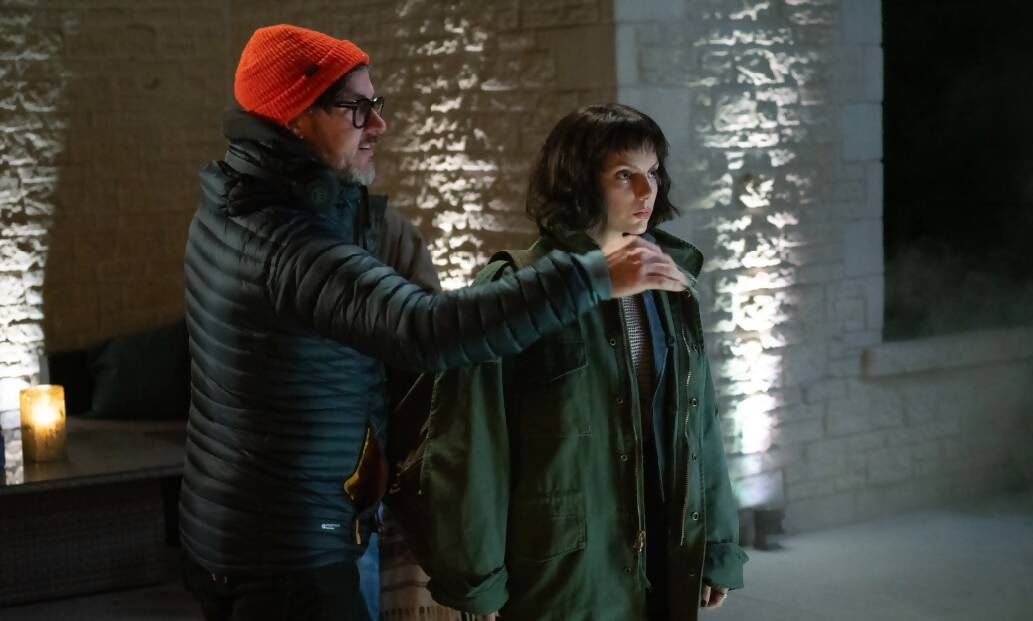
Written by screenwriter Owen Egerton, Whistle’s high-school setting gave director Corin Hardy the opportunity to make his own film in a particular horror subgenre he grew up watching as a youngster: the high school bloodbath pioneered by the likes of John Carpenter and Wes Craven.
“I wanted it to be a bit of a love letter to some of the movies I grew up on,” Hardy tells us. “Movies like The Lost Boys, A Nightmare On Elm Street, The Breakfast Club, The Blob, Donnie Darko, things like that. I could tap into my own 14 year-old teenage angst and failed romances and heartbreaks at school. With little nods that inspired the movie.”
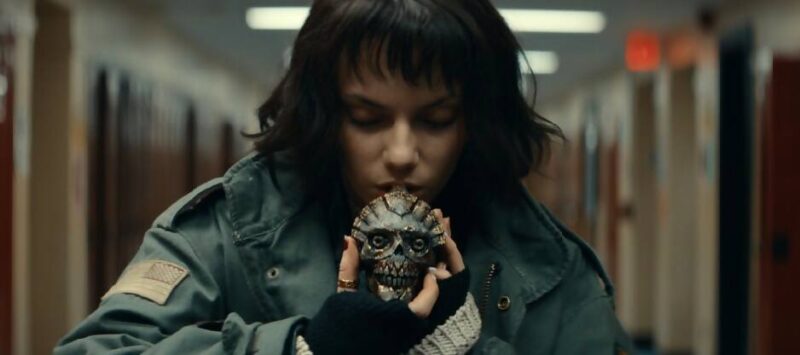
Reading Egerton’s original script, Hardy was also struck by the originality of its core concept: that of a Mesoamerican death whistle that brings death, doom and general bad juju to everyone foolhardy enough to use it.
“I could sort of feel this instant, simple, strong mythology about an ancient cursed object that I hadn’t seen a film about before,” he says. “I’d been aware in the back of my mind of the idea of a death whistle. I think it gets mentioned in one of the recent Ghostbusters movies, but I hadn’t seen a death whistle movie. And I actually thought maybe this is completely made up.
“And then I was amazed to read, when I researched it, that death whistles existed, and hey are shrouded in a lot of mystery themselves, harking back thousands of years to Mesoamerican times and Aztecs and Olmecs… So Owen had pulled different ideas together, and the idea of this ancient thing being found in the wrong environment, in an American high school.”
Although it’s inspired by slasher horror films of the 80s and 90s, Whistle comes up with a tone and texture that is markedly different from the clean, affluent suburbs of A Nightmare On Elm Street or Scream. Hardy’s fictional town has a careworn, post-industrial feel which draws, he says, on the work of George A Romero and Michael Cimino’s Vietnam drama, The Deer Hunter.
“I wanted it to be set in a place that, even if death hadn’t come for these kids, if they didn’t escape, then they’d probably die here,” Hardy says. “I made a lookbook when I started getting into pre-production; I made a big presentation of the mood and the look of the movie, and pulling from Pennsylvania and Detroit and Pittsburgh and all these places.”
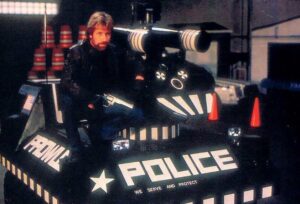
Filming took place in Hamilton, Toronto, a setting that contained the kind of landscape and tone Hardy imagined. The discovery of one location, in particular, prompted a minor change in the script: a set-piece was originally set to take place in a sawmill; when Hardy found an abandoned steel mill, the scene was reworked to fit. Eagle-eyed viewers may spot that the mill’s named after a filmmaker also known for his flashes of grisly violence.
This is but one of dozens of nods to other filmmakers placed throughout the film by Hardy himself. Cigarettes, fizzy drinks and even the names of incidental characters all have some movie connection behind them. A refreshing can of Wook Juice, anyone…?
“When I work with the props and costume departments, and you have to do any sort of names or brands, they can just do generic ones,” Hardy explains. “But I said, ‘Any opportunity, please run it by me.’ We probably put in way more [references] than you see [in the final cut], because then you get to the edit and certain shots don’t make it… the basketball team you see at the beginning are all the names are horror heroines, heroes or villains. You only see a few in the final movie, but I’ve got photos of all of them.”
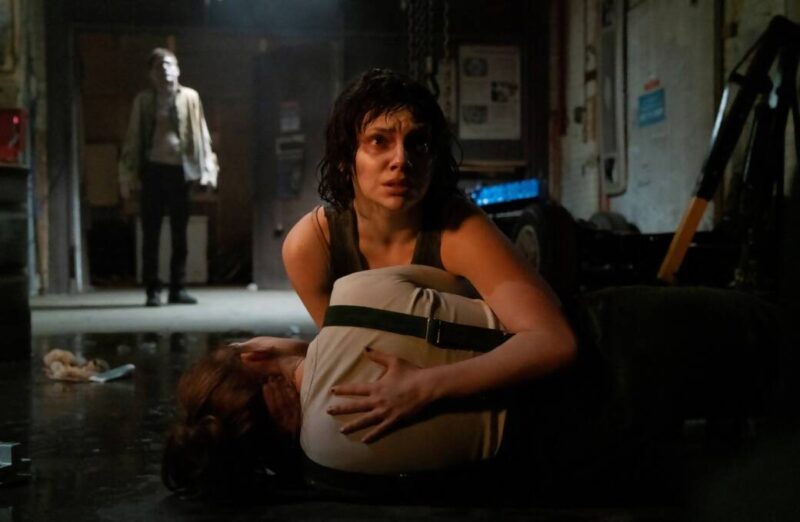
The same attention to detail went into Whistle’s elaborate death scenes. Without spoiling the underlying premise, each terminal moment is unique to its victim – and one gory sequence, in particular, is likely to be discussed quite a bit by horror fans in the coming months.
“I read it in the script, and then double took and read it again,” Hardy says. “And I was like, ‘I really want to do that. This is a really lightning-in-a-bottle idea. How am I going to do it?’”
That sequence, and others like it, were achieved through a mixture of digital and traditional, handmade techniques, Hardy says; “from puppetry and animatronics and prosthetics to using visual effects enhancements. [I want to] try and make things happen before your eyes in that illusionary way that I love about horror and monster movies.”
Before he broke into filmmaking with his terrific horror debut The Hallow – and found a box-office smash with spin-off The Nun – Hardy was a stop motion animator. He spent five years making the 30-minute piece, Butterfly, which led to a career applying his craft as an artist and animator to rock promos for the likes of Keane and The Prodigy. Devising an effective horror sequence like the ones in Whistle, he says, are a natural extension of what he learned as an animator.
“Every single part of a stop motion is designed, and the models have to physically support themselves and hold up, and they have to look a certain way,” Hardy says. “You do feel like you’re bringing something that didn’t exist to life, which is what I love about horror, and what I love about special effects and monster-making and creating illusions: you’re trying to suspend the audience’s belief.
“So the idea of doing that over a prolonged sequence that might be two seconds or a minute long, in this case of Whistle, these death sequences, was a big part of the attraction to taking on the film as well. Because it was like a kind of a cookery show… with all the different departments, from special effects and practical effects and costume and props and production design, cinematography – everyone’s doing the work to create that illusion together.”
Whistle is in UK cinemas from the 13th February 2026.