Different decades, different mediums, but Christopher Nolan’s The Odyssey and 80s TV show Ulysses 31 tell us a great deal about the retelling of ancient stories. The space station is as quiet and empty as a tomb. Exploring its deserted corridors, Ulysses and his travellers find a lone astronaut in suspended animation: briefly opening his ... The Odyssey | The crossovers between Christopher Nolan’s Greek epic and Ulysses 31
Different decades, different mediums, but Christopher Nolan’s The Odyssey and 80s TV show Ulysses 31 tell us a great deal about the retelling of ancient stories.
The space station is as quiet and empty as a tomb. Exploring its deserted corridors, Ulysses and his travellers find a lone astronaut in suspended animation: briefly opening his eyes, he murmurs, “The crew, save the crew,” and talks about a stricken vessel trapped somewhere between fire and ice.
Ulysses, never one to shy away from a rescue mission, rushes out in his ship. He leaves his son, Telemachus, the boy’s robot sidekick, No-No, and alien girl Yumi behind on the empty station – a foolish move, because it all turns out to be another trap set by the vengeful god, Zeus.
A booming voice tells Ulysses is forced to choose his fate: between Scylla, here depicted as a raging inferno with the face of a dog, and Charybdis – a freezing whirlpool churning in space. Meanwhile, back on the abandoned ship, Telamachus is menaced by the astronaut, his zombie-like body possessed by the gods.
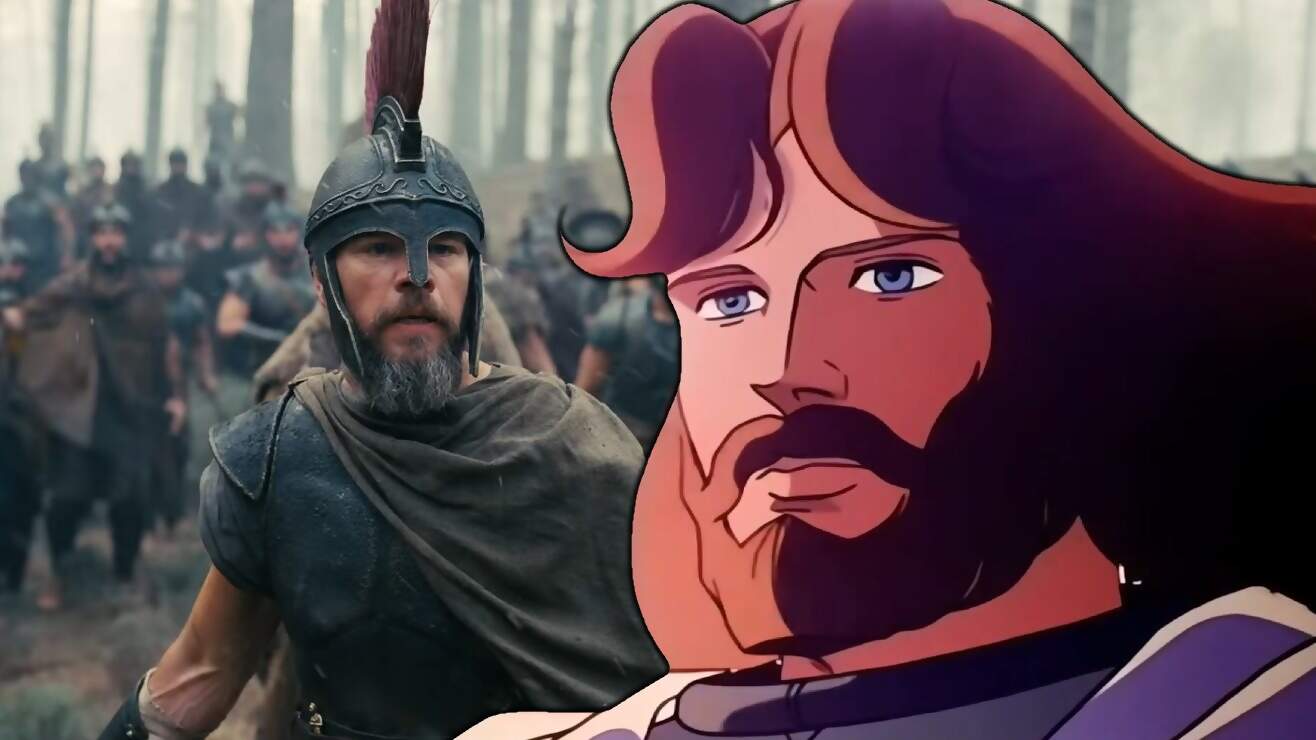
So went episode 12 of Ulysses 31, an animated series that first aired on UK television in the early 1980s. A French-Japanese co-production, it took stories from Greek mythology and projected them into the distant, Star Wars-influenced future. Odysseus, here given his Latin name Ulysses, is now a laser-sword wielding space traveller with prog rock hair and flowing beard.
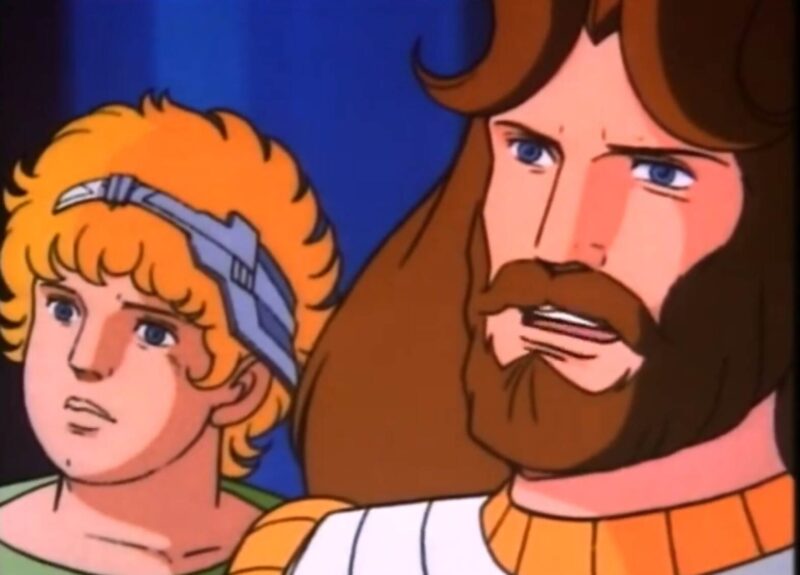
It was a show aimed squarely at kids, so it had all kinds of cutesy elements to catch their eye. There was an unofficial rule in the early 80s that cartoons had to contain a cuddly comic relief character, and No-No was reliably on hand to provide some moments of slapstick. But strip away the squeaky-voiced kids and pratfalling robots, and Ulysses 31 could be genuinely eerie.
Each episode was based on a mythological vignette, and while the show’s writers often bent those ancient tales to make them more sci-fi-leaning or child friendly, the overall mood was of a hostile universe filled with characters in thrall to Zeus – here depicted as a Zardoz-like floating head who condemns Odysseus to an eternity of roaming the stars. Wherever Ulysses went, there were strange monsters or characters who, like the astronaut above, seemed benign but had hidden agendas.
Read more: The Odyssey review | Christopher Nolan turns Greek myth into cosmic horror

It might sound frivolous to mention a 45 year-old cartoon in the same web post as The Odyssey, a $250m epic made by one of the most respected filmmakers on the planet. But there are a number of parallels between the series, created by Nina Wolmark and Jean Chalopin, and Christopher Nolan’s latest spectacular.
They’re both based on Homer’s Odyssey, of course, and so there’s overlap between the two in terms of the slices of myth they pick out. But both take the story and interpret it in their own ways; although Nolan’s film is set in ancient times, the director’s own, fantastical vision of the past rather than some slavishly accurate re-creation of it.


Suggested product
Issue #60 Magazine Bundle (3x Covers: A Scanner Darkly Magazine + 1991 + Roger Deakins)
£14.99
Characters talk in a modern vernacular; costumes are hyper-stylised (check out King Agamemnon’s helmet, decorated with what look like polished human vertebra); Nolan is happy to depart from Homer’s description of events where it suits him, and sometimes brings in story elements from other epic poems such as the Aenid. (Over on RogerEbert.com, Matt Zoller Seitz’s review explores these departures superbly.)
All the same, the cartoon Ulysses and the incarnation of Odysseus played by Matt Damon this summer undergo a similar series of trials. They’re both on a voyage home when they’re cursed by the gods and spend years lost in the unknown. Nolan depicts the fate of Odysseus and his crew as an endless cycle of horror, with his ship’s crew sailing for month after month before running low on food and being forced to stop at an island to find supplies.
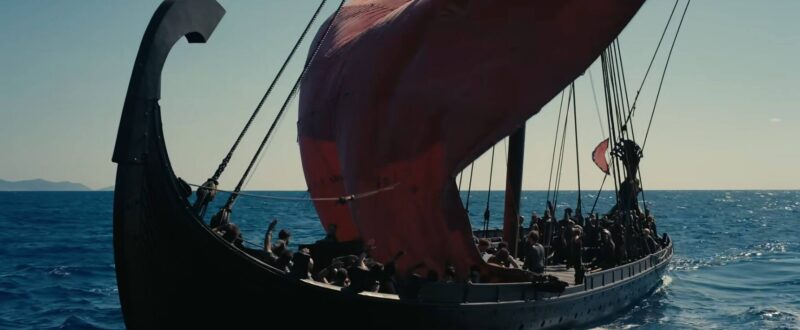
Those islands contain an increasingly terrifying series of figures, including the huge Cyclops, Polyphemus, a race of armoured giants, and the standout, an enchantress named Circe (Samantha Morton, in a film-stealing performance).
Ulysses 31 contains many of these same moments, albeit rendered in its retro-futuristic anime style (the show was animated by Tokyo Movie Shinsha). Ulysses slays the Cyclops, here depicted as a gigantic robot with a snakelike neck, in order to save his son, which sees he and his crew thrown into unknown space. He meets Circe, just as his big-screen counterpart does; has to deal with the deadly song of the Sirens in much the same way Damon’s Odysseus, and is also fed memory-loss inducing lotus flowers by the enigmatic Calypso.
Nolan’s The Odyssey also contains a sequence where Odysseus must choose his fate, between Scylla and Charybdis, and the director’s take on it is a real filmmaking achievement: a collision of in-camera effects and (we’re guessing) puppetry melded together with a bit of CGI to cover the joins.
What’s fascinating about Nolan’s film and this little show from the 1980s is that they both achieve something similar.
The Odyssey brings with it a sense of the unknown that is more profound, to this writer, than Nolan’s space-faring epic, Interstellar: it makes our planet, now so precisely mapped and charted, feel vast and unfamiliar again. The sea is like a treacherous monster, bearing Odysseus’ ship and threatening to dash it into pieces. Merely setting foot on an island is an act of bravery; as in a dream, they’re places where anything can happen. These moments are as powerful and as awe-inspiring as anything Nolan has ever made.
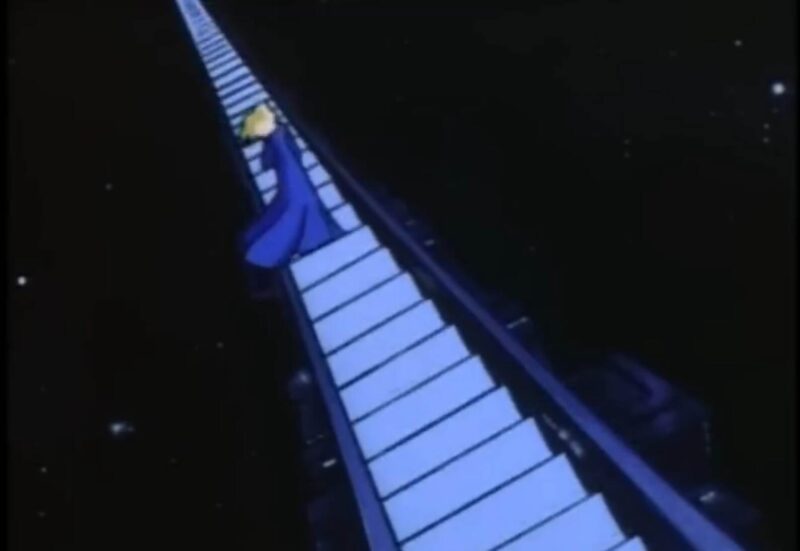
For all its technical and format limitations, Ulysses 31 is something of an achievement in itself. Its planets are spooky and sad, full of doomed characters all desperate for escape. In episode after episode, we’re shown these landscapes where space age technology and ancient stone architecture merge; here, Sisyphus lives on what is a planet-sized factory that manufactures the same ball of junk that he’s forced to push up a hills for eternity. Hades is a vast temple where human figures ride an escalator into oblivion.
Ulysses 31 also highlights the absurdity of the endless online debate surrounding The Odyssey.
In the build up to its release, there were posts and a stream of YouTube videos that spoke angrily about the film’s lack of historical accuracy and the diversity of its casting. Leaving aside the racism, transphobism and general bad faith that underlies much of this click-seeking outrage, it misses the point of what Homer’s original poem actually was: it was a work of literature, but is widely agreed to also be an oral tradition that stretched back many years before it was ever written down.
These are stories that have been told and retold over multiple generations – each teller adding their own embellishments over time. Adapting an ancient poem isn’t the same as unfaithfully adapting a best-selling novel – though it’s arguable that even adaptations that take liberties can still be brilliant. The Muppet Christmas Carol is one of the most faithful adaptations of Charles Dickens’ book filmed to date; had it been made in 2026, online dwellers would probably be making YouTube videos screaming that there were no felt puppet frogs in the 19th century.
Ulysses 31 and The Odyssey are but two re-tellings of a 2,800 year-old epic, and both have cultural value beyond entertainment. In the 80s, the TV show brought Greek mythology to a generation of kids who may otherwise have considered it to be a dusty relic; by adding whizzing space ships and laser swords, it forged a connection between the modern mythology of Star Wars (which was still phenomenally popular at the start of the decade) and the ancient stories that underpinned it.
Similarly, The Odyssey reimagines Homer’s saga for a modern multiplex audience, lashing its stories of gods and monsters to the more familiar masts of comic book movies, revenge thrillers and contemporary horror. Although set in the distant past, Nolan also gives it a modern spin; there’s talk of Troy controlling trade routes, while the war itself is depicted as cruel and unjust.
Whether he’s called Ulysses or Odysseus, whether he flies a space ship or sails on the high seas, the character’s encounters will continue to be reworked and retold. In the process, they’ll reveal new facets of both the original stories and the current times we live in.
Bring on the soundtrack!