Christopher Nolan delivers a frightening, strange and often awe-inspiring take on Greek mythology. Our review of The Odyssey: Director Christopher Nolan said in 2024, not long after the release of Oppenheimer, that he wanted to make a horror movie. There’s an argument that The Odyssey is that movie. In here are sounds and images straight ... The Odyssey review: Christopher Nolan turns Greek myth into cosmic horror
Christopher Nolan delivers a frightening, strange and often awe-inspiring take on Greek mythology. Our review of The Odyssey:
Director Christopher Nolan said in 2024, not long after the release of Oppenheimer, that he wanted to make a horror movie. There’s an argument that The Odyssey is that movie.
In here are sounds and images straight from the darkest of nightmares. It contains the loudest, bellowing roar this writer has ever heard in a cinema. There’s gore. Violence. Nerve-jangling anticipation. Anyone fearing that Nolan’s latest opus will offer some scholarly tour of Homer’s epic can rest assured: this is the filmmaker at his most crowd-pleasing and imaginative – even if there is a lot of exposition to get through in the early running.
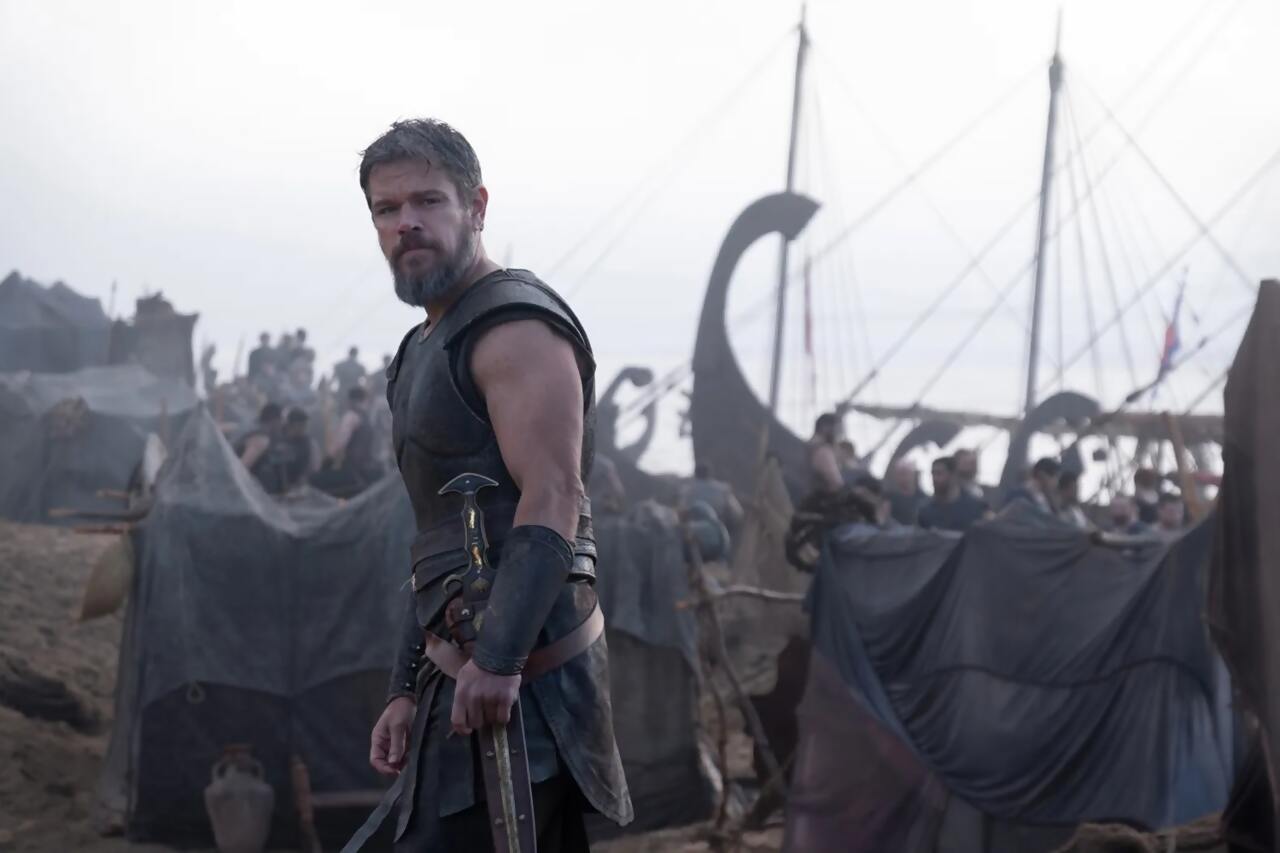
This incarnation of Odysseus (Matt Damon) is a classic Nolan hero. Like Memento’s Leonard Shelby, Inception’s Dom Cobb and Interstellar’s Cooper before him, Odysseus is trapped in one of the director’s temporal snares. Having forgotten much of his past thanks to the enchantment of Charlize Theron’s sea nymph, Calypso – this film’s femme fatale – the hero’s story returns to him in fits and starts. It’s a tidy way of repackaging the inherently episodic nature of Homer’s original text.
Like Cooper, Odysseus is a hero who leaves his family behind for a higher purpose and then spends the rest of the narrative longing for home. He’s a general sent to fight in the Trojan War, which becomes a ten-year siege that is only broken thanks to the cunning deployment of an ordinary ceremonial horse.
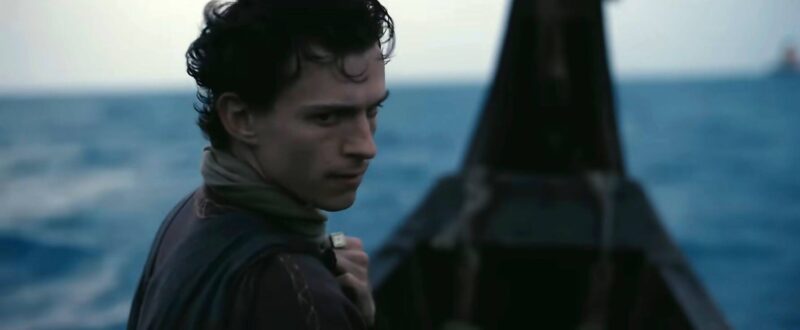
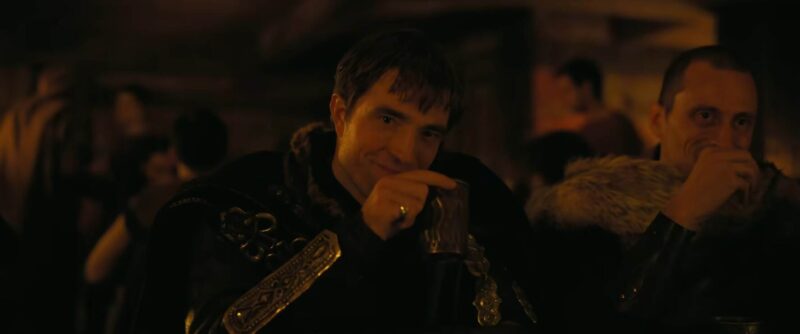
Back home, Odysseus’ wife, Penelope (Anne Hathaway) lives in a coastal palace overrun by dozens of randy suitors who treat the place like a local Wetherspoons and all desire the queen’s hand in marriage. Antinous (Robert Pattinson) is the most despicable of the lot – a sniveling coward who constantly goads Odysseus’ son, Telamachus (Tom Holland) and belittles the hero’s faithful servant Eumaeus (John Leguizamo). Years after Odysseus set sail and seemingly vanished, Penelope and her son retain a shred of hope that he’ll one day return – though with Antinous becoming increasingly aggressive in his demand to marry Penelope, time is beginning to run out.
Nolan is heavy on the backstory in these early scenes, which may prove tough going for anyone whose knowledge of Greek legend begins and ends with Ulysses 31 and O Brother Where Art Thou. (It could be said that the dialogue-heavy opening has the opposite effect to that intended; showering the unwary with so much lore that the cognitive load becomes numbing.)
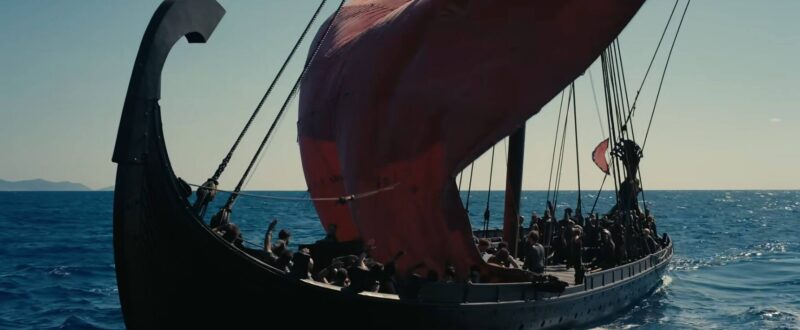
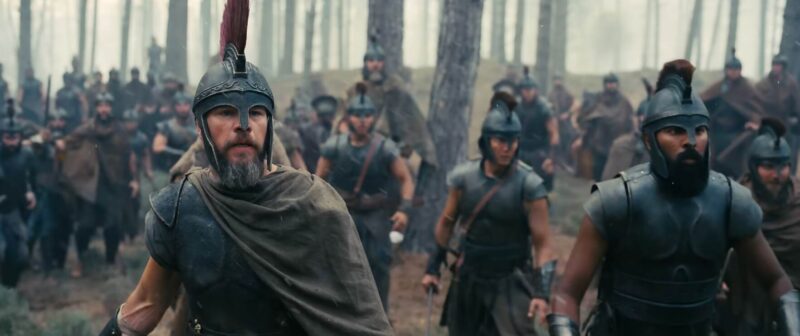
Once the scene’s set, however, Nolan becomes more content to let the sound and images tell the story. Shot by regular cinematographer Hoyte van Hoytema, the scenes aboard Odysseus’ ship feel as though they were genuinely captured at sea rather than in some water tank in Malta – there’s a hint of William Friedkin’s Sorcerer to the battering storms and creaking wood.
It’s all accompanied by Ludwig Goransson’s score – a backdrop that, by mainstream standards, sounds almost experimental. Discordant sounds and radiophonic scrapes are contrasted by choral chants and soaring strings. The mix is spine-tinglingly eclectic.
Then there’s the design of the story’s monsters, giants and enchantresses: they’re more twisted than we’re used to seeing in Nolan’s movies, and at times genuinely frightening. We can see how the director has used tricks like forced perspective, prosthetics and puppetry to create some of them, but herein lies the magic – they’re physically present in the frame, and look like real, breathing creatures with blood (or perhaps ichor) running through their veins.
A scene involving Samantha Morton’s Circe is a standout – a story-within-a-story that looks in places like Brian Yuzna’s Society. A further sequence involves visions of the undead that recall George A Romero.
When Nolan isn’t evoking the genre greats, he riffs on his own pet themes. His protagonists often come with a side order of guilt, but The Odyssey could be seen as a portrait of existential despair – we see Odysseus fade from mighty general to doubt-ridden middle age; haunted by the decisions he’s made and horrified by the bloodshed he’s seen.
Heading back from the Trojan War with his crew, Odysseus decides to take an alternate route from his brutal King Agamemnon (a barely glimpsed Benny Safdie) – and winds up lost in a sisyphean cycle of terror. The crew grow short on food; their hunger drives them to the nearest island, which contains some abomination or other; Odysseus and his men are terrorised and whittled down in number, and head back to sea. And then the cycle repeats, the snare tightening and the terrors growing in magnitude.
Odysseus is a stoic yet interesting character; on one hand, he’s coolly pragmatic and less given over to superstition than the men he leads. On the other hand, he can be impulsive – as seen in a moment when he unnecessarily fires off an arrow that royally ticks off one of the film’s monsters. It’s a restrained yet expressive performance from Damon, but then, every player here impresses; Elliot provides some of the film’s more haunting moments as the soldier Sinon, and Himesh Patel radiates a human vulnerability as Eurylochus, Odysseus’ second-in-command.
Nolan and Hoytema capture their performances in intimate close-ups, the Mediterranean sun and IMAX camera resolution allowing us to study every line and pore on their increasingly care-worn faces. It may be unflattering for the actors, but it gives The Odyssey a strange hyperrealism we seldom saw in the soft-focus glamour of old Hollywood epics.
Nor is there much of the boyish charm of Ray Harryhausen’s Grecian adventures like Jason And The Argonauts; instead, Nolan depicts his battles as genocidal war crimes – mass murders so great that they shock Odysseus to his core. In the original telling, Odysseus is punished for desecrating a temple, but the film’s opening words – “A time of apparent magic,” suggest that the punishment may emanate from Odysseus’ own conscience.
This isn’t to say that The Odyssey is without humour – there’s a dry and very British wit here which naturally springs from the situations the characters find themselves in (Damon’s timing and matter-of-fact delivery of the line “Leave the meat” is wonderful). You’ll also find some satisfyingly blood-curdling action, and while Nolan still isn’t the best fight orchestrator currently working, his scenes here have a more visceral, immediate quality than some of his earlier thrillers.
Although it has moments of true uplift, The Odyssey is a harsh, often bleak film that only a filmmaker of Nolan’s stature could get away with making at this budget level. There are moments where the dialogue creaks almost as loudly as Odysseus’ ship, but it’s easily forgiven in the context of the wider achievement.
The buildup to The Odyssey’s release has been joined by some frankly exhausting criticisms of everything from its casting to its historical accuracy, most of which seem to miss the point: this is one filmmaker’s interpretation of an ancient story that has been passed down and retold in multiple ways.
The world Nolan creates has one foot in ancient Greece, yet it also feels as concrete and as alien as the Arrakis in Denis Villeneuve’s Dune saga.
Nolan’s treatment of Homer’s work has much in common with his Dark Knight trilogy – an acknowledgement, perhaps, that comic books are our new myths, so it makes sense to treat the Odyssey like a big, bold comic book. But in his use of modern horror imagery, it’s a wonder whether Nolan recognises that audiences packing out IMAX cinemas are ready for something more baroque and artistically challenging than the Marvel and DC wave that dominated culture for almost 20 years. It’s been a long time since the work of Goya has been so openly referenced in a summer film.
A streak of cosmic dread runs through The Odyssey – a sense of hopelessness in a universe governed by mad gods. A similar tone can be found in the hit Obsession, and one passage in Nolan’s film has coincidental echoes of that film – proof, perhaps, that horror draws on fears and nightmares that are many hundreds of years older than cinema itself.
For those wondering how such an ancient text can hold much meaning for modern movie goers, the answer may lie in Odysseus himself. This version of the hero might appeal to generations who’ve lived through terrorism, recession, wars, a once in a generation pandemic, the rise of populism, and the building climate crisis.
Like Odysseus, we’re all on a journey through life, facing private trials and fighting our own battles. Whether we believe in Zeus, fate, or that the universe is godless and uncaring, it’s how we contend with those trials and battles that defines who we are.
The Odyssey is in UK cinemas from the 17th July 2026.