In 2014, The LEGO Movie was an unexpected critical and commercial smash, but in the 2020s, the franchise seems to have petered out. We try to figure out where they went. For the second week in a row, Toy Story 5 is currently the number one movie in the world. It’s taken 31 years for ... Whatever happened to all the LEGO movies?
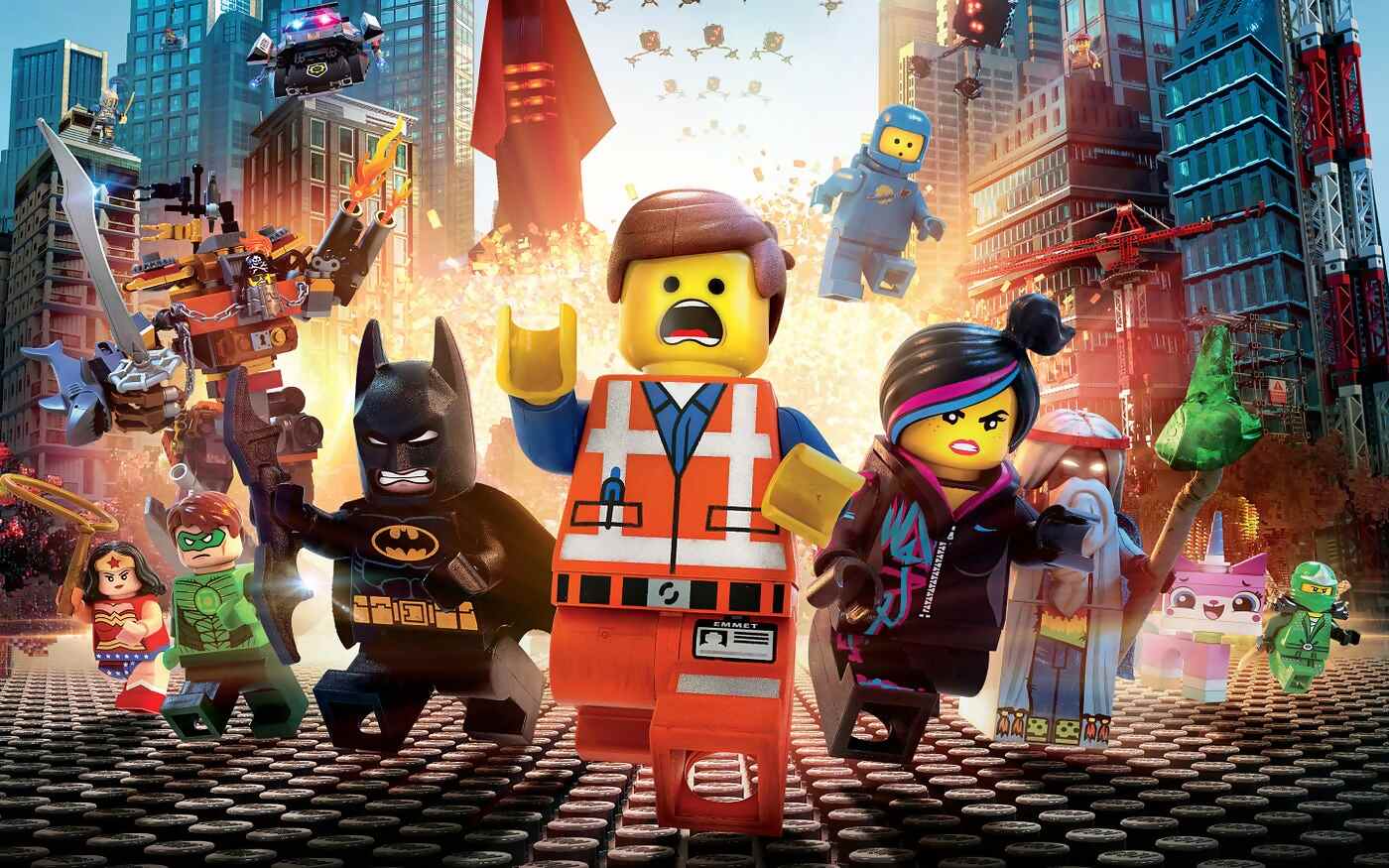
In 2014, The LEGO Movie was an unexpected critical and commercial smash, but in the 2020s, the franchise seems to have petered out. We try to figure out where they went.
For the second week in a row, Toy Story 5 is currently the number one movie in the world. It’s taken 31 years for Pixar’s flagship franchise to reach its fifth instalment when its apparent “toyetic” successor, The LEGO Movie and its spin-offs, got to five officially licensed CG “brickfilms” in little more than a decade. Recently though, we haven’t seen as much LEGO on the big screen.
From 2014 to 2019, Warner Bros made more than $1 billion off the LEGO licence at the worldwide box office, but when its option expired, the studio quietly let it go. In April 2020, Universal sealed a five-year deal to make more LEGO movies, but took about that long to release just one, the little-seen animated Pharrell Williams biopic/rockumentary Piece By Piece, in 2024.
The studio has since extended this deal, announcing several LEGO feature projects around the time the Pharrell movie hit cinemas, but they’ve yet to appear. Behind the scenes, both Warner and Universal have put many millions of dollars into developing LEGO movies without actually making many of them. The announcements keep coming, though.
Last week, Deadline broke the news that Keanu Reeves and Toy Story 4 director Josh Cooley are reuniting for a live-action/CG-brickfilm hybrid, with no further word on previously announced projects from filmmakers including Patty Jenkins, Joe Cornish, and Jake Kasdan.
There could be nine to 99 reasons why these projects and earlier ones have stalled in development, but how did one of the most promising animated franchises wind up with its tyres on bricks?
Play well

Around 2010, there was a gold rush on movies based on toys and board games, prompted not by Toy Story but by the billion-dollar success of Michael Bay’s live-action Transformers movies. On the face of it, The LEGO Movie could have been consigned to the shelf with Ridley Scott’s Monopoly (remember when that was a thing?) or Tonka starring Adam Sandler (no, really).
Leave it to directors Phil Lord and Christopher Miller – self-confessed purveyors of good movies that sound terrible – to turn the 2014 movie from an open-goal moneymaking exercise into a delightful spoof of chosen-one narratives and corporate groupthink.
In many ways, it set an example for Greta Gerwig’s Barbie, which shares a similarly arch sense of humour, a catchy original soundtrack, and even repeats the casting of Will Ferrell as an antagonistic CEO. And if all the spin-offs of The LEGO Movie had done as well as Barbie, we’d probably have many more of them by now.
Australian VFX studio Animal Logic provided the animation, which was deliberately styled after fan-made stop-motion brickfilms. As well as setting the film apart from other animated franchise, this kept costs relatively low for an animated tentpole, at around the $60-million mark for what turned out to be a global box-office haul of $470.8m.
Warner wasted no time green-lighting follow-ups. A Ninjago movie was already in the works for 2016 but it was leap-frogged by a spin-off for LEGO Batman, with both films eventually arriving in 2017. A LEGO Movie 2 was also announced, but that went through a few more phases in development before arriving in 2019.


Another film announced around this time was The Billion Brick Race, based on an original idea from Drew Pearce and Jason Segel. Coming off 2011’s Sherlock Holmes and Muppets sequels respectively, the two wrote the script and were also set to co-direct the LEGO racing caper, which was likened to Wacky Races and The Cannonball Run.
As anticipated, The LEGO Batman Movie was a big draw, topping the US box office despite competition from Fifty Shades Darker, another franchise movie about a billionaire who beats up poor people with a wacky array of toys. Grossing $312m worldwide, the Will Arnett-voiced Dark Knight also provided a lighter counterpoint between the two live-action Batfleck movies. Warner planned at least one more LEGO DC adventure, too.
A few months later, however, The LEGO Ninjago Movie didn’t fare half as well. Despite offering a choice bit of family-friendly counterprogramming to IT: Chapter One and Kingsman: The Golden Circle, it opened in third place and its theatrical box-office maxed out at $123 million worldwide. Releasing two movies in 2017 only seemed to solidify the image of a downward trend.
Everything’s Not Awesome
Meanwhile, the LEGO Movie sequel underwent a lot of personnel changes behind the scenes. Lord and Miller produced the sequel but declined to direct, with their co-director Chris McKay set to take over. When McKay went onto LEGO Batman instead, Rick & Morty and Monster House writer Rob Schrab was announced as his replacement in 2015.
Schrab left the project due to creative differences, Shrek Forever After and Trolls director Mike Mitchell replaced him. Delayed from May 2017 to May 2018, the film was retooled to include more songs, partly in the wake of “Everything Is Awesome” by Tegan and Sara being a breakout hit, but mostly to compete with the resurgence of Disney animated musicals with Frozen and Moana.
Finally released in February 2019, the finished film featured a remix of the original catchy standard, “Everything’s Not Awesome”, featured in the finished film – and so it went with the film’s box-office performance. Despite garnering warm reviews, The LEGO Movie 2: The Second Part outperformed Ninjago with $199m worldwide, but also fell short of box-office expectations.
When Warner let its option go in December, it retained the rights to the films made under its deal, as well as The Billion Brick Race. When the project was cancelled, Jorge R Gutierrez (The Book Of Life) had taken over directing duties from Pearce and Segel, and described the film on his Twitter account as: “a racing film about race, privilege and gentrification with references to all my favourite 80s and 90s cop and action movies.” Art director Sylvain Deboissy also shared some character designs on his website.
Universal picked up the licence thereafter, but Warner also still owns DC Comics, so the planned LEGO Batman follow-up LEGO Superfriends was also cancelled. McKay was due to direct from a script by two more Rick & Morty writers, Dan Harmon and Michael Waldron.
Confirming that rights issues had halted the film, McKay later told Collider: “Dan and Waldron had done a first draft of the script that was really great. It was truly epic… both from an action standpoint and from a story standpoint. The structure was Godfather Part 2… a story about Batman’s relationship to the Justice League now as well as the formative moments of the Justice League then.”
Warner’s Animation Group produced DC’s League Of Super-Pets in 2022 instead, but in a tumultuous few years for Hollywood, it took a long time for Universal to get the bricks back out of the cupboard.
Piece By Piece
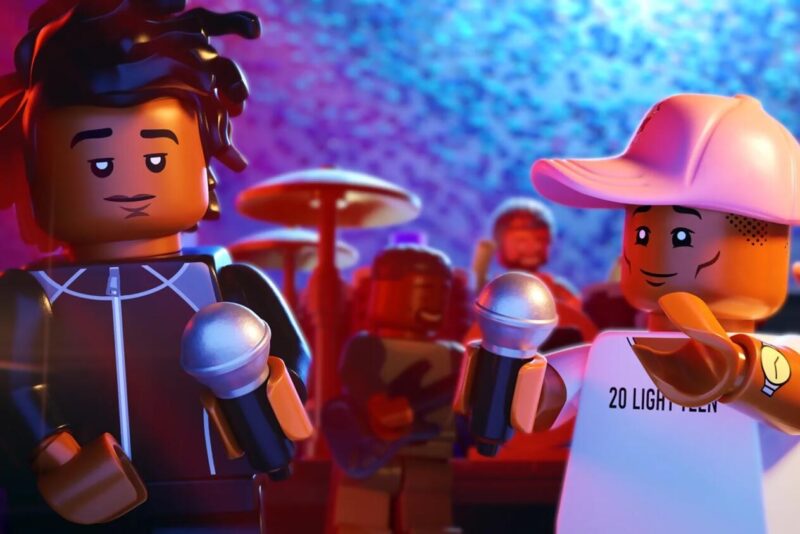
“The LEGO Pharrell Williams Movie” doesn’t sound like the most natural next step, but Piece By Piece was the next brickfilm feature in cinemas. Uninterested in a more conventional biopic, pop music’s biggest multi-hyphenate went to Universal and filmmaker Morgan Neville (who directed live-action docs Best Of Enemies and Won’t You Be My Neighbor?) with the idea of doing it in LEGO.
“You know what would be cool is if, like, we told my story with LEGO pieces,” Williams tells Neville in the LEGO-animated version of an early interview that starts the movie. He advances a creative philosophy that life and art are made up of pieces of pre-existing material and it’s all about how we put it together.
In charting Pharrell’s life from his schooldays to the peak of his fame with 2013’s back-to-back bangers “Get Lucky” and “Happy”, Piece By Piece takes a vibrant approach to what would otherwise have been a fairly conventional rockumentary. All of the interviews with his collaborators – including Gwen Stefani, Jay-Z, and Snoop Dogg, to name but a few – were recorded that way without telling participants they would be LEGO-animated at the time.
While under-seen, it’s undeniably a radical expansion of what LEGO movies can be. If the franchise were still at Warners, we’d have seen at least one Superfriends film, but also probably a couple of LEGO Lord Of The Rings movies – simply because they wanted to keep the franchise active in order to retain those rights.
Universal hasn’t gone down the route of LEGO Jurassic World or LEGO Fast & Furious (both of which frankly sound better than what those franchises will probably offer in the next year or two), but instead made an entirely different type of movie.
Of course, the studio also has DreamWorks Animation and Illumination Entertainment among its assets. If Disney and Pixar closed down tomorrow, Universal would have a near-monopoly over the biggest animated franchises going, so it doesn’t really need LEGO movies like Warner’s Animation Group did in 2014.
As in animation at large, there’s also a question of the medium being seen as “for kids”. Neville’s film is self-aware on that point and even plays it for laughs – it’s always smoky when Snoop Dogg is around, but this is explained by LEGO roadies unpacking boxes conspicuously marked “PG Smoke”.
It’s understandable that they want the films to appeal to families, both the kids who play with LEGO and the adults who buy it (and also play with it). Piece By Piece is guarded in being both accessible to younger audiences and an exercise in brand management. The marketing was primarily in front of kids’ movies, and the tie-in merch was a LEGO Icons collectors’ set aimed at older collectors, and by targeting broadly, it may have missed a wider audience.
On watching the film, it’s tempting to think the attendant likeness and music clearance rights amassed by Pharrell would have been put to more entertaining use in a LEGO-style concert film rather than a documentary with biopic elements. As it stands, it’s neither here nor there.
It’s the lowest-budgeted LEGO movie to date at $16m, which makes it all the more surprising that it was the first LEGO movie to bomb at the box office, grossing just $10.7m in cinemas in October 2024. Incidentally, a month or two later, the shockingly good “Robbie Williams is a CGI chimp” movie Better Man also tanked, and personally, I find this rejection of visually exciting and inventive music biopics all the more galling given how well Michael is (still!) doing in cinemas.
Play again?

As mentioned, there’s no more word about the status of LEGO movies from Cornish, Jenkins, and Kasdan. With both the Warner and Universal franchises, it’s not the long lead-time of animation that’s led to quiet periods so much as the extended development times on different projects.
Of the three, Kasdan is directing a script from other writers, while Jenkins has co-written hers with former DC Comics writer Geoff Johns, and Cornish is reportedly rewriting a draft by yet another Rick & Morty writer, Heather Anne Campbell. This type of thing is expected when a name director boards a project, but also when the studio tries to make anything LEGO, apparently.
It’s funny that Toy Story came back to cinemas just after Warner’s LEGO Movie sequel faltered at the box office; and per the latest news, it may well be that the director who reopened that toy box brings LEGO movies back. With the further success of Toy Story 5, a sixth one of those seems inevitable too. It’s a sure thing, as franchises go; and here, it sounds like producers are sifting through various pitches and not getting anywhere quickly.
Just looking at the available concept work on The Billion Brick Race, there are loads of merchandisable characters and vehicles and set-pieces there. By their design, LEGO movies would previously have been toy-friendly enough to get them into production, but the movies haven’t been tailored to an adult market the same way as the toys have. LEGO hasn’t made a lot more movies, but this year alone, we’ve seen new sets based on Star Wars: The Mandalorian And Grogu, Shrek, The Lord Of The Rings, and even the Hail Mary from Project Hail Mary, a non-LEGO Lord and Miller outing.
Comparatively, CG-brickfilm features don’t cost a lot to make and Piece By Piece proves you can do virtually anything with them. Maybe that’s the problem in an increasingly risk-averse industry. Where the limitless possibilities of play are a selling point for LEGO toys, Hollywood seems more prone to stepping on LEGO movies in bare feet. And that’s the worst pain that there is.
—
Thank you for visiting! If you’d like to support our attempts to make a non-clickbaity movie website:
Follow Film Stories on Twitter here, and on Facebook here.
Buy our Film Stories and Film Stories Junior print magazines here.
Become a Patron here.
/**/