Despite the infected hoards, the 28 Years Later series gives us the most authentic view of modern Britain in years. You’ve stumbled across the Film Stories Newsletter! To get this sort of thing in your inbox every Friday, subscribe here. Hello! Nia DaCosta’s 28 Years Later: The Bone Temple arrives this week with a bang. And a ... Bone Temple Britain | 28 Years Later is the most British franchise in yonks
Despite the infected hoards, the 28 Years Later series gives us the most authentic view of modern Britain in years.
You’ve stumbled across the Film Stories Newsletter! To get this sort of thing in your inbox every Friday, subscribe here.
Hello!
Nia DaCosta’s 28 Years Later: The Bone Temple arrives this week with a bang. And a scream. And some fascinating music cues. Check out our piece on the franchise’s very British bearings below. Oh, and do peek at our review of The RIP – a Netflix thriller which won’t bore you to tears. You’re welcome.
PLUS: Why not make it your new year’s resolution to support indie print mags? Get the latest issue of Film Stories magazine, featuring boxing drama Giant on the cover. 168 pages can’t all be wrong.
TELL ME THE NEWS IN FIVE(ISH) LINES
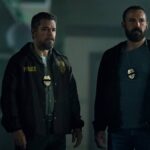
???? The RIP is a Damon-Affleck thriller it’d be a crime to miss. Read our review.
???? The Penske Media-owned Golden Globes happened – check out who won.
???? Kathleen Kennedy has left Lucasfilm after 14 years, praises AI for some reason.
???? Paramount is suing Warner Bros, as corporate nonsense continues.
⚰️ Marvel’s Blade is dead. Not in an undead way. Properly dead. RIP.
Inside Bone Temple Britain
Considering its fondness for bows and arrows and backpacks, it’s easy to forget the 28 Years Later (sub-)series is set four years into our future. It’s harder, for audiences living in dear ol’ Blighty, to forget how familiar it all feels.
Between their references to Teletubbies, the NHS and North East rail franchises, 28 Years Later and The Bone Temple feel like the most authentic visions of modern Britain we’ve seen in mainstream cinema in years – even if whatever operator’s train stock lying overgrown in a ditch has long gone out of business. They’re proper blockbusters set in an unnervingly familiar setting; they’ve even got proper film things like themes and political allegories, and those don’t come around often. (Paddington, with its Poppins-esque London of calypso bands and affordable Primrose Hill town houses, provides a less grittily realistic counterpoint to folks spilling their innards all over the place.)
But even compared to 28 Days Later, the new duo of horror hits feel particularly rooted in their time and place. Shot back-to-back and released just six months apart, the two films are about as up-to-the-minute as $60m blockbusters are able to be. When it comes to the topic of Britain today, they have a lot on their mind.
In Danny Boyle’s 2002 original, that the apocalypse had struck right here (in Britain) and right now (the comedown of Cool Britannia) was sort of the point. Shot largely on Canon XL1 digital cameras, watching zombies fall over themselves at speed had a cheap and nasty look unnervingly close to an episode of You’ve Been Framed. The film’s most iconic image, a Westminster Bridge empty save for a lost-looking Cillian Murphy, struck a chord by taking a recognisable slice of modern life and turning it on its head. The image stuck around, too: the onset of Covid-19 lockdowns in March 2020 was greeted by a spike in google searches for the film.
It was, for Boyle, something of a return to form. After the mixed critical reception of Hollywood co-productions A Life Less Ordinary and The Beach, the Trainspotting director would continue to put out his best work on British soil (weirdly, with Hedda closely followed by The Bone Temple, so would the American Nia DaCosta). As an unlikely shepherd of the 2012 Olympics Opening Ceremony, he cemented his place as a director uniquely gifted at tapping into British audiences’ hearts and minds.
Fast forward frustratingly-close-to-28-years later, and the title of writer Alex Garland’s soon-to-be trilogy offers a very different prospect. This isn’t the Britain you know, it tells us. Almost three decades of neglect and isolation have put the island on an alternate path of isolation, anger and decline. You could almost expect Ralph Fiennes to give a Fleabag nod to the camera.
“I think both Danny and me are essentially reactive,” Garland told Film Stories last year. “So in that respect, [28 Years Later] would be about Brexit, whether it was intended to be about Brexit or not, because that was the thing that was happening. I’d say neither Brexit nor COVID were particularly in my mind while I was writing; I’m just not discounting the fact that they would have played into it.”
By what’s presumably a happy accident of slightly dodgy timing, the four-to-five year remove between the events of the new 28 Years Laters offer just enough remove to let them nod to this sort of thing without controversy. Even so, the films demonstrate the kind of daring not just absent from recent British film, but the film industry globally.
“It’s the sort of inverse of Brexit,” Garland added, “the fact that you are not as important as you think you are, as a nation or as an individual.” Making political points without point-scoring, the text provides a thematic background strong enough to support its story even without a delightful smattering of British-specific nods and winks. Making the story entirely London-less, too (by this point it’s probably fallen down anyway) hints at a country whose green hills and overgrown railways are more familiar to the vast majority of the UK’s population.
But where the first Years uses apocalyptic convention to discuss British themes, Nia DaCosta’s The Bone Temple uses British details to depict global trends. Psychotic gang “The Jimmys”’ obsession with The Teletubbies (and, yes, that they’re all dressed like Jimmy Saville) takes the infantilisation of adult entertainment and stretches it to horrific limits. It’s a very British take on a very international issue.
The result is two parts of a trilogy that couldn’t be made anywhere except Britain today. If that four-year gap between the infected apocalypse and the modern day is meant to be reassuring, it does a lousy job.
28 Years Later: The Bone Temple is in cinemas now.