Kenneth Branagh’s boldly bonkers Dead Again is on Netflix now in the UK. We look at the story behind a film out of time. If Ken “the Shakespeare guy” Branagh seems a surprising choice for the role of a cynical Los Angeles Private Investigator, chances are he won’t strike you as an Eastern European composer, ... Dead Again | When the RSC took on Hitchcock
Kenneth Branagh’s boldly bonkers Dead Again is on Netflix now in the UK. We look at the story behind a film out of time.
If Ken “the Shakespeare guy” Branagh seems a surprising choice for the role of a cynical Los Angeles Private Investigator, chances are he won’t strike you as an Eastern European composer, either. But in 1991 the actor-director – hot off a best director win at the BAFTAs for Henry V – played both in his unlikely LA noir, Dead Again.
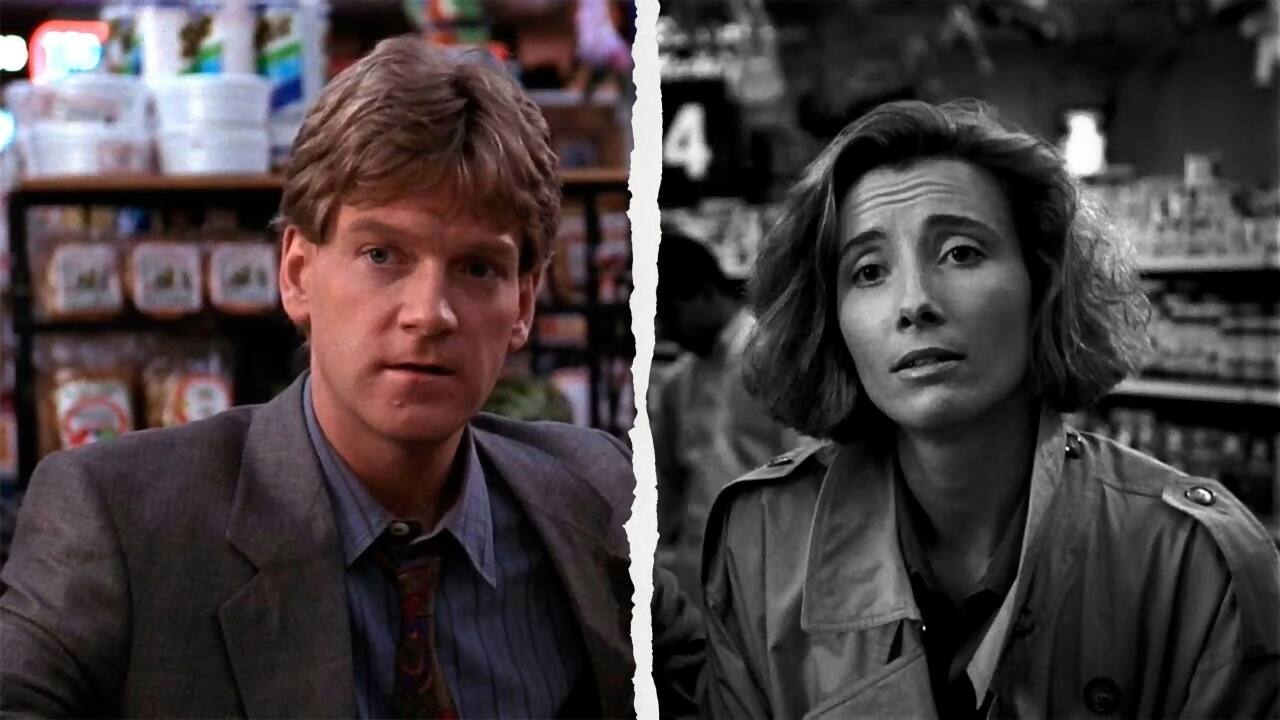
Despite the director’s apparent topical about-turn, it’s a film about reincarnation, not reinvention. Wise-cracking detective Mike Church (Branagh) helps an amnesiac woman (Emma Thompson) uncover their relationship to a murder in 1948; as Roman and Margaret Strauss, both put on varying degrees of false moustaches and silly accents. Are our modern duo destined to repeat their doppelgangers’ fate?
Intended as a tribute to the thrillers of Branagh’s youth, the resulting enjoyable romp brings out the theatricality of classic Hitchcock. It feels like a return to cinema’s more stage-bound roots: watching a bunch of performers putting on a show. That the show is an enjoyably silly thriller, rather than a Shakespeare play, is neither here nor there.
Despite his own training in the theatrical, Branagh’s impetus for getting Scott Frank’s script made were purely cinematic. “It’s weird, but I can see it!”, he said on his first read-through. “I had a picture in my mind. The script had this affection for a time when movies were a bit more audacious.”
Read more: Last Action Hero | The cop thriller parody we never got to see
His approach to the film was nothing if not enthusiastic. “I wanted it to be full-blooded, but not overblown in the way that kind of threw people,” he told Cinefantastique in 1992. “This should be like a rollercoaster ride where this premise of reincarnation, which some people would regard as basically preposterous, would be something that breathless pace and direction would carry you along.”
The character of Church was based on screenwriter Scott Frank, who recorded his lines for Branagh during pre-production. The director honed the accent by ordering popcorn in an American twang, and shook off the shackles of the archetypal English hero by emulating some classic American confidence. “I started to walk behind people in the street to get this loose-limbed quality,” he told NPR’s Terry Gross at the time.
Branagh packed the cast with his Henry V co-stars. His then-wife, Emma Thompson, was an obvious choice for the film’s amnesiac femme fatale; his last film’s narrator, Derek Jacobi, brings theatrical gravitas to the exceptionally Hitchcockian Franklyn, who plies his dodgy hypnotherapy trade from the antique shop he co-owns with his always-in-another-room mother. One of Franklyn’s first patients is a respectable old woman he reduces to her childhood state played, uncredited, by a game Miriam Margolyes.
The film’s dominance by theatrically trained Brits is such that more conventional Hollywood types Andy Garcia and Robin Williams stand out more than they should. Both give understated performances as a journalist and disgruntled former-psychologist, respectively – but this is not an understated film. The central trio of Branagh, Thompson and Jacobi clearly relish the chance to play in the LA noir sandbox, their obviously anachronous casting lending the film a certain performative quality.
Even Branagh’s approach to marketing felt like a kind of performance. Williams’ significant supporting role was intended as a surprise, uncredited cameo for cinemagoers – a surprise ruined slightly when Paramount put him front-and-centre in the trailer. In interviews, the director refused to show off his American accent, saying: “When you do something like that, you just give away a little bit of the magic.”
That theatricality spreads to every aspect of the production, which flip-flops between 90s LA and a house which wouldn’t look out of place in Rebecca. “The moment we found the mansion we wanted for the film, I told the designer we wanted to do an Edgar Allan Poe thing,” Branagh told Cinefantastique. “Get the gorgons. Weird faces, strange statues. The macabre gates… The plot will be too bizarre to sustain a documentary look. It must be removed from reality. It’s not realism – I don’t know what ‘ism’ it is.”
Patrick Doyle’s score, too, evokes Bernard Herrmann’s work for Alfred Hitchcock, suspenseful strings transitioning into something borderline operatic by the film’s bloody conclusion. With it, Branagh was specifically looking to capture the classic thrillers of his childhood. In a quote which sounds more plausible in Church’s vaguely Bostonian brogue than his natural speaking voice, Branagh cried: “We were trying to make a movie-movie here.”
In fact, despite the theatrics, that “movie-movie” energy drips from Dead Again in a flood of cinema reference points. Its modern-day sections evoke pure Vertigo, blending an unconventional romance with sunlit shots of a Californian cityscape, fighting against the shadowy convention of the noir genre’s roots.
In true cake-having-and-eating fashion, though, those roots are on full display in the film’s 1948 sequences, which see Dead Again hop back to full Citizen Kane and 40s melodrama. Still unsure whether the stylistic jump would work for the film, or even if Paramount executives would let them do it if it did, Branagh and cinematographer Matthew F Leonetti hedged their bets – lighting for the contrast offered by black-and-white but shooting on colour film stock.
When Paramount began to sweat over their inclusion, Branagh found an unlikely saviour in the form of Sydney Pollack, who he called “the 400-pound gorilla who saved my bacon on the film”.
“Sydney was a very persuasive arguer on my behalf,” Branagh told Cinefantastique. “He reminded us that we must not be afraid to do radical things, fundamental things.”
Clearly, it worked: Branagh would return to the form in 1995’s In The Bleak Midwinter and 2021’s Belfast.
But the enthusiasm of the Hitchcock tribute act belied that the master of suspense’s tonal balancing act was more difficult than it looks. In post-production, the film went through five radically different cuts over the course of six months, swinging widely between comedy, tragedy and just plain weird.
“It was agony putting it together”, Branagh said. “To get there was like trying to unlock a safe. We knew we had the movie all there, but it wasn’t balanced.”
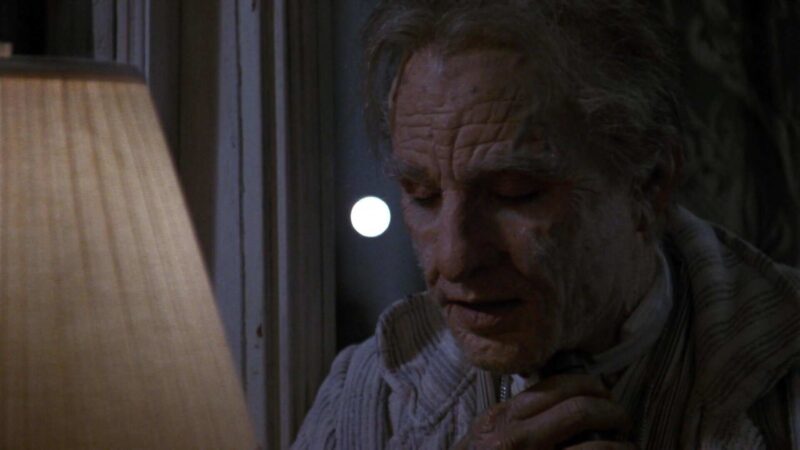
With that fifth cut, though, Branagh and editor Peter E Berger nailed something, yes, magical. In a 2019 interview, the director remembered the preview audience’s reaction to the film’s most shocking scene, where an aged-up Andy Garcia smokes a cigarette through a tracheal tube. “Oh, listen, we’ve definitely got their attention… That’s what smoking can do to you”. Thirty five years have not dealt a more persuasive blow to the tobacco industry.
And despite critical acclaim and moderate box office success on its release, Dead Again is not the film for which Branagh is now best known. It’s probably not even in the top ten; a quintet of Shakespeare adaptations, Marvel’s first Thor movie, three Poirot mysteries and Oscar-winner Belfast all have it beat in the cultural recognition stakes.
But as an example of what Branagh is capable of when firing on all cylinders, as an example of bold, excitable, throwing-shit-at-the-wall creativity, it’s arguable he never beat his triple-billing on Dead Again. It’s a style of filmmaking that feels complimented by his theatrical roots, not hamstrung by them – a director, cast and production team playing in a sandbox to tell a gripping yarn. It’s simple, occasionally bonkers, stuff.
Dead Again is streaming now on Netflix UK.