When Warner Bros landed another hit with Lethal Weapon 3, the studio went to great lengths to keep the creatives involved happy – and it involved an extra gift to them all. In the early to mid-1990s, there was a phrase used to describe the movie arm of Warner Bros: ‘The studio that Batman built’. ... The special reward for Lethal Weapon 3’s filmmakers
When Warner Bros landed another hit with Lethal Weapon 3, the studio went to great lengths to keep the creatives involved happy – and it involved an extra gift to them all.
In the early to mid-1990s, there was a phrase used to describe the movie arm of Warner Bros: ‘The studio that Batman built’. It’s hardly fair, of course, given the studio’s long heritage and history, but conversely, it goes to the fact that Warner became the home of movie star-driven blockbusters for much of the decade that followed Tim Burton’s first trip to Gotham City in 1989.
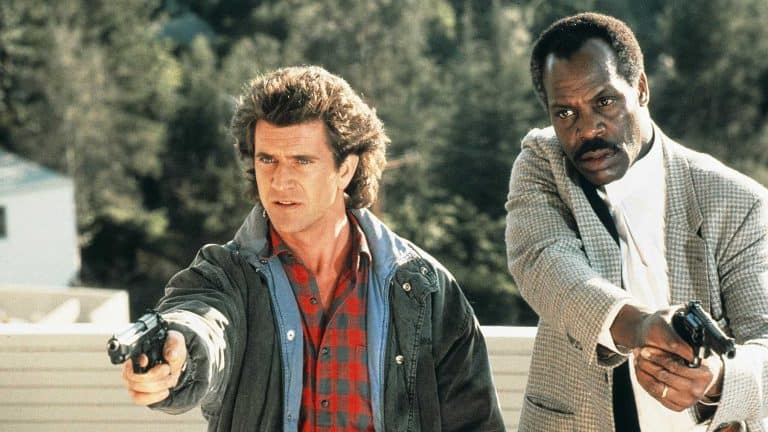
What’s often forgotten about 1989, though, is that Warner Bros had two huge hits. The other was Lethal Weapon 2, the swift reunion of Mel Gibson, Danny Glover and director Richard Donner following the breakout success of the 1987 original. Richard Donner would say of the hugely successful sequel, “It was like being at a college that had a winning team. You all wanted to wear the sweater.”
Warner Bros, as was its style at the time, promptly made deals with the key talent. Mel Gibson and Richard Donner would thus make Lethal Weapon 3, Maverick, the underrated Conspiracy Theory and Lethal Weapon 4 with the studio in the 1990s. Three out of those four were strong hits, too.
What Warner Bros was great at was giving a home to huge stars – a formula Sony arguably picked up in the 2000s. It paid well – although it was never going to be the first studio to break the $20m star salary ceiling – and looked after its major creative talent.

A big example of that came with 1992’s Lethal Weapon 3, which also came out in a Batman year. It landed the same summer as Batman Returns, the sequel that fell a little short of expectations for the studio (and started the reboot process which led to 1995’s Batman Forever). But where Batman had a minor stumble – and I say that as someone who really likes Batman Returns – the Lethal Weapon saga looked bulletproof.
It’s not going out on much of a limb to suggest that the third pairing of Los Angeles cops Riggs and Murtaugh wasn’t the finest hour for the duo, but as Edmund Blackadder once said, you can’t argue with the box office. $144m in the US and another $177m overseas off a $35m budget put the sequel into the green even before the lucrative home video release. The studio was delighted, not least because takings were up nearly $100m on Lethal Weapon 2.
So delighted, as it happened, that it wanted to organise a reward for the star talent involved. Accepting that they’d all received handsome paycheques anyway, Warner Bros nonetheless organised something else on top of that.
As Premiere magazine described in an article looking at Warner Bros in January 1996, the studio chiefs Robert Daly and Terry Semel – who had a prolonged and successful stint at the top – invited the Lethal Weapon 3 team to a special celebratory lunch on the lot. They were taken to Semel and Daly’s private dining room and treated to what I’m going to assume was not a cheap lunch.
At first, the lunch was intended for Mel Gibson, Richard Donner and Joel Silver. It was a Warner Bros tradition to do a ‘well done’ lunch when a project had turned out well. Donner wanted to invite more guests as it became clear more would be available for it. He rang Warner Bros up and asked if writer Jeffrey Boam could come along, and then called again when he realised Danny Glover was going to be in Los Angeles on the right day. By the time the list for lunch was finalised, Rene Russo and Joe Pesci were on it too, all saluting the fact that Lethal Weapon 3 had rocketed its way past $100m at the US box office alone in double quick time.
Unbeknown to the attendees, Warner Bros had another surprise in store, though.


It had bought originally three brand new Range Rovers – at a cost of $50,000 each – as a surprise thank you. Problem was, as Donner kept calling up and adding more names to the list, the studio then had to go and find another one each time. In the end, seven of them were lined up in the parking lot, and the special guests were presented with them as an extra thank you once lunch was concluded.
As Premiere noted, ‘the cars were a singular act of showy gratitude that had never been seen before at Warner’s, nor repeated since’.

The gesture received a great deal of attention from the press. And while there was understandable pushback – why do rich people need to be brought a new car when they’ve been paid millions already? – it was a smart play at work. The story hit the trade papers, and the act of generosity became known among agents and other movie stars. It helped cement the studio’s relationship as a place where star talent was both revered and heavily rewarded.
It was perhaps no coincidence that, over the following decade, talent such as Joel Schumacher, Kevin Costner, Sylvester Stallone, Joel Silver, Julia Roberts, Tim Burton, Jodie Foster and Arnold Schwarzenegger would make at least two movies apiece with the studio. Furthermore, the Lethal Weapon team was persuaded to reunite for a swiftly-shot fourth movie as well, although when that movie shot past the $100m barrier, no fresh Range Rovers were ordered.
But they didn’t need to be. The gesture had done what it was supposed to do, and the star talent kept coming through the studio gates. At the very least, throughout the 1990s, the private dining room on the studio’s Burbank lot would have been kept very, very busy.
A version of this feature previously appeared on the site in 2020.