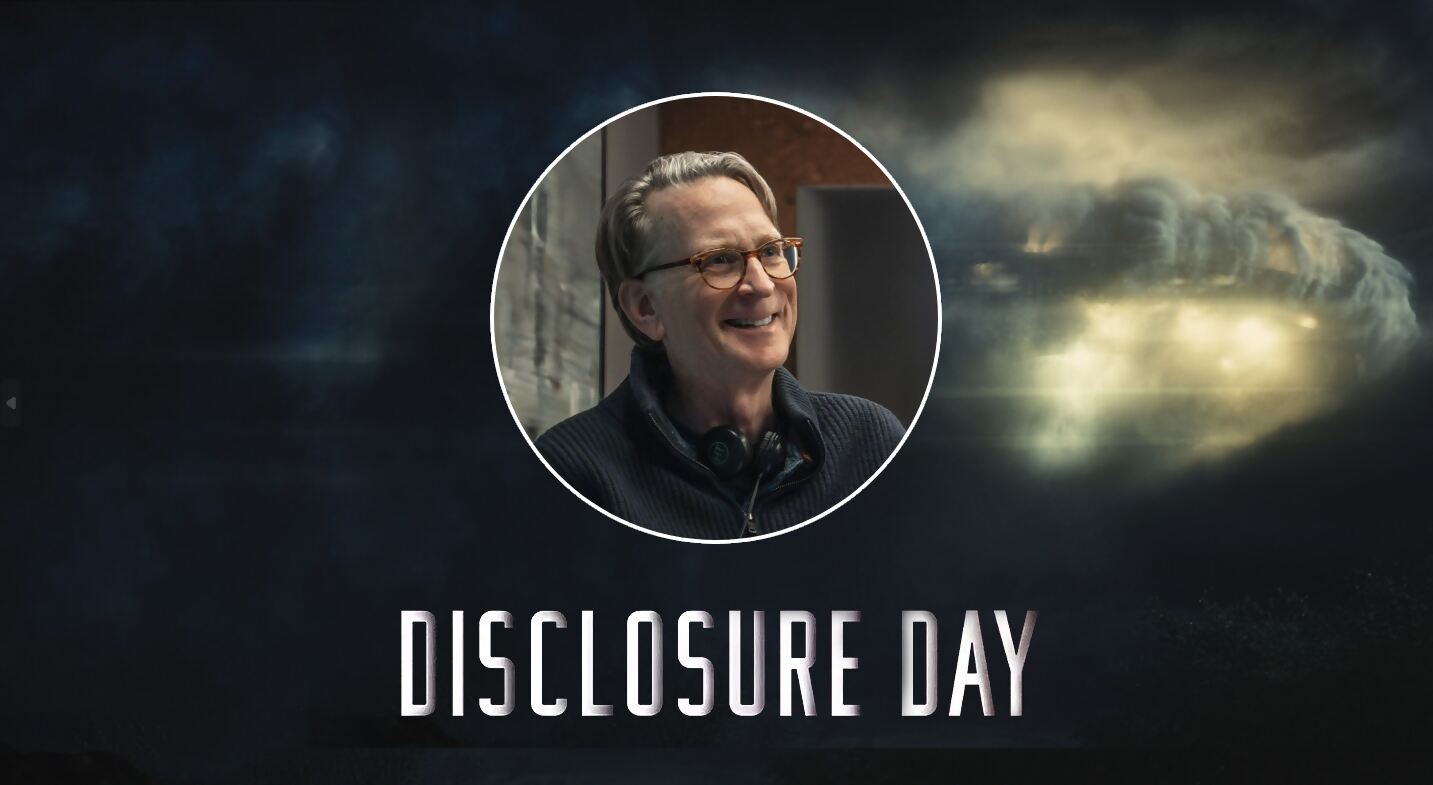
Screenwriter David Koepp talks to us about his new film with Steven Spielberg, Disclosure Day, its alien visitation themes and more besides. In 1993, Jurassic Park wasn’t just a behemoth at the box office – it also marked the first collaboration between Steven Spielberg and screenwriter David Koepp. Then 30 years old, Koepp successfully turned ... Disclosure Day | Screenwriter David Koepp on UFOs, aliens, government lies and Steven Spielberg
Screenwriter David Koepp talks to us about his new film with Steven Spielberg, Disclosure Day, its alien visitation themes and more besides.
In 1993, Jurassic Park wasn’t just a behemoth at the box office – it also marked the first collaboration between Steven Spielberg and screenwriter David Koepp. Then 30 years old, Koepp successfully turned Michael Crichton’s dinosaur resurrection novel into a summer thrill-ride; he toned down the gore and upped the sense of adventure and wonder, and created the blueprint for a true modern blockbuster.
Over 30 years later, and Koepp is still writing movies for Spielberg. They’ve worked together on such films as Jurassic sequel The Lost World, War Of The Worlds and the 2008 Indiana Jones outing, Kingdom Of The Crystal Skull.
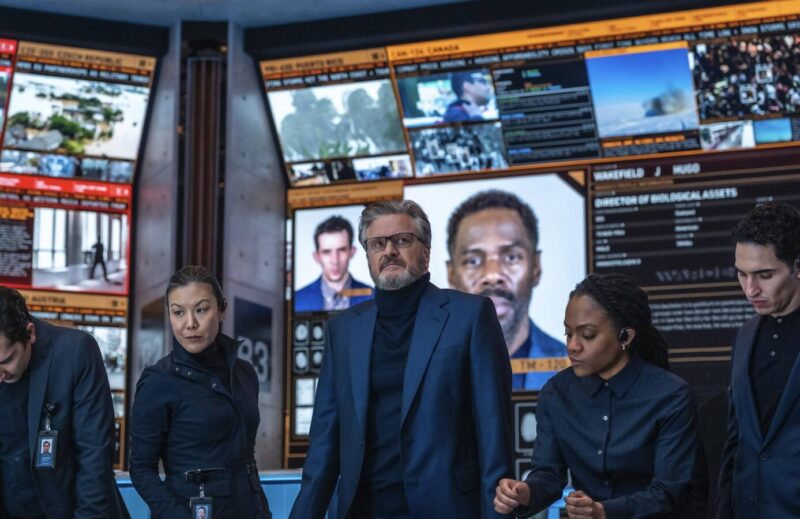
Now they’re collaborating again on Disclosure Day – a sci-fi thriller in which Emily Blunt and Josh O’Connor seek the truth about alien visitation as a group of shadowy agents, led by a grim-faced Colin Firth, attempt to keep that information hushed up.
Below are edited highlights of our long chat with Mr Koepp, who spoke to us a few weeks ago from his apartment in Manhattan via the gift of Zoom. The conversation also digressed into the release of Jurassic Park, working with Brian De Palma and writing a Dolph Lundgren film under a pseudonym early in his career – but we’ll save that for a longer piece in our next edition of Film Stories magazine.
Here, Koepp takes us through Disclosure Day’s beginnings as a Spielberg story treatment, its similarities to (and differences from) Close Encounters Of The Third Kind, and what it has to say about government conspiracies and extra-terrestrial visitors. And don’t worry – it’s all spoiler free.
I love your King Kong poster.
Oh, thank you. Me too… This is the room I write in. I’ve got a bulletin board, a chair, poster. A dog. And the rule is no memorabilia, nothing, only things that are inspiring.
Your office is much tidier than my office, I must say.
Well, I knew I was having an interview. It’s not necessarily always this way.
It’s wonderful to speak to you about Disclosure Day. Can you take me back to the beginning of it? I understand that it began with a treatment that Spielberg wrote. How much room was there in there for you to play around in there as a writer?


Suggested product
Issue #60 Magazine Bundle (3x Covers: A Scanner Darkly Magazine + 1991 + Roger Deakins)
£14.99
Let’s see. Well, he sent it to me, and he said, ‘I wrote this thing. Let me know what you think of it.’ So and it was more than just this thing. It was a 40 page story of a whole movie. And you send your writer friends stuff all the time. ‘Take a look at this, tell me what you think.’ It didn’t seem like he was asking me to write it.
So it was nice to just be able to react and say, ‘Well, I think, I think this is great. And that’s great. No, I love this part. I might suggest moving this, accelerating that, combine these…’ The usual sort of notes that you that you’d give to someone.
He said, ‘Oh, okay ,good notes. What are you doing?’
I said, ‘Well, I’m busy, as you know, writing a screenplay for you.’
He said, ‘Oh, yeah, right, right, right. So then he went off and worked on it some more, and he sent it again. Maybe a month later, he’d made changes, and I guess at that point we started, then I was further along with the thing I was doing, and we just started batting ideas back and forth.
I talked to him about it fairly recently. When you know you’re going to start doing interviews, you want to make sure you get your stories straight. And he said, ‘Well, that was the point at which I started trying to talk you into doing it.’
And I said, ‘No, no, that was the point at which I started trying to talk you into letting me do it.’
It was funny. We both had the opposite memory. Then I started writing. So in terms of freedom, there was quite a bit. I mean, there’s an unspoken, ‘please don’t change things that work.’ And quite a bit worked. So there was that. But a screenplay is very different from a story treatment.
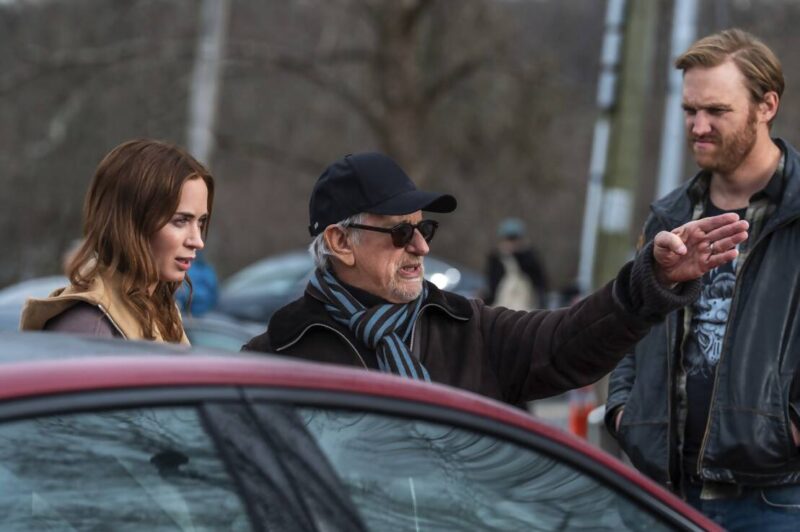
One of the great things about working with him is he wants you to work it out. Do your job. Have freedom.
To what extent do you think this takes Spielberg full circle? Obviously he’s made Close Encounters, but it also goes right back to Firelight. Do you think there are parallels there?
Clearly this has interested Steven his entire life. And what I admire is that this is now the fourth – not counting Firelight – feature film he’s made where aliens are the topic, and each one has a strikingly different tone. Close Encounters has nothing to do with E.T. in terms of tone, which has nothing to do with War Of The Worlds, which has nothing to do with this. I think if you were going to pick one this was closest in tone to it might be Close Encounters, because it has that sort of 70s, paranoid conspiracy vibe to it, but it’s still different, and it’s its own thing. So clearly, it’s interested in his entire life, and he keeps finding new ways to explore it.
Read more: Disclosure Day review | Steven Spielberg returns to the saucer age
Yeah, it’s interesting. You mentioned the conspiracy elements in Close Encounters. Because, like you say, it came out of a period of 70s conspiracy thrillers, but a lot of those had such downbeat, dark endings – Parallax View and the like. But Spielberg gave us what audiences wanted by the end of the 70s, I think, which was a film that had an element of hope and wonder.
I think essentially, he’s a hopeful person… he gave us a hopeful movie about the Holocaust. He managed to find the good and the heroism, the uplift, in what is the most horrendous subject of the last several centuries. It’s a gift, goddamn it. I appreciate it as a moviegoer. know how horrible things are. Can I please have an ounce of uplift, please? And he will deliver.
The interesting thing about alien visitation films is that they tend to reflect people’s hopes and fears [of the era]. So in the 50s, they were very much rooted in the Cold War and Red Scare and all that kind of thing…
…and in the 70s, ‘the government’s lying to us.’
Yes, exactly, that cynicism.
And the 90s, the sort of gung ho 90s, just running with your theory, there’s Independence Day., ‘It’s war. Like, you can’t, you can’t stop us.’ And in War Of The Worlds, which would have been 2005, we very much had 9/11 and the Iraq war on our minds. So they are crucibles of modern political and emotional cross currents.
Yeah. So where do you think Disclosure Day fits tonally in there? I’m asking to divulge spoilers, obviously.
I think it’s tending back toward ‘the government is lying to you’. You’re being lied to. But the very 2026, spin on it is, ‘we know you’ve been lying to us. Everyone knows you’ve been lying to us’. It’s not like in the 70s, where we weren’t naive anymore, and we started to think, ‘oh, wait, our government does things that aren’t great.’
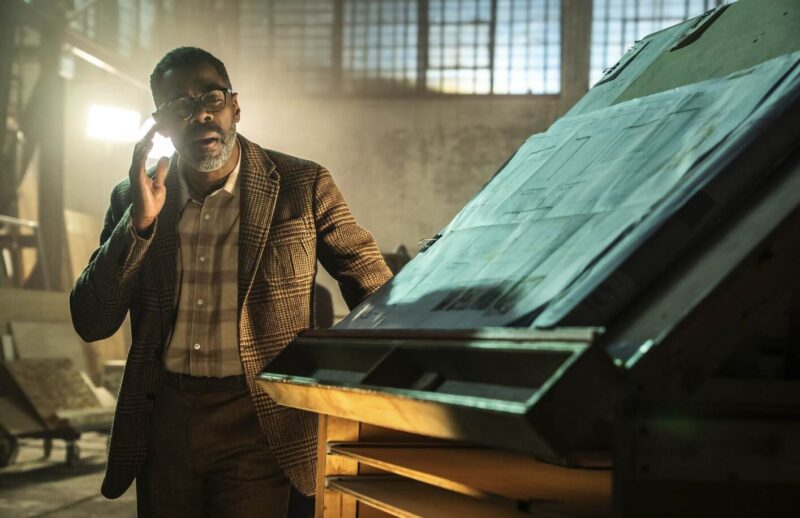
We know well that you’re lying to us. It’s a culture of lies. Lies are everywhere. You know, social media is lies from beginning to end, and we’re sick of it. Enough. Coleman Domingo has a very moving monologue in the movie trade where he says they treat us like children. We can handle it.
With close encounters, Spielberg obviously believes in the subject. He takes the subject seriously to the point where he had J Allen Hynek as a technical advisor, essentially. And he had a cameo in that film too.
…and he appears in the film. Yeah.
Did you take a similar approach here? What sort of research did you do?
Well, quite a bit of it. It’s not a subject that is lacking in research materials or people who are willing to talk to you. And Steven, of course, [said] ‘look at this, read this.’ And then there are books on the subject that, some good, some not. There are an enormous number of documentaries, some good, some not. And there’s, you know, once. As if that’s not enough, if you start to go down the internet rabbit hole, you can really get lost.
Also the congressional hearings were happening as we were putting the story together, or had just happened – the first really splashy congressional hearings from about two years ago. And so there was quite a bit. The problem is, there’s sorting out what you feel is credible and what isn’t.
Because in the absence of concrete, truthful information given to us by governments of the world, we fill in the blanks, right? And so when you tell a half truth, people imagine the rest of that. And they use their imagination. But then all these become conspiracy theories. You can’t lie to people for that long without them trying to answer it. There’s a term for it, and I can’t remember what it is, but it’s a strategy of those who wish to disinform us, which is to promote the craziest theories, so that you discredit the would-be truth-tellers. So research is easy, credible research is hard.
How do you feel about the subject? Are you skeptical? Or are you as convinced of the existence of alien visitors as Spielberg seems to be?
I feel the same way as I do about the presence of God. I was raised Catholic. I was at Catholic school, and when I was 14 or 15, I said, ‘I don’t want to do that anymore,’ in part because I found the absolutism of Catholic doctrines to be too much for me. And there was a particular nun who I used to get into theological arguments with when I was 12. Because I just said, ‘How do you know? How do you know?’
At first I thought, well, I’m an atheist. And then a few years later, I realised that that’s the same lack of intellectual rigor that you’re accusing the believers of. How do you know for certain that there is no God? So I am an agnostic, and my position is, I don’t know that there’s a God. I’ve never seen evidence of it. I hope there is, and there may well be.
I think it’s the same for not just life on other planets – mathematically, that seems like a certainty – but also life on other planets that’s visited us. I don’t know that there is. I hope so, but it’s never been proven to me.
I will say also, though: I think our thinking is sometimes too narrow. ‘Well, when we get some credible film footage of a flying saucer, then we’ll know for sure.’ I think we’re thinking of it in terms that we understand and can perceive when we can only perceive the visual spectrum, right? Okay, it’s from like 400 to 800 angstroms. I’m sure that’s wrong, but you know, there are many things that occur outside of our ability to perceive them visually. It’s the same with hearing. My dog has a much better sense of hearing than I do. So we’ve invented devices to help us see or hear things that we can’t with our crude senses, but those are also crude. Those are maybe 100 years old, the telescope [is even older].
But you know, how are we to say that there isn’t an alien presence, as you and I speak, that just lies outside our realm of both physical and technical perception? How are we to say… how can you be saying that? Ryan, why would you say that? [Laughs]
One thing that interests me is that it seems people seeing flying saucers, or UFOs, UAVs, whatever, spike in times of anxiety. So 1947, straight after the Second World War, the start of the Cold War. So I wonder whether you think that, in a way, this is the human brain creating modern myths to a certain extent.
Surely. I mean, yes, I think so. I think there’s a portion that’s the Streisand effect. You know, Barbra Streisand – someone took a picture of her home. She didn’t want anyone to see it, called attention to it, everybody saw it. I think there’s some of that. ‘Don’t look at this. Don’t look at this. What do you mean? Don’t look at that. Don’t look at what?’
There’s some of that. But also, it’s fun. Sometimes life is a little boring and it’s fun to speculate about something. Awe and wonderment are natural parts of the human psyche as well. And looking up at the night sky and wondering is a very human thing to do. How can we not? And yes, in times of anxiety, I think we look for answers elsewhere, because the answers don’t seem to be here. I think we’re in one of those right now. Good Lord, are we in one of those right now.
I remember seeing an interview with you where you were talking about the first time you worked with Spielberg. How you had to forget that you’d grown up watching his films and think, ‘right, this is a work colleague. I can’t be too overawed by him.’ How has your working relationship with Spielberg developed over the last 30 or so years?
Well, I’m more comfortable than I was. Thank God it only took 10 movies! I think it did take a couple movies for me. It was hard to work with Steven because I knew Spielberg was in the room. I think it’s helpful to think of him in terms of his first name and his last name. So what you learn early on is, he tells you he needs a collaborator, not not an acolyte. He doesn’t use those words, but he makes it clear, ‘come on, don’t give me what you think I’ll like… give me what you think is good.’
If you just keep following that as your guiding principle, then you’ll be fine. I mean, look, everybody likes it if you refer to one of their old movies and says something you liked about it. Just watch it with him, because you become a fan, not a colleague.
So what are your hopes for Disclosure Day? What sort of feeling do you want to leave audiences with?
I hope people feel the way I did [when I saw it]. I find it exciting and also very moving. I think it’s a very emotional experience watching that movie…. I hope people go and have an emotional experience. I think that would be my greatest hope.
David Koepp, thank you very much.
Disclosure Day is in cinemas now. You can read more from David Koepp, including his writing process, working with Brian De Palma on Carlito’s Way and more besides, in issue 60 of Film Stories magazine, out later this month.