Introduced in the 1974 disaster film, Earthquake, Sensurround shook audiences in their seats – and if anything, may have been too effective… How to coax audiences out of their homes and into cinemas? In the early 1970s, Hollywood studios went for suspense and spectacle. Such films as Airport (1970) and The Poseidon Adventure (1972) proved ... Earthquake, and how Sensurround shook 1974’s cinemas to their foundations
Introduced in the 1974 disaster film, Earthquake, Sensurround shook audiences in their seats – and if anything, may have been too effective…
How to coax audiences out of their homes and into cinemas? In the early 1970s, Hollywood studios went for suspense and spectacle. Such films as Airport (1970) and The Poseidon Adventure (1972) proved that people would happily turn off their televisions and head to a theatre for a starry movie with lots of crashes and bangs in it; the success of those cinematic events kickstarted an entire cycle of disaster movies, which lasted until the genre began to wane towards the end of the decade.
In 1974, Universal Pictures went all-in on the disaster genre, greenlighting Airport 1975 – a sequel to the film that got the whole cycle rolling in the first place – and what it perhaps hoped would be the final word on these kinds of star-laden extravaganzas of death and destruction.
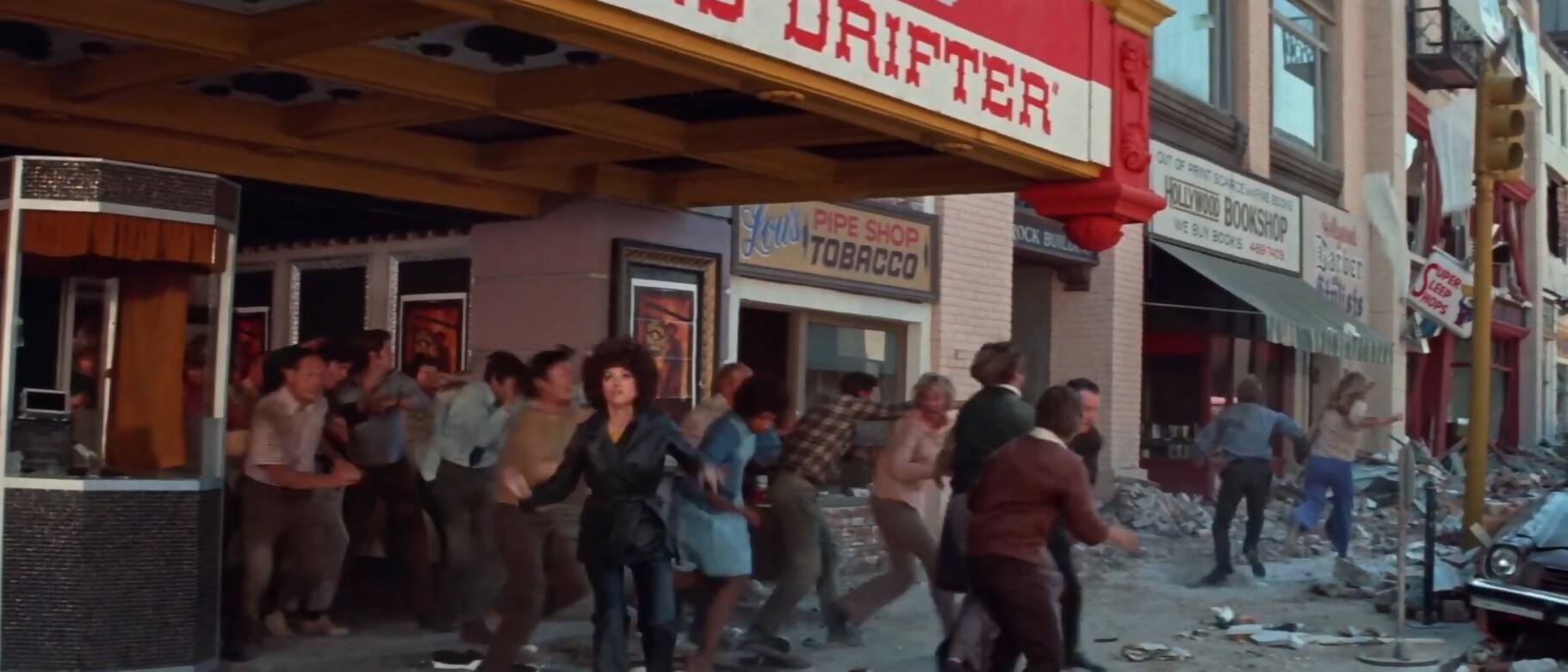
Directed by Mark Robson (Peyton Place, Von Ryan’s Express), Earthquake aimed to take the disaster movie from the relative confines of a plane (Airport) or a cruiseliner (The Poseidon Adventure) and out onto the streets of Los Angeles. It would see Hollywood itself rocked by gigantic tremors, before being engulfed by the waters of a ruptured Mulholland Dam. Among its ensemble cast there was Charlton Heston, Ava Gardner, Richard Roundtree, George Kennedy and Victoria Principle. Who would live? Who would die? Audiences would have to buy a ticket to find out.
Earthquake had a major rival on its hands in the winter of 1974, however: The Towering Inferno. Produced by disaster maestro Irwin Allen, it had two of the era’s biggest stars – Paul Newman and Steve McQueen – heading up an ensemble which included William Holden, Faye Dunaway, Fred Astaire and Richard Chamberlain. The movie was so big that it needed two studios to hold it up (Warner Bros and 20th Century Fox initially had two separate burning skyscraper movies in production, but saw sense and decided to merge them into one).
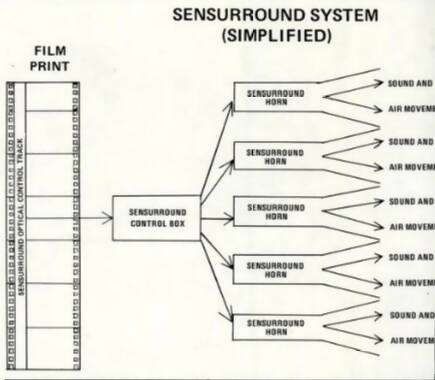
What The Towering Inferno categorically didn’t have, however, was a new-fangled piece of technology called Sensurround. In essence, it was a specialised sound system which employed several huge low-frequency speakers. Powered by similarly outsized amps, the speakers were capable of making an entire cinema shudder with sub-audible sound; movie-goers would be able to feel their seats vibrate and the air around them physically move. The perfect effects, in short, for a movie that aimed to make the earth move for its audience.
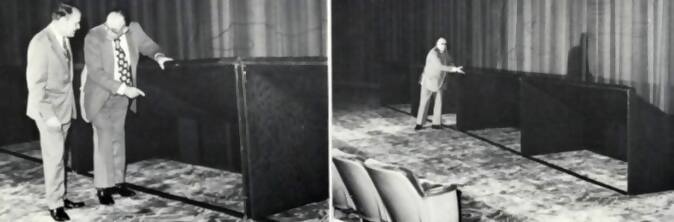
Designed by a company called Cerwin-Vega and built by MCA (which was part of Universal), the concept was tested for several months before the first proper iteration was installed in Grauman’s Chinese Theatre in Hollywood in November 1974. The huge vibrations were generated by a set of horns measuring some four feet in diameter by eight feet long; an additional track on the film then provided the bass frequencies that would emerge from those huge subwoofers.
Sensurround was the brainchild of Earthquake executive producer Jennings Lang, who, writing in a November 1974 edition of American Cinematographer, explained that it was specifically intended to give audiences an “event” they couldn’t experience in their own homes.
“At the time when the idea of Earthquake was conceived,” he wrote, “it occurred to me that perhaps there was a way to make the film more attractive to film-goers, something we could do to augment their experience in the theatre. I had a feeling that there was a way of creating the impression of the theatre shaking during the scenes when the earthquake was taking place. Our special effects fellows and our sound department got together and came up with Sensurround.”
Indeed, it sounds as though early iterations of the system worked a little too well. Lang wrote that, when it was tested at Universal’s offices in Nicaragua and Chile, workers fled the building because they thought it was a real quake.
That same edition of American Cinematographer also carries pictures of Universal sound experts Richard Stumpf and AO Watson, overseeing the installment of a Sensurround system at the Chinese Theatre. Their initial tests had a cabinet of the huge horns located at the front of the cinema, directed out at the audience; but then tests revealed that having a massive horn located mere feet away from the front row made the experience unbearably loud for anyone sitting closest to the screen. In the end, the huge subwoofers were moved to the sides of the theatre instead.

Suggested product
Issue #60 Magazine Bundle (3x Covers: A Scanner Darkly Magazine + 1991 + Roger Deakins)
£14.99

Even then, the rumbling effect that Sensurround was capable of producing was quite dramatic. When interviewed by American Cinematographer, AO Watson talked with seeming glee about the sensation felt while the system was rumbling away.
“We generate both subaudible and audible frequencies that actually vibrate the torso and the diaphragm inside the body,” he said. “You feel something going on in your flesh and the auditory nerves are also responding to the sensation. The result is a strong sense of participation, with the viewer feeling like he’s actually experiencing an earthquake. He feels that the building is shaking. It isn’t really, but it feels that way. If you touch a thin plaster walls or you touch a theatre seat that has metal in it, you find that these are actually vibrating.”
All the same, Watson was quite confident that, as intense as Sensurround might feel, it wasn’t powerful enough to cause structural damage to the building hosting it.
“The frequencies at which the building would be in resonance are extremely low,” he said. “So what we are doing would never damage the theatre.”
There were early signs in that magazine, however, that Sensurround might come with some drawbacks. Special effects supervisor Jerry Christian noted that working on the film’s dubbing was unusually fatiguing because of the constant sound of rumbling on the soundtrack. “It’s partly the vibrations,” he offered, “but also the tremendous amount of concentration that the mixers have to apply because of all the extra controls there are.”
Christian also pointed something else out that would become significant in later months: “We found out, also, that the system made so much noise that it was distracting to the people working on the adjacent music scoring stage. As a result, we ended up doing quite a lot of night work…”
Earthquake barged into American cinemas in November 1974, and while critics grumbled about the soapy dramatics and uneven special effects, it was a big hit, making over $167m against its comparatively sensible $6.6m budget (as Jennings Lang pointed out, this was actually less than Airport’s a few years earlier). Critics were similarly mixed on the merits of Sensurround, though The Washington Post suggested that the seat-rattling ‘gimmick’ made the movie more memorable than it might have otherwise been.
It was as Sensurround was adopted by cinemas across the US that reports of problems began to emerge. According to a collection of anecdotes over at in70mm, some patrons complained of nausea and nosebleeds. There were reports that historical theatres ended up with cracks in walls and decor, seemingly caused by all the vibrations. A china shop adjoining one cinema in Montana ended up with its wares shattered all over the floor. The tremors emanating from a theatre located in a shopping mall were also said to be powerful enough to have killed a tank full of goldfish at a nearby pet shop.
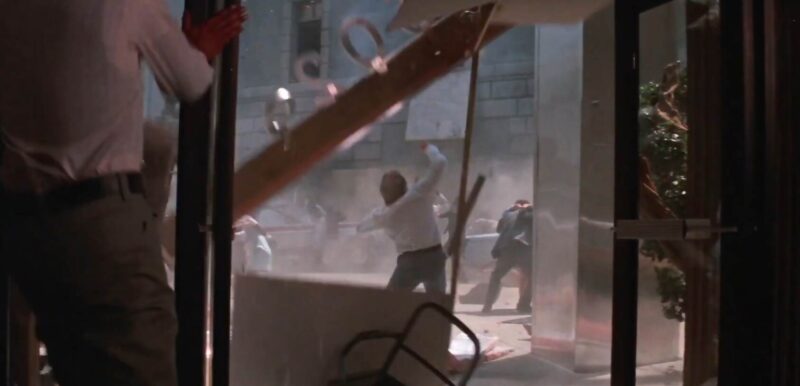
Then there was the problem first hinted at by effects supervisor Jerry Christian: Sensurround’s rumbles were disrupting the screenings of other films, including those for The Godfather Part II, which happened to be in cinemas at the same time as Earthquake.
All of which explains why Sensurround was only used in four other movies during its short lifetime, including Midway (1976) and Rollercoaster (1977): the system was heavy, expensive, and wasn’t necessarily guaranteed to pull in vast audiences. Earthquake was a big hit in 1974, but still not as big as its arch rival, The Towering Inferno – it made over $200m without having to resort to foundation-trembling sound systems.
Rollercoaster was similarly decisive. Another starry disaster thriller (though not quite as starry as those 1974 movies…) it was roundly trounced in the summer of 1977 by Star Wars. All of a sudden, grim disaster films were out, and effervescent, effects-led sci-fi and fantasy adventures were in.
Sensurround still has an important place in cinema history, though, and for more than being just another trouser-rattling gimmick. It could be regarded as the forerunner of the modern 4DX system, which employs moving seats, deep bass and other special effects to augment (or perhaps ruin) the usual cinema-going experience. And while Sensurround may have been a little too over-the-top for most cinema applications, Jennings Lang was absolutely right about one thing: if you’re going to tempt audiences away from their televisions and back into cinemas, you need to offer them an event.
When it came to Earthquake, he suggested that the addition of Sensurround made it something that simply couldn’t be replicated on a TV screen. Over 50 years later, this still holds true: even with our huge OLED screens and 21st century sound systems, we can’t quite replicate Sensurround’s ability to crack ceilings or trigger nosebleeds.