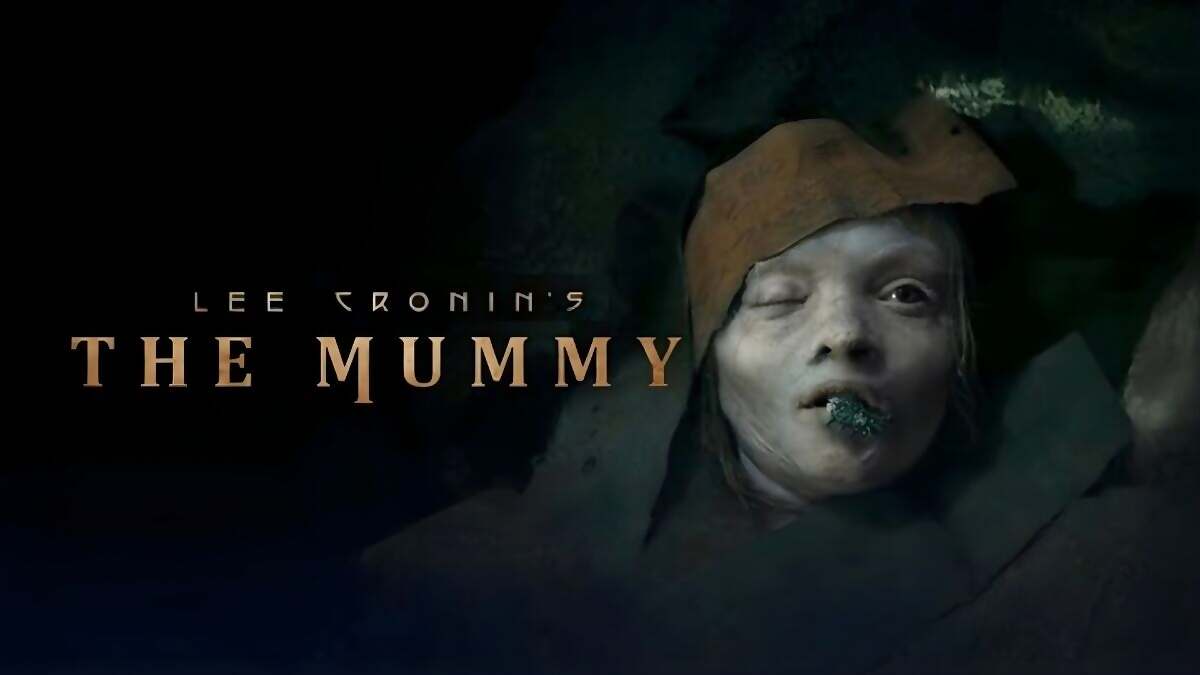
Why call it Lee Cronin’s The Mummy? Why put any director’s name in the title at all? There are multiple answers to that question… The recent release of Lee Cronin’s The Mummy puts its director in a small category: a filmmaker whose name is right next to the title. It’s a branding exerise that goes ... Lee Cronin’s The Mummy: Why put a director’s name in the title?
Why call it Lee Cronin’s The Mummy? Why put any director’s name in the title at all? There are multiple answers to that question…
The recent release of Lee Cronin’s The Mummy puts its director in a small category: a filmmaker whose name is right next to the title. It’s a branding exerise that goes all the way back to the early days of Hollywood, when Frank Capra was considered such a draw for audiences that Columbia Studios boss Harry Cohn started putting the director’s name above the title – said to be an industry first.
Household name status was vanishingly rare for filmmakers in the first half of the 20th century – it was only later that such directors as Steven Spielberg, Francis Ford Coppola more commonly achieved the fame of Capra or Alfred Hitchcock. But even as the rise of auteur theory saw such directors as Martin Sorsese and Brian De Palma talked about in ways that filmmakers rarely were before the 1970s, they resisted the temptation to put their names above or in a movie title. It wasn’t Martin Sorsese’s Taxi Driver or Brian De Palma’s Dressed To Kill.
One filmmaker who famously did push his own name was, of course, John Carpenter. From Halloween onwards, posters and titles in the movies themselves proudly displayed his name first. And, really, he earned that auteur status: he wrote, directed, scored and edited most of his movies, sometimes under pseudonyms in the credits.
Carpenter admired the likes of John Ford, Howard Hawks and Hitchcock, directors who put a stylistic stamp on their work, and this was one of his ways of doing the same thing (though it’s arguable that you can spot a Carpenter movie as easily as Hawks movie, even without looking at the credits).

When Revolver magazine asked him why he put his name above the title, Carpenter replied, “I wanted to brand it. ‘It’s mine.’”
The name-title juxtaposition isn’t always done for branding reasons, though. ‘Guy Ritchie’s The Covenant’ looked somewhat vain at first glance, but there’s said to be a more logical explanation behind it. His 2023 war drama was originally called The Interpreter, but Ritchie decided that it ought to be called The Covenant instead.
“Names, as it transpires, is about the most challenging aspect of filmmaking,” Ritchie told Variety a year before the film came out. “The last few films I’ve done, the trickiest decision to make has been the name of the movie. As of today, it’s called The Covenant.”
But then it was discovered that Renny Harlin had already made a supernatural horror with the same name in 2006, so Ritchie’s name was plonked in front to help distinguish the two. Or at least, that’s the story going around on the internet.
As pointed out in a stevehoffman.tv forum thread about names in titles, studios commonly register titles with the Motion Picture Association. Once they do so, another studio attempting to use the same name might be “penalised in various ways, including not being eligible for ratings and not being allowed to show it at theaters that have agreements with the MPA.”

This is why we ended up with Lee Daniels’ The Butler. Not due to vanity or the spirit of authorship on the director’s part, but simply because Warner Bros had already registered The Butler, and forced The Weinstein Company to change the name after a brief legal battle. Weinstein tried to appeal, lost, and was asked to cough up $400,000 plus legal fees.
With Lee Cronin’s The Mummy, the reasoning is similar, albeit not without its own small mysteries. Cronin’s horror is a Warner Bros movie and Universal has the rights to the classic Mummy franchise, and even has a new entry – bringing back Brendan Fraser and Rachel Weisz – coming out in 2028. Whether voluntarily or for legal reasons, Warner Bros went for the name Lee Cronin’s The Mummy.
Which begs the question: why not just go for a completely different title? As critics have pointed out, it’s not as though there’s much of a mummy in the movie anyway.
There’s another problem with the Lee Cronin’s The Mummy title: ambiguity. We have its intended meaning, which is ‘Here’s The Mummy, as directed by horror auteur Lee Cronin’. But it could also mean ‘Lee Cronin IS The Mummy’, which is something else entirely. (This might explain why we don’t see a traditional mummy in the film; it’s sitting on the other side of the camera, wrapped in bandages, yelling “Action!”)
The habit of slamming the director’s name right next to a title requires a certain amount of caution, then. Steven Spielberg’s Jaws might imply we’re about to watch a dental examination rather than a shark attack epic. Peter Farrelly’s Balls Up could amount to an admission of guilt. And Bryan Singer would have had to have thought very carefully had he been offered the job of directing The Predator.