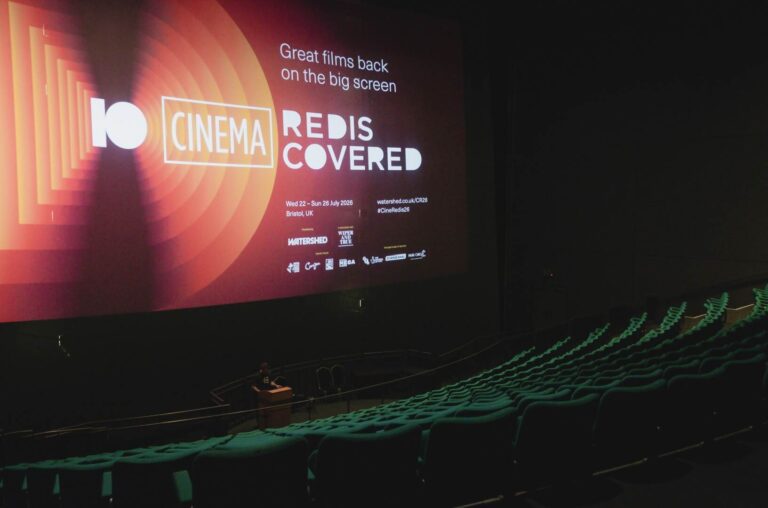
Over 50 films and events over five days: Bristol’s Cinema Rediscovered is one of the UK’s most unique film festivals. Tim reports back from July’s edition. How to summarise a festival featuring more than 50 films, as well as a whole host of events and “wraparounds” (as common festival parlance now goes), all packed into ... Lost and found: exploring the film gems at this year’s Cinema Rediscovered
Over 50 films and events over five days: Bristol’s Cinema Rediscovered is one of the UK’s most unique film festivals. Tim reports back from July’s edition.
How to summarise a festival featuring more than 50 films, as well as a whole host of events and “wraparounds” (as common festival parlance now goes), all packed into just five days? You could manage maybe five or six movies a day at a push, which would still only account for half of Cinema Rediscovered’s offerings this year.
You could just stick a pin in the schedule for the Bristol-based event, now in its 10th year, and hope for the best. You could pore over the guides prepared by the organisers, which pull in a host of partners and collaborators to offer up a truly diverse selection of films, or dive into any one of the strands that the event has curated (the most overused word in festival-speak, but one that must be used in this instance).
There’s no overarching theme, apart from the fact that the films are considered to be ripe for rediscovery. Many have been painstakingly restored, although the strands do allow for links and clusters of films. The reviewer could focus on relevance for readers, concentrating on the clutch of films that will be touring rep cinemas after the event and ones due for a theatrical or imminent Blu-ray release after restoration, or just ones they wanted to see, or make their own tenuous links.
In the end, your correspondent settled for a mix of the above, aiming for breadth and variety too. So here we go, in chronological order.
Thursday
The proceedings kicked off for me on Thursday lunchtime, rather than the Wednesday that formally opened the festival, easing my way in with a discussion with festival chief Mark Cosgrove and Curzon’s head of distribution, Jake Garriock. The indie mainstay is marking 50 years in distribution this year – world cinema distributor Artificial Eye having launched in 1976, before being acquired by long-standing London arthouse cinema chain Curzon earlier this century.
Headed up by genuine cineastes Andi and Pam Engel, Artificial Eye pioneered world cinema on video in the early 1990s, buoyed by the huge success of the then highest-grossing subtitled film ever in UK cinemas, Cyrano De Bergerac. Fittingly, Artificial Eye had one of its major releases play at this year’s festival: a newly restored 4K version of Andrei Tarkovsky’s The Sacrifice. It’s one of two restorations from the legendary director showing at the event – the other being 1983’s Nostalgia. (Tarkovsky’s 1986 drama is also due for a general release in cinemas to mark Artificial Eye’s golden jubilee.)
In short, Artificial Eye did more than other company to popularise the auteur’s work in the UK. The Sacrifice is as stately as you might expect, but it’s visually stunning and a gentle way to kick off proceedings.
Things got decidedly weird for the second film, Dead Mountaineer’s Hotel, a lost sci-fi thriller from the former Soviet Union, made in the mountains of what is now Estonia. It’s not often you get to share a cinema with an actual, bona fide ambassador, but the Estonian dignitary was there, alongside original score composer Sven Grunberg, who talked about creating the synth score from what was effectively one of the only synthesisers in the Soviet Union in the late 1970s. The film is ripe for discovery, let alone rediscovery, and as outré as a Soviet tale about aliens masquerading as gangsters in a deserted mountain-top hotel could be. Great score too, which was later performed in the bar of the Watershed.
Friday

Friday kicked off with Satyajit Ray’s Days And Nights In The Forest, a ‘big city lads on holiday in the backwards countryside’ tale that’s as far away from what it sounds as you could get. Having barely seen any of the director’s work before, it was a revelation for this writer: funny, wryly revealing and providing a valuable insight into India’s complex caste system.
Later, a panel discussion with some of Cinema Rediscovered’s contributors provided a lunchtime treat, offering an insight into the thought processes behind the event and some of its challenges. It was interesting to hear about some of the other events that were sold out or over-subscribed, not least much of the Aardman programming, as well as some of the issues facing organisers (mainly, the prohibitive cost of screening some films) and sensitivities for audiences.
One of a number of Studiocanal restorations came next; these are always consistently great in quality terms, and 1967’s Accident, starring Dirk Bogarde and Stanley Baker as a pair of philandering university tutors, certainly looked a treat. Often, an older title such as this would come with a warning about outmoded views; its attitudes aren’t outright shocking, merely dated and scandalous – mainly because no one at this fictionalised version of Oxford university seemed to think that their lecherous behaviour was anything out of the ordinary.
Powerhouse was another indie distributor closely involved with the event, and it was good to hear the company’s head of production Anthony Nield talking about its 10th anniversary ahead of the screening of Pastor Hall (1940). It came with a great background story: refused classification by the BBFC at script stage in the late 1930s, when appeasing Nazis was all the rage, the drama was then ushered into production after war was declared. Such was its power that someone even stood up at the end and compared the Nazis trashing a Jewish shop in the film to present-day acts of vandalism by anti-immigration bigots in Northern Ireland. This isn’t something you see every day in cinemas.
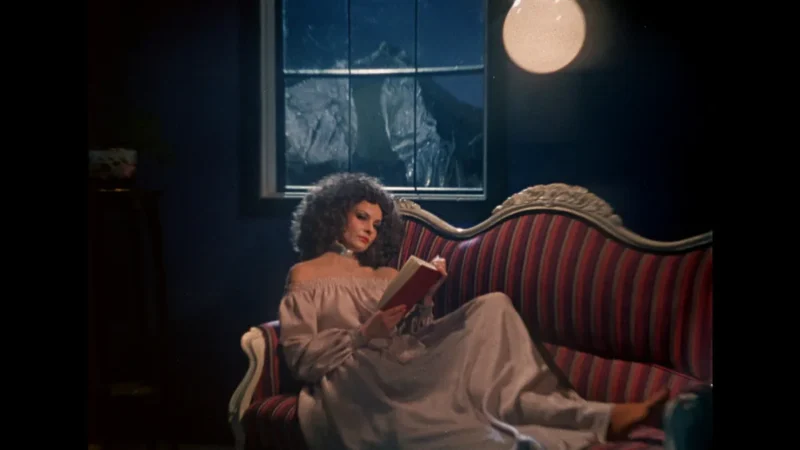
The day ended with two different sides of 80s and 90s American indie filmmaking: My Brother’s Wedding (1983) and Nadja (1994). The former is a Los Angeles-set family drama that pre-dated the wave of Black filmmaking from the west coast; directed by Charles Burnett, it focuses on familial conflict and the impact of gang violence. Nadja is a black and white, New York-based retelling of the Dracula legend that is exactly how you’d expect a black and white, New York-based retelling of Dracula to be, My Bloody Valentine on the score and all. Both are ripe for reappraisal and reintroduction to the UK: they barely showed up on the radar on their initial release, but have added weight more than 30 years later.
Saturday

Saturday and Sunday viewing was constricted to a brace of films each day, but after the double whammy of Mikey And Nicky, and Taxi Driver (both 1976), two was enough. The first, writer-director Elaine May’s mesmerising tale of two lowlife criminal pals, one with a contract out on him, the other realising it’s the end of the line for his friend, felt perhaps more brutal and extreme than ever. John Cassavetes and Peter Falk give dual masterclasses, and the film’s reputation has only grown as more cineastes have recognised its visceral impact.
While Mikey And Nicky is under-seen, Taxi Driver is familiar to most, not least thanks to its oft-quotable lines (the Cinema Rediscovered trailer, playing before every film, featured an obligatory “you talking to me” clip, which never failed to draw a laugh of recognition). The chance to see Martin Scorsese’s thriller on the giant Megascreen was too good an opportunity to miss; its ending has lost none of its power, its climax giving you the feeling you’ve just witnessed the most ultraviolent film ever, even though its body count is relatively minimal.
Sunday
Sunday was going to be a more gentle outing – or so your correspondent thought. But Billy Liar, in a sumptuous new Studiocanal restoration, hit harder than I could have imagined. Maybe it was the pin-sharp image that gave it extra oomph, but John Schlesinger’s drama seemed more powerful than ever, the dreary northern town looking even more bleak, its titular hero’s inability to pull away from it even darker.
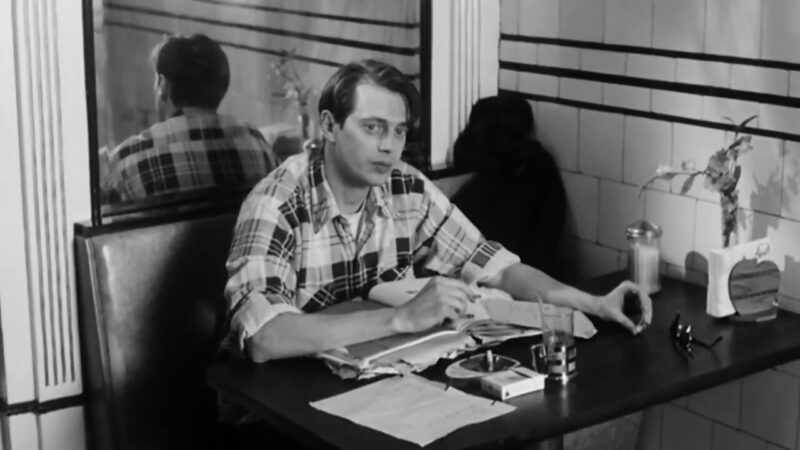
In The Soup (1992), ostensibly the closing film (although room was made for repeat screenings of some of the sold-out films from earlier in the weekend) offered some welcome lightness, even if it too had undercurrents of darkness. If anything, the closing salvo of Billy Liar and director Aldolfo Rollo’s film demonstrated the beauty of Cinema Rediscovered – one’s a familiar title you may have heard of but haven’t seen lately, given a masterful restoration, the other a forgotten title that all but disappeared after release. It’s a reminder of all the great US indie films that came and went in the video era.
Sure, there was plenty I did miss, including some of the event-style screenings (Matinee, Josie And The Pussycats, Cruising, all the Aardman stuff), but the dozen or so I viewed were a nice summation of the power of cinema – the joy of rediscovering old favourites and seeing some beauties I’d missed out on all those years ago.
What I did see, too, was a real sense of community: people in the bar chatting about what they’d seen, panels with engaged audiences, queues and sold out signs at the stands operated by some of those involved (Powerhouse, Radiance, Curzon) who were selling their wares. It was, organisers say, a record breaker, with admissions and revenue up and punters returning for repeat screenings.
As Watershed Cinema curator and Cinema Rediscovered founder Mark Cosgrove told me: “Our 10th birthday edition proved our most popular with a record number of admissions. It was great to see many people from young cinephiles to established names in the film world come together at the festival. The thing I’m most proud of is the range of new curatorial voices the festival supports from Ellen Smith presenting her co-curated Rogue Hollywood strand, to Georgia Humphreys winning the Pitch to Park Circus with a terrific proposal on media manipulation at the movies. Watch this space.”
Several films from Cinema Rediscovered’s roster are now touring the UK. You can find more details at Watershed’s website.