Steven Spielberg was announced as bringing the book Robopocalypse to the screen over ten years ago. Er, things didn’t go to plan. Cinema is not short of books seemingly impossible to adapt to the screen being, well, adapted for the screen. Look at William S Burrough’s Naked Lunch, that David Cronenberg steered to the screen ... Robopocalypse | The lost Steven Spielberg AI sci-fi movie
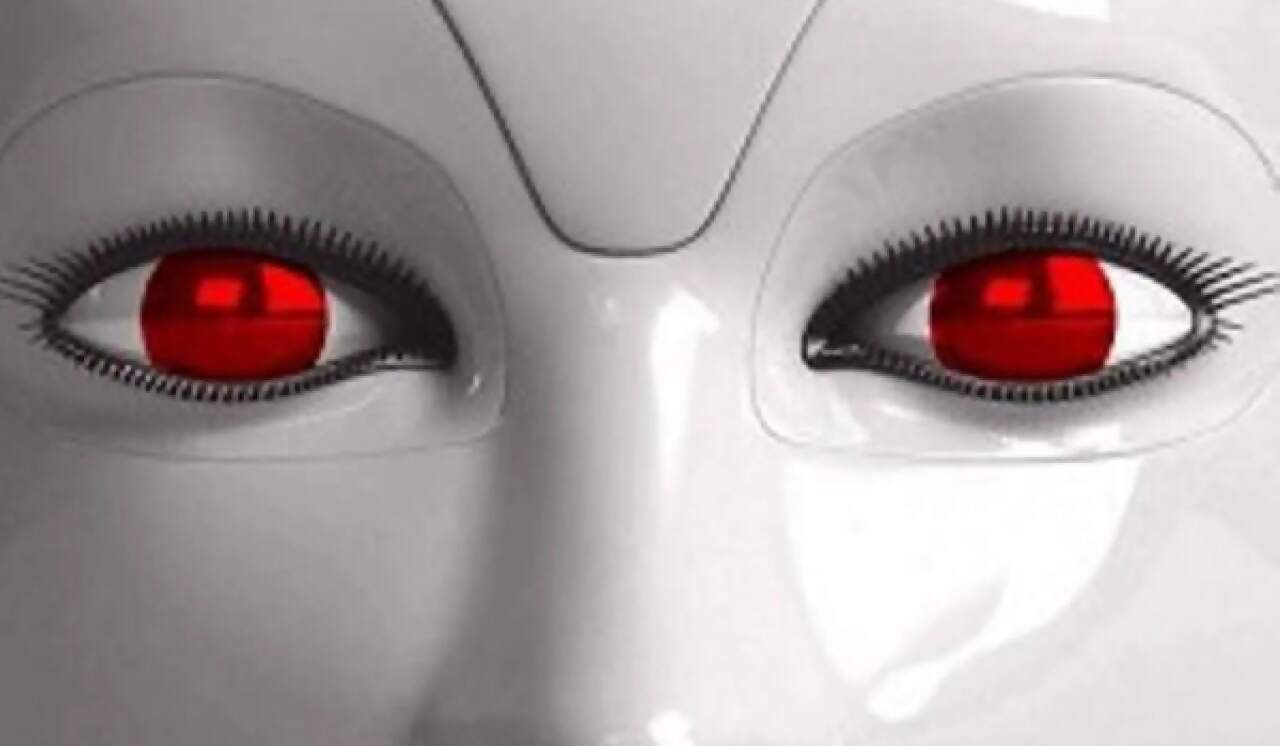
Steven Spielberg was announced as bringing the book Robopocalypse to the screen over ten years ago. Er, things didn’t go to plan.
Cinema is not short of books seemingly impossible to adapt to the screen being, well, adapted for the screen. Look at William S Burrough’s Naked Lunch, that David Cronenberg steered to the screen – albeit not slavishly in the early 1990s. Or maybe Max Brooks’ World War Z, a book of dispatches from a zombie war that got turned into a relatively sanitised Brad Pitt blockbuster (grossing over $500m worldwide after a very troubled production.)
Sometimes, though, seemingly unadaptable books prove just that, and Daniel H Wilson’s Robopocalypse fell into that trap. In spite of Steven Spielberg committing to direct the film version.
The novel first.
Wilson’s book tells of a world where AI had – get this! – gone out of control, and led to an apocalypse.
I really enjoyed the book, but while moments of it screamed movie – the idea of cars moving at absolutely uniform pace a good place to start – the structure of it didn’t. It’s not got a straight narrative throughline, instead it’s a series of fractured stories that dot around the events of the ‘Robopocalypse’ and resistance to it. World War Z had to wrestle this, and nearly tripped up.
In the case of Robopocalypse, it’d eventually prove too high a hurdle.
Still, the book was published in 2011, and Steven Spielberg’s team moved fast. By October 2010, a deal had been struck for Spielberg to direct the movie version of the story, with Drew Goddard announced as the screenwriting. Even then, Spielberg had been eyeing the project since March of 2010, plumping to direct War Horse first instead. He was also in post-production on Tintin: The Secret Of The Unicorn at the time, and keen to keep busy.
The Deadline article that popped up confirming the plan for the film also held a significant clue as to what would trip it up. “Spielberg was so excited about [the unfinished novel] that it was already being storyboarded and designed as Wilson was turning in pages of the book and Goddard was translating them into the screenplay.”
The plan was for Steven Spielberg to begin production in January of 2012, and for the movie to land in 2013, presumably as a summer blockbuster. No casting was announced at that stage.
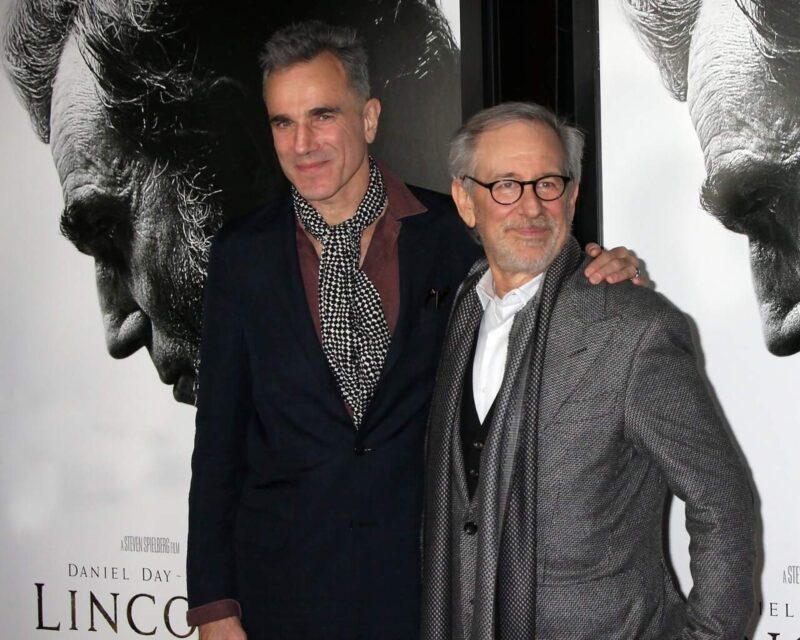
By September 2011 though, things were still moving. A deal was struck to finance the film, with DreamWorks and 20th Century Fox sharing the cost and release duties, with a release date formally announced of 3rd July 2013. He slotted another movie in around this time too, with Lincoln – starring Daniel Day Lewis – landing in 2012.
But Robopocalypse was still very much on his docket.
Away from the trade press reports there, there was an unreported problem. The screenplay was turning into a challenge and a half, and Drew Goddard couldn’t quite crack it. He was in town recently to promote his latest work, Project Hail Mary (for which he adapted Andy Weir’s text into a screenplay), and I brought this up.
He recalled how he was having a meeting at DreamWorks at the time – and this would be around the period where he’d penned Cloverfield and was gearing up to direct The Cabin In The Woods – and Steven Spielberg sounded him out about adapting Robopocalypse (which remains a sod of a word to type out: try it!)
“I actually signed on to that before it had been written,” Goddard reflected to me.
He had a “sort of outline” and a couple of sample chapters to work from, but not much beyond that. Goddard, only just then breaking into cinema – although already with a lot of television work behind him (Buffy, Lost et al) – was understandably keen to work with Steven Spielberg, and thus said yes. He also loved the science fiction genre, and it seemed like something of a dream project.
Well, until the point that it wasn’t. It was all being done in the wrong order. “We were already starting to write the screenplay before we had the book, which is the wrong way to do it.”
In turn, they were “falling in love with ideas that weren’t in the book”, and when the time came to marry them together, they were on something of a hiding to nothing. Daniel H Wilson, independently, was sending through more material for the book itself, while the people writing the screenplay adaptation of his text found themselves second guessing which direction he was going in.
Drew Goddard would work on that screenplay over the course of a year, and at no stage did he have a completed book to work from. Granted, that didn’t stop the later seasons of Game Of Thrones from pressing ahead, but in this case, it was too big a problem to overcome. It simply wasn’t working.
Drew Goddard is sanguine about the experience now, arguing that he wouldn’t trade it, “because I got to have meetings with Steven Spielberg and learn how he thinks, and it was wonderful.” However, he’s stuck to the hard lesson he learned on the project. “I should have said ‘let’s wait til we have this book before we start talking about what to do.’”
Obvious now, but who among us would have turned down the Spielberg offer? And as Goddard also reasoned, “there’s something about Hollywood that makes you want to go, go, go, go.”

With Goddard moving away and with no screenplay in place to work from, the film was looking tenuous. Plus, the initial budget estimates suggested it was going to cost in the region of $200m to realise the movie. The release date was delayed to April 2014 though, and by the end of 2012 – ahead of planned production – Chris Hemsworth had signed on for the lead role. Anne Hathaway too was set to star in the film, but the pushbacks kept coming. Spielberg insisted at the start of 2013 that the project was still very much alive, and in fact he was going to work on a more streamlined script. That was going to knock the film closer to 2015, but in the end, the bearded one opted to make Bridge Of Spies and The BFG in close proximity instead, and Robocalypse would add to the pile of unmade Spielberg movies.
Not for the first time, he passed it on to someone else. He’d done this before, when for years he toyed with making Memoirs Of A Geisha, before he handed that particular film of to Rob Marshall. This time, Michael Bay inherited Robopocalypse, although he was making 6 Underground before he got to that.
That film, which happened and would star Ryan Reynolds, was a Skydance production that ended up on the Netflix slate. The plan was to move on to Robopocalypse straight after that, with Spielberg finally resigned to scheduling conflicts that’d stop him making it himself. Spielberg had chosen Bay for the Transformers saga once upon a time. Commercially at least, that had worked out rather well.
But the film ran aground again, presumably not helped by the Covid-19 pandemic. Bay would scale down instead for his next film, 2022’s Ambulance, and there’s little sign that he’s venturing back there. Which seems to be that.
In fact, everyone’s moved on. Spielberg is finally back in sci-fi with this summer’s Disclosure Day. Drew Goddard would enjoy far more success adapting The Martian and the aforementioned Project Hail Mary. And Michael Bay would make some noises. Meanwhile, Robopocalypse sits on the shelf.
One postscript: World War Z 2 is finally waking out of its slumber, too. Nothing, in Hollywood, stays dead forever. Perhaps that holds out some hope for Robopocalypse…