It’s finally time. Our voyage through the work of Michael Caine brings us to his unforgettable turn as Hoagie in Jaws: The Revenge. Michael Caine showed no sign of slowing down as he entered his third decade as a leading man. The 1980s would see him win his first Academy Award (Hannah And Her Sisters), ... The 1980s films of Michael Caine: Jaws: The Revenge (1987)
It’s finally time. Our voyage through the work of Michael Caine brings us to his unforgettable turn as Hoagie in Jaws: The Revenge.
Michael Caine showed no sign of slowing down as he entered his third decade as a leading man. The 1980s would see him win his first Academy Award (Hannah And Her Sisters), tackle new genres such as horror (The Hand) and shark-based revenge movie (Jaws: The Revenge) whilst continuing to work with interesting new auteurs like Brian De Palma (Dressed To Kill) as well as old friends from classic Hollywood such as John Huston (Escape To Victory).
Film by film, I’ll be taking a look at Caine’s 1980s filmography to see what hidden gems I can unearth alongside the more familiar classics…
Spoilers for Jaws: The Revenge lie ahead…
Directed by: Joseph Sargent (White Lightning, The Taking Of Pelham One Two Three, MacArthur, Nightmares)
Other Featured Geezers: Lorraine Gary as Ellen Brody, Lance Guest as Michael “Mike” Brody, Mario Van Peebles as Jake, Karen Young as Carla Brody, Mitchell Anderson as Sean Brody.
Tagline: This time, it’s personal.
What’s it all about, Alfie?: A Bahamas-set romantic drama about a widow, Ellen Brody (Lorraine Gary), finding late in life love with roguish pilot Hoagie (Michael Caine). Her protective adult son Michael (Lance Guest) has reservations, but lovable Hoagie is just the man to help Ellen and her family move past terrible trauma. That trauma: a targeted harassment campaign orchestrated by a globetrotting shark.
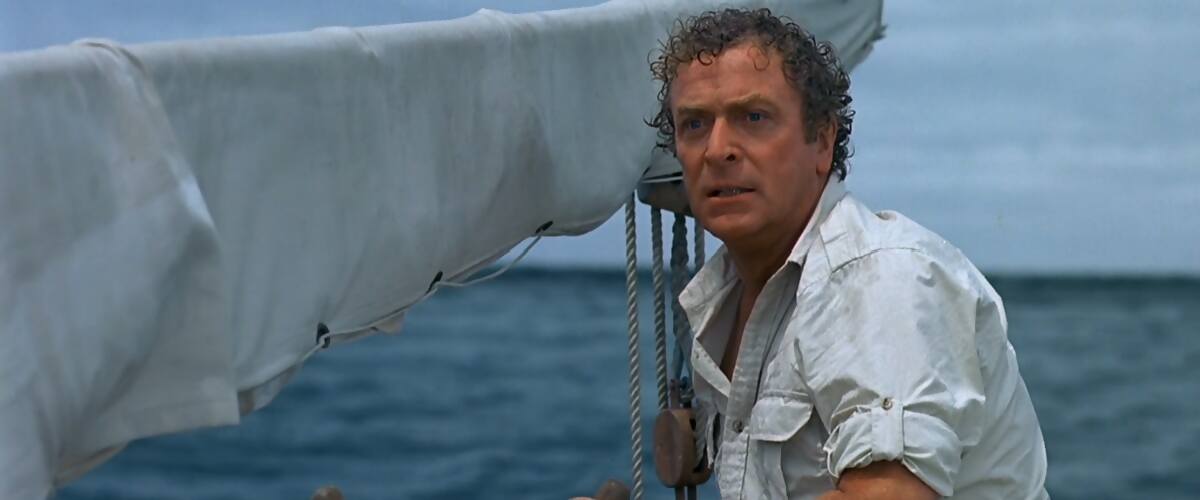
Caine-ness: The striking opening credit “And Michael Caine as Hoagie” ushers in Caine’s most notorious flop. But he can hold his sea-soaked frizzy-haired head high as he’s the best thing in it.
We first see Caine 19 minutes in, disinterestedly flying the Brody family to an island in the Bahamas in his little plane. Initially it seems both actor and character are checked out, but he perks up when little Thea Brody (Judith Barsi), Ellen’s precocious granddaughter, asks, “Where’s the lady who brings the soda?” which leads him to laughingly respond: “There’s some coffee in the thermos.”
“I’m too young for coffee, can I drive?” Thea asks, and so he lets her sit on his lap and steer the plane. This is an apt introduction to Hoagie; an avuncular charmer with a bit of a reckless edge (pre-teens should definitely not be piloting light aircraft, however adorable they may be).


Through shoehorned-in exposition, we learn that Hoagie is an inveterate gambler who may have to spend the rest of his life flying tourists to pay off his debts. In the original script, Hoagie had a side hustle as a drug smuggler but all of that was ultimately cut. When Michael Brody asks what he does when he’s not flying people Hoagie coyly responds, “I deliver laundry”.
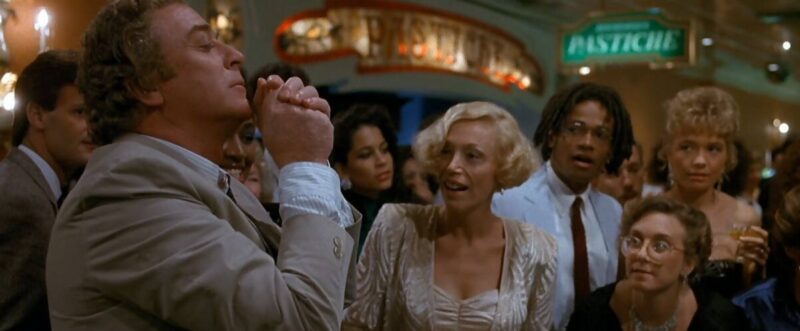
However, Michael’s suspicions of Hoagie, and his intentions towards his mother, remain. “I don’t like him chasing around after you. I don’t trust him.” He says to her, thus becoming a bigger villain than the shark by trying to disrupt this beautiful romance.
Surprisingly, the romance between Ellen and Hoagie is sweet and believable. Hoagie is a lonely middle-aged woman’s fantasy. He’s good with the grandkids, an active listener in touch with his emotions – “I always listen to my feelings” he says strolling along the beach with Ellen. He’s not afraid to let loose and do a little boogie, offers sound motivational advice such as, “Give it a kick in the arse, get on with your life.” He even has a bit of a cheeky, non-threatening bad-boy side too.
The best line Caine has ever been given is when at a beachside bar he orders “Two Bahama mamas please.”
Then, buoyed by the Bahama mamas coursing through him, he suavely announces, “I have an irresistible urge to kiss you Ellen Brody,” and isn’t deterred by Ellen’s mood-killing response of “Why?”
The smooth operator continues with, “Because it would occur to you why. Blushing suits you.” And is still undeterred by Ellen’s ongoing lack of game. She says, “Are you sure you don’t need glasses?”
Caine’s response: “I’m a pilot, my vision is perfect.”
After that she can’t resist anymore and they kiss. I found this all very endearing.
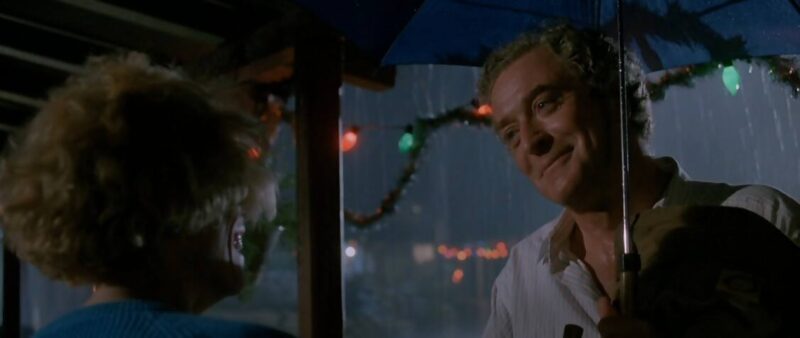
Hoagie is a down-to-earth, friendly Cockney and Caine here is at his most stereotypically Michael Caine-y. At times, such as during Hoagie’s rambling, inconsequential monologues, it’s almost as if Caine is doing a Michael Caine impression himself.
“One time I was flying supplies up the Amazon when I came down in the jungle, I was picked up by this tribe of head-hunters, and they took me to see their chief, he took a long look at me and then he took me in his hut. Inside his hut there was a long pole.”
We sadly never find out what the pole was for as most of these stories tail off and we cut to the next scene. The film ends with his voice fading out as it starts the following story:
“When I come back, remind me to tell you about the time I took 100 nuns to Nairobi.”
Roll credits.
Hoagie has reached a zen mindset worth aspiring to. He’s laid-back and unphased by whatever life throws him, whether it’s something insignificant like an unsuccessful fishing trip (“Dunno why I fish here, never catch anything. There must be a sign under the water ‘Beware: Hoagie’s about!’”), losing at the craps table, or being nearly eaten by a shark (“Bloody hell, the breath on that thing”).
He’s always armed with a joke and a toothy laugh that’s scarier than the shark’s.
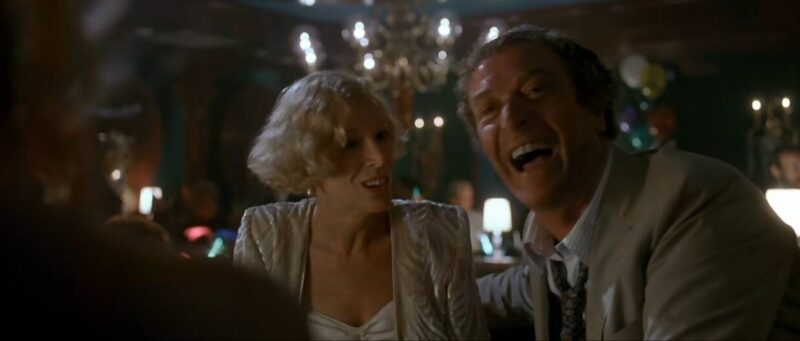
Hoagie loves the island life and has no intention of giving it up. “I tried winter once: Burlington Vermont. I have a bone in my left foot that hasn’t thawed yet.” It seems that Caine also is having fun on this all-expenses paid acting job in the Caribbean.
Caine shares no ill-will towards the movie, even though filming it famously kept him from accepting his Academy Award for Hannah And Her Sisters in person. His oft re-reported thoughts on it, taken from his autobiography What’s It All About, are:
“Christmas was coming, with all the expenses that entailed. I was almost on the verge of a nervous breakdown when I was offered a small part in the fourth of the Jaws films at a tremendous fee and I took it. I have never seen the film but by all accounts it was terrible. However, I have seen the house that it built, and it is terrific. Jaws: The Revenge will go down in my memory as the time when I won an Oscar, paid for a house and had a great holiday. Not bad for a flop movie, right?”
Caine-nections: Jaws was based on a novel by Peter Benchley. Caine kicked off the 1980s with another Benchley adaptation; The Island (1980).
Caine is the second actor to follow up an Academy Award winning performance with a Razzie Award nominated performance the year after in a Jaws sequel. The first was Louis Gossett Jr, who won an Oscar for An Officer And A Gentleman in 1982 and then in 1983 was nominated for a Razzie for Jaws 3-D.
This is the second time that Caine has been in a poorly-received sequel to an acclaimed movie after Beyond The Poseidon Adventure (1979).
Best Non-Caine Actor: It’s refreshing to see a middle-aged woman, Lorraine Gary, returning as Ellen Brody from the first two Jaws films, as the star of a tentpole summer blockbuster. If you wondered how an older actress without star power achieved that feat, then it probably helped that she was married to Universal CEO Sid Sheinberg.
Gary has only eight feature film credits (three of which are Jaws films). She originally retired in 1979 after appearing in Spielberg’s 1941 but was lured back for one more shark encounter in this, her final released film to date.
Gary is good as the melancholy matriarch and, as mentioned, her scenes with Caine are the film’s high point. She sells the giddy girlish excitement of an older woman unexpectedly finding new love, especially in the scene when she’s excitedly talking to her daughter-in-law about her first kiss with Hoagie.
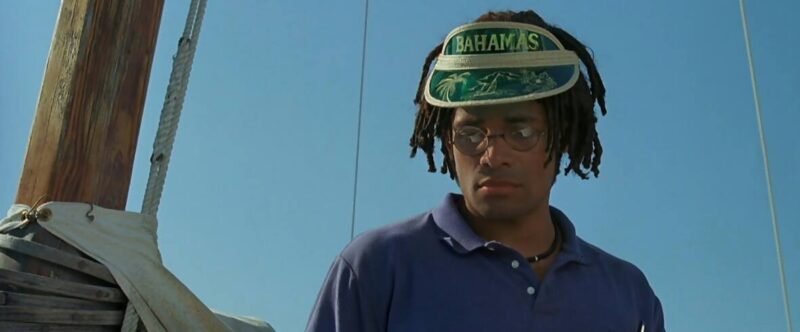
It’s not a star-studded cast, but it is filled with impressive cable knit jumpers. After Caine, the actor with the biggest career, and the best performance in the film, is Mario Van Peebles as Jake with his affinity for Barbados-branded attire and inexplicable survival instincts. His dad, filmmaker and actor Melvin Van Peebles, also has a cameo as the mayor unveiling Carla’s statue.
Lance Guest, best known for his starring role in 1984’s The Last Starfighter, plays Michael Brody, taking over from Dennis Quaid who had played him in Jaws 3-D but declined the offer to return. This film seems to have derailed Guest’s burgeoning film career as his subsequent filmography contains little of note. He found success later in life playing Johnny Cash on Broadway and, looking at his Wikipedia photo, he has a luscious mullet, so good for him.
The more ill-fated Brody, Sean, is played by Mitchell Anderson. This is Anderson’s biggest film, and he now owns a restaurant called MetroFresh. Good for him, too.
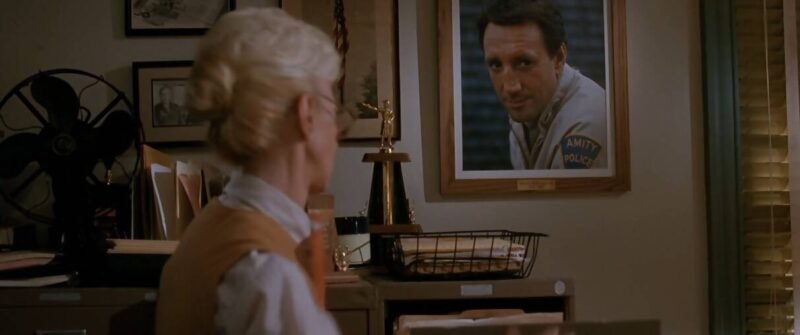
Roy Scheider and Richard Dreyfuss both refused to return for this film. Their characters were in the original script, with Martin Brody dying by shark in the opening rather than Sean. Instead, we now hear that he died of a heart attack before this film takes place and Scheider only appears as a large framed photo in the Amity police department and via sepia toned flashback footage from the first film. Robert Shaw wasn’t asked to return, since he had died both in the film and in real life, although nowadays that wouldn’t necessarily be an impediment.
My Bleedin’ Thoughts: The opening credit “A Joseph Sargent Film”, isn’t the most reassuring stamp of quality given that arguably Sargent’s only great movie is The Taking of Pelham One Two Three (1974) and the rest of his career is rather iffy. We also get music composed and arranged by Michael Small, who, although not without his successes (he scored Klute and Marathon Man), is no John Williams.
William’s original score is used in part, but in a way that seems rushed and careless, which reflects the film’s production as a whole. This was hurried before cameras, with Sid Sheinberg desperate for a surefire hit after a raft of underperforming projects at Universal, and also likely an excuse to get his wife out of the house. Sheinberg had no such luck and ended up with another critical and commercial flop. It broke even financially, but barely.
Perhaps audiences were deterred by the hard truths that this movie confronts. It’s the first film in the franchise that dares to ask: can sharks hold a grudge? “It came for him. It waited all this time, and it came for him,” Ellen says of Martin’s death. “He died from fear. The fear of it killed him.”
Her son is less sure: “Sharks don’t commit murder”.
However, the evidence that the film presents seems to be resoundingly on Ellen’s side. Sean is clearly lured to his doom by a piece of driftwood that he is forced to sail out to and move by himself as his colleague is busy dealing with cow tippers. Has the shark orchestrated all of this and somehow tipped those cows? Probably. When Ellen is leaving Amity Island on the ferry, we get a conspicuous cut to a shot of the bit of driftwood, suggesting it was the shark’s accomplice.
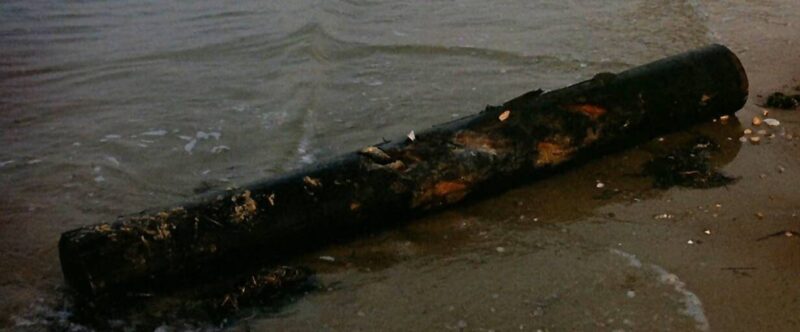
Pictured Above: The film’s true villain.
Michael says there has never been a great white where he lives in the Bahamas, but that doesn’t stop this tenacious shark. Also, when it first appears there it goes straight past Jake, who is underwater beside it, and attacks the boat where Michael is. All showing clear premeditation on the shark’s part.
It also seems to deliberately pick the time to attack the beach that will most disrupt the Brody family, as it’s the exact moment that Carla’s rubbish statue is being unveiled. Speaking of which, I’m not sure how a random white woman from the USA has been commissioned to make a statue to represent the true spirit of the Bahamas, but that’s by-the-by.
In the original script, and the novelisation based on it, these events are explained by the shark being controlled by Amity Island’s aggrieved witch doctor, Papa Jacques, who after being insulted by Michael Brody decides to put a voodoo curse on him. As you do. This was removed from the final film. Whether the inclusion of Papa Jacques would have made the film better or worse is debatable.
In the shark attack scenes, there are quick, confusing edits, obviously to hide the shark, which is well done in the original but here is simply disorientating. The intercutting between carol singers and Sean’s death is nice in theory, but the bad acting, where Sean’s bitten off arm is clearly just shoved inside his raincoat, and poorly filmed action, ruins it.
The shark is so docile and rubbery that it looks almost cute when we see it just gently gumming the side of Sean’s boat. In another shot, as it’s approaching the boat floating half on its side, it looks hammered after a night on the town.
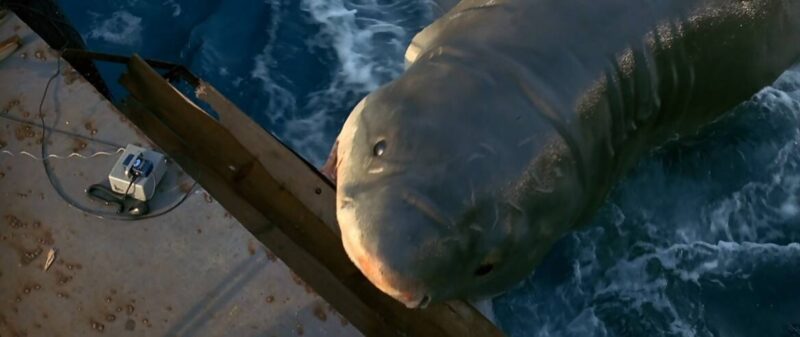
Credit where credit is due: there’s an effective jump scare with a big, open-mouthed moray eel, and the banana boat beachside attack is an unironic thriller highlight. The shots where the shark attacks a woman, and has her leg in its mouth, look realistic and disturbing.
That sequence precedes the absolute shambles of an ending, however, which promptly removes any remaining goodwill. Ellen commandeers a boat and sets out on her own to kill the shark. “Come and get me you son of a bitch,” she says. The shark doesn’t respond because it’s a shark.
Michael realises what his mother is up to and sets off with Jake, roping Hoagie and his plane in along the way. They then all get into a climactic shark attack where Hoagie’s plane is munched on and Jake very clearly is eaten.
We get a shot of Jake looking bloody and very dead after falling into the shark’s mouth – but later, after the shark is blown up, he pops up from the bottom of the ocean alive and well.
“What the hell are you doing alive?” Michael understandably asks him. “I told you, Uncle Jake’s equipment don’t crap out,” he casually responds, not really answering the question.
This is after Ellen has decided to steer the pointy bit of the ship into the inexplicably roaring shark, causing it to explode into many bits for no real reason (the shark does have an electrical device shoved into it which is supposed to be the cause) interspersed with clips of Martin killing the shark in Jaws to confuse matters further.
The reason for this mess of an ending is that it was cobbled together after the film was already playing in US cinemas because of audiences’ negative reaction to Jake’s fate. In the original cut Jake does die and the shark bleeds out rather than exploding spectacularly for no reason. For international release, and home video, the new ending was used and has been the default ending everywhere since, though the other conclusion has popped up on British TV from time to time.
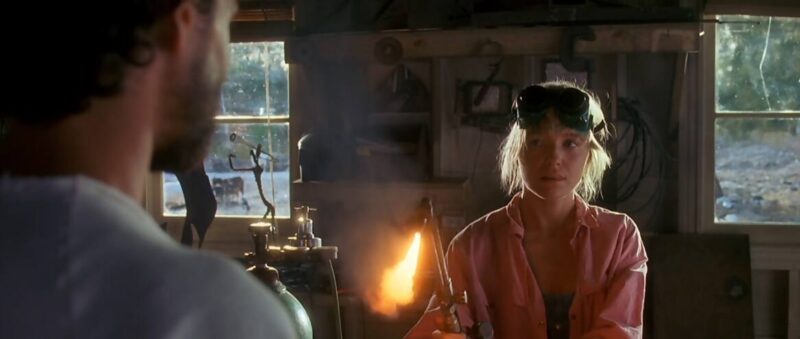
One of the film’s most memorable sequences is welding-based. Following an argument about taking out the bins, Michael approaches his wife just as she’s about to get down to some welding and utters the immortal line, “I’ve always wanted to make love to an angry welder. I’ve dreamed of nothing else since I was a small boy.”
It’s then implied that they have passionate make-up sex as they slide down out of frame. A goat looks on through the window in the distance.
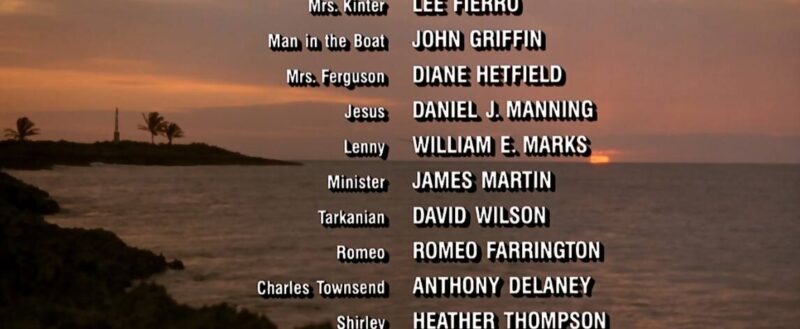
Best Cameo from The Messiah: I didn’t spot him but, according to the credits, Jesus was in the film alongside other such important figures as Man in the Boat and Lenny. The Lord truly does work in mysterious ways.
Trivia (Courtesy of IMDB): The shark’s roar comes from a Tom and Jerry cartoon called The Milky Waif (1946). The sound editor refused to make a new sound effect for a roaring shark because he had some dignity.
Bruce the Rubber Shark was nominated for a Golden Raspberry Award for Worst Actor. The shrieking dolphins, Cindy and Sandy, from Jaws 3-D, were the last animals to receive this honour.
Michael Caine is in the Guiness Book of World Records under the category of “Most Told Anecdote” for his story about how he has never seen this movie but he has seen the house it paid for. At last count he’s told this publicly 174 times (This doesn’t actually seem to be true, I can’t find any corroboration, I think this is just an IMDB user having a bit of a laugh. I also think Caine has definitely told this anecdote more than 174 times).
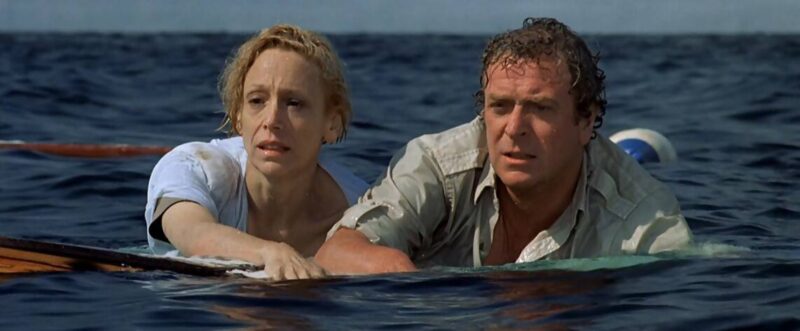
Overall Thoughts: In spite of its reputation, Jaws: The Revenge isn’t Caine’s worst film, and it’s not one of the worst films ever made, but it is nevertheless very bad. However, it is unintentionally quite amusing in parts and the Hoagie and Ellen Brody romance works thanks in no small part to Caine’s charm.
Rating: 2/5 Bahama Mamas
Where You Can Watch This: At the time of writing, it’s available to stream on Prime Video or to rent or purchase digitally at the usual locations, or on DVD or Blu-ray.
Up Next: It’s one of Caine’s more obscure movies, the comedy Surrender. Will I surrender to its charms? It has Steve Guttenberg in it, so I’m guessing not.
/**/