With inevitable spoilers, we look back at Alien: Earth’s first season to look at what worked, what didn’t, and where it might go next. Contains bad art. NB: Your final warning for Alien: Earth spoilers – including the episode 8 season finale. With that, showrunner Noah Hawley’s Alien: Earth runs off, shrieking down a corridor, ... Alien: Earth | A spoiler-filled exploration (with bad art)
With inevitable spoilers, we look back at Alien: Earth’s first season to look at what worked, what didn’t, and where it might go next. Contains bad art.
NB: Your final warning for Alien: Earth spoilers – including the episode 8 season finale.
With that, showrunner Noah Hawley’s Alien: Earth runs off, shrieking down a corridor, presumably to be seen again soon – assuming a second season gets greenlit. So what did it all mean, and where might it go next? With a warning for obvious, inevitable, inescapable, unavoidable spoilers, let’s have a look. Ably assisted by some bad drawings courtesy of yours truly.
In retrospect, the plot for Alien: Earth is fairly straightforward. It’s the year 2120, and a spacecraft, the USCS Maginot, has crashed into a city owned by a mega-corporation called Prodigy.

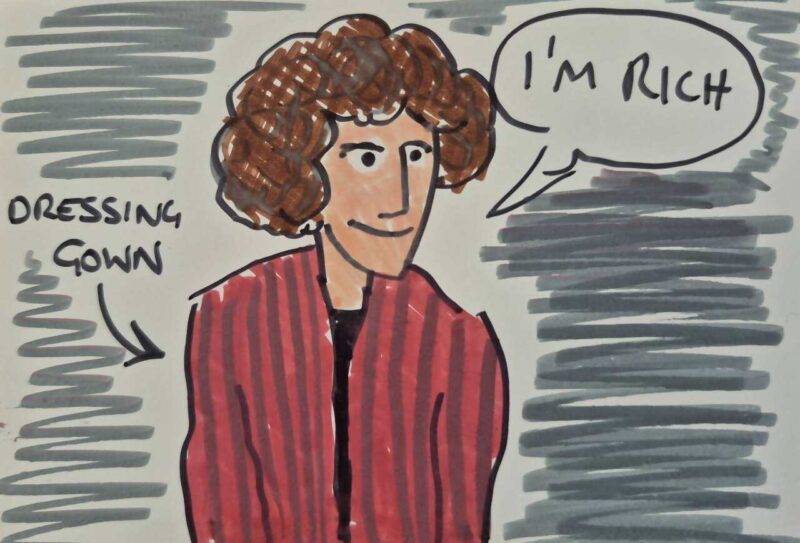
It’s owned by this 20-something oddball named Boy Kavalier who bears no resemblance to modern-day tech CEOs, so just put that thought out of your head.
Anyway, the Maginot belonged to rival corporation Weyland-Yutani, and was on a decades-long mission to collect alien specimens from some unspecified corner of the galaxy.
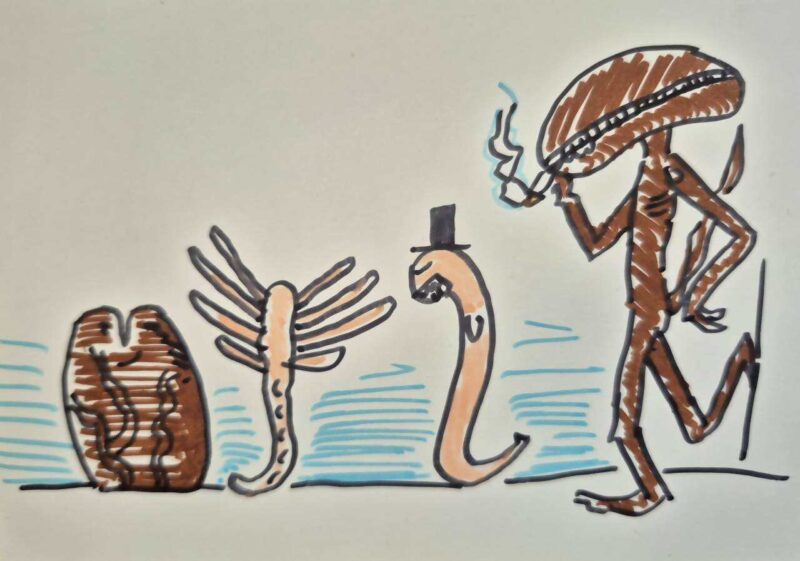
By the time the ship crashes, those creatures have already broken out and killed most of the crew – all except a cyborg named Morrow, who’s essentially left his entire life behind for this specimen-hunting mission.

As Kavalier’s private army swoops in and snaps up all the specimens for its own experiments, Morrow clenches his fists and makes it his mission to get them back. The twist being – as revealed in episode five’s extended flashback – Boy Kavalier had a saboteur onboard the Maginot, and the crash was deliberately engineered so he could snatch the monsters away from Weyland-Yutani.
While all this was going on, the island-based Prodigy corporation had another project going on: a successful attempt to take a human being and inject their consciousness into an advanced synthetic body. The first of these experiments is a terminally ill young girl named Marcy – a few flashing lights and clips from Peter Pan later, and she wakes up in a powerful, adults-sized body and re-christened Wendy. (This show references Peter Pan a lot.)

Not long after, Wendy’s joined by other hybrids, as they’re called, just like her. All were once sick kids who’ve essentially been donated to science. All end up in adult bodies, but with their under-developed, youthful minds intact. Not that this stops Boy Kavalier from sending them all out to the Maginot crash site to help with the specimen retrieval project.
Anyway, Boy Kavalier and his chief science officer Kirsh set about prodding and experimenting on the specimens, which of course the xenomorph from elsewhere in the Alien franchise.

Suggested product
Issue #60 Magazine Bundle (3x Covers: A Scanner Darkly Magazine + 1991 + Roger Deakins)
£14.99

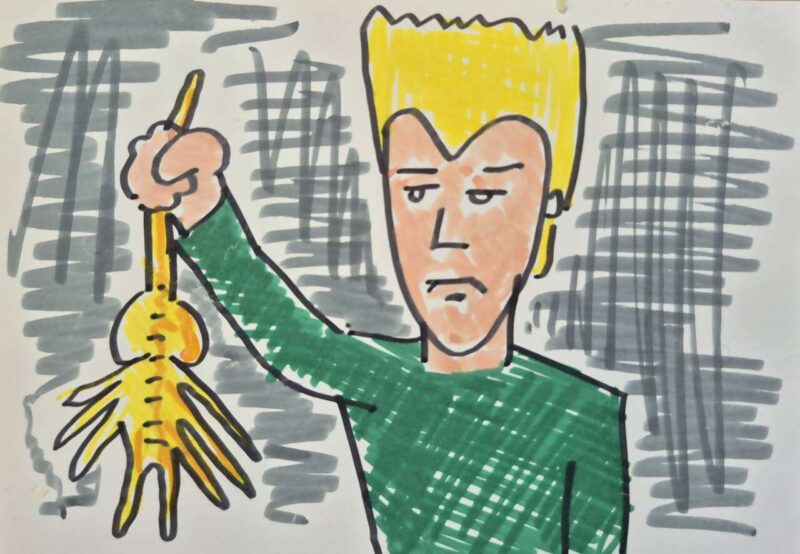
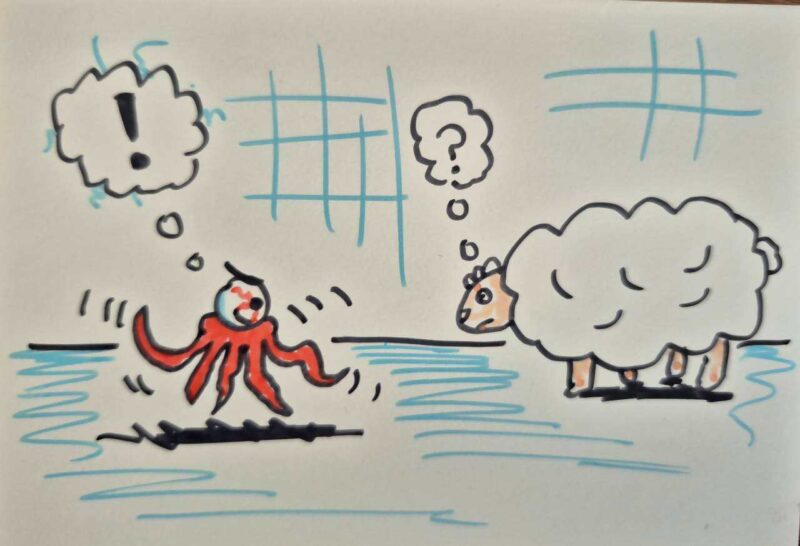
There’s also an octopus-eyeball parasite that burrows into its victim’s faces and controls their brains.
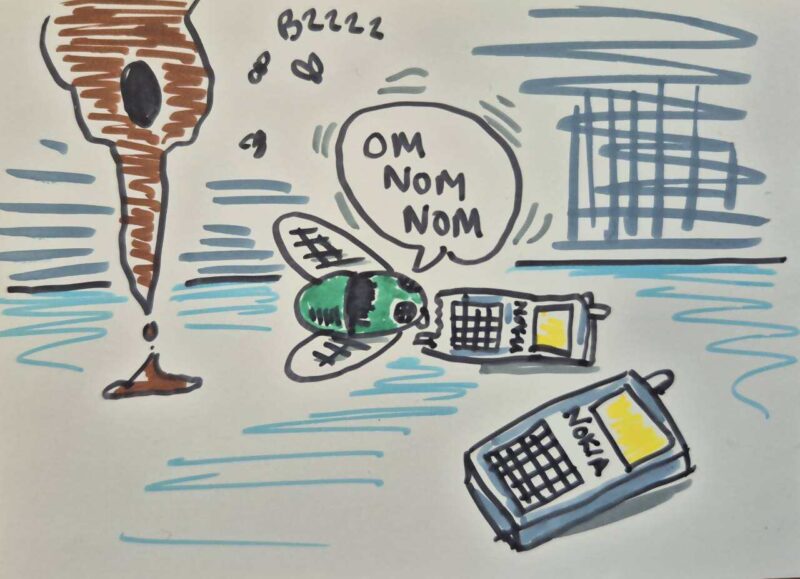
A fly that eats mobile phones…
…And a kind of vegetable-looking thing that hangs from ceilings and does nothing.
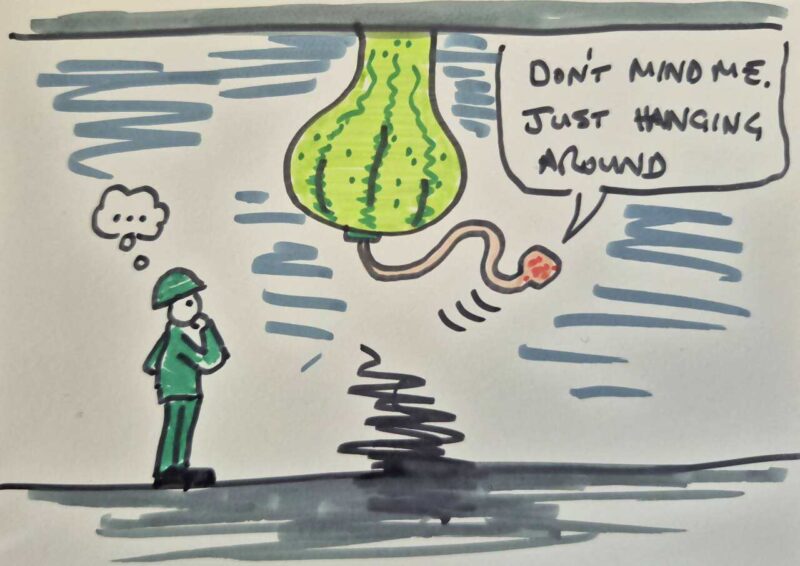
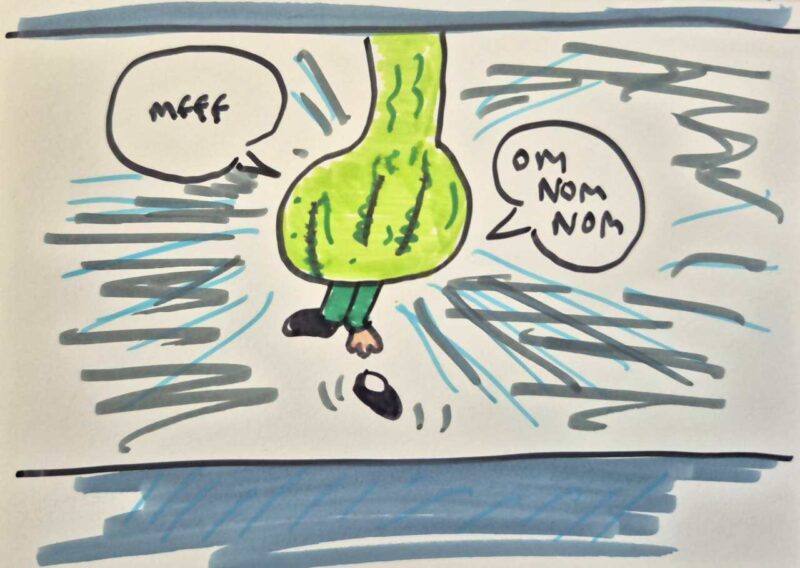
At least until the final episode.
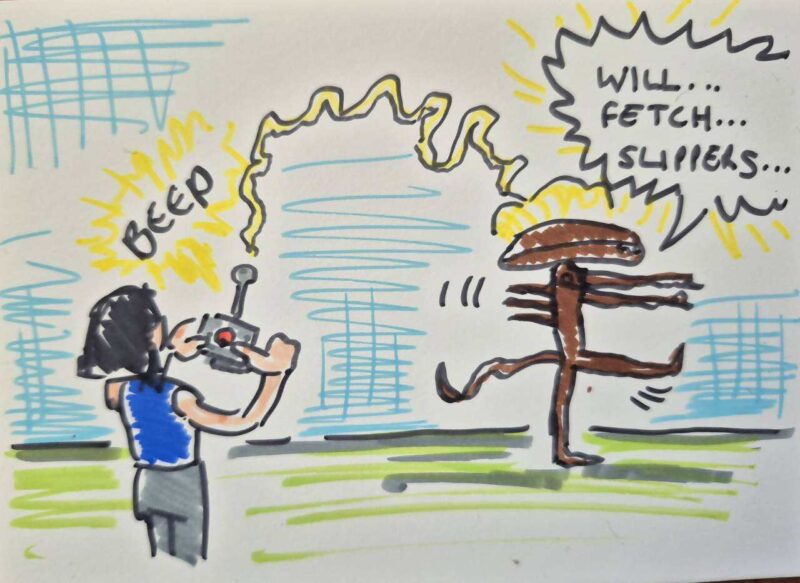
While Kavalier and Kirsh play Doctor Moreau, Wendy slowly discovers her new powers. She can control electronic devices with her mind – a skill she uses to reconnect with her brother, Joe Hermit, who doesn’t realise she’s still alive. Even more dramatically, Wendy can communicate with xenomorphs, and even send them charging into battle on her behalf. It’s like that arcade game Shadow Dancer, where you could sic a dog on your enemies. (Anyone remember that game? No? Oh.)
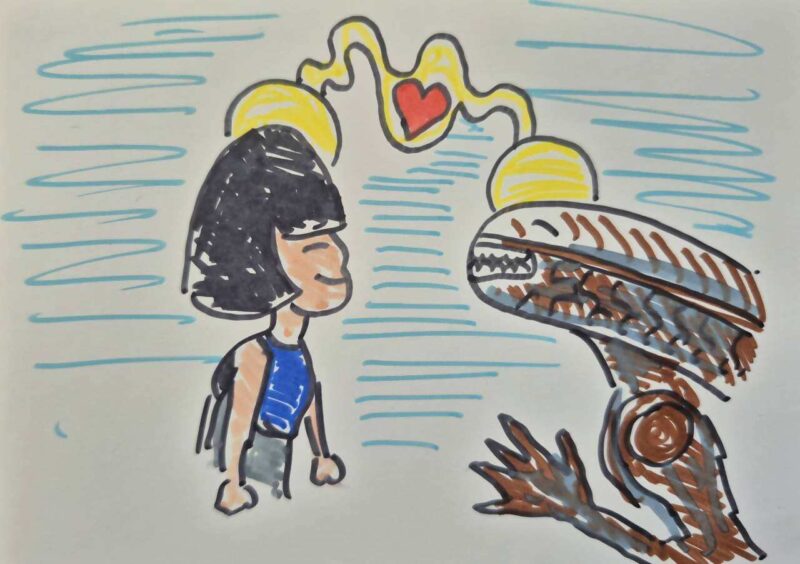
At any rate, the stage is set for a grand finale: Morrow has used his cyborg powers to remotely groom one of Wendy’s Hybrid compatriots into sneaking out a xenomorph specimen from Prodigy’s island compound. There’s a sheep with an octopus monster sticking out of its eye, and Boy Kavalier is fixated on the idea of moving the parasite from the human host so he can chat to it.
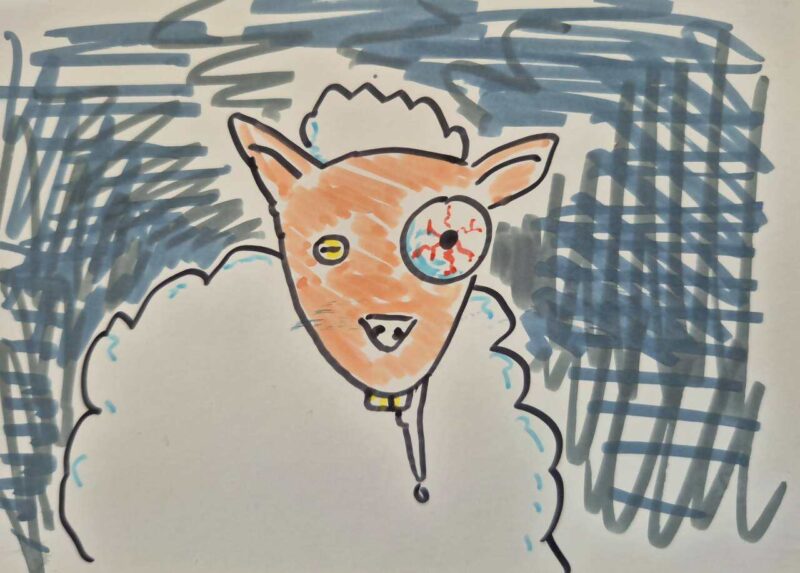
Wendy belatedly realises that Kavalier is a terrible monster and she’s in tech hell, so she vows to escape with her friends, so she uses her special powers to turn the tables on Prodigy and imprison its boss and his lackeys.

But! Weyland-Yutani’s forces are closing in, and the eyeball monster has taken over the corpse of luckless scientist Arthur, who only hours earlier gave birth to a chestburster on a beach near some crabs.
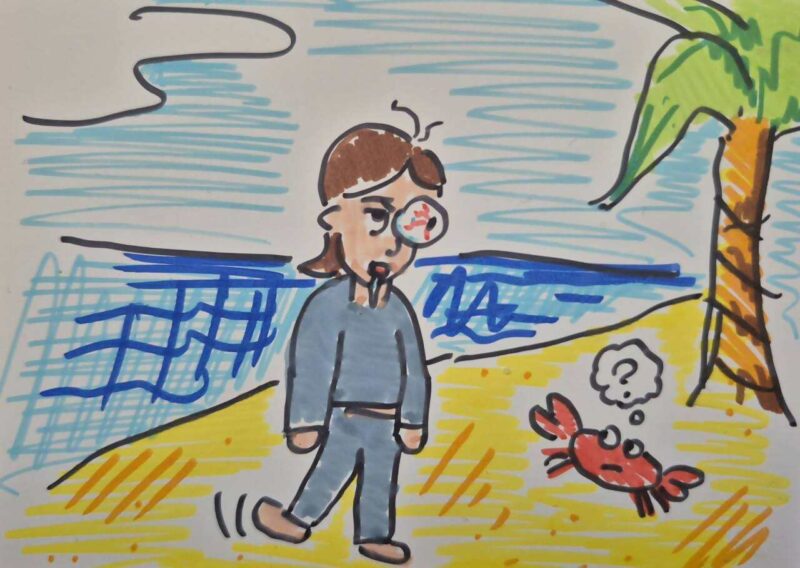
And that, essentially, was it. Season over.
A ship crashed into Earth, corporations want the specimens aboard, a few people died but not as many as you might expect, and just about all of the central characters are still around for what Noah Hawley clearly hopes will be a second season.
It’s an… okay end to what has otherwise been at times a great series. From a production design standpoint, it looked terrific for a TV series. Those first two episodes, in particular, set up a really convincing extended Alien universe that expands on the cyberpunk themes that were already there in the movies. Episode five, essentially an hour-long homage to the original Alien, was tense and absorbing.
More generally, the performances have been fantastic, especially Sydney Chandler as Marcy/Wendy, Babou Ceesay as Morrow and Timothy Olyphant as Kirsh. Shout-outs too for Adrian Edmondson as the corporate hatchetman Atom Eins and Samuel Blenkin as Boy Kavalier.
For this writer, Alien: Earth’s most effective element is its whole post-human, cyberpunk angle, again set up in those early episodes. Kirsh got to the heart of it in his monologue: “You used to be food.”
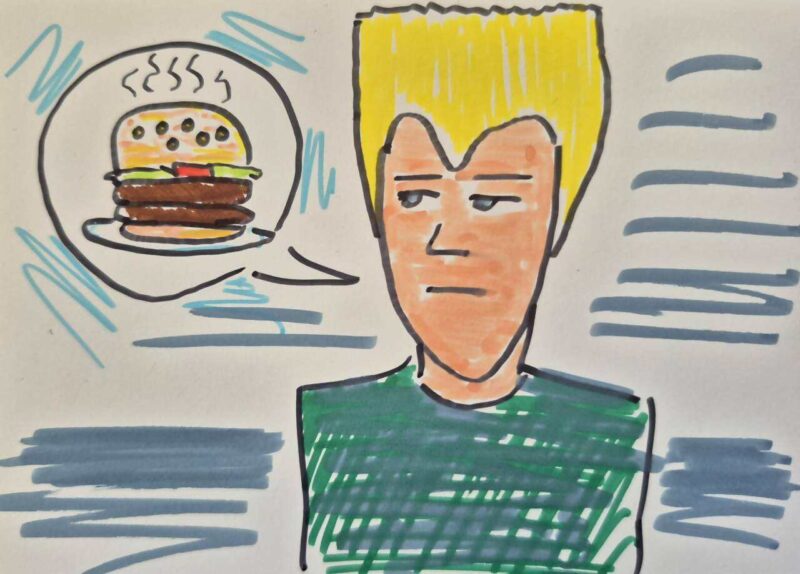
What is a human being without their physical, perishable, edible body? Can a hybrid like Wendy be considered human or not?
In this regard, the show could be read as a parody of Silicon Valley’s real-world obsession with immortality. There’s tech guy Bryan Johnson, who’s spent millions on trying to cheat death. Jeff Bezos and Peter Thiel have also spent untold sums on finding ways of extending their lifespans. Elon Musk has his company Neuralink, which he hopes will one day put intelligence-enhancing chips in our brains. Both Musk and OpenAI founder Sam Altman have talked about the hope of eventually transferring human consciousness into machines – much like Ghost In The Shell or Alien: Earth.
In Alien: Earth, those fantasies have become a reality, with rival corporations all coming up with their own transhumanist plans. There are synthetics like Kirsh; cyborgs like Morrow; Hybrids like Wendy. The problem for all of these characters isn’t the science that made them who they are, but the corporate forces behind the science. Humans may no longer be food, but in a world where big business controls everything, humans become products. Things which can be controlled, bought and sold and reprogrammed, like poor Nibs.
But having established thought-provoking ideas like these, Alien: Earth spent its last three installments seemingly spinning its wheels. There were so many threads set up but never meaningfully paid off. The enmity between Morrow and Kirsh was teased more than once, but the final confrontation simply ended with Kirsh suffering from a bad back.
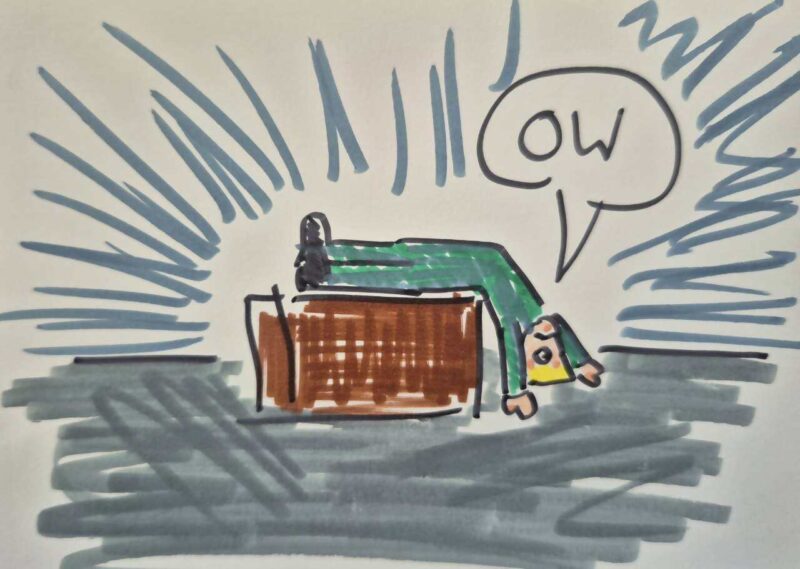
Kirsh has some hidden agenda that for now is still frustratingly obscure. Boy Kavalier’s plan to have the eyeball octopus infect a human host came to nothing.
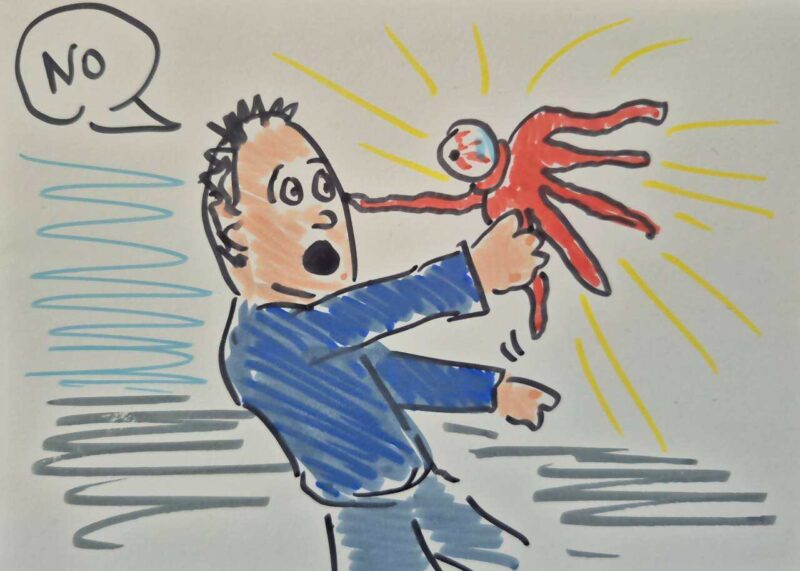
So too, ultimately, did Morrow’s attempt to get a xenomorph off the island.
We don’t know why Wendy has those xeno-whispering powers, and nor do they have much consequence to the plot beyond being a device to get her out of a tight spot.
Surely there’d be some downside to trying to horse-whisper the most deadly creature in the universe? Lion tamers get bitten all the time. Wouldn’t it have raised the stakes had the xenomorph done something unpredictable and frightening once in a while?
It’s almost certain that Noah Hawley has answers to these questions in mind, and that he’ll revisit them if a second season is greenlit. But there lies the problem – Alien: Earth season one is a story without a meaningful ending. Nothing has been fully resolved; the toys have been put back in their box, ready to be taken out for some future adventure.
What might a second season of Alien: Earth look like? The final episode signals that Weyland-Yutani will figure heavily, as their ships close in on the Prodigy island. The company wants its specimens back, but if they get wind of Wendy’s xeno-whispering powers, they’ll probably want to experiment on her, too. After all, if you can remotely control the xenomorph, like Wendy can, you have a powerful weapon.
Beyond that, it remains to be seen how the series will fit into the rest of the Alien universe, given how close the show’s events take place just two years before those of the original movie. If the xenomorph is already on Earth, why send the crew of the Nostromo to LV-426 to collect more specimens? Maybe something goes wrong, wiping out the Prodigy island and the assorted monsters on it, prompting Weyland-Yutani to send out more unsuspecting lackeys out on an encounter with the xenomorph.

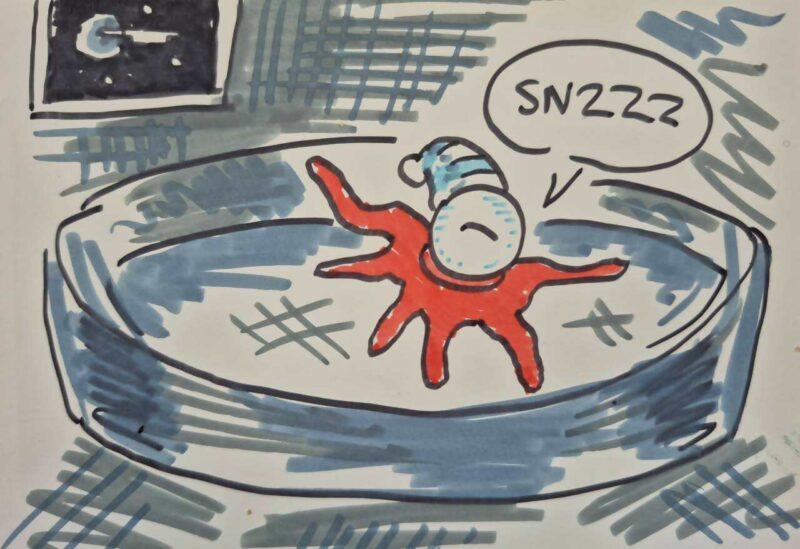
Perhaps the culprit will be Arthur, the luckless scientist now possessed by that calculating eyeball monster.
Whatever happens, we’ll almost certainly have to wait at least a couple of years before any of our questions are satisfyingly answered. Like Ripley at the end of Alien, the story will lie in stasis until it’s picked up and revived in some future season. Sleep well, calculating eyeball monster.
All episodes of Alien: Earth are streaming now on Disney+.