Netflix UK has unexpectedly put up Chatroom – a deeply flawed yet fascinating internet horror with a before-they-were-famous cast. And the director of The Ring. Reefer Madness emerged in 1936 as an urgent warning about the dangers of smoking marijuana. The film’s histrionic tone soon made it infamous; “Women cry for it – men die ... Chatroom | Inside the 2010 horror curio dredged up by Netflix
Netflix UK has unexpectedly put up Chatroom – a deeply flawed yet fascinating internet horror with a before-they-were-famous cast. And the director of The Ring.
Reefer Madness emerged in 1936 as an urgent warning about the dangers of smoking marijuana. The film’s histrionic tone soon made it infamous; “Women cry for it – men die for it!” screamed the poster. If you were to believe director Louis J Gasner’s soon-to-be cult item, the slightest puff of cannabis is capable of turning an ordinary, decent college kid into a bank robber or an axe-wielding mass murderer.
Intended as a sincere warning about the dangers of drug use by its makers, Reefer Madness was instead regarded as a valuable piece of high camp when it was rediscovered by viewers in the 1970s.
This brings us, in a decidedly round-about way, to the horror thriller Chatroom, which was widely panned on its release in 2010. Although not quite as shrill (or ramshackle) as Reefer Madness, it too provides a rather alarmist perspective on its chosen subject – in this case, the internet and its impact. It depicts the worldwide web as a tawdry warren of interconnected spaces filled with sexual predators, manipulative psychopaths, and the weak-willed waiting around to be preyed on by them.
Pre-release, Chatroom received a justified ripple of interest due to its pedigree. Here was the English-language debut from Japanese director Hideo Nakata, who made the legendarily frightening Ringu (or The Ring). Its script was written by author and playwright Enda Walsh, writer of Steve McQueen’s acclaimed Hunger, and was based on her own play of the same name.
When critics saw the finished film, however, they rounded on it. The late Guardian writer Philip French said that its scenes were alternately “stilted and unconvincing” or “tedious”. The Daily Mirror’s David Edwards said it was a “movie of utter, unspeakable, hideous awfulness.” Time Out’s Dave Calhoun described it as a “rotten apple” among an orchard of other films about the internet.
Thereafter, Chatroom was swiftly forgotten about, and few involved (and boy were there some names involved…) appear to have brought it up in interviews since.
It being the strange cultural harvesting machine that it is, Netflix has unexpectedly dredged Nakata’s information superhighway oddity out of the archives. And with the added perspective of just over 15 years, Chatroom is perhaps more fascinating now than it was way back then.
The first thing that jumps out is Chatroom’s cast. The majority of its actors were in their late teens or early 20s when the film was shot in and around London, and most have gone on to enjoy successful careers since. In here you’ll find Aaron Taylor-Johnson, Imogen Poots, Daniel Kaluuya, Imogen Poots and Matthew Beard. Richard Madden shows up in a blink-and-you’ll-miss-him scene; Tuppence Middleton appears in what initially promises to be a pivotal role, but then she goes into a clothing store’s changing room and is never seen again.
It’s all part of a muddled cyber thriller that doesn’t quite seem to know where it wants to head next. Is it a serious examination of the damage that online spaces can do to the vulnerable? Is it a schlocky thriller? Chatroom is sort of both, and at the same time neither; its cruelty and sheer silliness cancelling out anything sensible it might have to say about the virtual world we all partly inhabit.
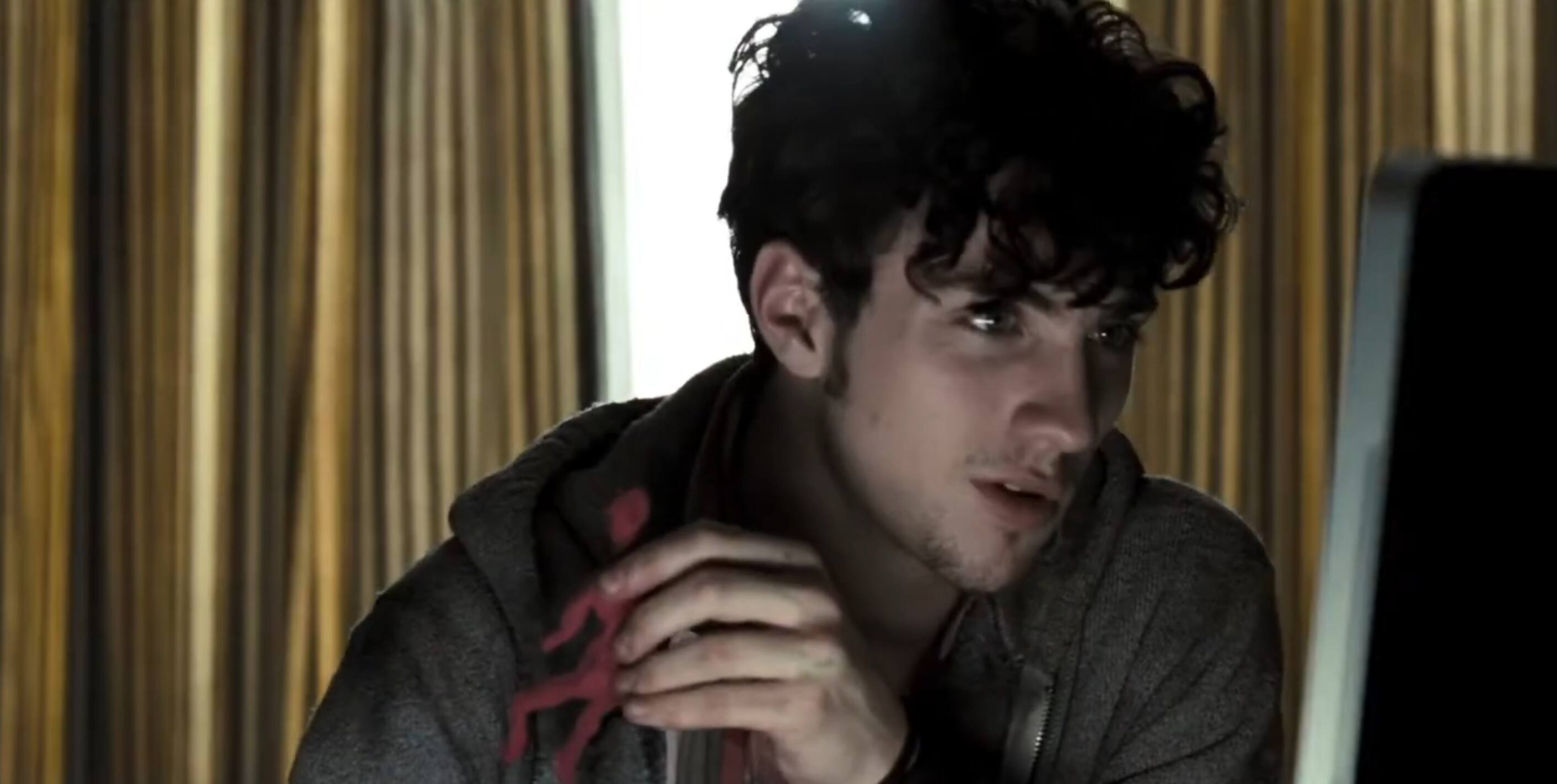
Serving as the black hole at Chatroom’s centre is troubled teenager William (Taylor-Johnson). His garrulousness and charisma attract a quartet of similarly-aged strangers to his chatroom, rather lamely titled Chelsea Teens!. There, they can vent their angst at their parents and everything else that’s troubling them. Eva (Poots) is a budding model who’s envious of a colleague who’s recently joined a high-profile talent agency. Jim (Beard) has an absent father and has been on antidepressants since he was eight years old. And so on.
What initially appears to be a safe space, however, soon turns out to be the opposite. William harbours demons and resentments of his own, including a reservoir of anger directed at his mother, a successful novelist, and his elder brother, who’s off doing something similarly lucrative overseas (this is the character briefly played by Richard Madden in one scene). The mop-haired lad channels all this rage into his online life, where he goads his newfound friends into a string of increasingly ill-advised acts.
He horse-whispers the demure Emily (Murray) into vandalising her parents’ car and house. Mo (Kaluuya) is cajoled into revealing his affections for a disturbingly young girl – an admission that could get him beaten up or worse. Then William sets his sights on Jim, and begins trying to talk him into taking his own life…
It’s grim stuff, initially made more palatable by Nakata’s direction. A little like Tron, he tries to imagine the virtual world as a physical space: here, the internet is like a Technicolor hotel corridor with thousands of adjoining rooms, each one representing a chatroom or other place on the web. William and his friends’ text chats therefore play out as in-person dialogues, often in colourful, brightly-lit rooms.
The concept works in theory, and it’s a striking alternative to the more recent ‘screenlife’ subgenre of movies, in which various thrillers – Missing, The Host, the calamitous War Of The Worlds – take place on a flat monitor surrounded by icons and other UI clutter.
In practice, though, Chatroom can’t shake off its origins as a stage play (in the original, characters simply sat in chairs against a black backdrop, according to Nakata). Much of the film takes place in these static interiors, while the sequences that take place in the grey, humdrum real world have the rushed, flimsy tone of a daytime soap opera.
More pervasive is the sense that, even in the distant year of 2010, Chatroom seemed glaringly off the technological pace. The world was already six years into the web 2.0 era of YouTube and social media by then; Nakata’s film is still embedded in an outgoing world of text chats and message boards.
Tech details aside, there are areas where Chatroom was, if anything, ahead of its time. Cyberbullying is a much more widely understood topic than it was 15 years ago; William’s act of humiliating a young woman by doctoring photos of her is remarkably familiar to how deepfake and AI technology has been misused in more recent years. There’s also greater awareness around social media, and how algorithms on platforms like Instagram can expose users to potentially harmful content involving self-harm or suicide.
Not unlike Reefer Madness decades before it, Chatroom’s dialogue and situations are often hokey and contrived. But what Nakata’s film does manage to depict – albeit imperfectly – is a generation of youngsters whose social interactions are almost entirely virtual. Viewed in retrospect, Chatroom turns into a warped foreshadowing of social media’s potential harms: addiction, mental health issues, radicalisation and more besides.
Later films and TV shows have explored similar territory to more satisfying effect; although it isn’t directly about social media, technology’s aftereffects are all over Adolescence, for example. All the same, Chatroom is still a misshapen, fascinating artefact: the execution is flawed, but what it warns us about remains surprisingly relevant.