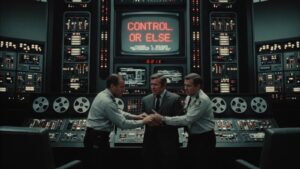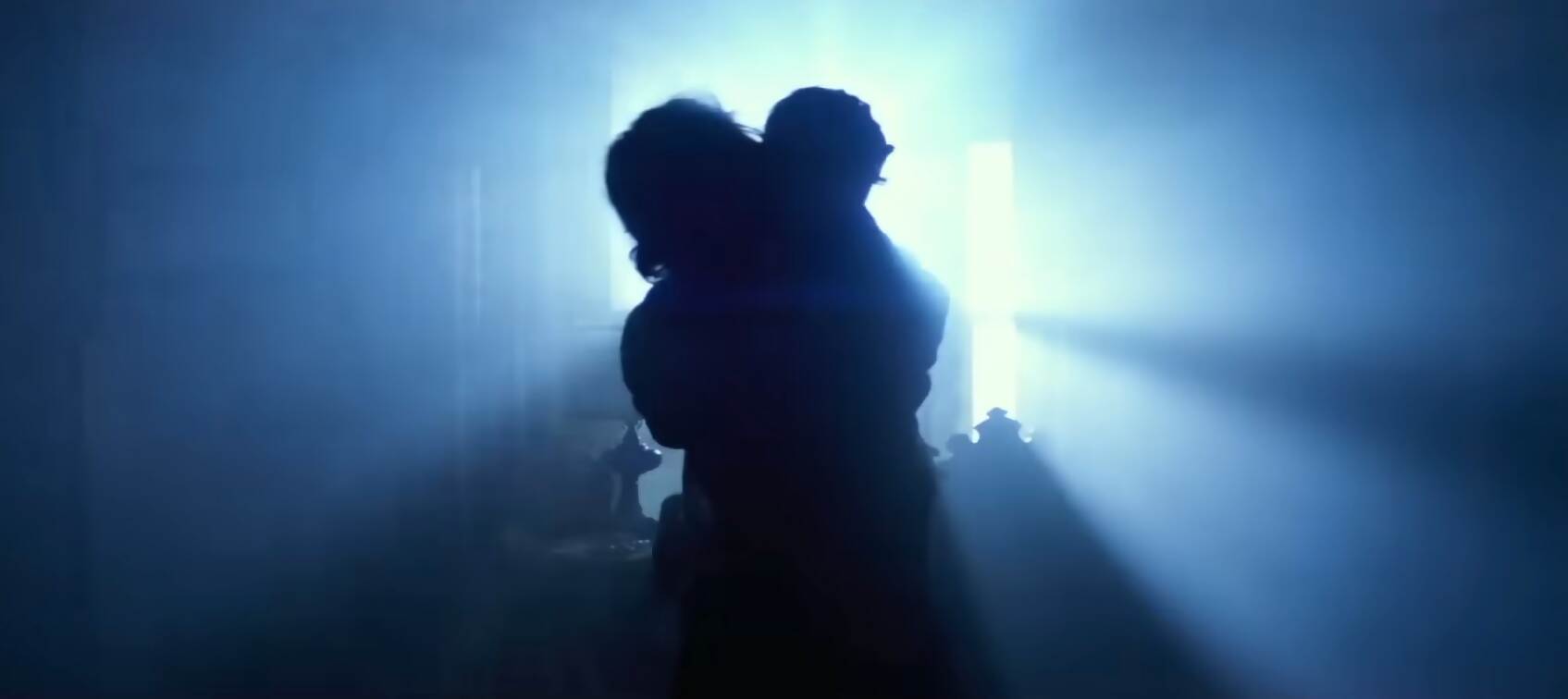
Right after Close Encounters Of The Third Kind, Steven Spielberg began work on a sequel. We look back at the unmade Night Skies. There’s an intriguing detail buried in a 1979 edition of Starlog magazine. Turn to page 12, and there’s a brief news story about a sequel to Close Encounters Of The Third Kind ... Night Skies | The Close Encounters sequel that never was
Right after Close Encounters Of The Third Kind, Steven Spielberg began work on a sequel. We look back at the unmade Night Skies.
There’s an intriguing detail buried in a 1979 edition of Starlog magazine. Turn to page 12, and there’s a brief news story about a sequel to Close Encounters Of The Third Kind – the sci-fi drama that had saved Columbia Pictures from bankruptcy two years earlier.
That sequel, the report tells us, was going by the title Close Encounters Of The Fourth Kind, and had been delayed due to Spielberg’s work on an “upcoming George Lucas-produced SF adventure” – a reference to Raiders Of The Lost Ark, which emerged in 1981.
With the sequel on the backburner, Spielberg instead worked on what would become the Special Edition of Close Encounters; released in August 1979, a new cut of the movie that tightened up some sequences and added new scenes that Spielberg didn’t previously have the budget to devise. (This included a guided tour of an alien mothership – a scene Spielberg regretted putting in, and subsequently removed from later cuts.)
Close Encounters Of The Fourth Kind never happened, of course, though it did come closer to conception than most film fans in the 70s and 80s would have realised. And while Spielberg hasn’t, to date, made a Close Encounters follow-up, the ideas dreamed up for that project eventually made their way into other movies. And, just to speculate for a moment, they may even show up in Spielberg’s next film, due out in 2026…
Spielberg’s fascination with unidentified flying objects stretched right back to his childhood; among the films he made with his friends as a teenager was Firelight, about scientists investigating mysterious lights in the sky and abductions of humans and pets. Shot in 1964 for a budget of about $500, it regrettably only exists in fragments today.
The success of 1975’s Jaws turned the 20-something Spielberg into one of Hollywood’s most sought-after directors, and he used that clout to make Close Encounters Of The Third Kind in 1977 – a sci-fi drama that rather fascinatingly fused a comparatively serious depiction of UFO phenomena with a wide-eyed, quasi-bibilical sense of awe. Beset by rewrites and cost overruns that its ailing studio could ill-afford, Close Encounters was nevertheless another smash for Spielberg – the third biggest film of its year, behind Star Wars and, more curiously in hindsight, Smokey And The Bandit. (Burt Reynolds was a seriously big deal at the time.)
Columbia Pictures was therefore keen to get a sequel going. Spielberg wasn’t necessarily as keen to direct one himself, but he’d also seen how Jaws had become a franchise over at Universal after he declined to make another shark film (Jeanot Swarc directed the 1978 sequel, replacing John D Hancock, who was fired 18 months into the production). Keen to retain control over a story that clearly meant a lot to him, Spielberg therefore began developing a sequel that he could oversee as producer.
Digging into UFO lore, Spielberg settled on the Kelly-Hopkinsville encounter – a bizarre visitation case one relayed to the director by J Allan Hynek, an astrophysics professor and flying saucer expert who served as an advisor on the first Close Encounters. In the broadest possible strokes, the story was this: in the summer of 1955, so witnesses claimed, a remote farmhouse in Hopkinsville, Kentucky was menaced by around a dozen unearthly creatures. Small, long-limbed humanoids with glowing eyes were said to have loomed up in windows, frightening the family in the house to such a degree that they started shooting at them with shotguns.
That story became the loose basis for Night Skies – an initial screenplay written by John Sayles. Currently available on Archive.org, it’s a fascinating read – not least because it’s so wildly different in tone from the relative constraint of Close Encounters. Where Spielberg’s 1977 film was a comparatively grounded mystery-thriller – at least until its lightshow climax – Night Skies dives right into macabre horror.


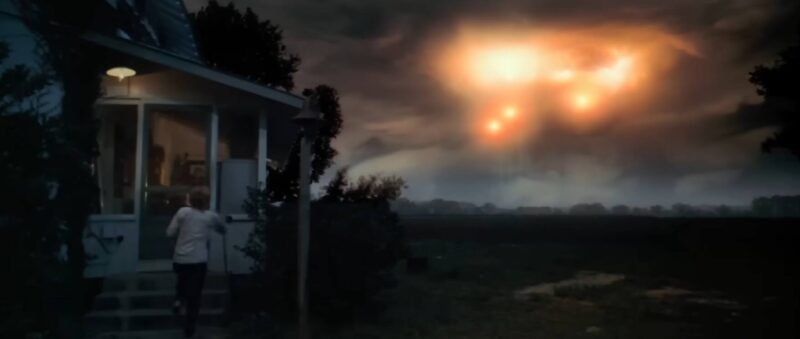
The benign, childlike extraterrestrials of Close Encounters are replaced here by beings filled with malevolence: early on a mutilated cow is found in a field, its body surgically hacked apart for reasons unclear. Later, they mount a nighttime assault on a farmhouse, terrorising the family inside and killing yet more livestock.
It’s a colourful, blackly comic script, and could be viewed as the clash between two distinct families. There are the humans in the farmhouse, including gruff father Ed, teenagers Tess and Watt, and Jaybird, a 10 year-old boy on the autistic spectrum. They’re contrasted by the five aliens, each with their own distinct personalities and names: Skar, the most evil of the lot, Hoodoo, who’s able to control humans with his mind, sidekicks Klud and Squirt, and Buddee – the youngest of the group, who forms a friendship with Jaybird.
Night Skies got as far as having a director attached – Ron Cobb, previously best known as one of the designers on Star Wars and Alien. Makeup effects genius Rick Baker was also hired, and spent several months creating the creature designs – rangy, hairless, and with eyes that range from evil and staring (for Skar) to wide-eyed and puppyish (Buddee).
During the making Raiders Of The Lost Ark, however, Spielberg kept thinking about just how far Night Skies diverged from Close Encounters. In collaboration with screenwriter Melissa Matheson, they decided that the story should focus more closely on the relationship between the boy and the alien. Sayles’ script also concluded on a sombre note: Buddee, shunned by his own kind, is left stranded on Earth, cutting a lonely figure against the landscape.
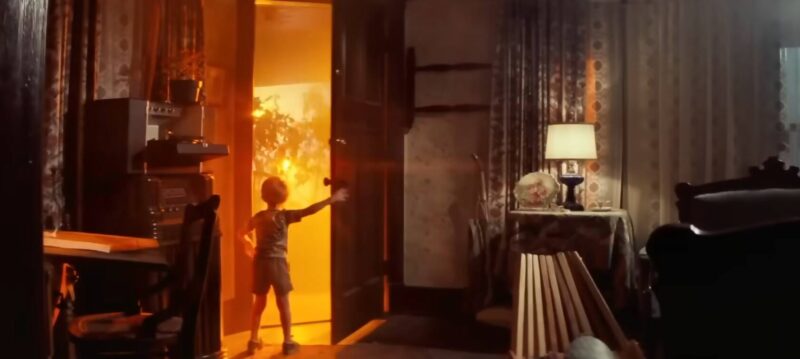
Those elements soon became E.T. The Extra-Terrestrial – a project that went from concept to realisation so rapidly that it was in cinemas by Christmas 1982 – just over one year after Raiders Of The Lost Ark. Elements from Night Skies also emerged elsewhere; the antagonists in Gremlins, produced by Spielberg and directed by Joe Dante feel like successors to those barn-menacing aliens. The 1986 comedy horror, Critters (starring E.T.’s Dee Wallace) also featured an aliens-assault-a-farmstead scenario.
Decades on, it sounds as though Spielberg is bringing his career almost full circle: there have been months of reports that his next film, due out in June 2026, explores similar flying saucer territory to Close Encounters and Firelight. There are even rumours that it might be a belated follow-up in some way to his 1977 classic – hence why, at the time of writing, its title still hasn’t been revealed (rumoured names include The Dish and Disclosure).
While we can’t confirm those reports at this stage, some strange billboards spotted in LA and Manhattan over the past few days contain an interesting detail. Accompanied by the words “All will be disclosed,” the huge adverts include the image of an upside-down eye peering through a silhouette of a bird.
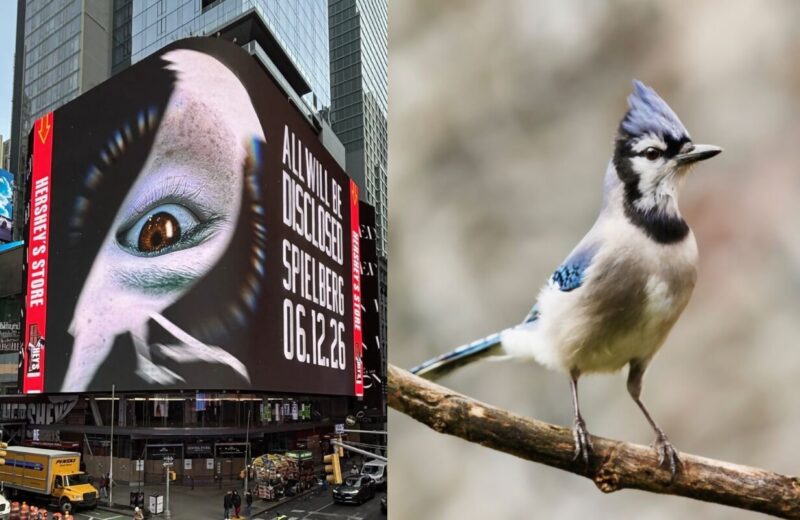
That silhouette, with its distinctive crest on top of its head, looks uncannily like the American blue jay. One of the lead characters in Night Skies was named Jaybird. A coincidence, or a nod to an earlier creative path not travelled?
Whatever the truth is, Spielberg’s next film could be a further return to a subject that has fascinated him for over 60 years. “I had a real, deep-rooted belief that we had been visited in this century,” he once said of Close Encounters. “I was a real UFO devotee in the 1970s, and really into the UFO phenomenon from reading. For me, it was science.”
Untitled Steven Spielberg film releases in cinemas on the 12th June 2026.