Between 2018 and 2024, Sony made some of the weirdest superhero movies of modern times. A look at its Spider-Man universe, and why it exists: In March 2024, Hollywood actor Dakota Johnson reclined on a stretch of grass, posed for photos next to a white-tailed deer, and then told a reporter exactly what she thought ... Sony’s Spider-Man Universe | The story of cinema’s weirdest superhero franchise
Between 2018 and 2024, Sony made some of the weirdest superhero movies of modern times. A look at its Spider-Man universe, and why it exists:
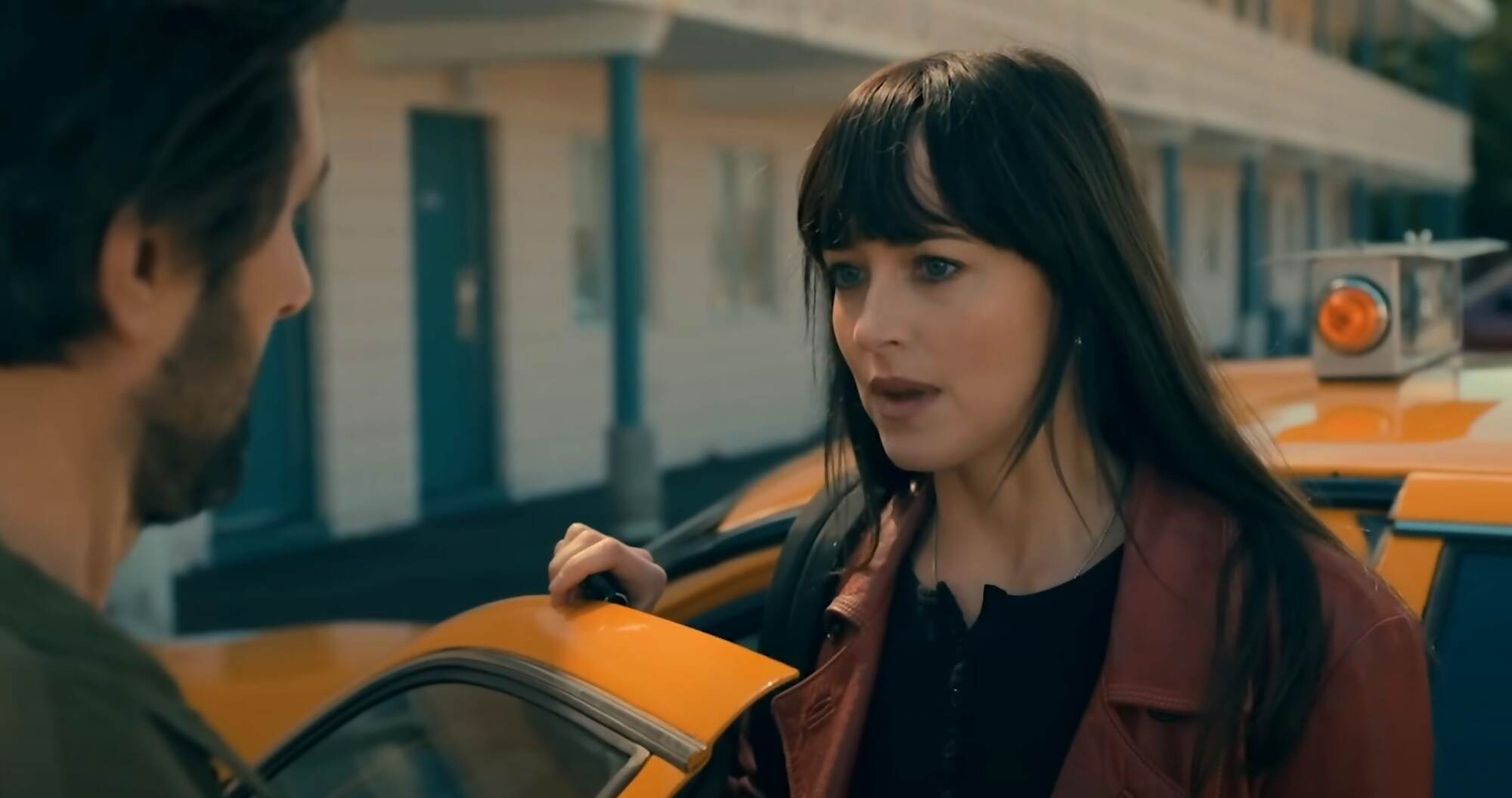
In March 2024, Hollywood actor Dakota Johnson reclined on a stretch of grass, posed for photos next to a white-tailed deer, and then told a reporter exactly what she thought of Sony Pictures.
“You cannot make art based on numbers and algorithms,” she told Bustle magazine. “My feeling has been for a long time that audiences are extremely smart, and executives have started to believe that they’re not. Audiences will always be able to sniff out bullsh*t. Even if films start to be made with AI, humans aren’t going to f*cking want to see those.
Johnson said this mere days after the release of Madame Web, Sony’s Spider-Man-adjacent comic book movie in which she played the title role of a paramedic with psychic powers. Through much of that film’s press tour, Dakota seemed borderline mutinous. She talked frankly about how much she disliked acting in front of a green screen (it’s “psychotic”, she said) and just how much the script had changed during production.
All of which built up to the aftermath of Madame Web’s premiere, by which point critics had poured scorn on the movie. Johnson had somehow ended up in Mexico City, where she was struck down with a case of pneumonia.

“I was really, really sick and felt horrible,” she said, before adding that she understood why reviewers had taken her latest movie to task. “It’s not nice to be a part of something that’s ripped to shreds, but I can’t say that I don’t understand.”
So ended one of the weirdest non-marketing campaigns for a mainstream movie of recent years. But then, it’s all of a piece with a comic book franchise which is itself incredibly strange when it’s subjected to any kind of scrutiny.
Here was an ‘extended universe’ of films that was connected to Spider-Man, but seemingly couldn’t (or wouldn’t) feature the web-crawler himself; instead, cinema-goers would be treated to a series of movies that focused on villains and supporting characters, including the Morbius and Kraven The Hunter.
With the exception of Venom, few of these characters were particularly well-known outside die-hard comic book readers; Sony’s strategy, it seemed, was to use these movies as a means of teasing future outings, including tie-ups between Sony and Marvel’s Cinematic Universe. The resulting movies received middling reviews at best, however, and at least two of them were mired in production difficulties that were plainly visible in the finished articles.
By the end of 2024 – a year which saw no fewer than three Sony superhero movies emerge – there were widespread rumours that the whole SSU concept (Sony’s Spider–Man Universe) was as good as dead.

Sinister Six
The idea of a Sony Spider-Man spin-off franchise has its roots in the early 2010s. At this point, Sony still owned Spider-Man as well as multiple related characters; Andrew Garfield was cast in the role of Peter Parker and his archnid alter-ego, and 2014’s The Amazing Spider-Man 2 hinted at a slew of future films.
That film, directed by Marc Webb, contained a distractingly huge roster of villains, including Jamie Foxx’s Electro, Paul Giamatti’s Rhino and Dane DeHaan’s Green Goblin. Sony’s plan was to stoke anticipation for a pair of Sinister Six movies, written and directed by Drew Goddard. Meanwhile, Alex Kurtzman was set to direct a Venom spin-off. (There were other films planned for minor characters – too many to list here, in fact.)
All those plans fell apart when The Amazing Spider-Man 2 failed to do the numbers expected of it – which is a strange thing to have to type, given that it made upwards of $700m. But that figure was down on previous installments, and by the time marketing was factored in, it was reported that the sequel had made a somewhat slim $70m in profits for Sony.
A year later, in 2015, Sony made a deal with Marvel Studios, meaning that Spider-Man could appear in future MCU films. At a stroke, the Amazing Spider-Man franchise, and the seemingly huge array of planned spin-offs, were all dead. Marvel promptly wrote Spider-Man into Captain America: Civil War, and celebrated the hero’s addition to the MCU fold in the title of his first solo outing for the studio: Spider-Man: Homecoming, released in 2017. By then, Garfield was out as Peter Parker, and Tom Holland was in.
The precise details of Sony and Marvel’s deal over Spider-Man were never made public. Initially, both parties made positive noises about the character appearing in both the MCU and Sony’s future Marvel movies; Sony producer Amy Pascal said in 2018 that her company’s movies would take place in “the same world” as that film.

By then, Sony had already begun talking publicly about its plans for a universe of spin-off movies, all based on the Marvel characters under its ownership. Even here, there were signs of confusion – the franchise was called Sony’s Marvel Universe at one stage, then Sony’s Universe Of Marvel Characters, then the ungainly Sony Pictures Universe of Marvel Characters, or SPUMC.
Nor was its roster of planned movies organised under the gaze of a Kevin Feige-like figure; some, like the Venom films, were overseen by stalwart producer Avi Arad; Madame Web was shepherded by producer Lorenzo di Bonaventura. (The animated Spider-Verse movies were also an entirely separate enterprise.)
Venom, released in 2018, was the first film in Sony’s planned expanded universe, and perhaps thanks to the recognisablity of the character and a game central performance from Tom Hardy, it did well in cinemas. Certainly, it implied that a Marvel film connected to Spider-Man could find an audience without having Spider-Man actually appear in it.
As Sony made plans for its roster of Marvel films, however, the role Spider-Man was going to play in it appeared to shift. In 2019, news emerged that Sony and Marvel had fallen out over the handling of Spider-Man’s rights; Disney reportedly wanted a bigger cut of the profits from movies featuring the character as well as other contractual changes. For a brief moment, it looked as though Spider-Man would vanish from the MCU altogether, before a deal that satisfied both parties was eventually drawn up.
Again, we don’t know the precise details of that deal. But afterwards, talk of Spider-Man sharing the same world as Sony’s films ceased. Around the time of Venom’s making, there were widespread reports that Tom Holland had been on the set of that movie, and that Sony ultimately cut it out – something director Ruben Fleischer later denied.
Although we can only speculate about what happened behind the scenes on Sony’s subsequent movies, it’s at least clear from what’s publicly known that numerous story changes were made to the Marvel spin-offs Morbius (released in 2022), Madame Web and Kraven The Hunter (both 2024).
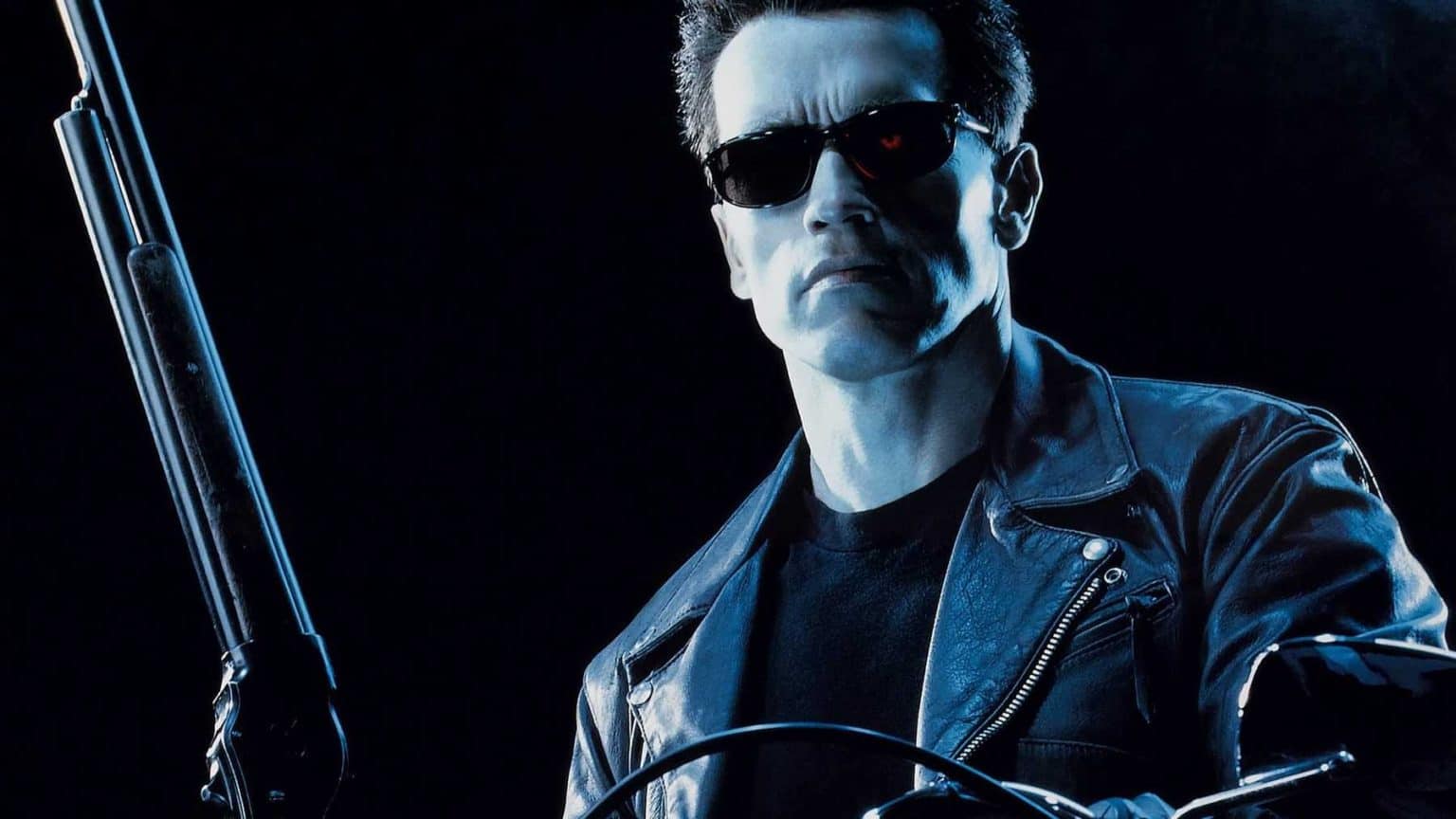
There were rumours that Madame Web’s plot originally saw its villain, Ezekiel Sims, attempting to hunt down and kill an infant Peter Parker, Terminator-style. In the finished film, Sims still behaves like the Terminator, but this time he’s after three teenagers who’ll one day become Spider-Man-adjacent heroes.

Director SJ Clarkson later said that the Peter Parker references were toned down to make the connections more subtle. But this begs the question: why have an actor as talented as Emma Roberts appear as a pregnant Mary Parker in the first place? Why include an infant Peter Parker, especially if weird things happen (including a balloon bursting at a comically-timed moment) whenever someone tries to mention his name?
In theory, Sony should still have the right to put Spider-Man in its spin-offs, so why didn’t it? The widespread story is that Sony simply didn’t want to, and that after the success of Venom, it mistakenly thought that its Marvel films didn’t need Spider-Man to sell tickets. But if Sony could legally give Spider-Man a cameo in those movies, it surely would have. We’ve repeatedly seen how ecstatically superhero film fans react to cameos and easter eggs.
For some reason, Sony went the other way: in the original trailer for 2022’s Morbius, a mural of Tobey Maguire’s Spider-Man appears. It was removed from the finished film.
Still, given the state of the resulting films, Marvel Studios are probably glad that Spider-Man stayed out of the whole thing.
The Venom trilogy, released between 2018 and 2024, were the critically best-received, though that’s not saying much. Each was highly profitable, though the returns diminished, from a high of $856bn at the box office for the first Venom to $478.9m for 2024’s The Last Dance.
Morbius (2022) which ill-advisedly cast Jared Leto as the titular doctor and vampire-esque anti-hero, was the subject of scathing reviews and mocking internet memes. Sony, mistaking the mockery for fandom, decided to put the film in cinemas a second time, meaning it flopped twice in a single year.

Madame Web, emerging in 2024, fared even worse; a line from the trailer (“He was in the Amazon with my mom when she was researching spiders right before she died”) became another meme. The resulting film had clearly been heavily re-edited late in production, with muddled storytelling and poorly lip-synched dialogue. Outrageously, the line about researching spiders also landed on the cutting room floor.
After Venom: The Last Dance came out that same 2024 summer, along ambled Kraven The Hunter – director JC Chandor’s attempt to make a gangster thriller out of a minor villain (a poacher in the comics). Sony, seemingly determined to draw a line under its SPUMC, released Kraven in markedly fewer cinemas than Madame Web, and it sank without trace that December.
Taken as a whole, Sony’s Marvel efforts haven’t been a complete financial disaster. Wikipedia tells us that all six films to date have cost somewhere between $595 and $639m, but have made $2.17bn at the box office.
The numbers mask don’t tell the full story, though: of those six, it’s the Venom movies that have done the heavy lifting. And that’s the most recognisable character in Sony’s portfolio. The non-Venom movies all lost money in cinemas.
As Kraven came and went in theatres, word emerged that, privately at least, Sony was preparing to draw a line under its weird spin-off adventures.
“The biggest issue with the Sony Spider-Man spinoffs seems to be the lack of quality control,” a Sony source told The Wrap in 2024. “The movies just aren’t good. Sometimes that lack of quality meets a movie no one asked for, which was the case with Madame Web, and that is a no-win scenario. It may be time for Sony to start cultivating different IP to launch new franchises.”

Just over a year later, however, Sony Pictures boss Tom Rothman appears to have had other ideas. When asked by podcaster Matt Belloni about the status of the SPUMC, Rothman denied that it was dead, but said a hearty yes when asked whether it was to be rebooted with “new people.”
Although otherwise terse about the subject, he did say something revealing about the Sony Marvel movies. “Scarity has value,” he said. “You’ve got to make the audience miss you.”
It rather suggests that Rothman thinks that Sony’s only mistake was to release three of its Marvel movies in quick succession in 2024 – not that the movies themselves were poorly conceived, or were about characters few outside comic book circles particularly cared about.
Not that those few brief years of spin-offs were a total disaster: in their own way, all six movies are fascinating – sometimes grimly so. There’s perhaps a book to be written on all the bizarre ways that Madame Web went wrong. Dakota Johnson’s resulting press tour was one for the ages. The Venom films were ramshackle in a delightful sort of way. It’s also rare to have a high-profile star like Aaron Taylor-Johnson literally beg audiences to go and see his movie, as he did with Kraven (“So really come see this movie, man. Come see this movie. I promise you it won’t disappoint…”)
All of that aside, there’s another reason why Sony wants to press on with its Marvel films – contractually, it has to. Written into an old legal agreement is a mandate that it must start production on a new film in the Spider-Man universe within three years and nine months of the last one. If it doesn’t, then Sony loses the rights to Spider-Man forever.
The SPUMC, then, is a uniquely late-capitalist type of tragically. The franchise doesn’t need to exist, but it must exist because putting it on pause would jeapardise future profits. And so the Spider-Man spin-offs will keep coming, even though prohibitive costs or other bits of contractual red tape mean that Spider-Man can’t appear in them himself.
The SPUMC is dead. Long live the SPUMC.