The latest in a string of recent dystopias, The Long Walk also appears to be part of a trend in films about rebellion in the face of tyranny. NB: The following contains mild spoilers for The Long Walk. Released earlier in September, The Long Walk’s brilliance lies in its minimalism. Aside from a pivotal flashback, ... The Long Walk and the hint of rebellion in 2025’s cinema
The latest in a string of recent dystopias, The Long Walk also appears to be part of a trend in films about rebellion in the face of tyranny.
NB: The following contains mild spoilers for The Long Walk.
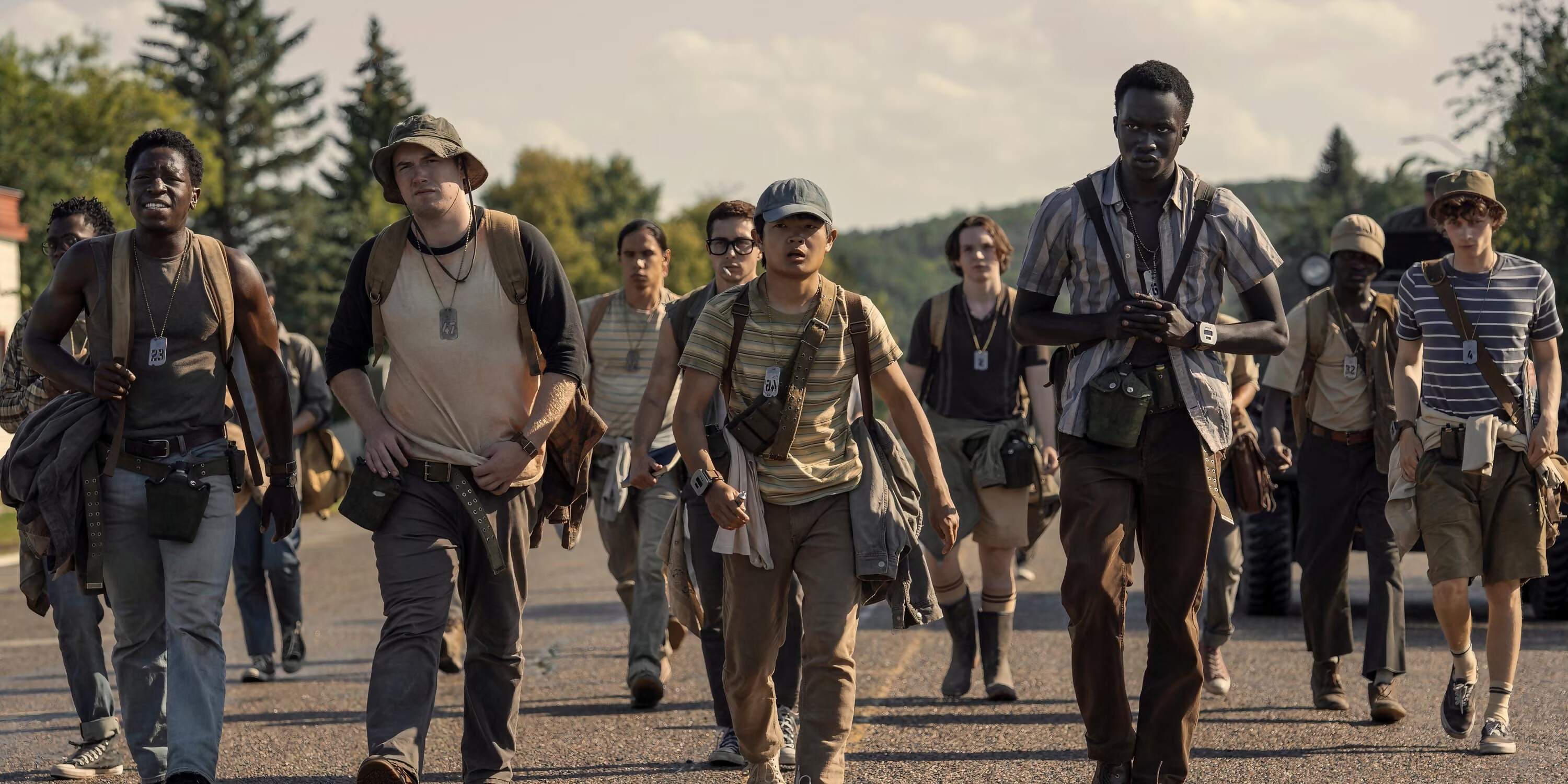
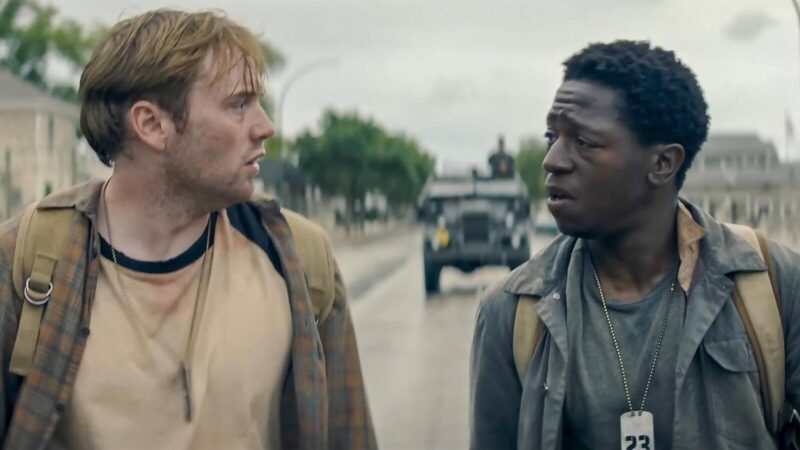
Released earlier in September, The Long Walk’s brilliance lies in its minimalism. Aside from a pivotal flashback, it takes place almost entirely on a lonely stretch of tarmac, the broader story details sketched in through conversations and the things the protagonists see along the way. From the perspective of its two charismatic leads, Cooper Hoffman and David Jonsson, we’re shown a dark portrait of the United States and where the road it’s taken might lead.
Adapted from Stephen King’s 1979 novel by screenwriter JT Mollner, The Long Walk takes place in a dystopian America in which, each year, a group of young men are selected at random and forced on a ceaseless march. Hour after hour, day after day, they’re forced to stride across an empty highway, prodded along by armed soldiers. Drop below a three mile-per-hour pace, stop to tie their shoes or empty their bowels, and they’re shot on the spot. The contestants must continue walking until there’s only one left; the winner will receive a vast sum of money and the granting of a single wish. Everyone else will be slaughtered.
What kind of society would engineer such a cruel event, much less put it on television? Director Francis Lawrence doesn’t fill the screen with images of flags, aggressive symbols or propaganda, but he leaves us in no doubt that his USA is a fascist, military state. It’s a place, after all, where citizens are dragged out of their houses and shot in the street for reading and talking about certain banned subjects.
We never see who’s President, much less what the wider country looks like; instead, Mark Hamill’s anonymous Major serves as the regime’s face – and an anonymous one, obscured by his cap and aviator shades. Glowering down from his jeep, the Major briefly relates the events that brought America to this point. There was a war, he says, and afterwards economic collapse. As the country has begun to rebuild, the younger generation has become a scapegoat for its suffering – people are penniless and hungry, the Major says, because of a “laziness epidemic.”
Fascist regimes always need a group of people to blame, and they thrive on media-spread images of those groups being punished and humiliated. In our present-day reality, it’s immigrants who are blamed for economic turmoil and moved around like cattle. In The Long Walk, the annual competition serves its own purposes – it’s a display of the state’s power and a metaphor for its fascist beliefs. Strength is the greatest virtue; weakness should be shunned.
King wrote the novel in response to what was going on around him in the late 1960s. He saw a nation left shaken, cynical and angry by the war in Vietnam. There was death overseas (much of it televised) and political turmoil at home. “At that time, Vietnam was chewing up our kids pretty bad,” King wrote in a Reddit AMA in August. “Back then (1967) there were still college deferments for kids in school. But it was a scary time to be young, and a year later they did away with deferments and put in a lottery. I was lucky, [and] drew a high number. But that was too close to The Long Walk for comfort.”
The Long Walk may be a product of the late 1960s, but its story is timeless enough to feel relevant almost 60 years later. It could be seen as a death allegory – characters talk outright about their mortality, and that it’s what we do with the time we have left that matters. But in its 2020s context, the film also feels like an urgent, even rage-filled warning about the path a nation is heading towards, and what happens when democracy cedes ground to fascism.
Several filmmakers, including George A Romero and Frank Darabont, had tried to adapt the book before, but it’s perhaps telling that Francis Lawrence finally got his version going around the time that films with similar themes emerged. Alex Garland’s Civil War, released last year, Ari Aster’s Eddington, The Long Walk, and Paul Thomas Anderson’s One Battle After Another are all, in their own way, about a nation that has either collapsed or is on the cusp of becoming a dystopia. A generation of filmmakers are looking at the horizon, and what they see is far from pretty.
Edgar Wright is currently busy finishing a new adaptation of The Running Man – Stephen King’s other dystopia about a deadly competition – and he recently noted a common thread in several 2025 movies. “Our film hasn’t come out yet,” Wright told me, “but it definitely feels like there’s something in the air… at the end of the year, there’ll be a number of movies that are expressing how people feel in an indirect way.”


In The Long Walk, what were once symbols of America’s wealth and prosperity are repeatedly inverted. The whole film takes place in what feels like an alternate mid-20th century; the big 1950s cars, baseball, cosy little towns, kids playing on bikes, are all presented in a deathly hue, or closely associated with violent events. The USA’s military might has also turned in on itself, and the sight of an American rifle trained on the face of its own citizens has a sickening power that recalls the Kent State Massacre.
Shocking though the bloodshed is, it’s perhaps the acts of defiance that are the most heartbreaking. There’s the verbal jab that Hoffman’s character makes as he snatches a canteen of water from a soldier: “You’re paid to shoot me, not stare at me,” he snarls. There are other moments of rebellion in The Long Walk, too – all building to a conclusion that starkly diverges from King’s novel, and sees a down-trodden generation finally bite back at its oppressor. Cannily, the filmmakers leave it to the viewer to decide whether this is a moment of triumph or tragedy. Perhaps it’s both.
In the real world, our headlines appear to be growing ever more dystopian. There are stories of children fighting for water in detention centres. Talk show hosts being hauled off air for their remarks. And more absurdly, people being arrested for projecting an image on the side of the castle.
In response, we might ask: what’s the point of making movies like The Long Walk, or Civil War, or One Battle After Another, that warn against polarisation and the rise of right-wing populism? We’re no longer naive enough to think that art can change the world, or that minds can be changed through manifestos. But here, The Long Walk could be read as another useful metaphor.
Facing an uncertain future, all filmmakers and creators can do is keep trudging down time’s road, making art as their own small acts of defiance. They’re a spit in the face, a finger in the eye of those in a seemingly immovable position of power.
The Long Walk is in cinemas now.
/**/