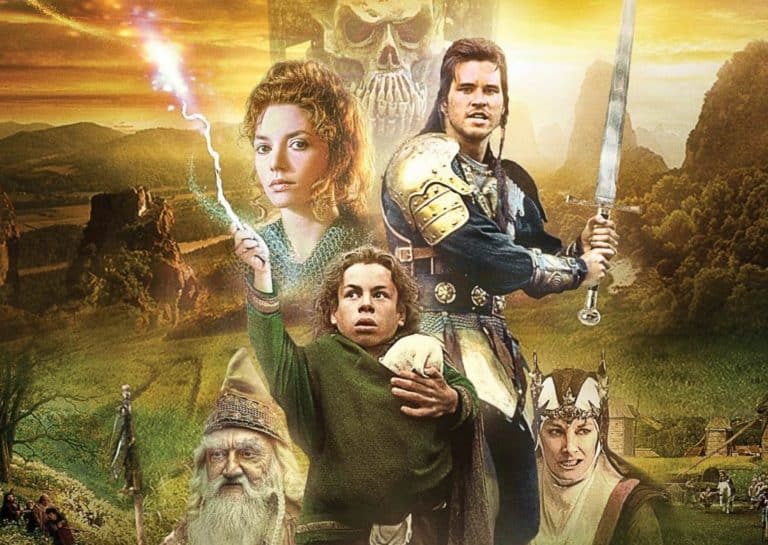
Even George Lucas’ name couldn’t persuade cinema owners of the 1980s to give Willow the run its parent studio wanted. If you fancy an insight into the perils of booking movies into cinemas back in the 1980s, then take a moment to consider Ron Howard’s 1988 family fantasy adventure, Willow. The film was heading to ... Willow | The mistake MGM made when trying to sell the film to cinemas
Even George Lucas’ name couldn’t persuade cinema owners of the 1980s to give Willow the run its parent studio wanted.
If you fancy an insight into the perils of booking movies into cinemas back in the 1980s, then take a moment to consider Ron Howard’s 1988 family fantasy adventure, Willow.
The film was heading to cinemas with some pedigree behind it. In 1988, Ron Howard hadn’t won his Oscar – that’d follow over a decade later – but he’d still struck box office gold with both Splash and Cocoon. Meanwhile, Willow was executive produced by George Lucas. Sure, Lucas had struck out a year or two earlier with the infamous Howard The Duck (here’s the Film Stories podcast episode where we talk about that). But this was still the filmmaker behind Star Wars, and one of the creative forces behind the Indiana Jones movies.
MGM, the studio bankrolling Willow, figured that those names would impress cinema chains. Willow didn’t have movie stars in it – Val Kilmer, Joanne Whalley and Warwick Davis led the ensemble, none at that stage with the box office clout to open a film – it did have profile by nature of who was behind it.
MGM confidently scheduled Willow for a May release in the US, and was hoping for a long run in cinemas. This was an era, of course, when a film could run in theatres for months, if the demand was there, without the threat of a major blockbuster the following weekend gobbling up screen space. Likewise, there was space for films to grow their audiences over a number of weeks.
That’s what MGM wanted, but it overplayed its hand.
In negotiations, MGM asked the owners of cinema chains to – without even having seen the film – commit to giving Willow a full 16-week run. To put this in context, in the late 80s, a chain might agree to 12 weeks for something it felt was a certain hit – Premiere magazine argued in 1988 that comedy sequel Crocodile Dundee II fit this bill – but rarely more than that. Especially when the film was an unknown quantity.

As a rep for AMC told Premiere in June 1988, “We look at what we know of Willow right now – who the director is and the storyline – then we try to find a picture that could be similar.”
The two films that were modelled against Willow were Howard’s earlier sci-fi hit, Cocoon, and John Boorman’s Excalibur – the latter being a cult favourite today, but was an infamous box office disappointment in 1981.
Numbers were weighed up, estimates were put together… and not a single chain on the US circuit would agree to the deal that MGM had put on the table. As such, the whole sale process had to start from scratch, with the studio holding fewer cards than it had first anticipated.
As it turned out, the film got a showy premiere at May 1988’s Cannes Film Festival, and opened at number one in the US with an impressive $8.3m debut weekend. Lucas, however, wondered if Willow could do E.T.-style numbers. It didn’t. A mixture of up-and-down reviews and tough competition led to the movie settling at around $57m on its initial US box office run. Far from shabby, but not the flat-out hit that had been expecting.
As it happened, the cinema chains – commercially at least – chose wisely.
A version of this article was previously published on Film Stories in 2020.
/**/