Spud and Begsby break down the thinking behind the West End’s unlikeliest show. Choose life; choose Trainspotting The Musical. “Truthfully, Trainspotting The Musical shouldn’t work.” Kieran Andrew, playing puppy-eyed unfortunate, Spud, in the West End’s latest film-theatre tie-in, is very aware of the market his latest project arrives in. The last five years alone have ... ‘You feel like you are in the toilet’ | Inside Trainspotting The Musical
Spud and Begsby break down the thinking behind the West End’s unlikeliest show. Choose life; choose Trainspotting The Musical.
“Truthfully, Trainspotting The Musical shouldn’t work.” Kieran Andrew, playing puppy-eyed unfortunate, Spud, in the West End’s latest film-theatre tie-in, is very aware of the market his latest project arrives in. The last five years alone have seen the capital play host to toe-tapping reinventions of Clueless, Mean Girls, The Devil Wears Prada and Paddington. This autumn sees the return of smash-hit Legally Blonde, and a version of the 2009 weepie One Day (the book arriving on stage via a 2011 film and 2024 Netflix series).
In a sea of feel-good film properties, giving Irvine Welsh’s scatological story of Edinburgh heroin addicts a bit of the ol’ razzle-dazzle won’t have been high on anyone’s to-do list. Embracing the punk spirit of both the novel and Danny Boyle’s groundbreaking 1996 film, however, that’s exactly what seems to have appealed to its cast.
“The idea of turning this grimy, punk piece of Scottish culture into a musical thrilled me,” Andrew says. “[It’s] the ultimate anti-musical… the sound that’s been curated is completely original”.
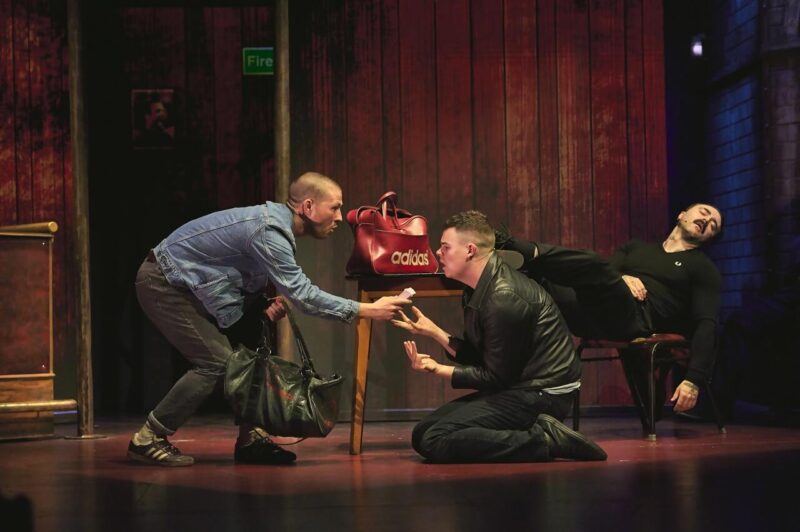
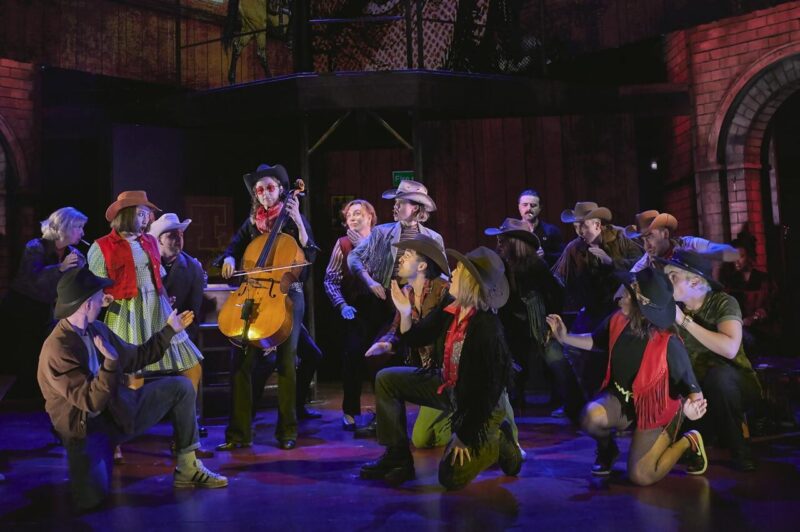
That sound, combining jukebox songs the film made famous along with new tunes from DJ/producer Steve McGuiness and Welsh himself, seems to delight in its source material’s eccentricity. “You’ve got everything in it, from dance music to punk, to even a sort of western number”, says Frankie O’Connor, playing the story’s moustachioed psychopath, Begbie. Like the source material, no-one here is aiming for subtlety: “The whole musical needs to be a bit of a kick in the teeth,” he adds.
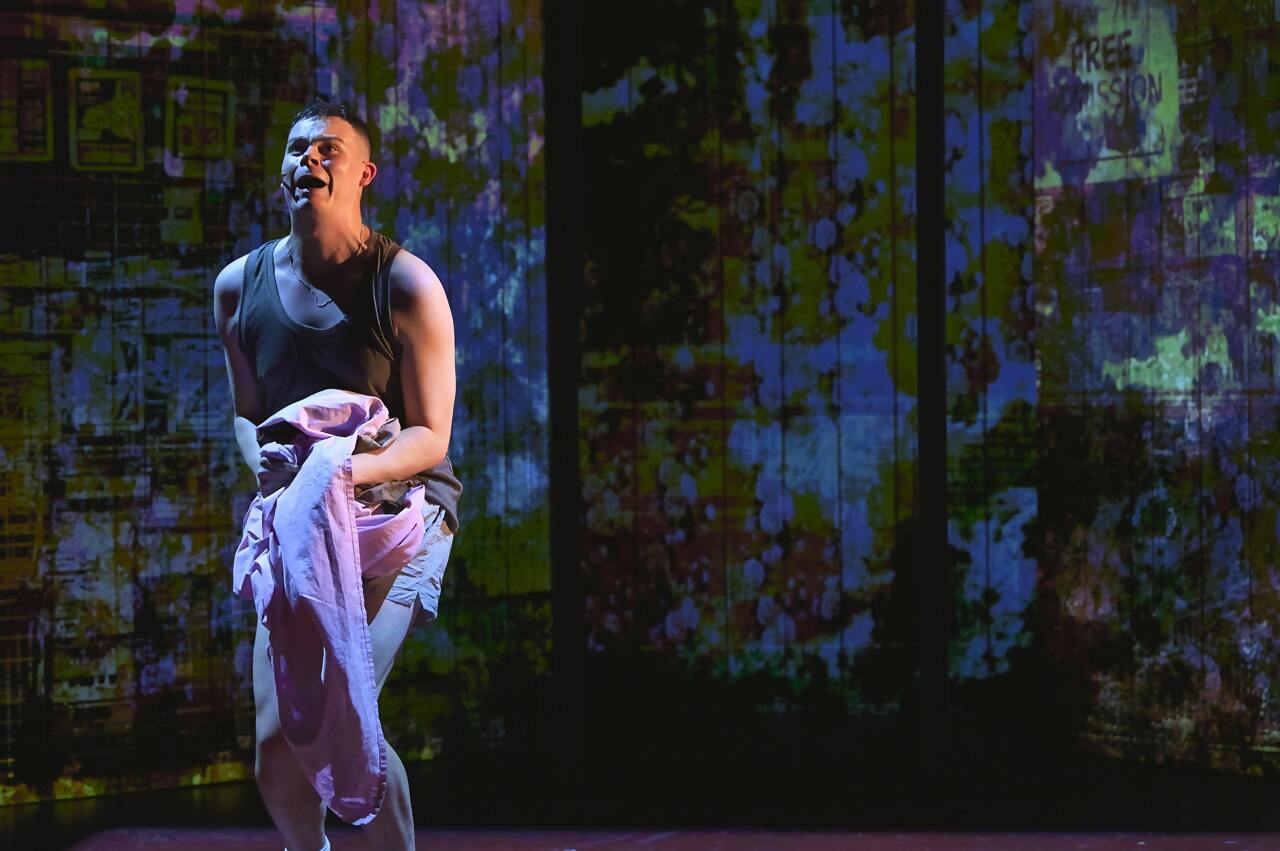
Referring to probably the film’s most famous scene: “You are in the experience. You feel like you are in the toilet, and you are swimming through that big body of water that you see in the film.”
Can theatrical immersion ever go too far?
For Scotland
Since Trainspotting’s publication – and particularly since Boyle’s film – the story seems to have inspired an unlikely national pride amongst Scots. “It gave the world a wee taste of Scotland,” O’Connor explains. “[It was] an independent film, and then it boomed and caught this huge cult following… I didn’t associate personally with the themes and stuff, but it gave me a sort of identity.”
“In many ways the book and film have become intertwined with what it means to be Scottish,” Andrew adds. “Trainspotting has been right at the front of our cultural output”.
That combination of the unapologetically Scottish, the entertaining and the gonzo with artistic acclaim has turned the many forms of Welsh’s story into a potent cocktail for actors and creatives in particular.
“I remember watching it and kind of seeing – not myself in it – but thinking: ‘Those are Scottish actors… I could probably do that,” O’Connor says.


As Begbie, a drug-hating, violent hooligan made famous by a terrifying Robert Carlisle in Boyle’s film, it’s probably for the best that O’Connor doesn’t see much of himself in the character.
“I’m a huge fan of Robert Carlile, and I’ve kind of followed his career,” he explains. “He was one of my icons growing up, and obviously seeing him in Trainspotting… It’s not a likeable part, [but] I remember those iconic lines and those funny moments. I’ve always played bad guys. I find them interesting.”
Inspiring sympathy is probably a bit easier for Andrew. As Spud (Ewen Bremner in the film), he plays a much sweeter, more innocent form of Edinburgh down-and-out. Counter-intuitively, making the character his own involved copying Bremner’s method to the letter.
“I remember Ewen saying in an early interview that he’d based his portrayal on a school friend of his,” Andrew says. “I wondered if I could use the same approach… We all have those pals in life that, no matter what they try, nothing seems to go their way: the loveable, hopeless, harmless type.”
Addiction
Set in 1989 at the height of Edinburgh’s needle-sharing epidemic, Welsh’s novel paints a particularly bleak look at the costs of addiction. “[We spoke to] some ex-addicts during rehearsals,” Andrew says. “The reality of our piece hit home.”
In 2026, though, the relationship of every audience member to addiction is very different even to 2013, when the stage version was last adapted into immersive Fringe hit, Trainspotting Live.
“I think everybody can relate to a bit of an addiction,” O’Connor says. “Obviously I’ve got an iPhone, and if you look at your screen time, you think, ‘wow, how many hours of the day am I looking down and not looking up?’”
“Addiction has become so present in our culture now,” Andrew adds. “I know Irvine has addressed this too, but we’re addicted to looking better, having more likes, better lifestyles, all this nonsense.”
“We’re alluding to the whole concept of addiction in a broader way,” Welsh told Sky News. “Prescription drugs, all the additives in our food… In this attention economy, everything is designed to grip us and to feed into this compulsive, obsessive thing that we have.”
And, as he told Film Stories last year: “I’ll say to young people, ‘Look, it’s not just me being an old c**t. It genuinely is much worse now.”
Who, in 2026, doesn’t feel like they’re swimming in a toilet?
Trainspotting The Musical is now playing at the Theatre Royal Haymarket ahead of a major UK tour from 19 October – 27 March. Tickets are available at trainspottingthemusical.co.uk.