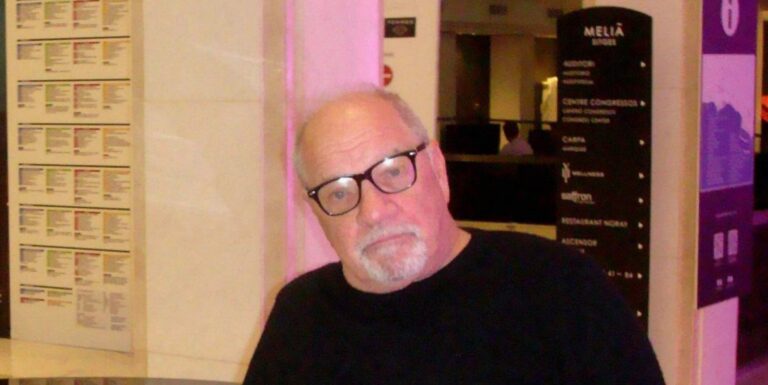
Paul Schrader has struggled to find Black actors willing to perform in his thriller, Three Guns At Dawn, so he says he’s going to generate them with AI. In a story we’re filing in a box titled, “Good Lord” comes some comments from Taxi Driver screenwriter Paul Schrader. Now in his 80s, Schrader has spent ... “AI came along, and I didn’t need Black actors” says Paul Schrader
Paul Schrader has struggled to find Black actors willing to perform in his thriller, Three Guns At Dawn, so he says he’s going to generate them with AI.
In a story we’re filing in a box titled, “Good Lord” comes some comments from Taxi Driver screenwriter Paul Schrader.
Now in his 80s, Schrader has spent his career writing and directing dramas and thrillers about troubled men and grim situations, from his earliest 70s thrillers (The Yakuza, Rolling Thunder, Hardcore) to more recent, artier fare like First Reformed and Master Gardener.
Schrader’s latest film is another drama-thriller, The Basics Of Philosophy, which recently debuted at Venice. But it’s a separate project, the crime piece Three Guns At Dawn, that is likely to generate multiple headlines in the coming days.
Talking to The Playlist, Schrader said he’s struggled to find Black actors willing to take on the three lead roles – a trio of African-American brothers who are all criminals of one sort or another. Rather than wonder whether there might be something in the script that was off-putting to the community it depicted, Schrader has instead decided to fill those roles with AI-generated ‘actors’ instead.
In the interview, Schrader explained how he’d “originally written it about three Black brothers, all of whom are bad guys: a corrupt cop, a drug dealer, and a sexual criminal” and that at one stage he had Training Day and Michael filmmaker Antoine Fuqua aboard to produce.
Then came the casting problem.
“We sent it out to actors, and no Black actors wanted to play in a movie where there are no good Black people,” he said. “And it sort of died. But then AI came along, and I didn’t need Black actors.”
Schrader has talked about his interest in generative AI before – he’s one of those older-generation filmmakers in the “It’s a tool” camp – but these latest plans point to something rather more disturbing.
We don’t, of course, know what it was in Schrader’s script that made the film essentially impossible to cast. But it’s a reminder of the kind of future that lies in front of us: AI being used to replace already marginalised groups of artists or workers. Or, perhaps even worse, being used to tell stories that those groups wouldn’t want to promote themselves.
If Tilly Norwood and the other products of gen-AI filmmaking are anything to go by, though, the results will probably be an unwatchable nightmare from the uncanny valley.


Suggested product
Issue #60 Magazine Bundle (3x Covers: A Scanner Darkly Magazine + 1991 + Roger Deakins)
£14.99
Lead image credit: Alex Swaney, Wikimedia Commons CC BY-SA 4.0.