As The Running Man emerges in cinemas, Edgar Wright tells us about its making, his favourite Stephen King novels, and more… Almost 30 years after the none-more-1980s version starring Arnold Schwarzenegger, The Running Man is back in cinemas courtesy of director and co-writer Edgar Wright. The British filmmaker has deftly fused the stark dystopia of ... Edgar Wright interview | The Running Man, Stephen King, The Incredibly Strange Film Show
As The Running Man emerges in cinemas, Edgar Wright tells us about its making, his favourite Stephen King novels, and more…
Almost 30 years after the none-more-1980s version starring Arnold Schwarzenegger, The Running Man is back in cinemas courtesy of director and co-writer Edgar Wright. The British filmmaker has deftly fused the stark dystopia of Stephen King’s 1982 novel – about a killer game show in an alternate 2025 – with his own blackly comic, showman-like sensibilities.
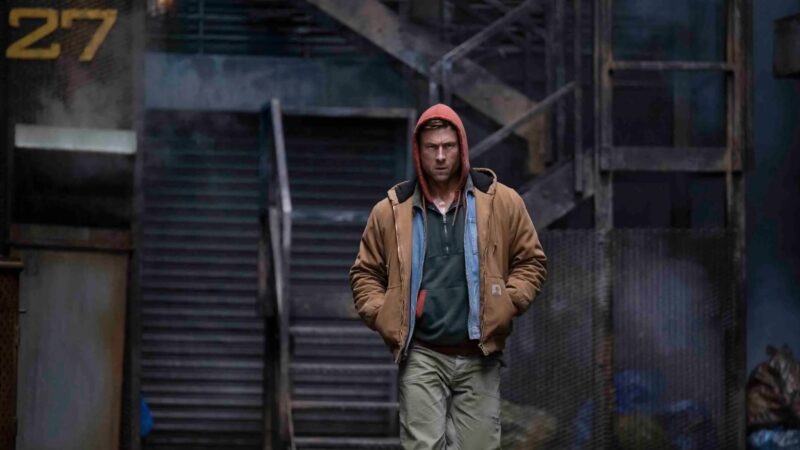
It’s once again the story of Ben Richards (Glen Powell, on pugnacious form), an ordinary guy who ends up on a murderous TV show in a totalitarian USA. Chased from place to place by heavily-armed Hunters, Richards must survive for 30 days in order to win The Running Man’s grand prize – something no other contestant has achieved.
Directed with Wright’s zip and brio, it’s both an entertaining action thriller and a larger-than-life satire that rings almost alarmingly true when looked at against 2025’s political landscape (by coincidence, King’s novel, published under the pseudonym Richard Bachman, was set in the same year).
The Running Man is also something of a dream project for Wright, who read King’s work as a teenager and first thought about adapting his sci-fi page-turner over a decade ago. With that in mind, here’s Wright himself to give us his perspective on the author’s work, the making of this latest adaptation, and his killer contest film recommendations.
When I think of your work, it’s joyous and upbeat, and The Running Man is quite a disturbing novel. So what attracted you to it?
I read the [Richard] Bachman books when they released them as a paperback collection in the mid to late 80s. I read those as a teenager, and they really stuck with me. And that was the compilation that came out once Stephen King’s pseudonym had been revealed. They released the four novels – Rage, Roadwork, The Long Walk and The Running Man in a compendium. And I was always struck with the book because it’s obviously a very grim dystopian novel, but not without a really savage sense of humour.
What I really liked about it was that, as well as the action and suspense, you also had the inner workings of a TV show, and that was really interesting to me. And I thought that in the novel that was extremely memorable, the process of which he goes through. And I think in a weird way, there’s a lot of Stephen King novels that are extremely prescient about the state of things and The Running Man was no exception. It’s a 1982 novel that’s set in 2025, and seems to accurately predict where we’re at right now.
The thing that I really loved about the novel, which wasn’t present in the 1987 adaptation, was how the game itself was more expansive, as in, you can go anywhere in the country or the world.
I liked that you were with Ben Richards the entire time. And other films or TV shows that are in this vein, or even things inspired by The Running Man tend to split the focus between many contestants or keep going back to the studio. I really wanted to do what was in the novel, and keep it extremely focused on Ben’s POV.
Did you read the novel before or after you saw the 1987 film?
I think I read it before. It’s interesting. I wasn’t old enough to see it. I was 13 when the first adaptation came out. And I’m pretty sure it was an 18 in the UK. I think I saw it on VHS. I’m pretty sure my brother saw it at the cinema. And it was around that time when there was lots of watching VHS around other people’s houses when their parents were out.
But I think in this instance, I’d read the Bachman book before I saw the film. So even though I enjoyed the Arnold Schwarzenegger film, I was aware at the age maybe 14 or 15 that it was a very loose adaptation. And it was probably the first time I really realised how different a movie and a book could be.
I was the other way around. A friend of mine had taped the film off Sky or something like that. And I saw it in the late 80s, early 90s. I was a Schwarzenegger fan, so I loved it. But then when I read the book, I was absolutely shocked by how different they were.
When you read about the 1987 one, it certainly seems that there were attempts to do something a little closer to the book… I’ll say this. When I watched the 1987 adaptation, one of the things that’s very different about it is that they keep the action mostly confined to an underground arena complex. And I now realise why they did that. My production designer, Marcus Rowland, told me that there are 170 different sets and locations [on our movie].
Oh, wow.
It’s exhausting. I felt as exhausted as Ben Richards does in the movie.
Glen Powell said a few months ago that making The Running Man was the hardest thing he’d ever done in his life. So what did you do to him?
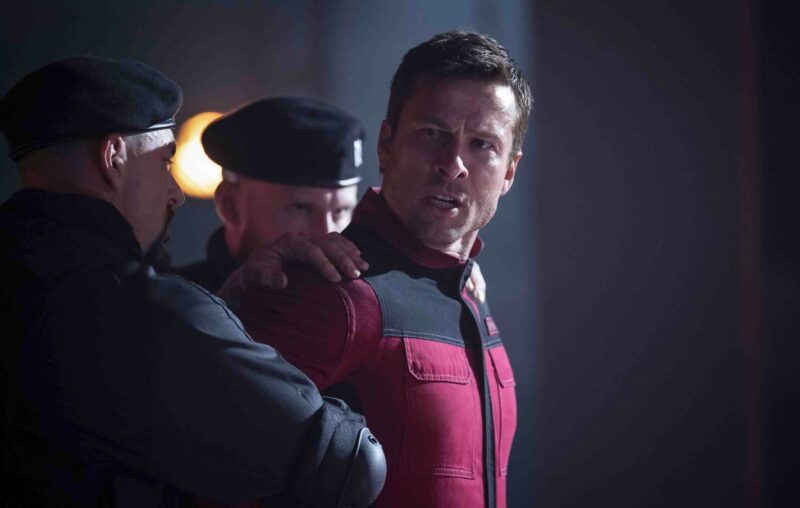
Listen, he’s in every scene. He’s in every single scene. I’ll say this: I’ve never worked with somebody as hard-working as Glen Powell. I don’t think I could have gotten through the shoot without him. And it’s really intense, on an action level and dramatic level, to be running and jumping and fighting… I take my hat off to him, in terms of what he managed to pull off in the movie.
Read more: The Running Man | Can Edgar Wright make a decades-old novel feel relevant in 2025?
Was that a way of you making this story your own, in a sense – bringing your style of action to it?
When the opportunity arose, I’d always been interested in doing something with the original book, but there was a complication with the rights. I think I’d looked into it as far back as around the time of Hot Fuzz or Scott Pilgrim, only to find that the rights were complicated.
So I didn’t pursue it anymore. Then Simon Kinberg, the producer, emailed me out of blue in 2021. I’d known Simon for a number of years. He’s probably one of the first meetings I ever had in Los Angeles. The two of us are about the same age, and we met when we were first starting out. And then he just emailed me and he said, ‘Do you have any interest in adapting The Running Man?’
I said, ‘Yes, I do. Actually, I’d thought about it before.’
So it was, it was a very rare instance where something landed in my lap that I actually really wanted to do. But in terms of trying to make it your own, I don’t know if that was necessarily something that I thought about a lot. You just have an instinctual vision of what it should be. There are other films that are out there that I really enjoy, that I think do a brilliant job of showing a nightmarish dystopia in a fun and entertaining way, like Escape From New York, Brazil.
Brazil is an extremely nightmarish Orwellian vision, and yet it’s still funny in places. The satirical element to that film is extraordinary, and there’s a streak of extremely cold black humor in Stephen King’s novel. It was great to have fun with that as well.
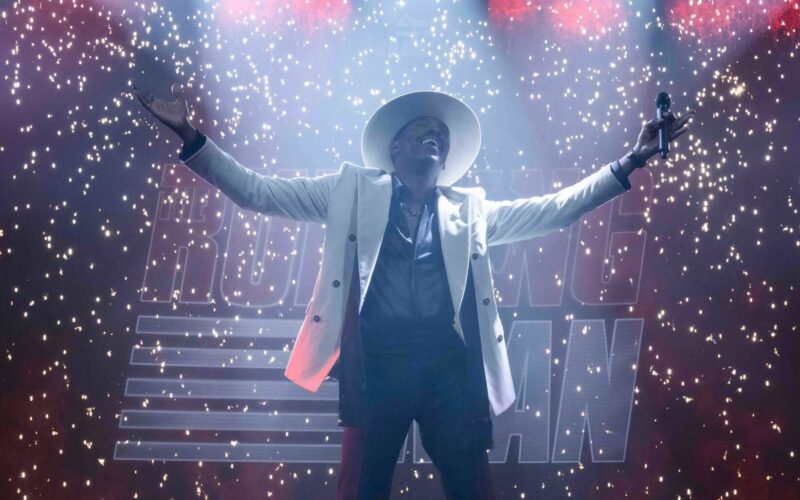
Also, Stephen King had approval on the screenplay. So possibly the most nerve wracking day of the entire production was writing to Stephen King with the attachment of the screenplay and pressing send. He loved it. But it was still extremely nerve wracking to send it to him.
What was his feedback like? Was he supportive?
Oh, yeah, he was great. I think also because he realised as well, he knew even before he read it that we weren’t going to be doing the ending from the book.
Everybody at the outset knew that that was something that wasn’t going to be part of this adaptation in exactly the way it is in the book. And he knew that as well. And so when he emailed back, he said, ‘I was very curious how you were going to tackle the ending, and I think you did a great job.’
So I was very happy with that.
That’s fantastic. Was Stephen King typical of the things you were reading as a kid?
Stephen King was definitely a gateway to adult [literature], so to speak. There’s not just the horror, but also quite grown up material and sex scenes and things. I remember reading those books thinking that my mum and dad probably wouldn’t approve. They definitely felt like a real portal into a lively world. And so they’re very dear to me, and I still enjoy them today. I still enjoy his writing a lot. His non-fiction book, On Writing, is one of my favorite books.
I love that.
Oh yeah, it’s terrific. I use it a lot for inspiration.
I still have all my copies, and they’re really well thumbed, and I’ll never get rid of them… I have my copy of The Bachman Books from the late 80s. And the first ones I read were the short story compilations – Night Shift and Skeleton Crew and and then The Bachman Books and It and The Shining and Salem’s Lot. I love Salem’s Lot – the book. I liked the TV movies. I liked the book better.
Why do you think his books are being adapted again so widely now, over the last few years? Do you think it’s just cyclical, or do you think there’s something else going on?
That’s a good question. I’m not sure how to answer that. I guess in my head, they’ve never really gone away. Isn’t he the second most adapted writer after Shakespeare?
That certainly wouldn’t surprise me.
I didn’t know. It’s a good question, and I’m not sure what the answer is. But there are so many great adaptations of his books, both in horror and non-horror. It speaks to his range. Stand By Me, and Shawshank Redemption are not in the horror genre at all. They’re great books, and great movies.
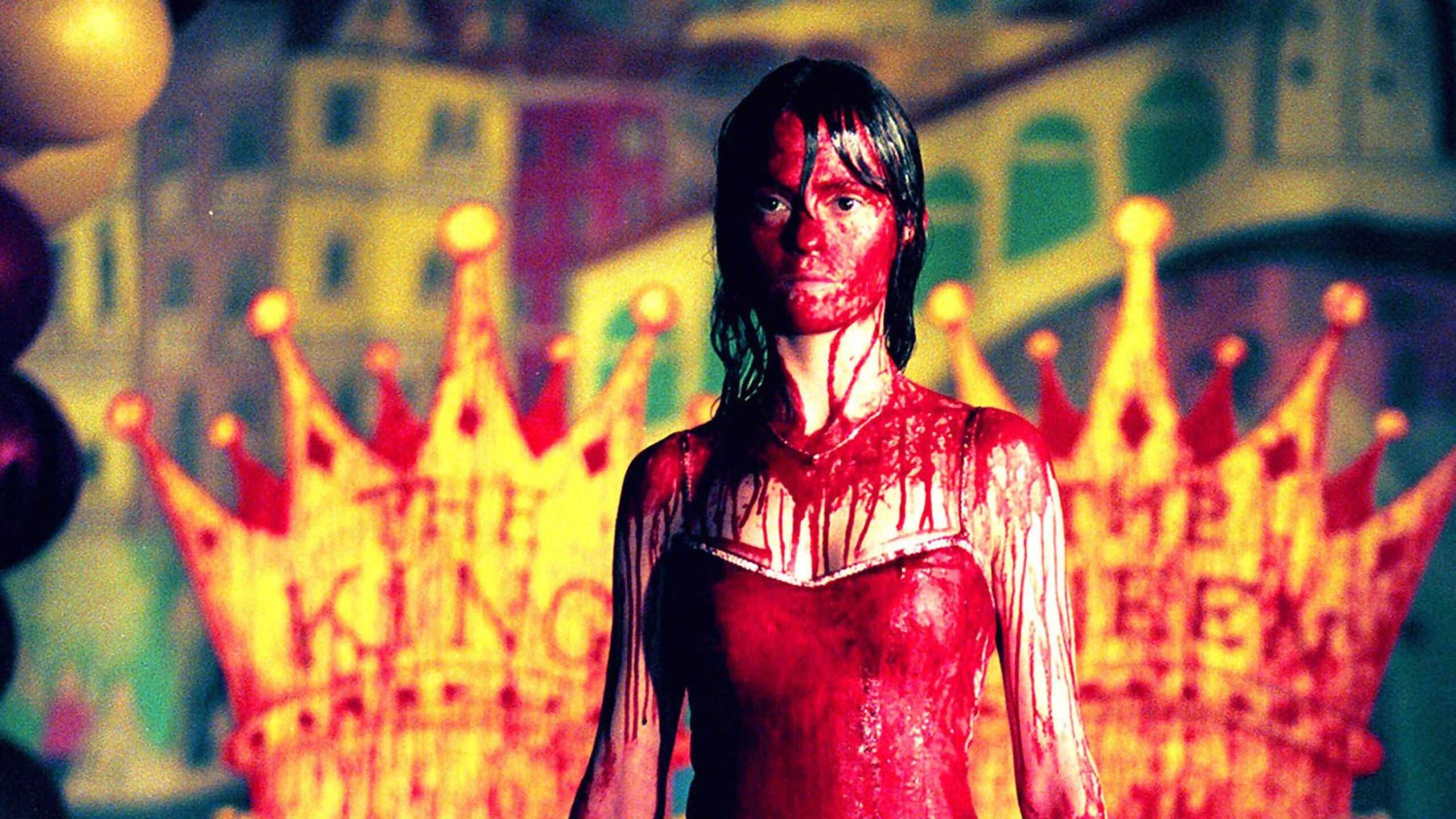
The Running Man is a bit different, because it’s one of his rare sci-fi books. But I think what he does brilliantly is show you horror through a relatable situation like Carrie, the first novel. Everybody can identify with the characters in Carrie. And if you’ve been to school, those people, you are those people. And so to bring this supernatural element into that milieu is just explosive, because the groundwork is so vivid. It makes it really painful, because you have your own recollections of high school
He had a brilliance, which he still has, of being a very contemporary writer and writing in a vernacular that everybody could understand, and then introducing a magical element. It’s probably had a bigger impact on me than even I can understand.
If you read any Stephen King books, a lot of the time, the slow burn to the first incident is quite long. You get to know all the characters. Probably on a subconscious level, that has a big influence on Shaun Of The Dead, in terms of spending a good 20 minutes, 25 minutes, understanding of the characters and their relationships before the zombie apocalypse starts.
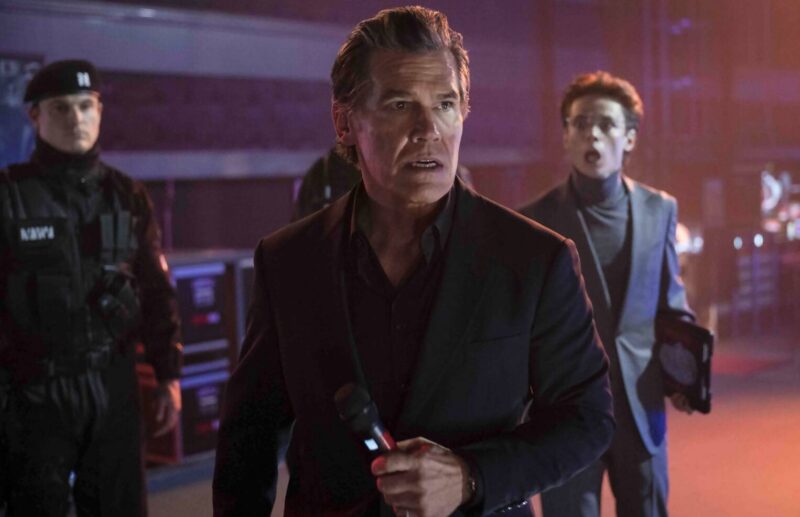
I feel as well like the themes that are common in your work is that there’s a defiance in the face of authority. They’re about individuals against some authoritarian force. Whether it’s the Neighborhood Watch scheme in Hot Fuzz or, the dystopian production company here. Why is that something you keep coming back to?
Maybe I’m a closing revolutionary.
Well, in a way, yeah. There’s a gleeful rebellion in your films, I feel.
I hope so. You always want to be on the right side of history, don’t you? I mean, that’s just something that’s ingrained in me. I don’t know if it’s through my parents or something. It’s early in the morning, and I’m trying to come up with some profound answers. I don’t disagree. There’s probably just something in my upbringing that there’s a bias towards… anti-establishment.
But it’s interesting that this year, and our film hasn’t come out yet, but there definitely feels like there’s something in the air in terms of a number of movies that are expressing how people feel in an indirect way.
With The Running Man, there’s almost an unofficial sub-genre of films that I’m going to loosely call murderous competition films, going right back to The Most Dangerous Game, They Shoot Horses, Don’t They? was an interesting one, because that won Oscars, but nobody really talks about it anymore.
I guess They Shoot Horses, Don’t They doesn’t get talked about in the same way because it isn’t a genre film as such, because it’s based on something [real]. Those things used to really happen. It’s crazy when you watch that movie, to think, Oh, this is a real thing. I guess there’s real parallels between that movie and The Long Walk, aren’t there?
The other one I’ll throw in, which I really love, which not many people talk about anymore, is The 10th Victim.
Oh, I haven’t seen that.
Oh, you should check it out. It’s really good. It’s an Italian movie with Marcello Mastroianni. It’s basically about a competition with hit men trying to take each other out. So it’s wide ranging, like the competition of the world’s greatest assassins trying to bump each other off. And it’s really fun.
There’s a number of films over the years, including both the 1987 Running Man and the book, that inspired a lot of other movies. I think The Most Dangerous Game is obviously one of the most adapted novels of that ilk.
I only watched the film of that recently, which I really enjoyed. It’s made by the same production team as King Kong, with some of the same sets. So you’ve got this movie that seems to also be shot on Skull Island.
It’s a really good movie.
Yeah. There’s Punishment Park as well,the Peter Watkins film. I feel like that’s an underrated entry into the canon. There’s also that Canadian film from the very early noughties called Series 7: The Contenders, which is a really good movie. It’s a low budget, independent Canadian film, but it’s like you’re watching episodes of the actual show itself. It’s very clever.
Yeah, and you touched on it before, but I feel like the reason that these stories hit such a nerve with people is because they do feel like they’re saying something about society, and certainly capitalism. And perhaps that’s why these stories are coming around again at the moment, is because of where we are almost feels like we’re living in a dystopia in some respects.
Well, it’s crazy that the Richard Bachman novel is set in 2025. In the movie,we don’t say what year it is. We let people read into it what they want. Maybe it’s like five minutes in the future.
I guess when we were talking about it from a production design standpoint, we kept saying it’s a version of where we’re living now, where some technology has got better and a lot of technology has got worse, and so there’s a big gulf between the uptown living and the downtown living in terms of how well the system works. That was a fun thing to: imagine an alternate reality version of where we are now.
You once said you were inspired by The Incredibly Strange Film Show, which was an amazing series. Do you think that’s partly where your love of mixing genres came from? Seeing things like that?
I grew up in an age when there were only four channels on British TV, and I didn’t have a VCR in the house. My family didn’t have a VCR until I was in my late teens. It’s difficult to explain to people in this streaming age how difficult it was to see some film back then, and a lot of horror films and also cult films were harder to see.
The Incredibly Strange Film Show was a series of documentaries which Jonathan Ross did on Channel Four. It was really awe inspiring for anybody who watched it, because these are people who, at that time in cinema, were like cult heroes and fringe figures: John Waters, Russ Meyer, Herschel Gordon Lewis, Jackie Chan, George Romero.
Those documentaries were mind blowing to me. And there were some films I’d seen, and then some other ones I hadn’t. And then the Sam Raimi episode in particular, which talked a lot about how he made the leap from amateur filmmaker to director of The Evil Dead at age 21… I already wanted to be involved in movies, but that particular episode was the one that made me go into school the next day and say, ‘I’m going to be a film director.’
I hadn’t really figured out how I was going to do it, but definitely seeing that documentary, it really made me think, that’s what I wanted to do.
[Another show that] was hugely influential was Moviedrome on BBC Two, Alex Cox’s series that he did with Nick Freand Jones, the producer. I went and did a talk about it for the celebration of it at the BFI. I looked at the first season of Moviedrome on Wikipedia, and I realised how many cult films I’d seen for the first time on that show. And again, back in the days when there were only four channels, you knew that, the next day – it was always on Sunday night, late night- that on a Monday morning at school there would be a small proportion people, if you’d seen The Wicker Man, you’d go and talk about it.
You don’t get as many films on TV anymore. In the streaming age, people don’t really watch anything they don’t want to watch, whereas back then, you would tend to sometimes watch films because they were on. And so you’d be exposed to a lot more cinema that you wouldn’t necessarily watch out of choice, and I think that’s really important. So I think if I’m quite omnivorous in my tastes, that I want to watch a bit of everything, it’s probably because of that.
Do you think one of the important things that filmmakers can do in their work, is that they can turn other people on to films they might not have seen? I think you do that with your films.
I hope so. I mean, I always listen to directors that I really admire, and I’m always interested in what they think about things.
When Quentin Tarantino came on the scene, it was really interesting, in his interviews, he went out of his way to mention movies that weren’t necessarily always regarded as classics. I thought that was really inspirational.
Martin Scorsese is another one. In fact, I eventually asked him directly, because I was always impressed that he would always mention films that weren’t part of the established canon. I think what happens with listicles sometimes is that the same titles go around and around in a blender. And not to say that any of them don’t deserve to be there, but, there’s the list of the top 100 British films of all time, and there’ll be lots of great films on there…
So I eventually asked Martin Scorsese what British films meant a lot to him in his formative years. And the list that I got was so extraordinary. Because, again, it was a lot of films that weren’t necessarily canon, or, more off the beaten track. In this day and age, especially films that are not part of a studio library, it’s very easy for some films to disappear from circulation unless somebody actually talks about them.
There are still great boutique DVD and Blu-ray labels doing amazing stuff with lesser-known films. And I feel like I’m obviously keeping them in business by investing in this library. But during the pandemic, I decided to make a list of all of the most famous or most lauded films I’d never seen, and work my way through them. And it was great. I took myself back to college.
What was your favorite of those?
Oh, my god, wow. Of the British ones, I really like this one Scorsese recommended, which I had not previously seen: The Queen of Spades, directed by Thorold Dickinson. It knocked me out. It’s something that I hadn’t previously seen. But I think that’s what tends to happen: film lists start to get a little bit predictable, because people make lists from other lists. Dickinson is a great example: because he didn’t make that many movies, he’s not often somebody that’s talked about as part of the canon, like a Hitchcock or a Carol Reed. But his films are extraordinary.
You once said that the only way to get a film idea out of your head, is to make it. That films can almost haunt you. I thought that was a really interesting way of putting it. Did you think, to be a filmmaker, that you have to be obsessive?
I guess so. Making films is not easy, and I think there has to be a level of obsession just to get something made. I always feel so grateful to be doing what I do, because I know how it’s so difficult, now more than ever, so sometimes making the film itself is the win. So yeah, I think you have to be obsessed. I don’t think there’s any way of getting through the mental and physical marathon required to make a film, if you’re not.
Also, I can only do things with sincerity. I really can’t do it at all if I’m not into it. It’s difficult doing the job that you have to approach it with… a fanaticism, I guess.
Edgar Wright, thank you very much.
The Running Man is in UK cinemas now. You can read more from our Edgar Wright interview in the latest edition of Film Stories magazine, available to purchase from our store.