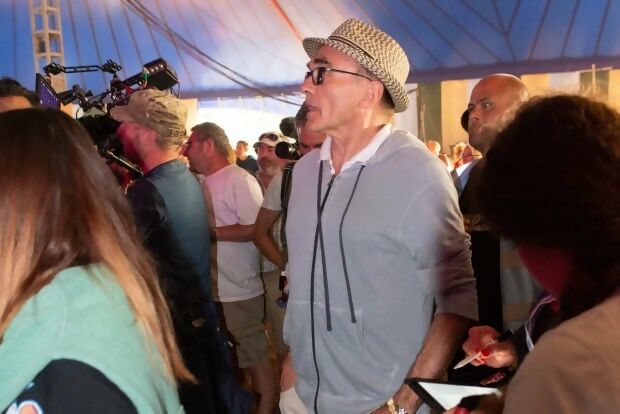
During a Q&A for his new film Ink at the Toronto Film Festival, Danny Boyle answered an audience question about AI. Due to go on its wider release in the US this December, Ink is director Danny Boyle’s drama about the rise of Rupert Murdoch – the Australian media mogul who essentially invented tabloid journalism ... Ink | Danny Boyle heckled over use of AI in his new film
During a Q&A for his new film Ink at the Toronto Film Festival, Danny Boyle answered an audience question about AI.
Due to go on its wider release in the US this December, Ink is director Danny Boyle’s drama about the rise of Rupert Murdoch – the Australian media mogul who essentially invented tabloid journalism in the UK.
Guy Pearce plays the future media tycoon, who in the 1960s hired editor Larry Lamb (Jack O’Connell) to transform The Sun newspaper into a daily parcel of sensationalism and smut.
The run-up to Ink's release has been overshadowed, however, by the news that it uses generative AI for certain sequences – including some photos that appear to come to life and some mice scampering around a newspaper office.
Critics noticed the usage in its Venice Film Festival debut earlier this month, and Boyle admitted that AI features briefly in the film shortly afterwards. More on that in a moment.
On Tuesday (15th September), Ink made its Canadian premiere at the Toronto International Film Festival, after which Danny Boyle, Jack O’Connell and Guy Pearce took to the stage for a Q&A.
(As they took their seats, the end credits were still playing in the background. Just as the moderator asked a question about the responsibility of the press, the logo for Google DeepMind – Google’s AI research lab – is projected right behind Boyle’s head.)
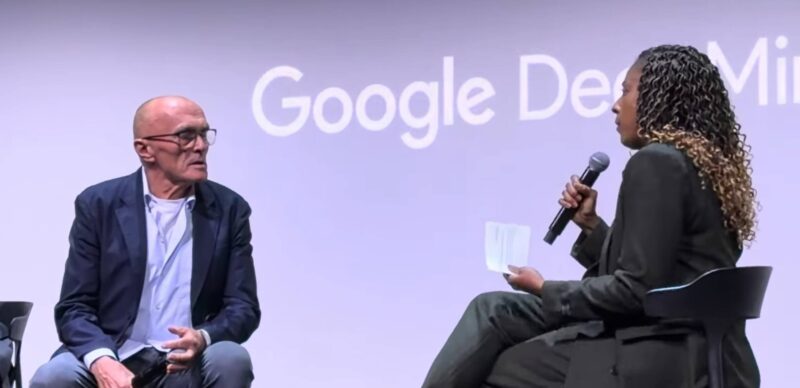
Inevitably, as noted by Variety, someone in the audience asks about the AI thing.
“We used a tiny amount of it,” Boyle said. “It’s very much linked with VFX in our world. It’s one of the tools they use in the VFX. We tried to be very responsible and make sure no actors were out of work because of it, so we would always employ actors if we were going to use a bit of it. There was about 30 seconds of it.
“The wider question of its place in society, of course, including our profession, is huge and complicated. Which I don’t think we can go into here. But we will need to into it, yeah, for sure.”
Not long after Boyle finished answering the question, someone in the audience appeared to shout, or at least say rather loudly, “Never do that shit again.”


You can just about hear this in the video below at around the 15:53 mark.
The Q&A is wrapped up quite soon after.
The AI question will likely hang over Ink like a cloud – which is unfortunate for everyone involving in making the film that had no say in its usage. By most accounts, Pearce and O’Connell are superb in it.
Critic Sarah Manvel was one of the first to see Boyle’s film, wrote in her scathing review:
“The fact that Ink has been made by formerly respected artist Danny Boyle, who has chosen to blow up his professional and personal integrity by using AI, is as big an insult to human talent that can be imagined. Let’s be clear: that’s an insult both the human talent that went into making the film as well as the humans in the audience. And how dare everyone involved serve up this sh*t and expect us to like it.”
Boyle has previously tried to minimise the issue, saying earlier this month that “about 30 seconds” of it are used in Ink, and that it’s “very good for animals.”
The filmmaker did appear to recognise that how the public reacts to AI’s use in cinema that define how it’s used in future, however.
“It doesn’t really matter what I think about AI,” he told Vanity Fair. “It matters what 20-year-olds think about it, is the honest truth.”
If audiences continue to react angrily to the appearance of AI in movies, then filmmakers – particularly those with Boyle’s reputation – may begin to think twice about using it.
Ink is out in UK cinemas from the 8th January 2027.