One of the most disturbing American horror films of the 1970s hails from the writers of Temple Of Doom. Here’s why you should see Messiah Of Evil. Panicked, sweating, out of breath, a lone figure runs through the night. We can’t see what he’s fleeing from, but it’s clearly something terrifying: the man glances over ... Messiah Of Evil | The writers of Temple Of Doom made one of the eeriest films of the 1970s
One of the most disturbing American horror films of the 1970s hails from the writers of Temple Of Doom. Here’s why you should see Messiah Of Evil.
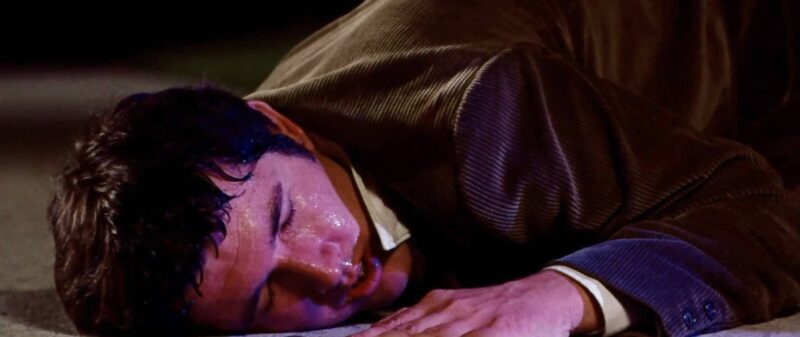
Panicked, sweating, out of breath, a lone figure runs through the night. We can’t see what he’s fleeing from, but it’s clearly something terrifying: the man glances over his shoulder, but the narrow street behind him is empty. Then, beckoned into a garden by a young woman, the man collapses next to a swimming pool, exhausted. The young woman kneels down, gently strokes the man’s cheek… and then slashes his throat with a straight razor.
Oh, and the guy lying by the pool, blood oozing from his neck? He’s played by a young Walter Hill, years before he made The Warriors or 48 Hrs.
Some of the best horror moments are the ones that can’t be explained – where reality itself appears to break apart, and we forget we’re even watching a movie. All logic and reason has fallen away, and we’re stuck inside someone else’s recurring nightmare.
In terms of sheer surreal terror, 1973’s Master Of Evil may be one of the most underrated movies of its era. It’s filled with the sumptuous colour and framing of an Italian filmmaker like Mario Bava or Dario Argento, but it’s less widely celebrated than much of their work. It has some of eccentric artistry of David Lynch, but hasn’t been celebrated to the same degree as his body of work. It’s in the grand (or maybe not-so-grand…) tradition of low-budget US classics like Carnival Of Souls or Night Of The Living Dead, but hasn’t been treated with anything like the same respect.
All the more bafflingly, Messiah Of Evil is the work of two filmmakers who went on to enjoy long and high-profile Hollywood careers. It was directed by Willard Huyck, who co-wrote it with his wife Gloria Katz. The pair made it a couple of years before the release of American Graffiti – the nostalgic, enormously popular drama that transformed George Lucas’s career in 1973. They then punched up the script for Star Wars, wrote Indiana Jones And The Temple Of Doom, before making the Dudley Moore comedy Best Defence (1984) and the ill-fated Howard The Duck (1986).
Shot on a low budget that ran out before the production ended, Messiah Of Evil was shelved for several years, dribbled into cinemas under multiple alternate titles – including Dead People and Night Of The Damned – and didn’t emerge on VHS until the second half of the late 1980s. Its fame has since grown, but it’s still relatively obscure even compared to other cult movies of its vintage.
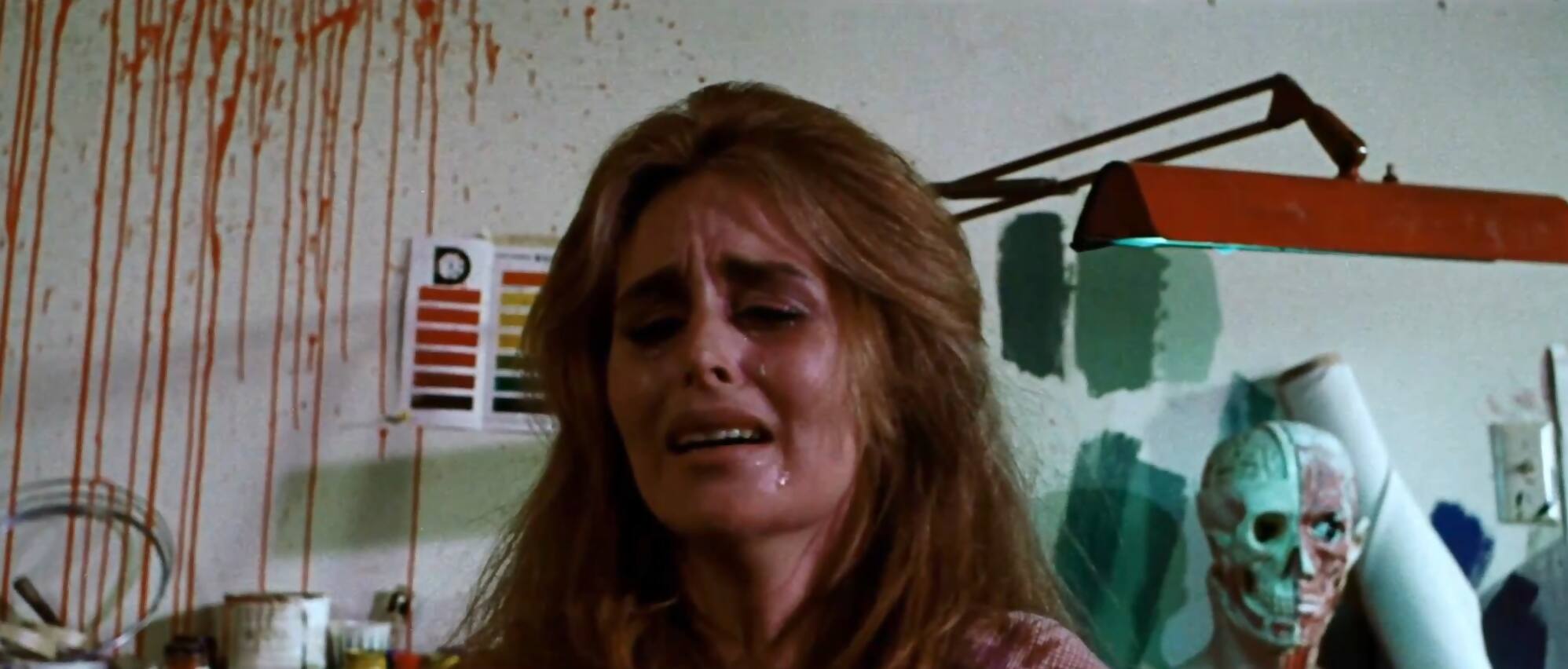
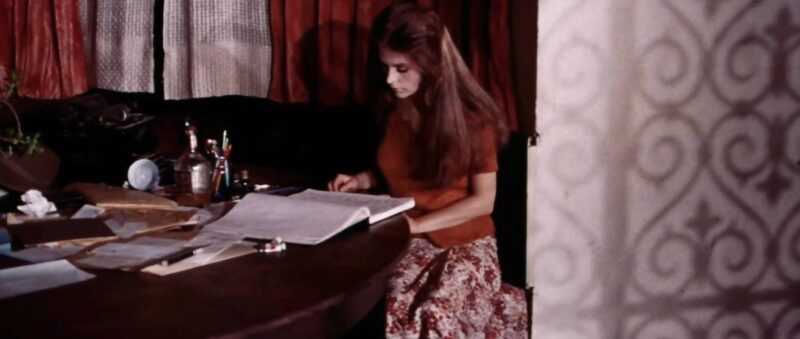
The set-up is classic horror: an ethereal young woman, Arletty (Mariana Hill) is driving to the quiet coastal town of Point Dune to visit her father, Joseph (Royal Dano). A reclusive artist, Joseph had kept in touch with Arletty by mail for several years, but his final letter contained ominous passages about waiting alone for some unspecified fate – and then all correspondence ceased.
Arriving after nightfall, Arletty finds his father’s house filled with eerie murals and art supplies, but otherwise deserted. The wider town is similarly desolate; one local proprietor describes the place as an artist’s community, but there doesn’t appear to be much activity anywhere beyond odd nocturnal rituals on the beach, and a group of locals who drive around in a pickup truck, the passengers sitting in the cargo bed, eyes fixed on the full moon.
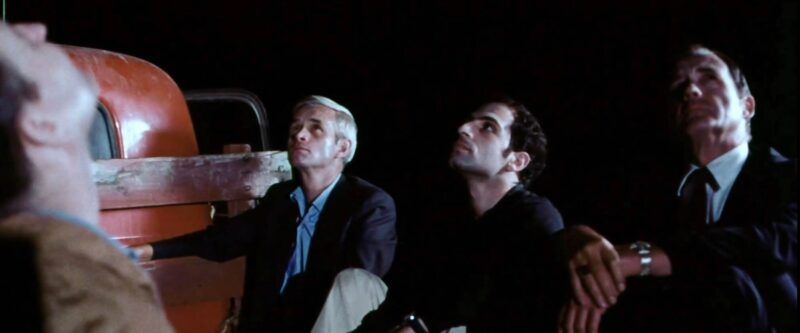
On her travels, the only companions Arletty makes are also outsiders. There’s the foppish Thom (Michael Greer), accompanied by two female travellers who seem to have joined him simply because they don’t have anything better to do. Thom appears to be in Point Dune to investigate the local legend of a vampiric figure who brought with him some sort of blood disease a century earlier; it’s vaguely hinted that Thom may even be this “dark stranger” that a deranged local (Elisha Cook Jr) raves about one day.
The fate of Arletty’s father, and the mystery of what’s going on in Point Dune, is what drives Messiah Of Evil along, though the film ultimately leaves behind far more questions than answers – partly, it seems, because Huyck and Katz never got the chance to shoot the concluding sequences that might have explained everything.


While we can never know what the film would look like had it been completed to the filmmakers’ satisfaction, the narrative gaps only add to the eerie atmosphere. Just as Herk Hervey’s Carnival Of Souls made a feature of its shoestring budget, Messiah Of Evil turns its lack of resources into a virtue. The movie was so low-budget that its makers often took on bit parts as actors, or family members were brought in for technical roles. The cinematographer was Stephen M Katz – Gloria’s brother.
Associate producer Morgan Fisher plays a gloriously pithy art dealer in one scene (he gets the line “We do get magazines in Point Dune, which some of us can even read”) and also provided the old red Volvo that the protagonist drives for much of the film. Gloria Katz makes a brief appearance as a box office clerk at a cinema. Bill Weber, another associate producer as well as one of the film’s editors, has a bit part. And the girl who slashes Walter Hill’s throat in that opening sequence? That’s Weber’s cousin.
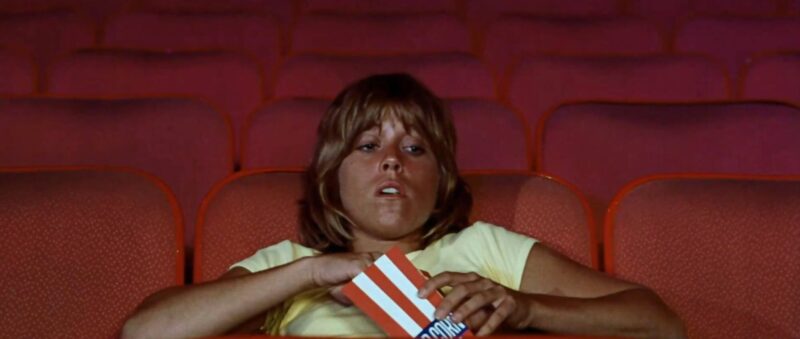
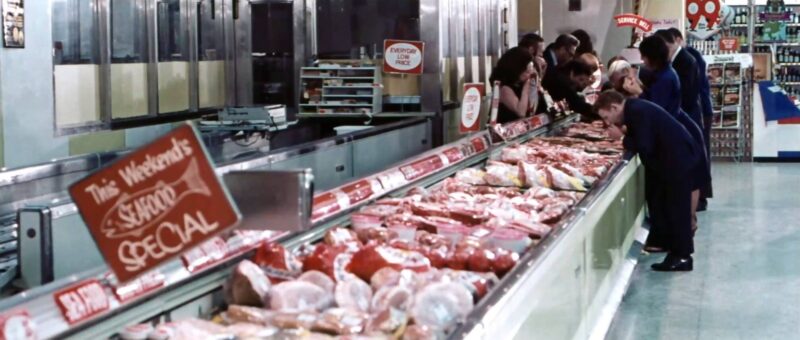
Working together like an amateur dramatics group, much as George Romero and his collaborators had years earlier when they made Night Of The Living Dead, the filmmakers came up with some of the most captivating moments in 1970s horror. And no, this isn’t hyperbole: there are set-pieces here that are comparable to the decade’s better known films, including a sequence in a supermarket filled with staring ghouls, and one in a cinema slowly filling up with some unholy customers. There’s a cringe-inducing scene involving a bathroom sink which appears to anticipate Tobe Hooper’s Poltergeist by several years. (Similarly, the opening line, a shrieked, “No one will hear you scream!!” also has curious echoes of Alien’s tagline.)
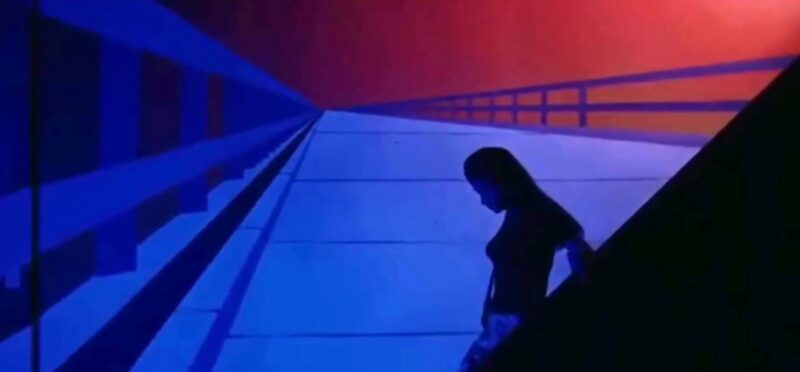
Away from those highlights, which in retrospect feel tailor-made to be clipped out and shared on YouTube, there’s a more general air of dread. The murals adorning Joseph’s house are brilliantly unsettling; the painted faces and figures on the wall, most clad in black suits, feel like ghosts loitering around the edge of the frame. In some scenes, the figures look so lifelike that they could almost be mistaken for background characters. Similarly, there are murals whose use of perspective messes with our own perception of a scene; they create a kind of trompe-l’oeil effect that turns a flat wall into a staircase that stretches off into infinity, only for it to flatten out as the camera tracks left or right.
There’s also an unsettling, baritone narration by veteran actor Royal Dano, which, along with the insular community, midnight rituals and gibbering madness, gives the movie the quality of a HP Lovecraft short story. Interestingly, Huyck later said in the documentary Remembering Messiah Of Evil, shot in the late 2000s, that he’d read Lovecraft’s work as a youth, but wasn’t all that interested in contemporary horror movies.
While they were still young, hopeful screenwriters, Huyck and Katz had been offered a small amount of money to make a movie; the financiers’ only stipulation being that it had to be horror – then a profitable genre. Their touchstones weren’t necessarily Night Of The Living Dead or other low-budget shockers, though – instead, Katz later said, they were more interested in emulating the work of the European directors they’d been introduced to at the USC School of Cinematic Arts.
“With the voiceover, with the painted sets, with the strange look at Los Angeles – it sounds ridiculous – but [we were] trying to do what [Michelangelo] Antonioni did with landscapes in his films, and the French were into voiceover and very literary allusions in their films. It was what we wanted to do. It was nothing to do with anything the investors wanted.”
All of which explains why, for all the slivers of Americana – the townsfolk in dungarees, the big trucks and lonely gas stations – Messiah Of Evil feels more like something from 1970s Italy. It might also explain why the film left so many viewers nonplussed – nothing else in the US looked quite like it in the first half of the 1970s.
When the production ran out of money, the film was shopped around for would-be investors who might want to provide the last bit of financing needed to shoot the climatic scenes. All passed, including master of B-movies Roger Corman. Ultimately, another financier bought the film, re-edited it, added an electronic soundtrack, and finally put it in cinemas in 1974 – three years after it was first shot.
“I was really upset that we didn’t get to shoot our last scene,” Katz later said, “which explained the whole story. That was a devastating filmmaking experience.”
As tough as it must have been, the resulting film has a raw, unearthly power on a par with Argento’s Suspiria. The characters in Messiah Of Evil may be thinly drawn and lacking in clear motivation, but then, the film avoids a trap that too many modern horror movies fall into. It doesn’t try to explain the inexplicable; it doesn’t tie everything up with a neat conclusion or a moment of catharsis. Instead, it leaves us trapped in its nightmare, its ending and beginning joining up to create one endless, echoing scream.
Messiah Of Evil is streaming now on Amazon Prime Video.
/**/