In 1984, Special Effects followed the trend of making thrillers in the vein of Hitchcock – and made a barbed comment on the film industry itself. The shadow of Alfred Hitchcock’s thrillers looms large over 1980s filmmaking, particularly in director Brian De Palma’s work in that decade. Dressed To Kill, in particular, is both a ... Special Effects | Revisiting director Larry Cohen’s 1980s Vertigo homage
In 1984, Special Effects followed the trend of making thrillers in the vein of Hitchcock – and made a barbed comment on the film industry itself.
The shadow of Alfred Hitchcock’s thrillers looms large over 1980s filmmaking, particularly in director Brian De Palma’s work in that decade. Dressed To Kill, in particular, is both a homage to Hitchcock’s ultra-controlled style and a subversion of it. As Quentin Tarantino once said in he and Roger Avary’s Video Archives podcast, Dressed To Kill references Hitchcock’s Psycho so specifically that it couldn’t exist in the same form without that earlier reference point.
“Dressed To Kill falls into a special subgenre of movie, and that is the ‘paraphrased remake,’” Tarantino said. “They’re not a remake per se, but they wouldn’t exist without this one movie’s existence. And if you’ve watched that other movie, that’s almost part of the enjoyment.”
As well as Dressed To Kill and Psycho, Tarantino’s other examples of paraphrased remakes were Bringing Up Baby and What’s Up Doc, and to a lesser extent, Martin Sorsese’s Taxi Driver and John Ford’s The Searchers.
Written and directed by Larry Cohen (It’s Alive, The Stuff, Q: The Winged Serpent), the 1984 thriller Special Effects is a less discussed film that could also be described as a paraphrased remake. It leans heavily on another Hitchcock classic, Vertigo – while at the same time deconstructing the exploitative nature of 1980s low-budget filmmaking of which it’s a part. The result is one of the most unusual – if not necessarily the most suspenseful – thrillers of its era.
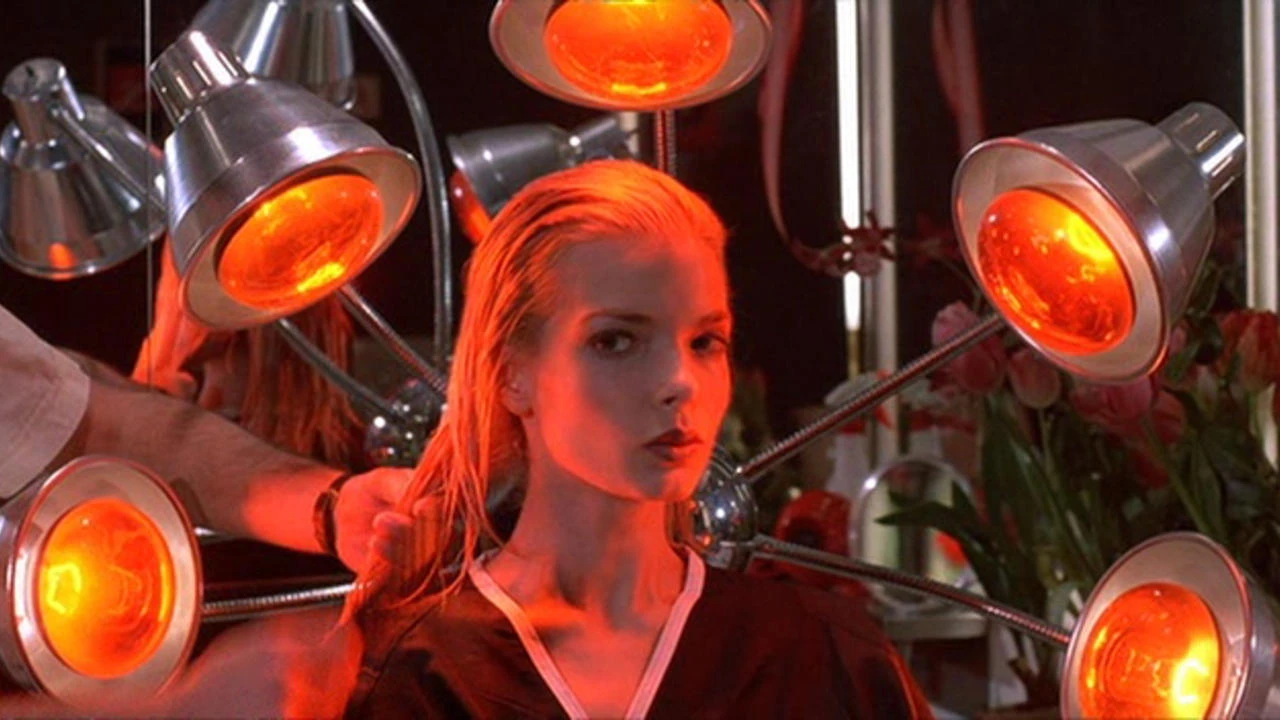
Zoe Lund, who made her debut three years earlier in Abel Ferrara’s sleazy Ms 45, is given a dual role here. In the opening reel, she plays Andrea – a young woman from small town Minnesota who’s moved to Manhattan with dreams of becoming a successful actor. In the place of stardom, however, she’s ended up surrounded by seedy men who want to exploit her looks; the film opens with Andrea surrounded by leering photographers who’ve paid $5 each to take pictures of her in stars-and-stripes underwear.
Having swerved the attention of her hot-headed, small-c-conservative husband Keefe (Brad Rijn), Andrea ends up in a sprawling loft apartment belonging to one Christopher Neville (an early-career Eric Bogossian) – a filmmaker back in New York after his previous two Hollywood movies went off the rails. The specifics of what Neville was making are kept vague; there’s repeated mention of a big budget (something like $30m) and his overreliance on special effects (hence the film’s title), but it’s hard to read who exactly Cohen might have patterned Neville after.
There’s also mention that Neville also tended to fill his films with sex and nudity, which could suggest that he’s a glancing parody of Brian De Palma. De Palma had his own struggles with the Hollywood system early in his career (his first film there, 1972’s Get To Know Your Rabbit, was a failure) and later became known, in such films as the above-mentioned Dressed To Kill and 1984’s Body Double, for both flashy camera trickery and attention-grabbing sex and nudity. (Of the latter, De Palma once said, “If this one doesn’t get an X
, nothing I ever do is going to.”)
It’s equally likely that Special Effects is based on the director’s own career, however; this piece on We Minored In Film points out that Cohen had himself been fired from a movie a few years before – 1981’s I, The Jury – for going over budget.
Whoever Neville’s based on, his capacity for voyeurism and murder go far beyond the make-believe realm of filmmaking. In what might be a nod to Michael Powell’s once-shunned 1960 thriller Peeping Tom, Neville likes to film his victims while he kills them – and in meeting Andrea, he comes up with a bizarre scheme that both satisfies his grim appetites and could serve as a basis for his big comeback movie.
When Andrea’s body is found the following day, Keefe is immediately singled out as the prime suspect. Taking advantage of this, Neville bails Keefe out of prison and offers to give him a prominent role in his proposed movie about Andrea’s death – and how New York’s malaise led to it. He then stumbles on a charity shop worker named Elaine who looks uncannily like the late Andrea – mainly because she’s also played by Zoe Lund.
Neville’s filmmaking plans therefore take a further demented twist: what if he can somehow convince Keefe to act out domestic scenes between he and Elaine, dressed to look like his dead wife…?
Writer-director Larry Cohen was known as a maverick filmmaker who often filmed without permits, and Special Effects continued his buccaneering spirit. He later recalled in an interview that he was given $500,000 to make two movies, and realising there was no way he could make anything of note with that little money, sought out non-union actors and wrote a script around a sprawling, upscale apartment belonging to an artist named Lowell Nesbitt. This film and the 1984 erotic thriller Perfect Strangers (also starring Brad Rijn) were the results.
Special Effects does feel like a movie written in a rush, and its ramshackle third act undoes a great deal of the intrigue set up in the first hour. But what it does have is some atmospheric photography by Paul Glickman, who contrasts the scruffy, wintry realism of 1980s Manhattan with queasily lurid sequences that wouldn’t look out of place in a Mario Bava movie; it’s also the rare example of a giallo-esque thriller in which a gloved murderer turns his attention to a male victim.
Special Effects is also held together by Cohen’s cynicism, which runs through the movie like steel rope through concrete. The film industry and the police (as represented by Kevin O’Connor’s Detective Delroy) are all venal and corrupt; everybody in the movie, it seems, is so swayed by the possibility of fame that they’re willing to overlook just how obviously manipulative and sociopathic Neville is (Bogosian really is terrific casting as the almost Nosferatu-like filmmaker.)
In this regard, Special Effects is as successful a paraphrased Hitchcock remake as De Palma’s 1980s efforts were. It too is about obsession, but the obsession with making one woman resemble another doesn’t belong to its protagonist, as it did in Vertigo, but rather its villain, whose impulses drive the entire movie. Everyone we see in Special Effects is essentially a pawn in Neville’s game.
Dated and flawed though it is, Special Effects’ jaded outlook does make it feel more current than many other thrillers of a similar vintage. Yes, it ultimately revels in the male gaze-iness it also tries to condemn, but as more recent history has proven, its observation that the wealthy and powerful can use promises of money and celebrity to get away with all kinds of horrendous crimes isn’t far off the mark.
Here’s one final bit of trivia from the film’s production. During filming, Cohen noticed that Zoe Lund appeared on set each morning carrying a heavy-looking bag. Asking what was in it, Lund said it was a script; she was nervous about leaving it at home in case anyone broke in and stole it. Why didn’t she just have it copied, Cohen asked. Because Lund was fearful that whoever copied it might see it.
Cohen shrugged and said, “Okay, Zoe, go ahead and carry your bag wherever you want.”
That script, Cohen later discovered, was The Bad Lieutenant, the crime classic that Abel Ferrara directed almost a decade later.
Special Effects is available to stream in the UK on Prime Video.
/**/