Ralph Fiennes takes the lead, Nicholas Hytner directs – and The Choral might be just the balm that cinemas needs. More here. There’s a moment, on a much slimmer budget, mildly reminiscent of Christopher Nolan’s Oppenheimer in the midst of The Choral. A story set in 1916, we find ourselves in a dusty old church ... The Choral review | The kind of film that keeps multiplexes ticking
Ralph Fiennes takes the lead, Nicholas Hytner directs – and The Choral might be just the balm that cinemas needs. More here.
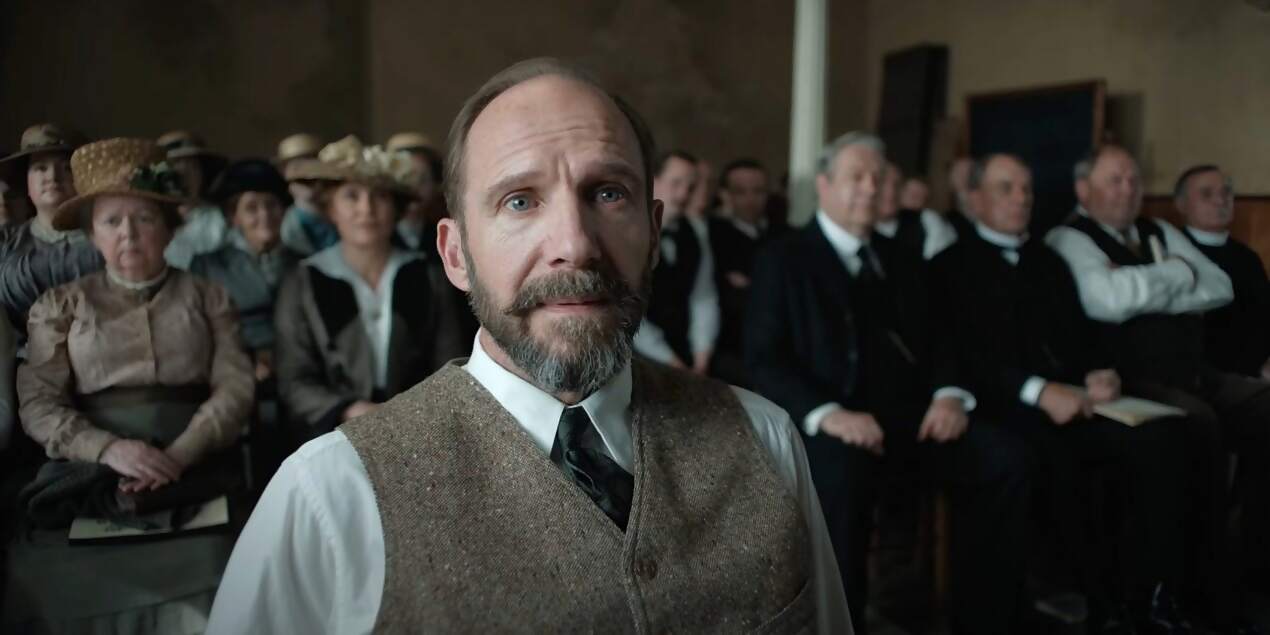
There’s a moment, on a much slimmer budget, mildly reminiscent of Christopher Nolan’s Oppenheimer in the midst of The Choral. A story set in 1916, we find ourselves in a dusty old church hall, the local choir going through their paces as they build towards an unlikely-sounding performance. Something happens that sees the majority of people in the room erupt with euphoria. It’s hear that director Nicholas Hytner pulls his camera back, and – with the minimum of fuss – we see the stillness, the troubled look of another character in the same scene. Words aren’t required.
It’s typically unfussy direction from Hytner, a man who’s a giant of the British theatre scene, but almost on the quiet has now snuck in seven films as director.
His most decorated remains 1994’s terrific The Madness Of King George, written by his long-time collaborator Alan Bennett. The Choral is their latest project together – you can find the likes of The History Boys and The Lady In Their Van on their cinema resumes – and unusually, it’s the first time it’s gone directly to the screen.
There’s evidence as to why this is a film pretty much up front. Set in 1916, we find ourselves exploring a village in the north of England, following a young postman going door to door delivering telegrams. Grief is in the air, and while Hytner and Bennett never take us outside the village, we do explore its streets. On them, the shadow of World War I is painted all over the film. We spent a lot of time outdoors in the village, and a reasonable amount at the local train station too. Conclusions: it looks bloody cold.
Not that The Choral is a relentlessly sombre piece. In fact, if anything, it’s a film that explores trying to find the joy in bleak surroundings. Injected with humour and dry wit, in reasonable measures it’s quite a broad, crowd-pleasing film. Furthermore, it looks at the prejudices that slip in when a nation is in conflict, and how the arts can be more than a straightforward outlet.
This is all explored through The Choral of the title, a choir group funded by Roger Allam’s character. A character who can’t sing too well, knows it, but can’t help loving singing.
However, when the usual choral master signs up for military service, the search is on for a replacement, which is where Ralph Fiennes’ Guthrie comes in. Long story short, he agrees to take over The Choral, but has conflicts of his own bubbling not very far under the surface. And it’s through the framing of trying to mount a production of Elgar’s The Dream Of Geronitus that much of what’s simmering is explored.
Now I’m a bit less highbrow than Hytner and Bennett, so it’s not a piece of work I was familiar with, but there’s smatterings of fun watching the sizeable ensemble of characters try and put this together. Against that, there’s people regularly being called up for service, and the obvious contrast between people crowding into a posh hotel, and others heading for a train journey from which they’ll likely never return.
The Choral’s not overly subtle in what it’s trying to say, and surprisingly for an Alan Bennett script, there’s quite a few characters who feel a little thinly drawn. But still, there’s an impressive combination of steel and comedy drama here, with Fiennes shouldering the bulk of the dramatic weight (although he’s hardly alone). He’s excellent, as you’d expect, and Hytner has cast the film with a mix of people he’s clearly worked with before (Simon Russell Beale gets a very entertaining cameo near the end!), as well as some well-chosen upcoming talent. There’s a feel throughout that this is a ‘proper’ film. The eventual performance of the work, goes less showy that, say, the last third of something like Military Wives, but still has the crowd-pleasing element to it.
It’s the moments at the train station that stuck with me the most, though. Notwithstanding Guthrie wrestling with his lost love elsewhere, and the acknowledgement of the brutality of war. Yet there’s something so unfussy yet haunting about the trains, something far more powerful in images than pages of dialogue could muster. The Choral also has one of the most indelible final shots of the year, too, and one that’s left the feature in my memory since I saw it. Again, it’s not Oppenheimer scale, but there’s a further parallel there.

Suggested product
Issue #60 Magazine Bundle (3x Covers: A Scanner Darkly Magazine + 1991 + Roger Deakins)
£14.99

The irony in the midst of this is that there’s a sneaking suspicion The Choral might have felt quite nicely on the stage, as handsome as it is to see on a big screen. It’s also, in the pantheon of Hytner’s film work, a step down from The Madness Of King George and The Lady And The Van.
But it’s still a commendable, enjoyable and thought-provoking film. There’s nothing overly complex to what it’s doing, nor what it appears to be trying to do. But it makes its points, entertains for a couple of hours, and might be the kind of movie that keeps a multiplex cinema busy during daytime hours. It’s less overtly crowdpleasing than something like Downton Abbey: The Final Showdown (I paid to see it, I call it what I call it), but quietly, that bit more ambitious.
/**/