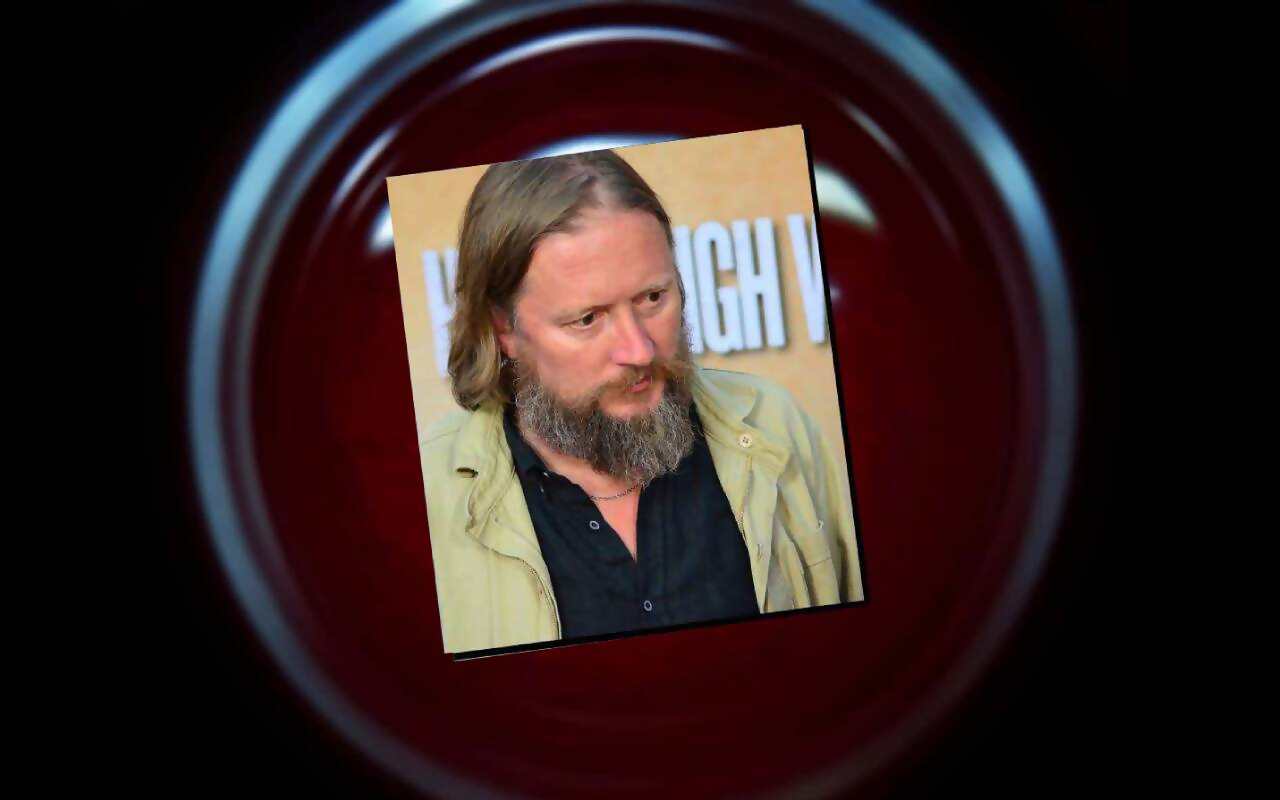
Director David Mackenzie tells us about Veritas, a film he hopes to make that will “use AI in some areas.” Artificial intelligence continues to be a controversial subject among artists and the public in general, but there are some filmmakers who have already embraced the technology. Darren Aronofsky has his tech company Primordial Soup, which ... Veritas | Fuze director David Mackenzie plans to make a film using AI (exclusive)
Director David Mackenzie tells us about Veritas, a film he hopes to make that will “use AI in some areas.”
Artificial intelligence continues to be a controversial subject among artists and the public in general, but there are some filmmakers who have already embraced the technology.
Darren Aronofsky has his tech company Primordial Soup, which recently produced a series of online shorts called On This Day…, generated entirely using Google’s AI software.
Last year, The Creator and Jurassic World: Rebirth director Gareth Edwards told us about his enthusiasm for AI tech and its potential impact on movie-making.
“I get excited about these new tools that are coming out,” he says. “I think, ultimately, it’s going to liberate storytelling – but it’s going to be a bumpy ride on the way to that, I think.”
To the list we can add David Mackenzie, the Scottish director of Young Adam, Hell Or High Water and this spring’s tense unexploded bomb thriller, Fuze.
Last year, while promoting another thriller, Relay, Mackenzie talked to NPR about a project he’s working on that is “about [AI] and… is involving it.”
We brought that project up in our own interview with Mackenzie recorded a few days ago, and the filmmaker revealed its title: Veritas.
“That’s one of the projects that we’ve got, called Veritas, which I’m trying to get off the ground,” Mackenzie said. “I would definitely want to use AI in some areas, particularly, even if it’s slightly glitchy, not perfect AI, so you’re experiencing a slippery reality.”
Podcast | In conversation with David Mackenzie
‘Veritas’ is the Latin word for ‘truth’ or perhaps ‘reality’, which perhaps provides a clue to the film’s subject: that, in the age of AI, the camera really does lie.


Suggested product
Issue #60 Magazine Bundle (3x Covers: A Scanner Darkly Magazine + 1991 + Roger Deakins)
£14.99
“I think recorded reality – that’s no longer to be trusted anymore,” Mackenzie told NPR. “One can affect images so easily now that the things that we used to rely on as sort of self-evidential truth that you see are no longer so easy to trust.”
Mackenzie added in our conversation, however, that Veritas would have to be made soon due to AI’s constantly evolving nature.
“The problem is, if I wait much longer… it won’t be long until we’re all making films using AI or elements of AI. Whether we’re shooting actors and plugging them into an AI environment… so it feels sort of inescapable to me.
“It’s a rapidly changing landscape. I’m not sure how I feel about the future of it, but I don’t think anyone can stop it.”
Another respected filmmaker, Steven Soderbergh, clearly agrees. In a recent interview with Filmmaker Magazine, he revealed that he’d been using AI on a documentary he’d made about John Lennon and Yoko Ono, saying he found it “helpful in creating thematically surreal images that occupy a dream space rather than a literal space.”
Soderbergh also added that he was hoping to make a film about the Spanish-American War starring Wagner Moura; that too would use “a lot of AI”, he said.
The veteran director added that, “like every other piece of technology, [AI] desperately requires very close human supervision.”
Similarly, Mackenzie told us that, “I don’t want every one of my projects to [include AI],” adding that “there always has been a certain power in authenticity of performance and in real places, in the grittier element of filmmaking, and it’s hard to imagine that being faked.”
At the same time, Mackenzie still believes that the adoption rate of AI among artists will increase. “I know lots of people who are making AI music, and it’s pretty hard to tell the difference. So we’re probably heading in that direction.”
Fuze is in cinemas now.